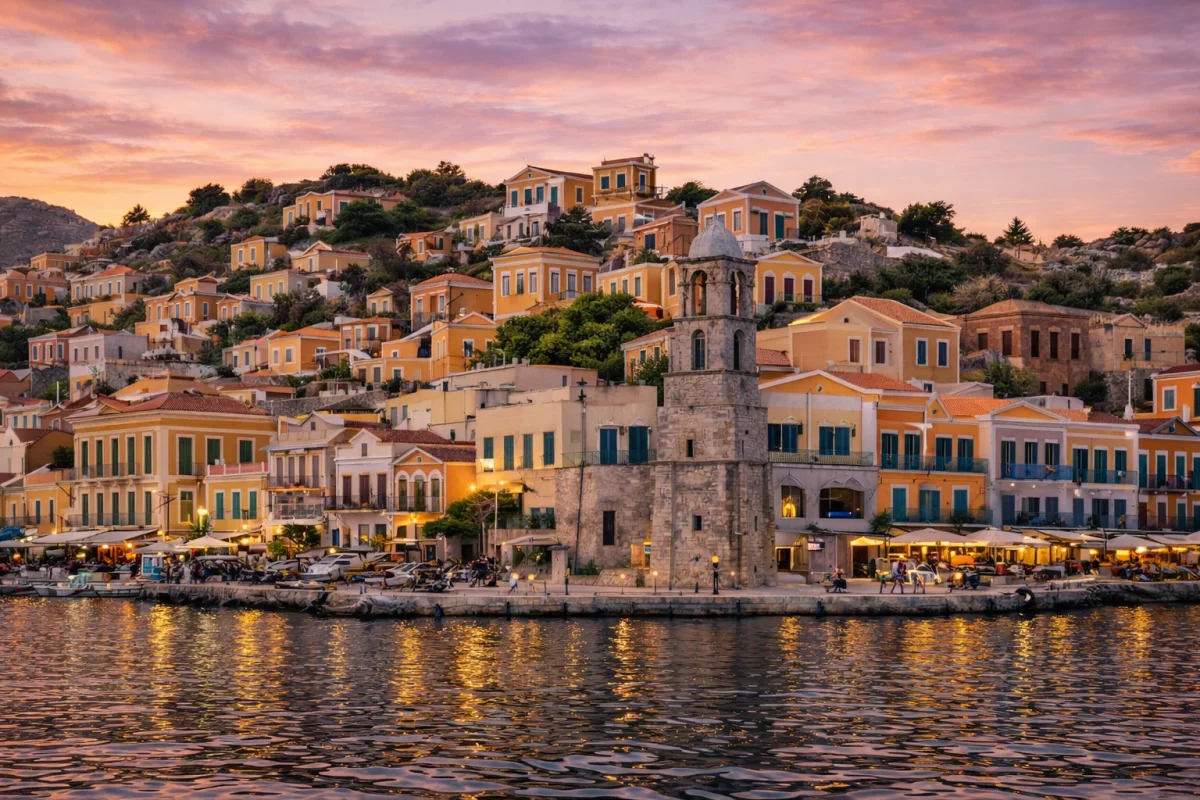
Symi possesses a certain poise. You arrive by boat and realise the island wasn’t designed to be seen but to last. The houses, in gentle yellows, blues and warm reds, ascend from the harbour in a tiered fashion, their symmetry subtly disrupted, lending a human touch. This is an island that understands proportion, between land and sea, between beauty and restraint and between presence and absence. Symi does not rush toward you. It allows you to arrive slowly.
Geography Shaped by Containment
Symi lies northwest of Rhodes, close to the coast of Asia Minor. It is small, steep and defined almost entirely by its harbour. The land rises fast from the water. Hills fold around the town, turning everything toward the sea. There are no wide plains here, no long inland journeys. Movement is vertical rather than horizontal. You climb. You descend. Over and over. You pause to look back at the harbour below, which always seems to hold the island together. The sea around Symi is deep and still. Bays are narrow and protected. The water reflects light differently here, darker, heavier and calmer. It feels less playful and more deliberate.
A Harbour That Is the Island
Life on Symi revolves around the harbour. There is no separation between arrival point and daily life. Boats arrive directly into the centre of things. People notice. The island adjusts. The waterfront is lined with neoclassical houses built during Symi’s period of maritime prosperity. They speak of trade, craft and connection rather than luxury. Walking along the harbour feels intimate. Streets are narrow. Sounds carry easily.
A History of Rise and Retreat
Symi was once wealthy. Its shipbuilders and sponge divers connected the island to ports across the eastern Mediterranean. Trade brought prosperity, education and architectural refinement. That prosperity did not last. Economic shifts, war and migration reduced the island dramatically. Many residents left. Houses emptied. Life contracted. What remained was not decay, but stillness. Symi did not rebuild itself in another image. It accepted reduction. That acceptance preserved its character. Today, the island feels neither abandoned nor revived. It feels settled. Aware of what it was and comfortable with what it is now.
Life on a Vertical Scale
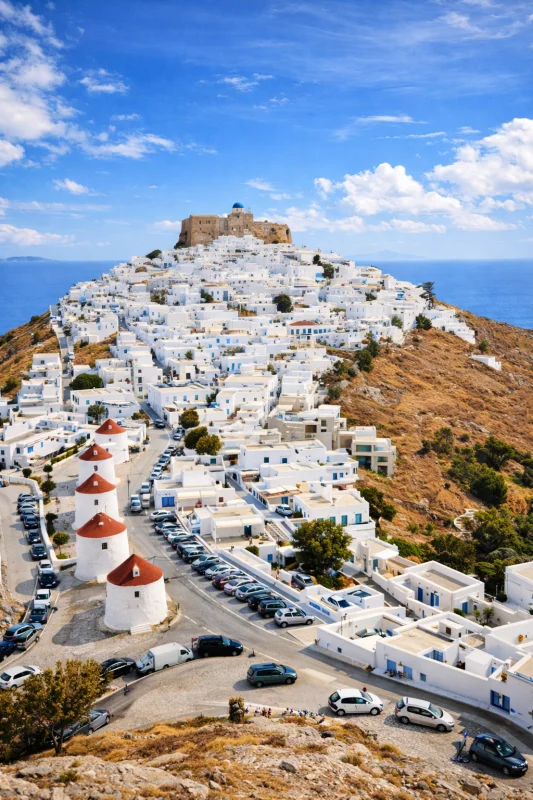
Symi is not an island you move across easily. It is an island you move through carefully. Stairs replace roads. Paths climb steeply. Even short distances require effort. This shapes daily life. You think before leaving. You carry what you need. You return when it makes sense. Nothing here is rushed, because rushing would feel out of place. Villages beyond the main harbour exist, but they remain small and quiet, often reached by boat or winding roads. They feel like extensions of the same inward-facing logic.
The Sea as Refuge
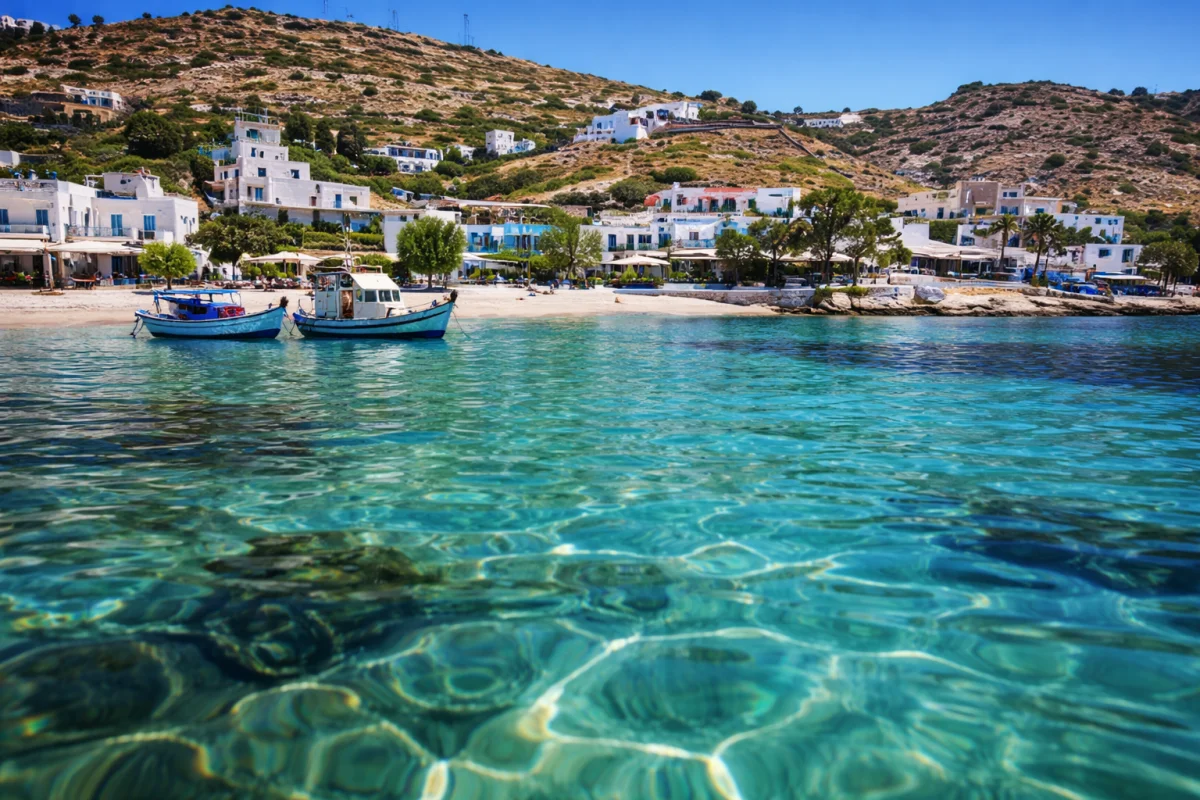
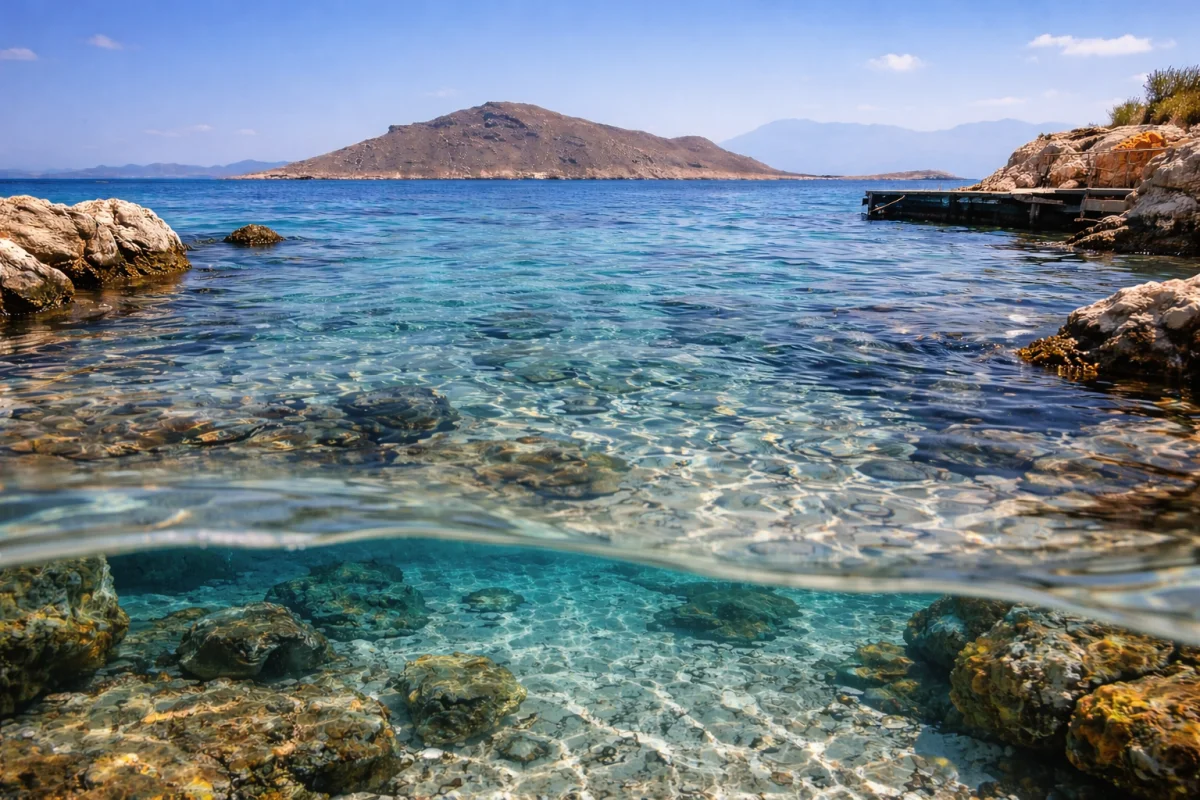
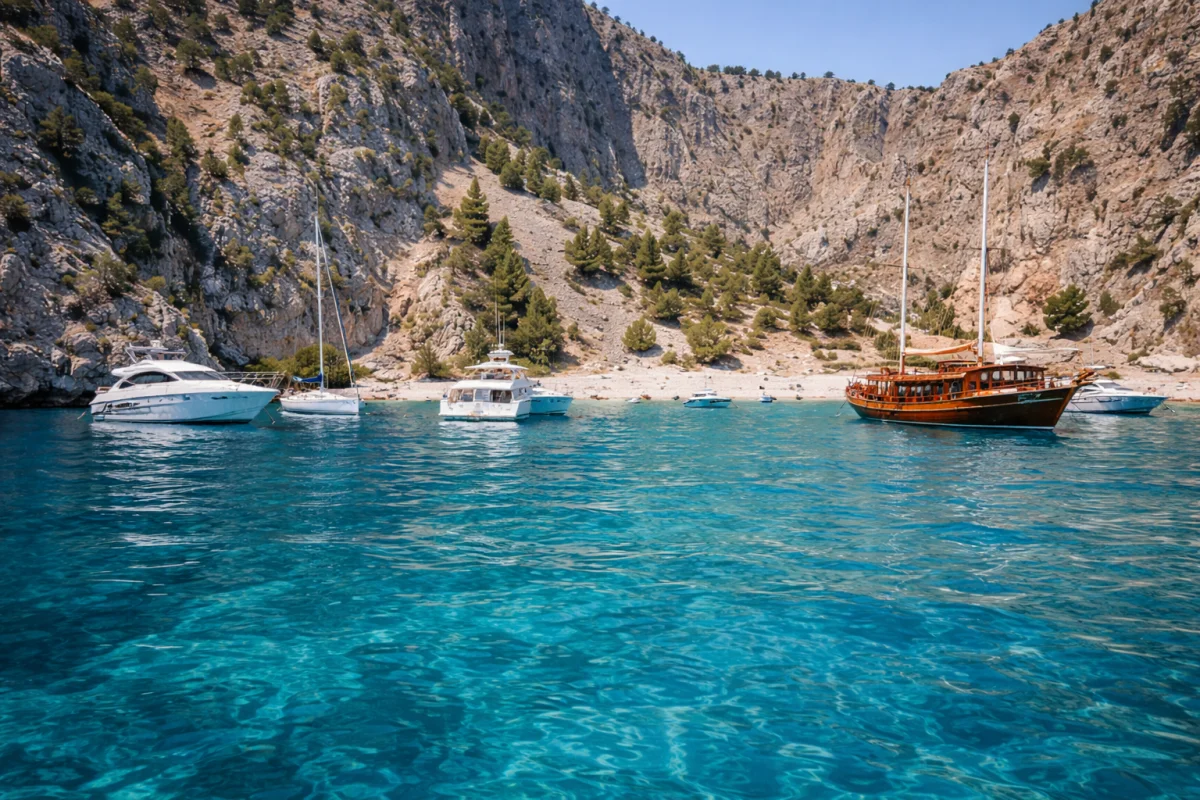
Symi’s beaches are mostly small, pebbled and tucked into narrow coves. Many are reached only by boat. This limits access and preserves calm. Swimming here feels intentional. You arrive. You enter the water. You float. There is little distraction. The sea is clear and deep, cooling rather than playful. These moments feel separate from the harbour’s life. A quiet counterbalance to its closeness.
Food and Familiarity
Food on Symi is shaped by continuity rather than variety. Fish, simple vegetables, olive oil and bread. Meals feel domestic, even when eaten out. Taverns line the harbour, but none feel performative. Eating here is social without being loud. Conversations drift easily between tables. Silence is allowed.
Tourism That Observes Boundaries
Symi receives visitors, many of them on day trips from Rhodes. Boats arrive, people walk the harbour, then leave again. What protects Symi is not isolation but limitation. There is only so much space. There are only so many places to go. The island absorbs attention without changing shape. Those who stay longer experience a different Symi, quieter evenings, empty steps and a harbour that belongs again to itself.
Why Symi Feels Balanced
Symi offers proportion between beauty and effort, between exposure and shelter and between history and daily life.
What Remains After You Leave
Symi stays with you as an image that feels complete. The curve of the harbour. The rise of houses. The stillness of water at night. It is an island that does not scatter itself. It holds together and invites you to do the same, if only briefly.