Patmos feels attentive. It is an island shaped less by movement and more by pause, by watching, waiting and listening. The pace is quiet, even deliberate, as if the island decided long ago that noise would only get in the way. People often come to Patmos with an idea already formed. They know its name, its reputation and its association with faith and revelation. What surprises many is how restrained it feels. This is an island where meaning settles rather than announces itself.
Geography That Draws You Inward
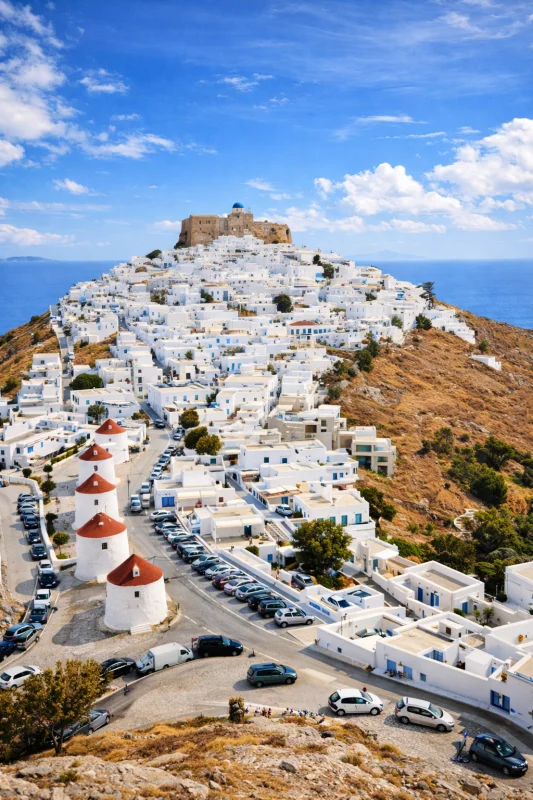
Patmos lies in the northern Dodecanese, smaller than it first appears, deeply indented by bays and coves that pull the coastline inward. The island feels folded rather than stretched, encouraging containment rather than expansion. The land rises toward the centre. The old settlement and monastery sit above the harbour. Hills are smooth and rounded, shaped by time rather than force. From most points, the sea is visible but never dominant. It frames rather than overwhelms. There is a sense of enclosure here. Bays protect boats from wind. Paths curve instead of cutting straight lines. Movement feels intentional.
Skala and the First Encounter
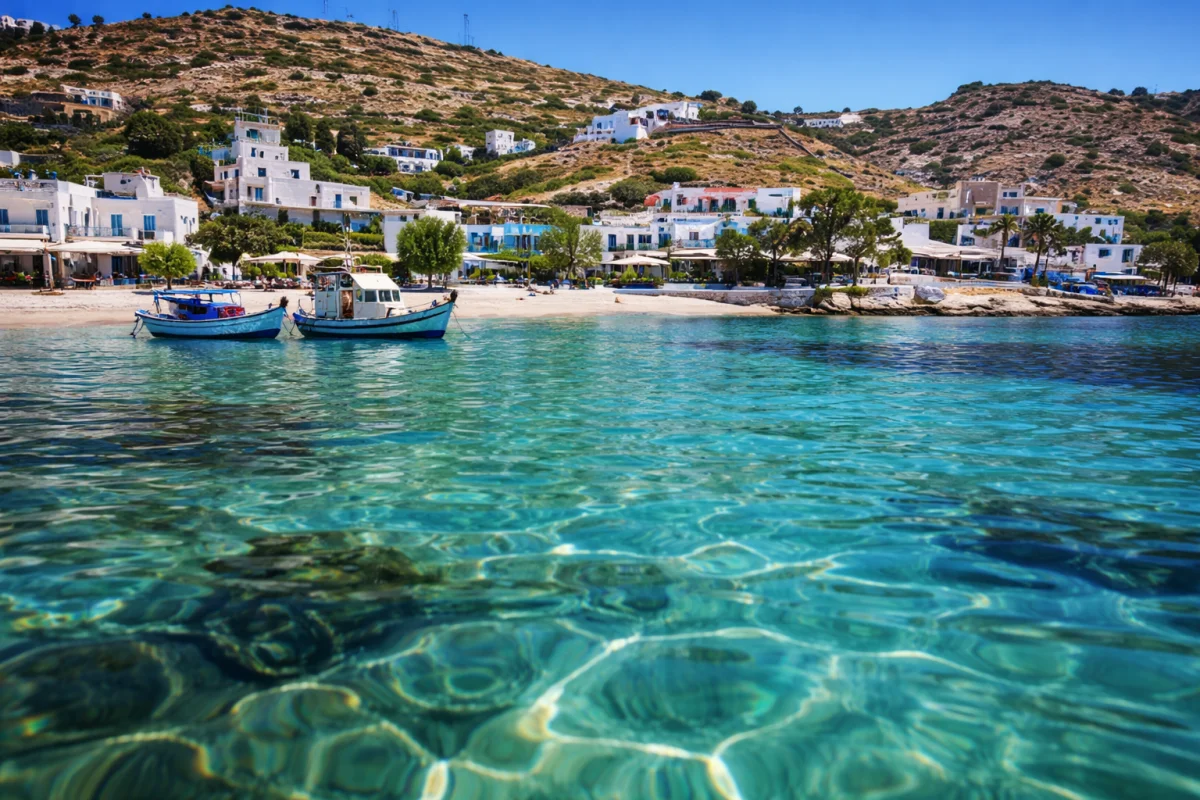
Skala, the port town, is where arrival happens. It is modest, functional and quietly social. Cafés line the waterfront without urgency. People greet each other easily. Boats come and go without spectacle. Skala does not try to define the island. It acts as a threshold. A place where the outside world slows just enough to allow entry into Patmos itself. From the harbour, the eye is drawn upward, toward the hilltop settlement.
Chora and the Weight of Time
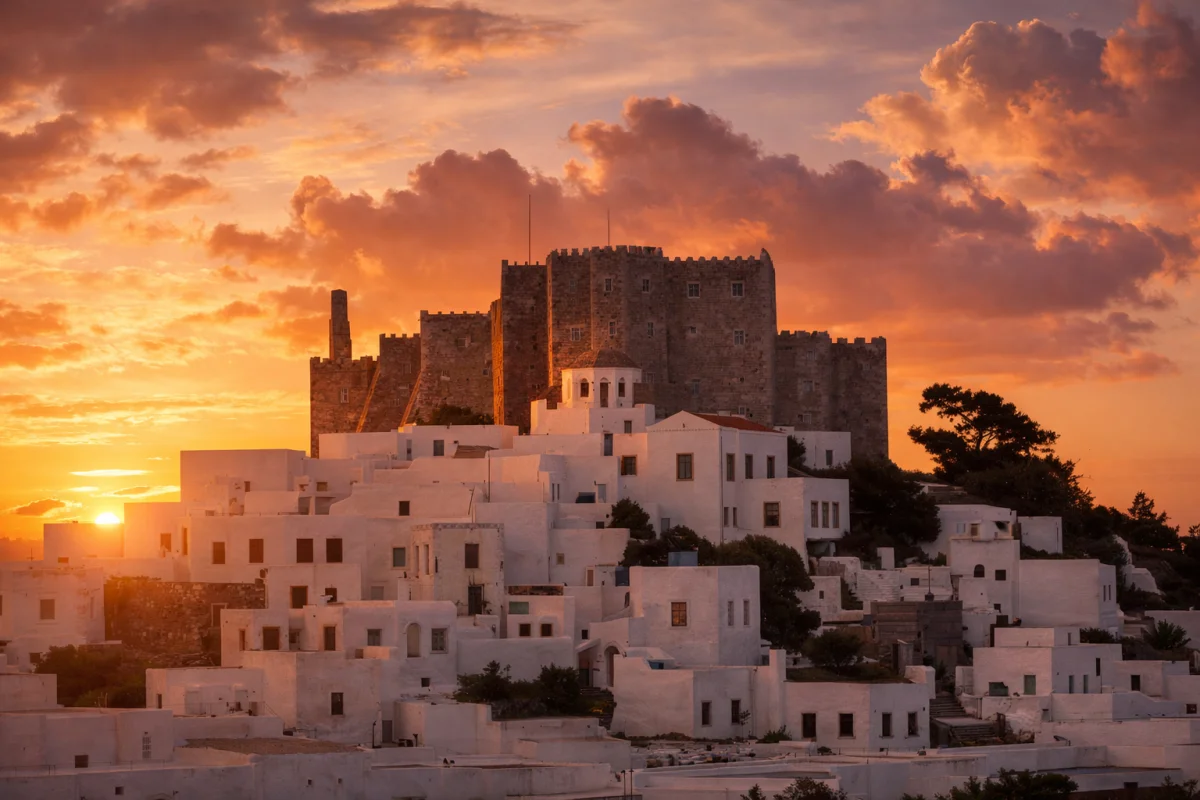
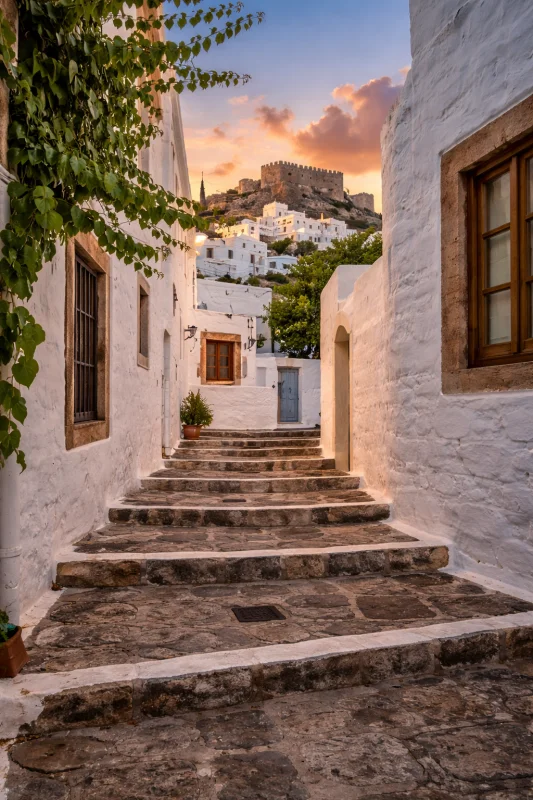
Chora sits high above the sea, crowned by the Monastery of Saint John. Approaching it feels deliberate. Streets narrow. Steps rise. Sound softens. The monastery dominates the skyline, but not aggressively. Its walls feel protective rather than imposing. White houses gather around it. Sheltered, but still exposed. Walking through Chora feels different than walking anywhere else on the island. The air seems heavier, quieter. Even conversations lower themselves naturally. Nothing here feels staged, yet everything feels considered.
A History That Turned Inward
Patmos has a long history, but it is one defined by focus rather than expansion. Patmos didn’t become important through conquest or trade. It became important through reflection, shaped by the Book of Revelation. Faith became not just a feature but a foundation. Over centuries, the monastery grew into a centre of learning, preservation and spiritual authority. Yet Patmos never became grand. It remained contained. Its importance did not translate into growth but into continuity. Knowledge was held, not spread outward indiscriminately. That inward orientation still defines the island today.
Daily Life and Quiet Discipline
Life on Patmos follows an understated rhythm. Mornings are calm. Afternoons are slow. Evenings pass quietly. Food is simple and familiar. Meals are unhurried. Silence isn’t avoided. If you want it even plainer or broken into shorter lines, I can reduce it further. It is not treated as absence but as presence.
Beaches as Release
Patmos’s beaches feel secondary, almost like relief valves rather than destinations. They are places to step out of the mind and back into the body. Most are small, tucked into coves and reached by winding roads or paths. The water is clear and calm, offering a sense of ease rather than excitement. Swimming here feels grounding. You enter the sea to reset, not to distract yourself.
Visitors and Restraint
Patmos receives visitors from around the world, but it does not bend itself to accommodate them fully. There are places to stay, places to eat, places to walk and clear limits beyond that. This restraint filters experience. People who come seeking entertainment often feel unsure. Those who come with openness tend to stay longer than planned.
Why Patmos Feels Different
Patmos feels different because it does not compete. It does not ask for admiration. It does not try to convert or convince. It exists in a state of quiet authority, not loud, not fragile and simply certain of itself. The island teaches a different relationship with time. One where pauses are allowed. Where meaning does not need to be extracted. Where presence is enough.
What Remains After You Leave
Patmos stays with you subtly. In the memory of narrow streets at dusk. In the sound of wind against monastery walls. In the feeling that you were somewhere that had already decided what it was long before you arrived. It is an island that stays quietly, waiting for you to remember it.