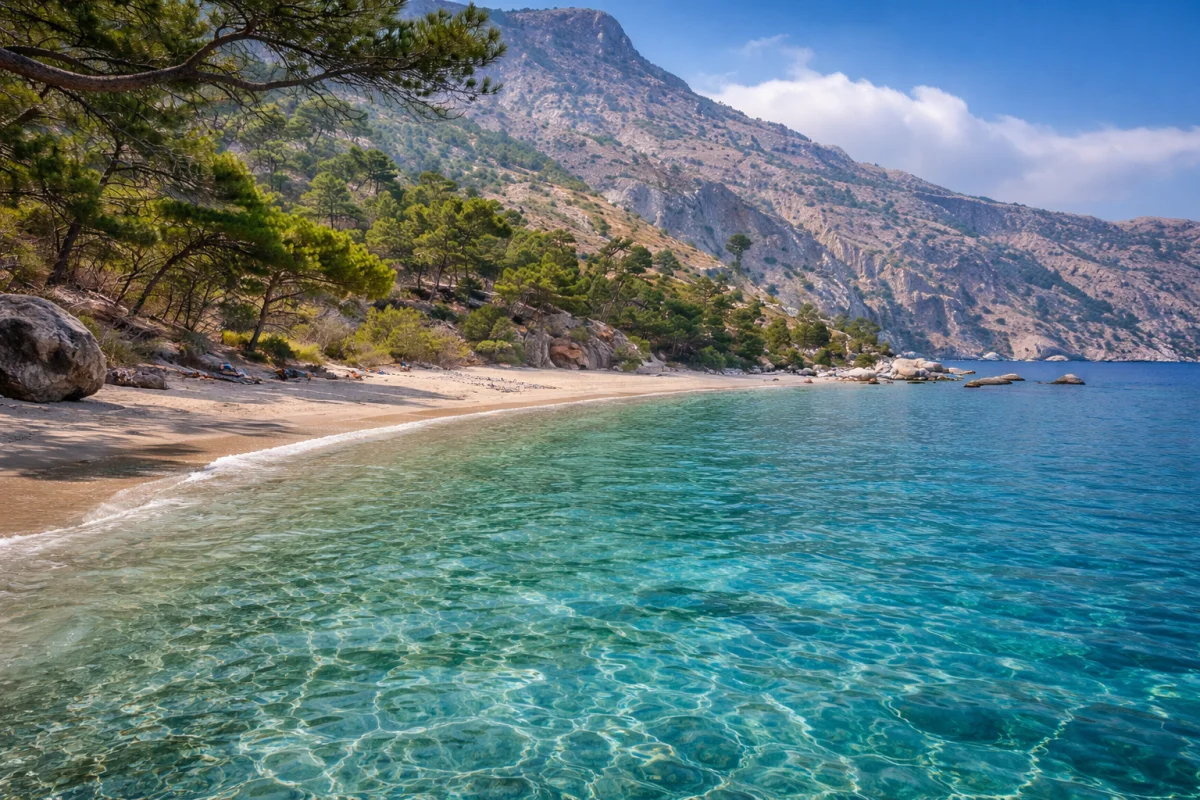
Karpathos is not an island that eases you in. It rises abruptly from the sea, sharp and wind-carved, with very little interest in adapting to expectation. People often arrive thinking of beaches or scenery. What they encounter instead is something heavier, older and more demanding. This is an island shaped by isolation. Not the romantic kind, but the practical, enduring kind. Distance from trade routes, distance from comfort and distance from compromise. Karpathos does not feel relaxed in the way other islands do. It feels awake. You don’t come here to drift. You come here to pay attention.
Geography
Karpathos is located between Rhodes and Crete and the strong winds that blow through the Karpathian Sea can easily reach it. The island is long and has mountains on it. There are steep ridges that cut it in half. Travelling across it takes time, not because of distance, but because of terrain. The landscape is dramatic and unapologetic. Mountains rise sharply from the coast. Villages cling to the sides of hills. Roads don't get flat; they twist. From above, the island looks broken, as if something is pulling it apart. There is always wind. It makes the air cooler, the sea rougher and life in general. You can feel it in the mornings and afternoons, as well as in the way buildings are arranged and paths are worn. Karpathos does not protect itself. It lasts.
Villages That Hold Their Ground
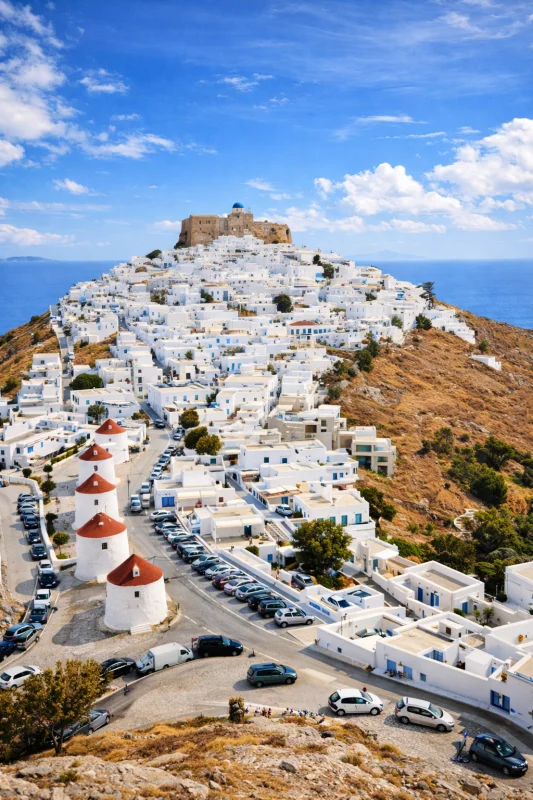
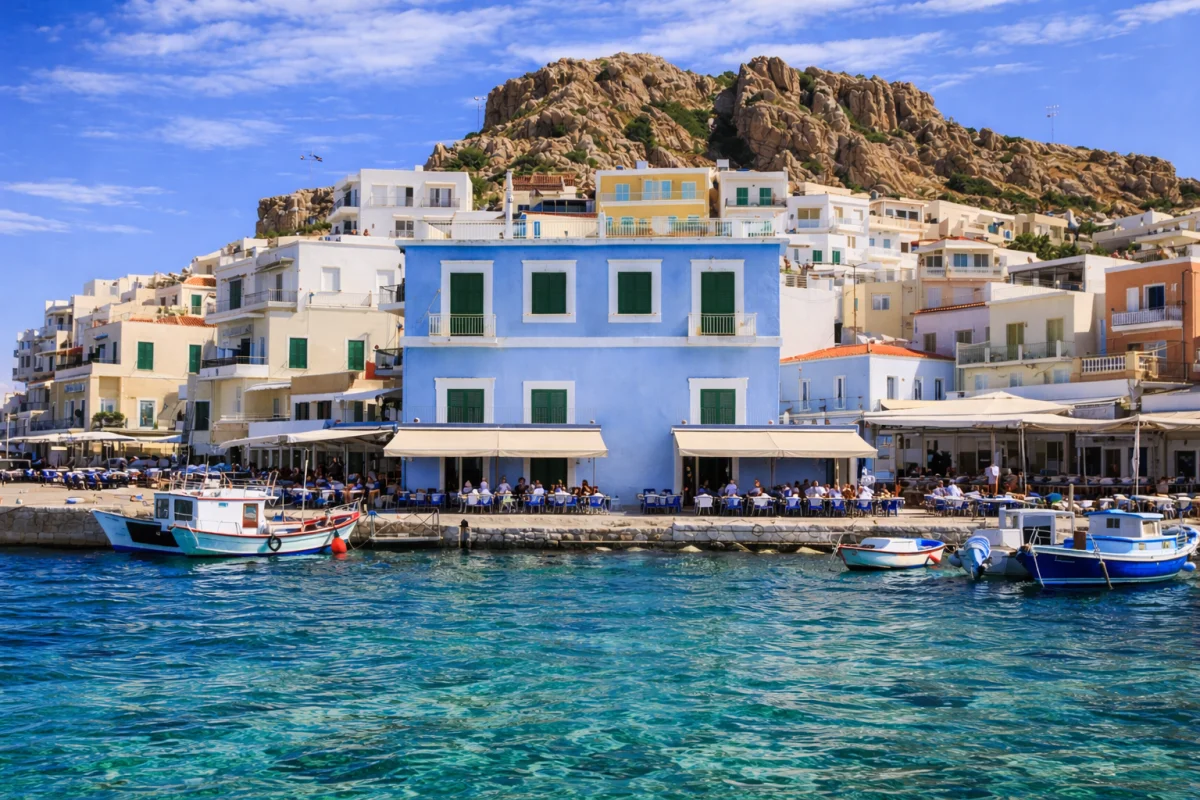
Karpathos is not centred around one dominant town. Its identity is scattered across villages, each holding onto its own sense of order. Pigadia, the main port, is practical rather than charming. It exists to serve the island. Ferries, shops and administration. Life here moves faster than elsewhere but never feels detached from the rest of Karpathos. Further north, villages like Olympos feel like another world entirely. Perched high above the sea, Olympos is not preserved for visitors, it simply never changed. Traditions are still there, but they are not shown off; they are part of everyday life. Language, dress, music and rhythm feel intact, not revived. In these villages, time feels layered. The present sits directly on top of the past, without explanation.
The History That Never Lets Go
People have lived on Karpathos since ancient times, but it was never easy to control. Its geography made it hard to take over. There were Byzantine, Venetian and Ottoman empires, but none of them completely changed the island. Isolation became protection. Traditions survived not because they were cherished, but because there was no pressure to abandon them. While other islands adapted outward, Karpathos folded inward. Even in the 20th century, migration shaped the island deeply. Many Karpathians left for work abroad, especially to the United States. Yet unlike other places, they never fully severed ties. Return was expected. Identity remained anchored. That tension, between departure and return, still defines the island.
The Sea
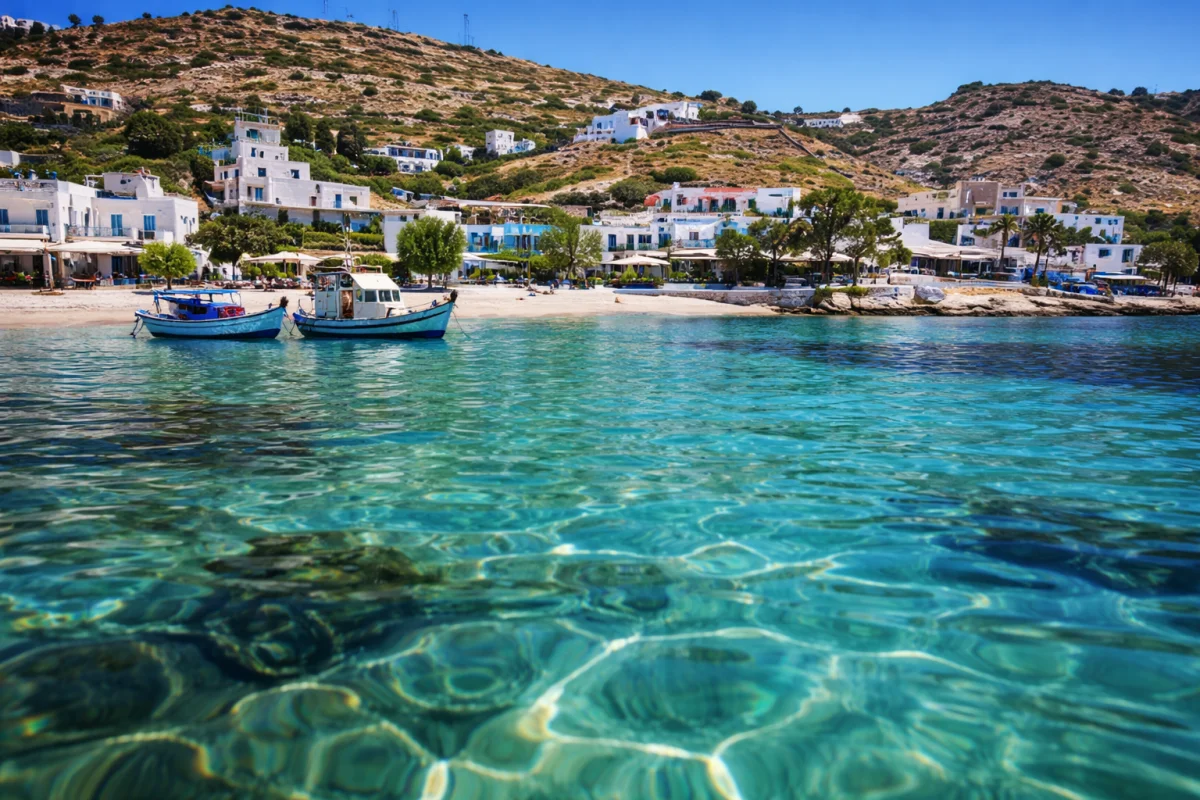
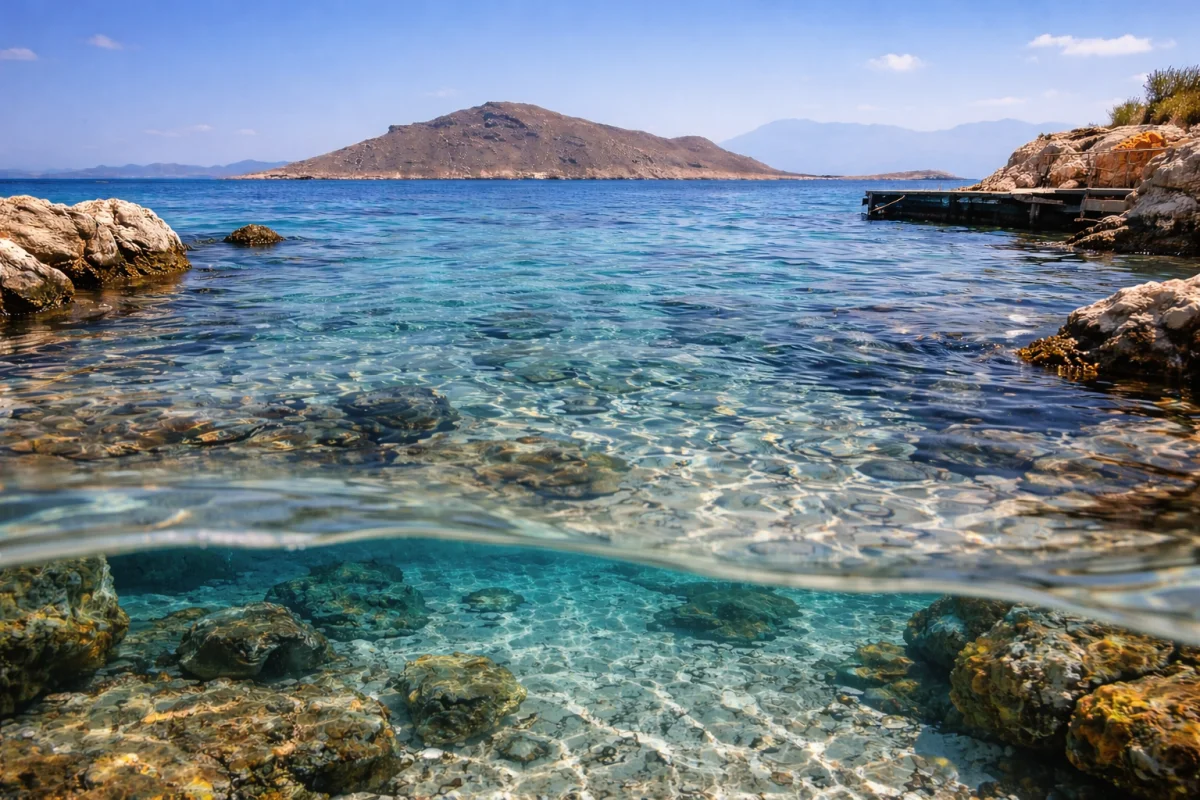
The water around Karpathos is strong. It doesn't always forgive. Winds make strong currents and the beach changes character from day to day. Some beaches are wide and open, with no trees or other things blocking the view of the water. Others are sheltered, carved into coves beneath cliffs. The water is clear, often deep close to shore and rarely passive. Swimming here feels physical. You adjust to conditions rather than expecting comfort. On calm days, the sea is luminous. On windy ones, it demands respect. This unpredictability shapes how people interact with the coast. The sea is not entertainment. It is a presence.
Movement and Effort
Nothing on Karpathos comes without effort. Beaches often require driving. Villages require climbing. Wind requires patience and yet, effort feels appropriate here. The island does not present itself easily and that difficulty filters experience. Those who stay tend to engage more deeply. There is less casual consumption and more participation. Walking paths connect chapels, hillsides and viewpoints. These are not scenic trails in the curated sense. They existed because people needed to move between places long before visitors arrived.
Food and Continuity
Food on Karpathos reflects endurance rather than abundance. Preservation, seasons and need all shape dishes. Bread, cheese, greens and meat when it's available. Recipes are specific to a place and don't change very often. Meals feel grounding. There is little interest in the presentation. What matters is familiarity. Eating here feels like stepping into a rhythm that existed before you arrived and will continue after you leave. Conversation often pauses naturally. Silence is not avoided.
Tourism on Karpathos
Karpathos does not cater easily. It attracts travellers who are comfortable with wind, distance and repetition. People who don’t need constant stimulation. Tourism exists, but it has not softened the island. Infrastructure remains limited. Roads end abruptly. Plans change with weather. That resistance protects the island’s character. Karpathos remains demanding and therefore intact.
Why Karpathos Feels Different
Karpathos doesn’t feel nostalgic. It feels current and ancient at the same time. Traditions are not reenacted, they are lived. Landscape is not background, it is authority. People leave Karpathos with a strong impression, sometimes even discomfort. It offers something rare: a sense of place that has not been diluted.
What Stays With You
Karpathos stays with you in fragments. Wind at night. A village road climbing into cloud. A meal eaten without hurry. The feeling that something here exists beyond tourism, beyond narrative.