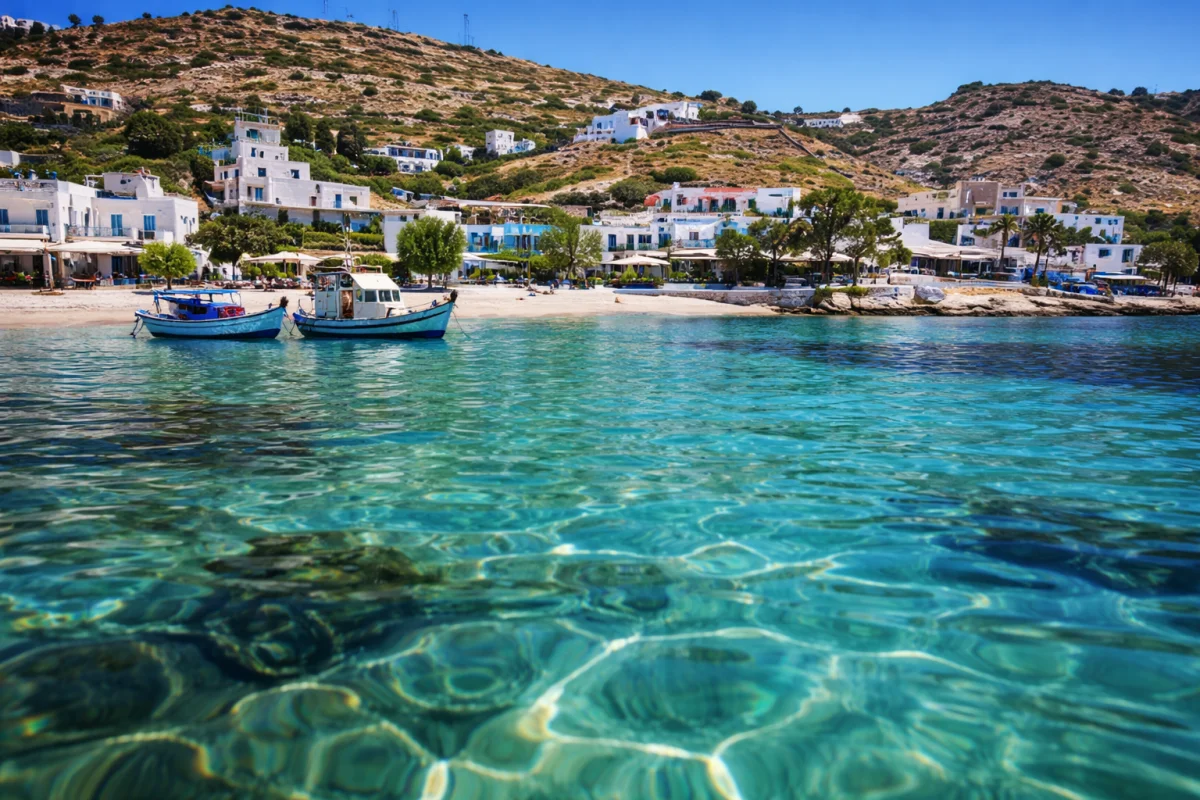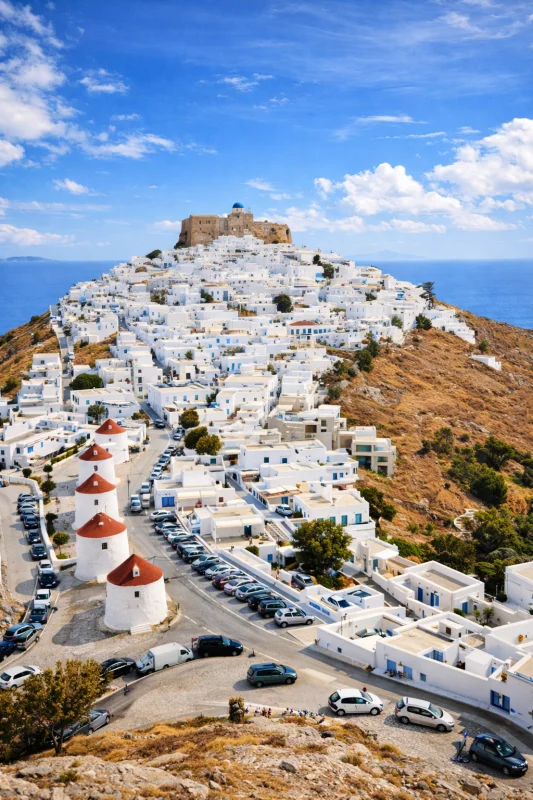
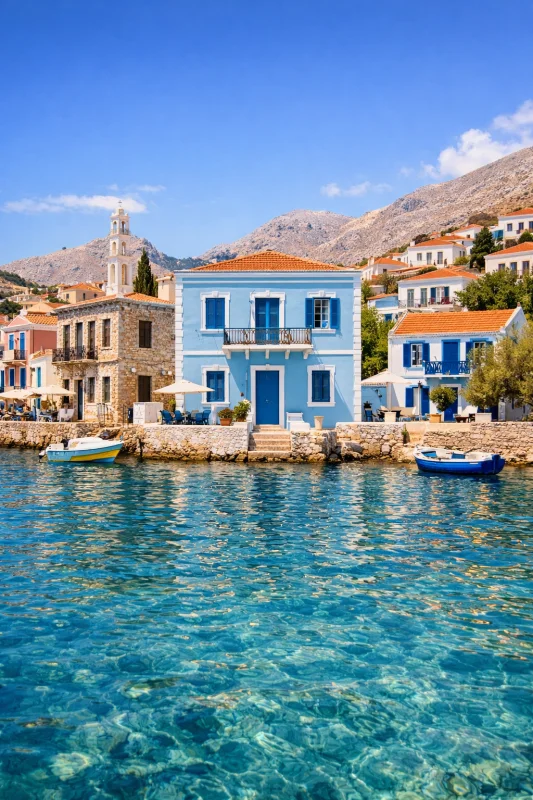
Chalki is easy to underestimate. It sits quietly west of Rhodes, close enough to be reached quickly, yet far enough to feel separate. Many people arrive expecting a short visit, a simple stop along the way. There is no urgency on Chalki. The island feels settled, comfortable with its size and limits. From the moment you arrive at the harbour, the pace changes. Pastel-coloured houses rise in soft lines from the water. Fishing boats rest without movement. The sea is calm, almost still. Nothing competes for attention.
An Island Defined by Its Harbour
Chalki’s geography is modest but deliberate. The island is small and largely dry, with gentle hills and rocky ground shaped by wind and sun. What gives it identity is not its interior but its relationship with the sea. The harbour settlement, Emporio, is the heart of the island. Almost everything happens here. Houses curve naturally around the bay, forming a quiet amphitheatre facing the water. There are no sprawling neighbourhoods, no hidden suburbs. Chalki is visible all at once and that visibility creates intimacy. The harbour is not busy, even in summer. Boats come and go, but slowly. Arrivals feel noticeable. Departures are unhurried. The sea remains the constant presence, reflecting light differently throughout the day.
Layers of a Quiet Past
Chalki’s history mirrors that of many small Dodecanese islands, but without the weight of grandeur. It has known antiquity, Byzantine rule and Ottoman presence, followed by Italian administration in the early 20th century. Yet little here feels monumental. Instead of castles and large ruins, Chalki carries its past in subtler ways. In abandoned inland villages, in old churches scattered across the landscape and in the shape of the harbour town itself. At one time, Chalki supported a larger population than it does today. Sponge diving, fishing and trade sustained island life. Over time, economic shifts led many residents to leave, especially during the 20th century. What remained was not decline, but quiet. That quiet reshaped the island into what it is now.
Beaches Without Excess
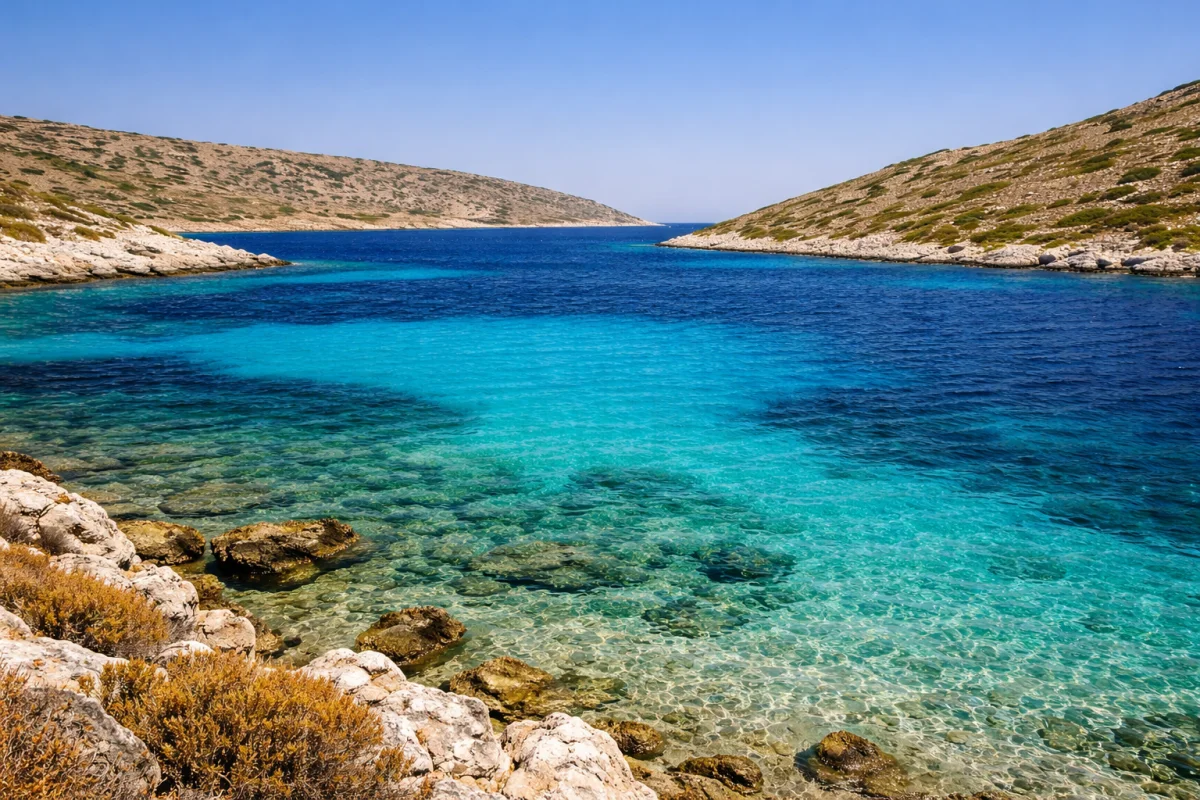
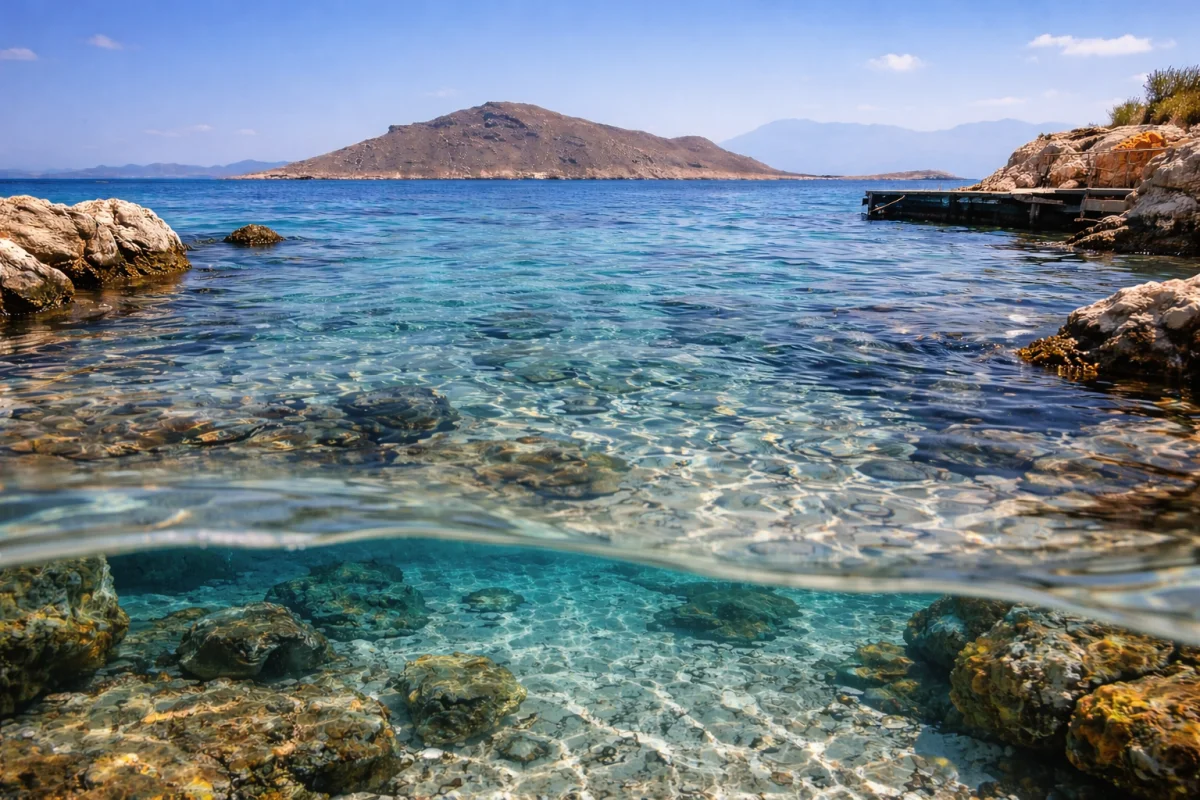
Chalki’s beaches follow the same philosophy as the rest of the island. They are simple, functional and quietly beautiful. Most are small and pebbled, with clear water that deepens quickly. Some are reached on foot from the harbour, others by short boat rides or paths that cross open land. There are no long rows of umbrellas or loud beach bars. Swimming here feels personal. You float, look back at the harbour houses and realise how little has changed in front of you for decades. The sea remains calm most days, reflecting Chalki’s sheltered position. In the early morning and late afternoon, light plays softly on the surface.
Daily Life, Reduced to Essentials
Life on Chalki is centred around small routines. Mornings begin quietly. Cafés open without rush. Locals greet each other by name. Visitors blend in easily, simply by slowing down. Meals are unpretentious. Fresh fish, simple dishes, familiar flavours. Food is prepared because people need to eat, not because anyone expects an experience. There is little separation between locals and visitors. The island is too small for that. Everyone shares the same paths, the same harbour and the same view.
A Place for Stillness
Chalki attracts travellers who are comfortable with repetition. People who don’t mind returning to the same table, the same beach, the same evening walk. The island reveals itself through familiarity rather than discovery. There are no hidden highlights waiting to be uncovered. What you see on the first day is largely what you will see on the last. The difference lies in how you notice it. Evenings settle slowly. Light fades across the harbour. Conversations soften. The water becomes darker and heavier. The island grows quieter rather than livelier.
Access and Isolation
Chalki is reached by boat, most commonly from Rhodes. The journey is short but meaningful. Once you arrive, movement becomes limited by design. There is little reason to travel far or fast. This limited access shapes the island’s character. Supplies arrive when they arrive. Weather influences plans. Time feels less controlled. Rather than being inconvenient, this rhythm becomes part of the appeal.
Why Chalki Lingers
Chalki doesn’t impress in obvious ways. It doesn’t overwhelm with beauty or history. It simply holds itself steady. People leave Chalki remembering small things: the colour of the houses at dusk, the quiet of the harbour at night and the feeling of sitting without purpose. The island stays with you because it never asked you to hurry. It is a place that feels complete without trying to be more.