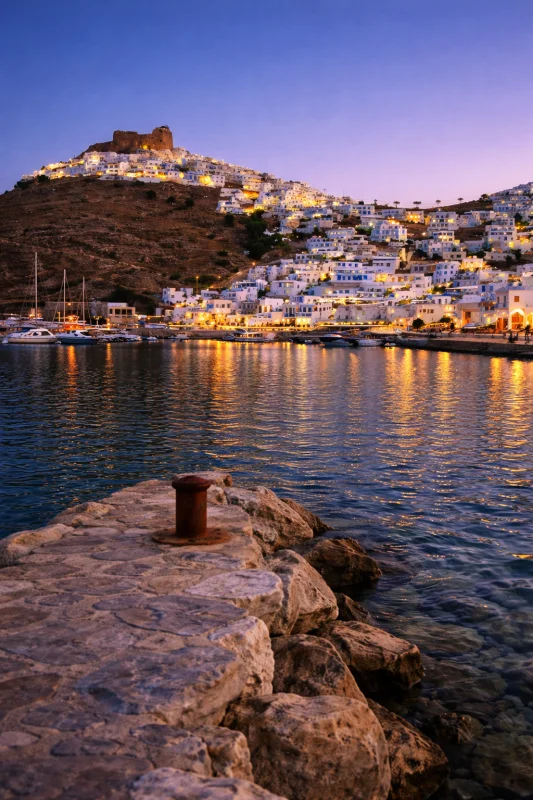
Astypalaia sits where the Cyclades begin to give way to the Dodecanese, both geographically and emotionally. You can sense it in the architecture, in the pace of life and even in the light. The island doesn’t rush to define itself. It allows you to notice the difference on your own. People often describe Astypalaia as a butterfly when seen from above, its two rocky halves joined by a narrow strip of land. But that image only tells part of the story. The island is defined by its openness to the sea, the wind and silence. It feels open in a way that is honest and not uncomfortable.
An Island Between Island Worlds
Astypalaia lies in the westernmost part of the Dodecanese, closer in spirit to the Cyclades but officially part of a different island family. This in-between position has shaped everything. The whitewashed houses and blue shutters are in the style of the Cyclades, but the island's history, government and cultural roots are firmly in the Dodecanese. The landscape is dry and sculpted by wind. Hills rise gently, then fall away toward the sea. There are few trees, but wide views in every direction. From almost anywhere on the island, you can see water. That constant presence shapes how Astypalaia feels. Open, uncluttered, almost weightless. The sea here is not decorative. It is part of daily awareness. You notice weather changes quickly. You feel when ferries are delayed. You sense when the island is quieting down for the evening.
Chora and the Shape of Life
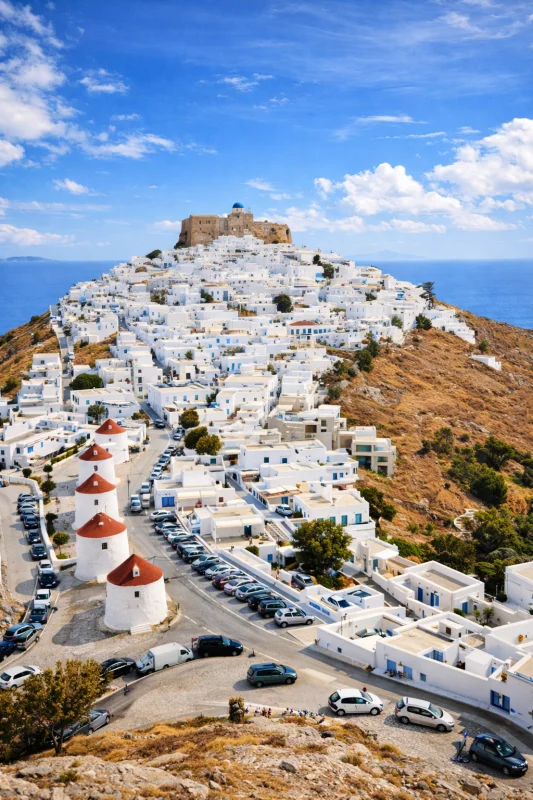
Astypalaia’s main settlement, Chora, is one of the most striking island towns in the Aegean, not because it is large or ornate, but because of how deliberately it rises from the land. White houses cascade down the hillside, all leading the eye toward the Venetian castle that crowns the top. The castle is the most important part of the view, but it doesn't take over. Instead, it holds the town together, both in terms of history and looks. Below it, life unfolds in narrow alleys, small squares and quiet terraces overlooking the sea. Chora doesn’t feel busy even when people are around. Movement is gentle. Conversations are unforced. Evenings stretch naturally, without urgency. The town feels lived in rather than arranged.
A Long, Layered History
People have lived on Astypalaia since ancient times and like most of the Aegean, it has changed hands many times. The Greeks, Romans, Byzantines, Venetians and Ottomans all left their mark here. The Venetian influence is the most visible, especially in the castle and in the layout of Chora itself. What stands out is not the presence of history, but how quietly it sits in the landscape. There are no grand reconstructions, no attempts to dramatise the past. Stone walls remain where they were built. Churches and chapels continue to serve their purpose. History here feels integrated rather than displayed. Astypalaia became part of modern Greece only in the mid-20th century, along with the rest of the Dodecanese. That late transition left the island with a strong sense of local identity-Greek, yes, but distinctly Astypalaian.
The Beaches
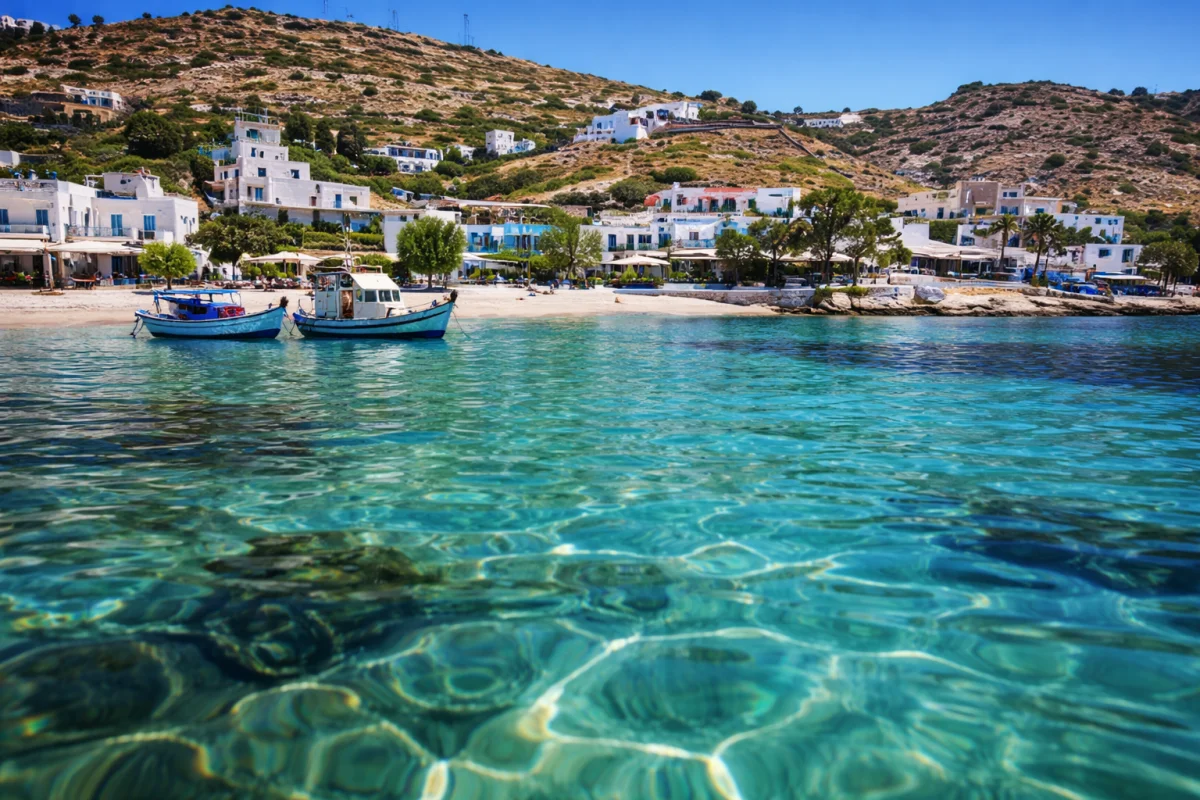
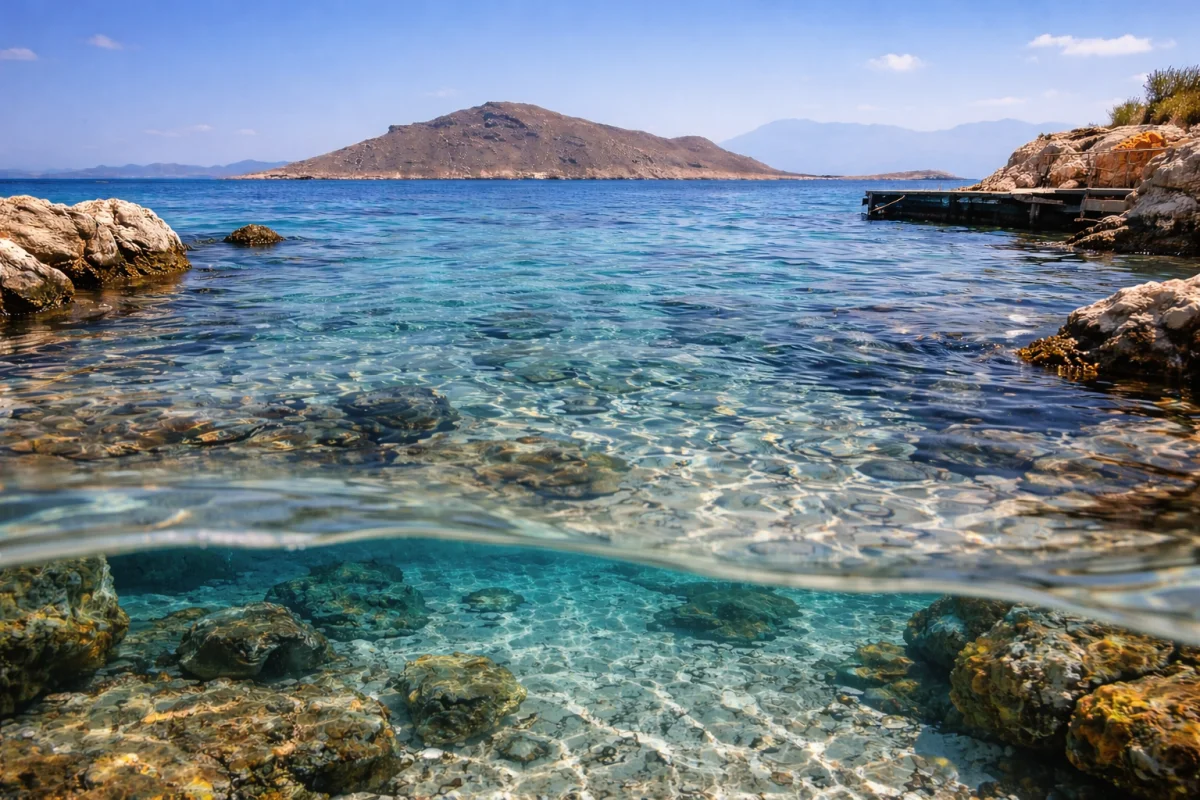
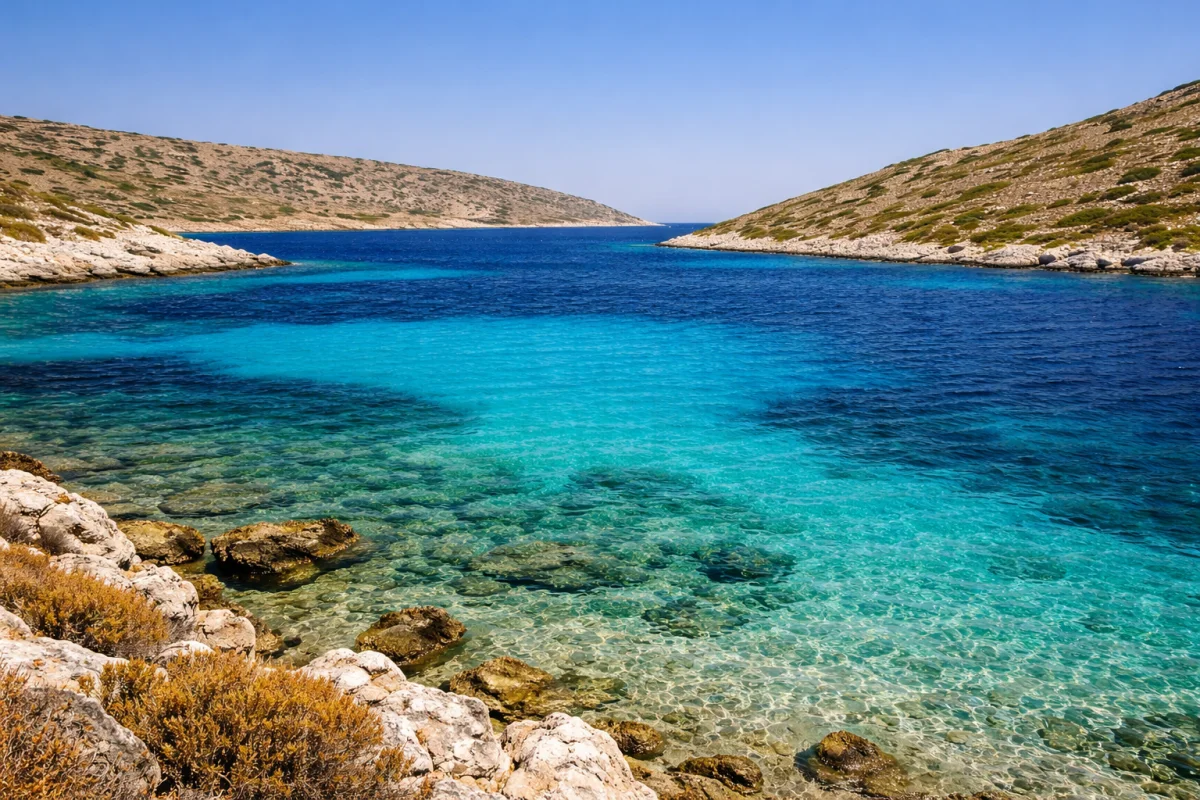
The beaches of Astypalaia show what the island is like. They are not overly polished or densely developed. Many feel wide and open, framed by rock rather than infrastructure. Some beaches are reached easily by road; others by dirt tracks or small boats. A few require walking. That effort, however small, creates a sense of arrival. You feel like you’ve earned the quiet. The water is clear and often deeper than it looks. Colours shift throughout the day, from pale blue in the morning to darker tones in the afternoon. Even in summer, many beaches retain a feeling of space. You can swim without distraction. You can sit without feeling observed.
Movement and Distance
Astypalaia is not large, but distances feel meaningful. Roads curve rather than cut straight. Wind influences how long things take. You plan loosely, then adjust. There is no pressure to see everything. In fact, trying to do so would miss the point. The island reveals itself through repetition, returning to the same café, the same viewpoint and the same beach at a different hour of the day. Walking plays a quiet role here. Short paths connect chapels, hills and viewpoints. From higher ground, the island’s shape becomes clearer. Sea on both sides. Sky above. Very little in between.
Food and Everyday Routine
Food on Astypalaia is simple and based on what is available. The base is fresh fish, local cheeses, bread, herbs and olive oil. Meals are unhurried and rarely complicated. What matters more than the menu is the setting. Eating here feels like an extension of the day rather than an event. Tables face the sea. Conversations stretch. Silence is comfortable. There is no performance around tradition. Recipes exist because they have always existed. Visitors are welcomed into this rhythm without explanation.
Tourism
Astypalaia attracts a certain kind of traveller. People who come here are usually not chasing highlights. They are looking for calm, for clarity, for something that feels unforced. Tourism exists, but it remains measured. Development has been cautious. There are places to stay, places to eat and places to sit and watch the light change. This restraint is intentional, even if unspoken. It looks like the island knows what it could lose if it moves too quickly.
Why Astypalaia Feels Different
Astypalaia offers something quieter: space to think, to notice and to slow down without effort. The island feels balanced between Cyclades and Dodecanese, between past and present and between movement and stillness. People often leave Astypalaia with fewer photos than expected but stronger memories. The kind that surface later. A view from Chora at dusk. The sound of wind at night. That is Astypalaia’s strength.