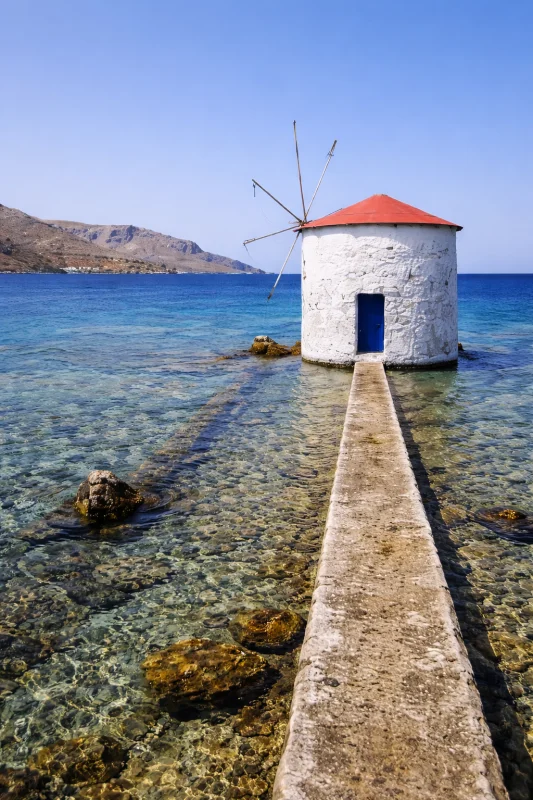
Leros feels thought through. Not dramatic, not wild, but shaped carefully by history, planning and long periods of attention. It is an island where nothing seems accidental, not the towns, not the harbours, not even the silences between them. Leros feels calm at first. Orderly. The sea is gentle, the coastline folded into natural harbours. Beneath that calm sits a history shaped by strategy and survival. This is not an island that reveals itself emotionally right away. It asks you to stay, to look twice and to notice what sits just below the surface.
Geography That Protects and Contains
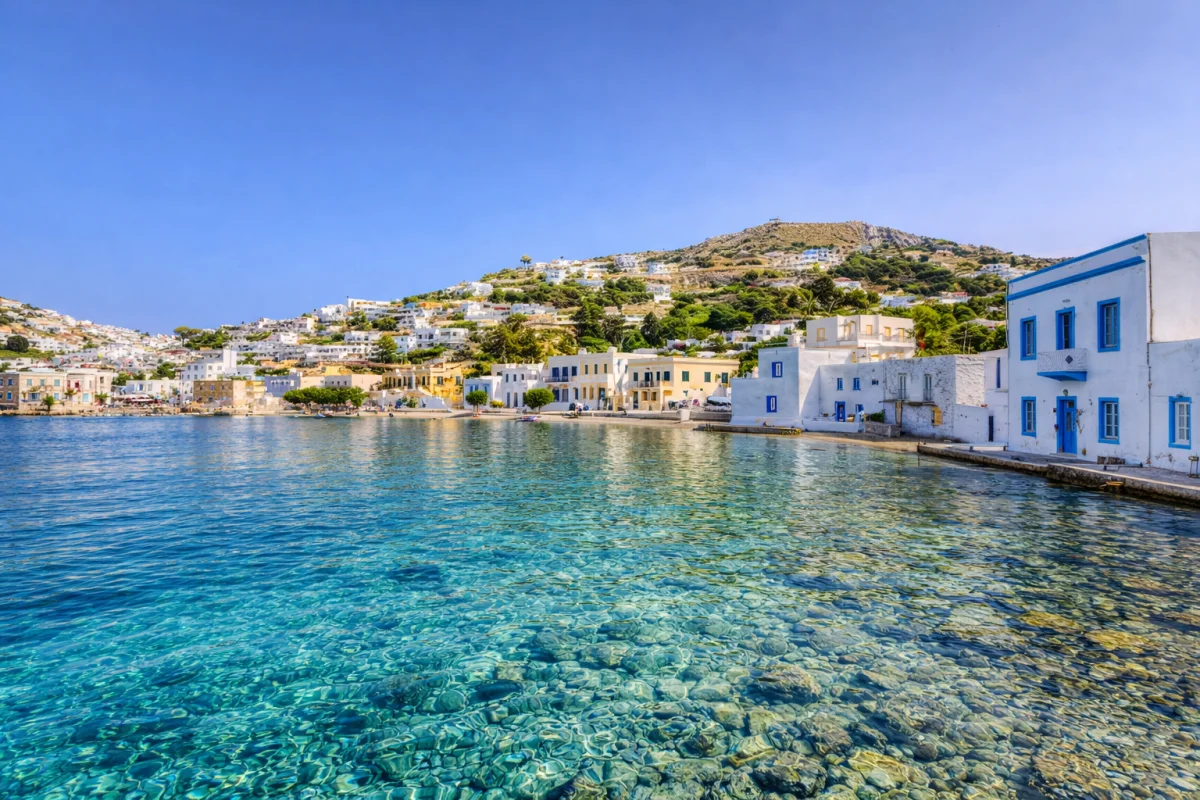
Leros lies between Patmos and Kalymnos, close to the coast of Asia Minor. Unlike many Aegean islands, its coastline is deeply carved, forming a series of bays and natural ports. From the sea, the island looks almost folded inward, as if designed to shelter what lies within. The land, green and low landscaped. Hills roll instead of rising sharply. Movement across the island feels contained rather than expansive. You are always close to water but rarely exposed to it. This geography has always made Leros valuable. Ships could anchor safely. Towns could grow without constant threat from the elements. Control was possible here and this control left its mark.
Towns with Different Personalities
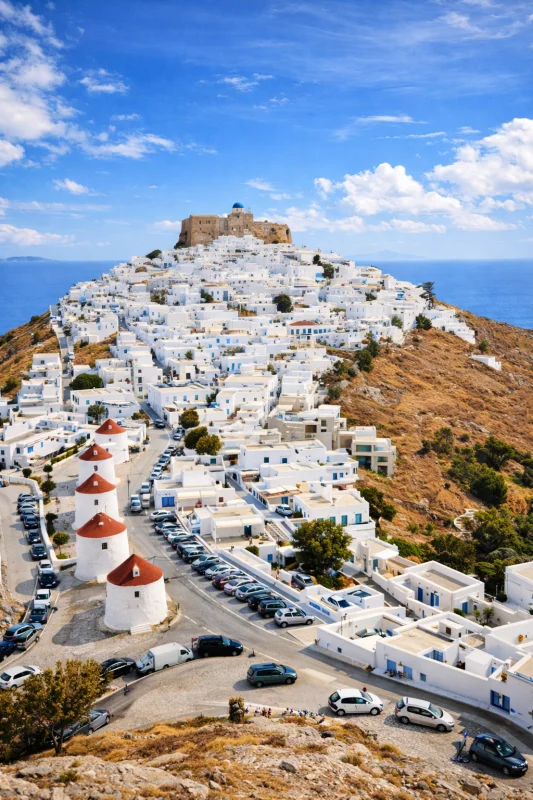
Leros does not have a single centre. Instead, it is made up of several settlements, each with a distinct role and atmosphere. Agia Marina and Platanos feel traditional, clustered around small streets and modest squares. Life here is quiet, local and familiar. Shops serve daily needs. Cafés are places of routine rather than performance. Lakki, by contrast, feels entirely different. Built during the Italian occupation in the early 20th century, it remains one of the clearest examples of rationalist architecture in Greece. Wide streets, clean geometry, open space. Everything feels measured, almost unreal, orderly, spacious and slightly detached from the island around it. Walking through Lakki feels like stepping into a moment that never quite moved on. The scale is larger than the island seems to need, a quiet reminder of plans and ambitions that were never fully carried through.
A History That Left Structures Behind
Leros has been shaped more by modern history than many Greek islands. During the Italian occupation, it was heavily fortified and developed as a naval base. Later, during World War II, it became strategically important, leaving bunkers, tunnels and military structures scattered across the island. These structures were never cleared away. They remain where they were built, visible, familiar and largely unremarked upon. Part of the landscape now, whether anyone points them out or not. Locals pass them without comment. Visitors often notice them only gradually. Later chapters of Leros’s history are more difficult. For years, parts of the island were associated with institutions and isolation. These experiences left emotional traces that still linger quietly. Leros does not dramatise this past. It carries it matter-of-factly, as something that happened and was survived.
The Sea as Shelter, Not Challenge
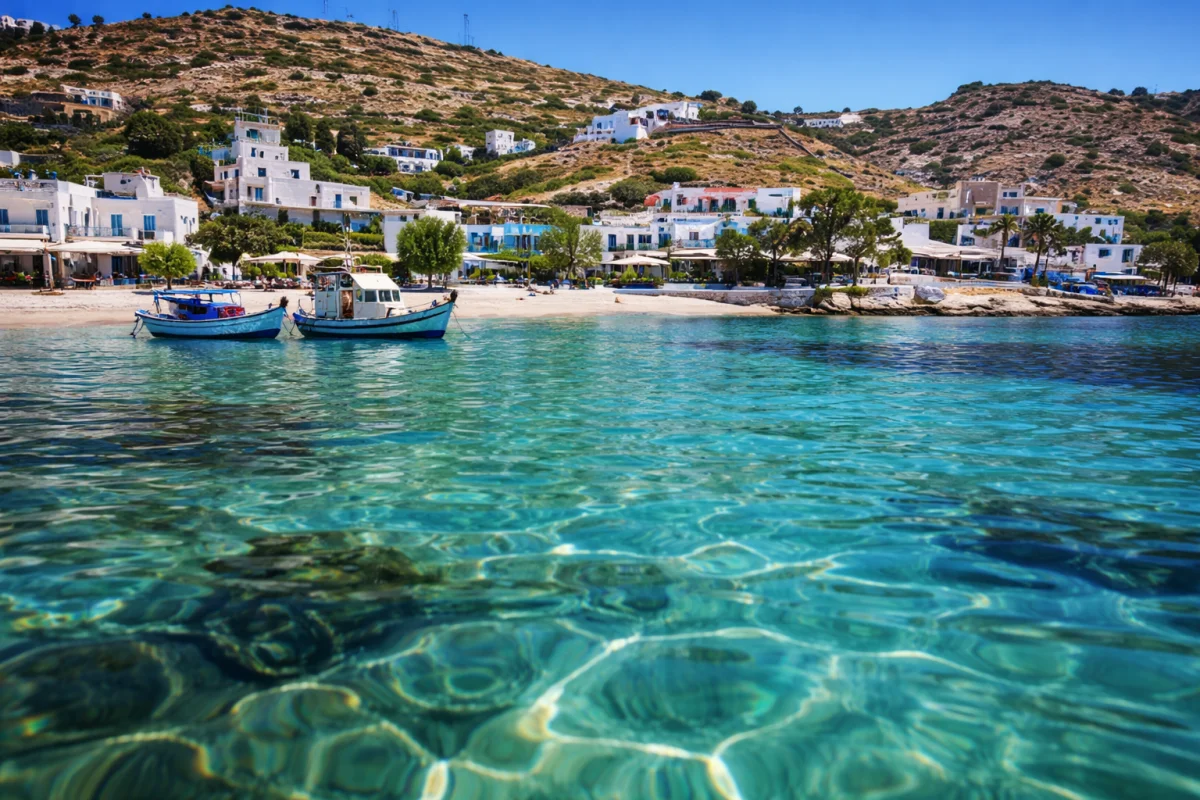
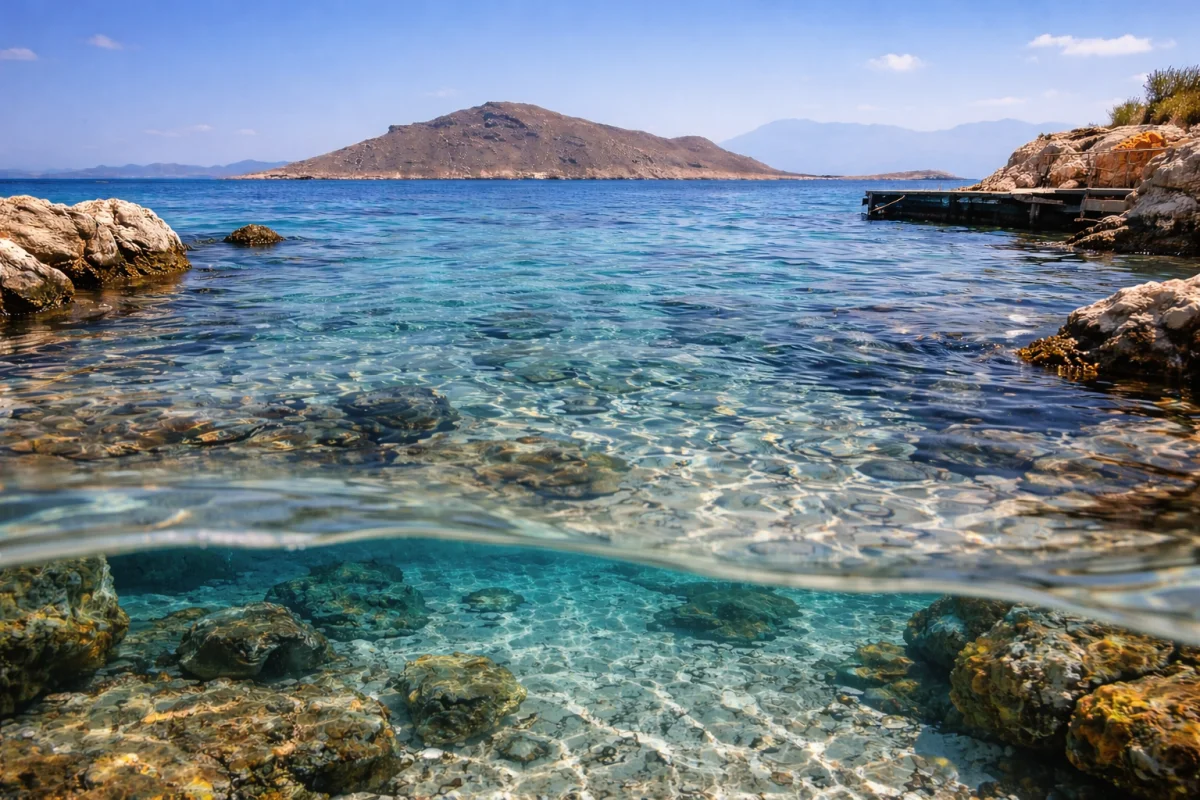
The sea around Leros is calm, protected by the island’s shape. Bays remain smooth even when nearby waters are unsettled. Swimming here feels safe, almost contained. Beaches are modest, often pebbled and tucked into coves rather than stretched wide. You choose them based on mood rather than reputation. None demand attention. They serve their purpose. The water stays clear and calm. They serve their purpose. The water is clear and unhurried. Time loosens its grip. You enter without bracing yourself. You float easily.
Everyday Life and Quiet Continuity
Life on Leros feels structured but not rigid. Mornings follow routines. Afternoons are naturally slow. Evenings gather people together without effort. Food is familiar and steady. Taverns serve dishes that reflect habit rather than invention. Eating here feels grounded, almost domestic. You are fed because people eat, not because you are a guest. Conversation flows easily, often drifting into silence. The island is comfortable with pauses.
Tourism Without Transformation
Visitors come and go. Leros stays the same. There are places to stay, places to eat and ways to explore, but nothing feels exaggerated or staged. People who arrive expecting spectacle often feel unsure at first. Those who stay longer begin to notice the island’s quiet intelligence. Leros reveals itself through consistency
Why Leros Feels Different
Leros feels different because it is built rather than improvised. Because it remembers the 20th century more vividly than most islands. Because its beauty lies in balance, not excess. It is an island of order, but not emptiness. Of calm, but not simplicity. It holds complexity without asking you to resolve it.
What Remains After You Leave
Leros stays with you in subtle ways. The strange calm of Lakki’s wide streets. The ease of swimming in sheltered bays. The sense that the island has seen more than it says. It is not an island of first impressions. It is an island of second and third looks. And those who give it that time often find it quietly compelling.