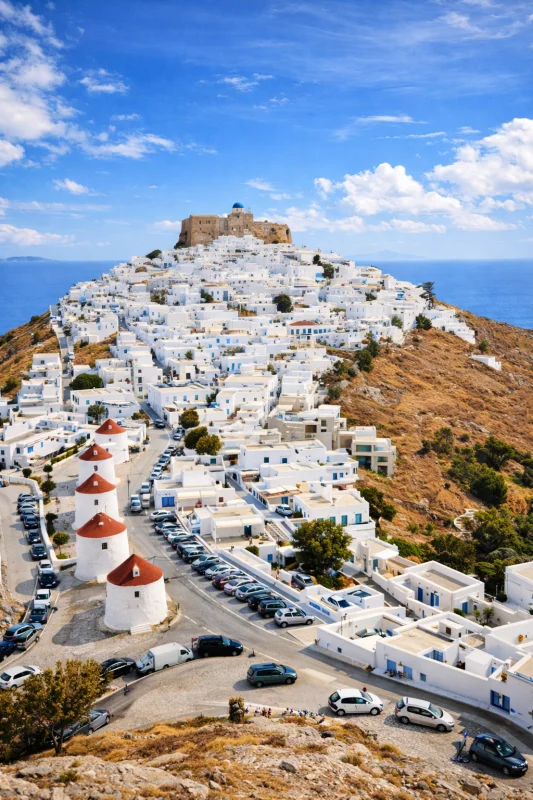
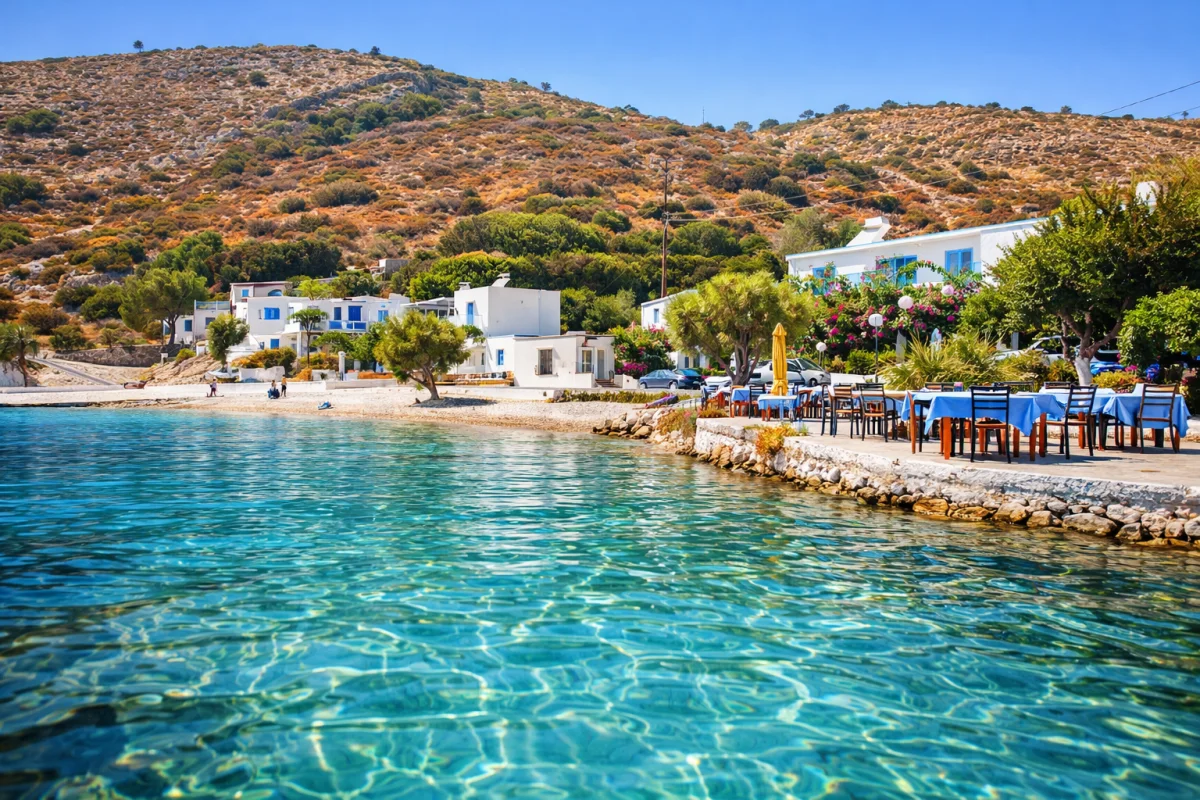
Agathonisi feels like it was never meant to stand out. It sits quietly at the northern edge of the Dodecanese, small and low, surrounded by open water and long stretches of silence. Nothing here competes for attention. People often come to Agathonisi with very little information. There are no strong images attached to it, no reputation to live up to. What they find instead is a place that feels untouched, not because it has been preserved, but because it was never reshaped in the first place. This is an island that lives simply, without performance.
Geography That Feels Unfinished
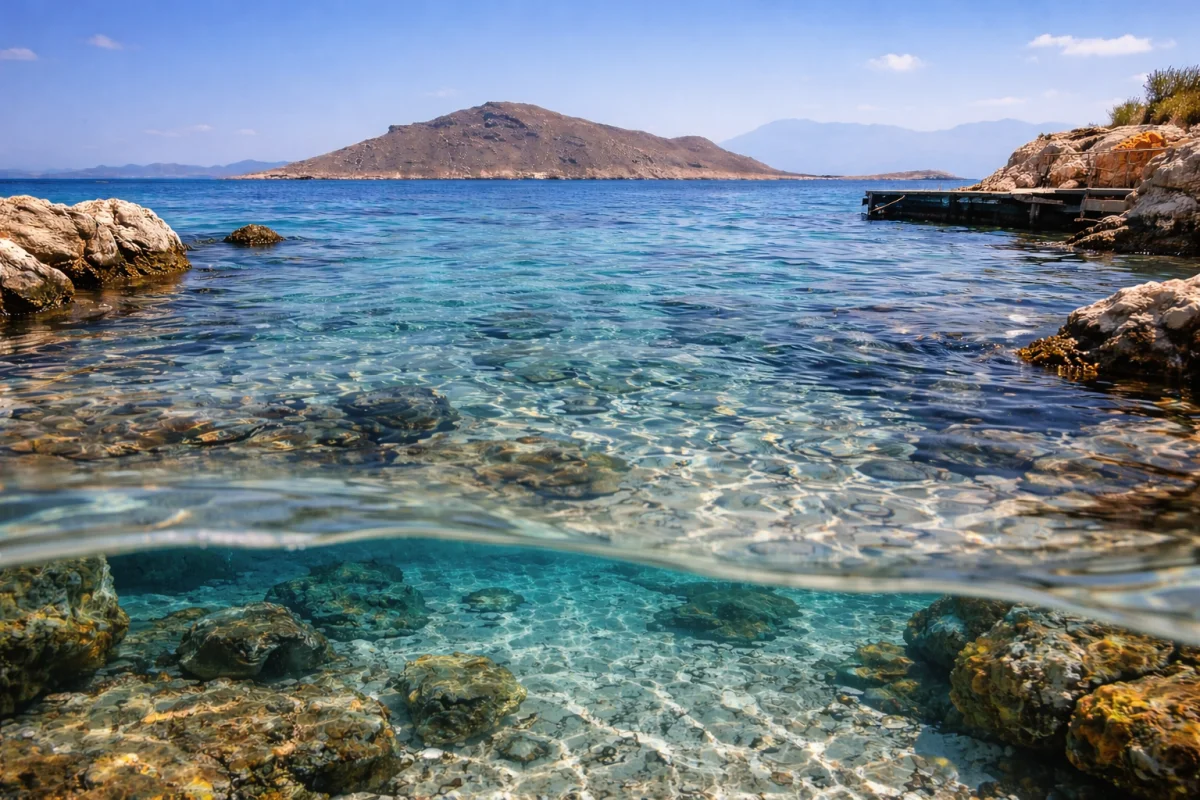
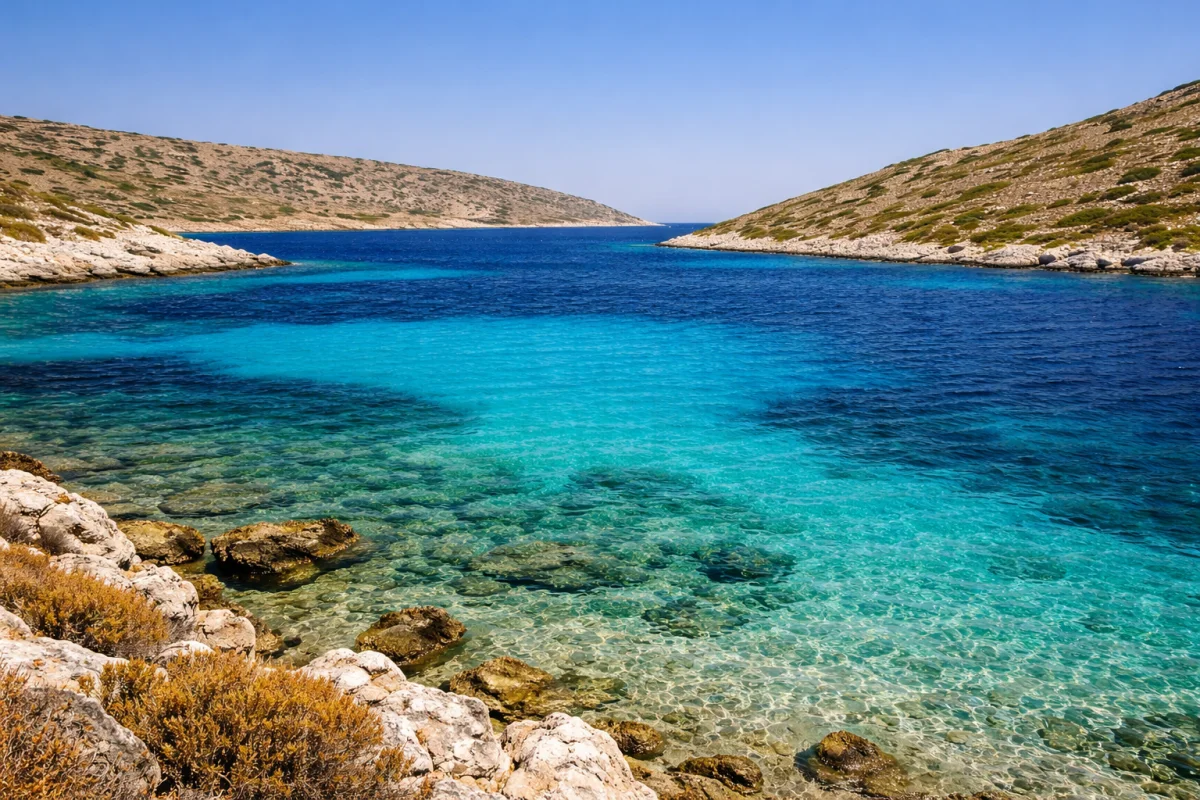
Agathonisi lies close to the coast of Asia Minor, part of the northernmost reach of the Dodecanese. It is small and gently contoured, with low hills and wide, open views. The land feels sparse rather than harsh. There is little vegetation. The coastline seems irregular, broken into small coves and rocky inlets. From many points, the sea feels close on all sides. Distance here is measured in minutes, not kilometres. The island feels evenly spread, as though life could settle anywhere without hierarchy.
A Few Settlements, Loosely Connected
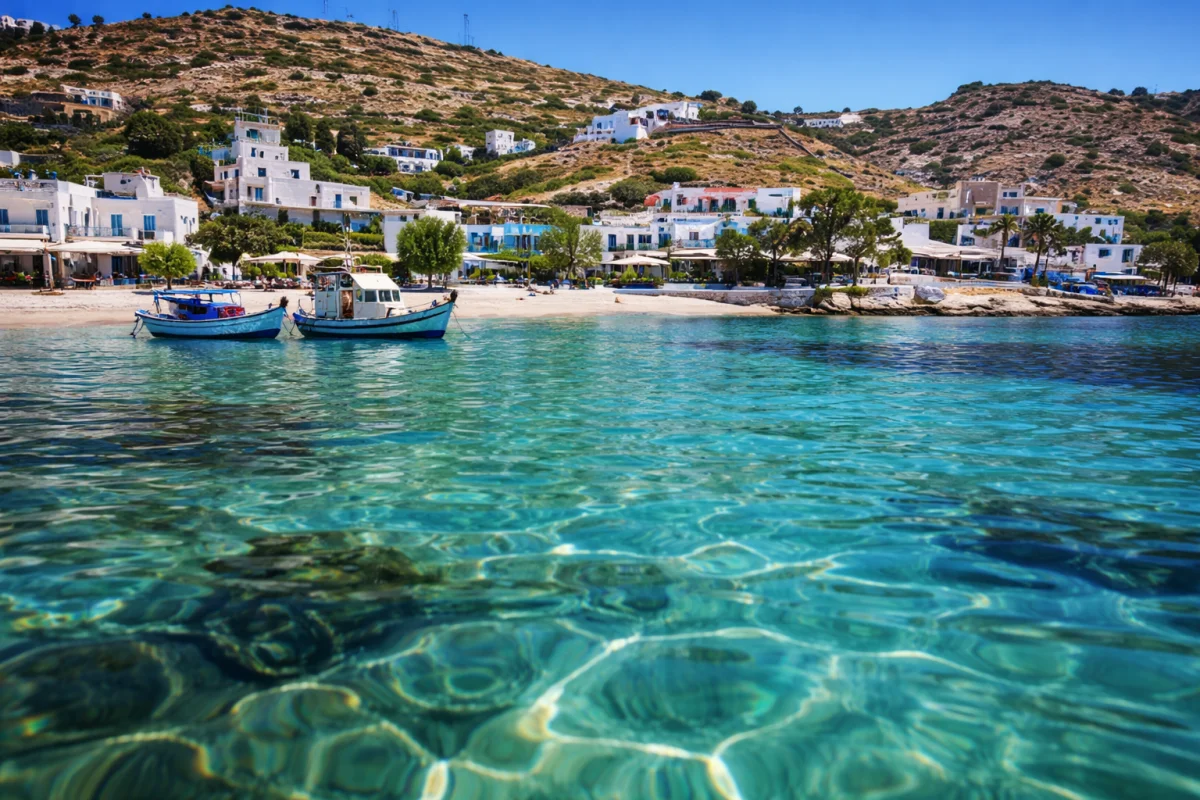
Agathonisi has a few small settlements. They sit quietly in the landscape. Narrow roads and paths. Enough to get around. The main harbour is modest, continually handling arrivals and departures. Boats arrive quietly. Elsewhere, houses cluster loosely, leaving space between them. Life here spreads out, allowing silence to remain present.
A History Without Interruption
Agathonisi has always existed on the margins. It was known, inhabited and used, but rarely fought over or controlled in any lasting way. Its size and lack of strategic value protected it from the cycles of conquest that reshaped other islands. Because of that, life here was able to continue with little interruption. Fishing, small-scale farming and seafaring sustained the island. People came and went as needed, without dramatic rupture. This absence of upheaval left the island with a quiet continuity. Nothing here feels restored or recovered. It simply remained.
Food and Daily Rhythm
Food on Agathonisi is straightforward and familiar. Meals are shaped by availability, not choice. Fish, simple vegetables, bread and oil. There are few places to eat and they operate quietly. You eat when they are open and you linger because it feels right. Conversation comes and goes.
The Sea
Beaches are small and understated. Some are pebbled, others rocky, all defined by clear water and space rather than comfort. You should always arrive prepared. Swimming here feels private. Even when others are nearby, the island’s scale keeps things dispersed.
Visitors and Limits
Agathonisi receives visitors, but few stay long. There is little to organise a trip around and the island does not try to change that. Those who arrive expecting activity often leave quickly. Those who stay tend to adjust, sometimes without realising it. The island filters attention naturally. Nothing here is marketed. Nothing is hidden. Agathonisi feels bare because nothing has been layered over it. No heavy history. No development. No expectations. Life, right there. You see how the island works almost immediately. There is no narrative to uncover, no highlight to reach. That simplicity can feel empty or freeing, depending on what you bring with you.
What Remains
Agathonisi does not leave strong images behind. It leaves a feeling of unstructured time. It is an island that exists quietly and peacefully.