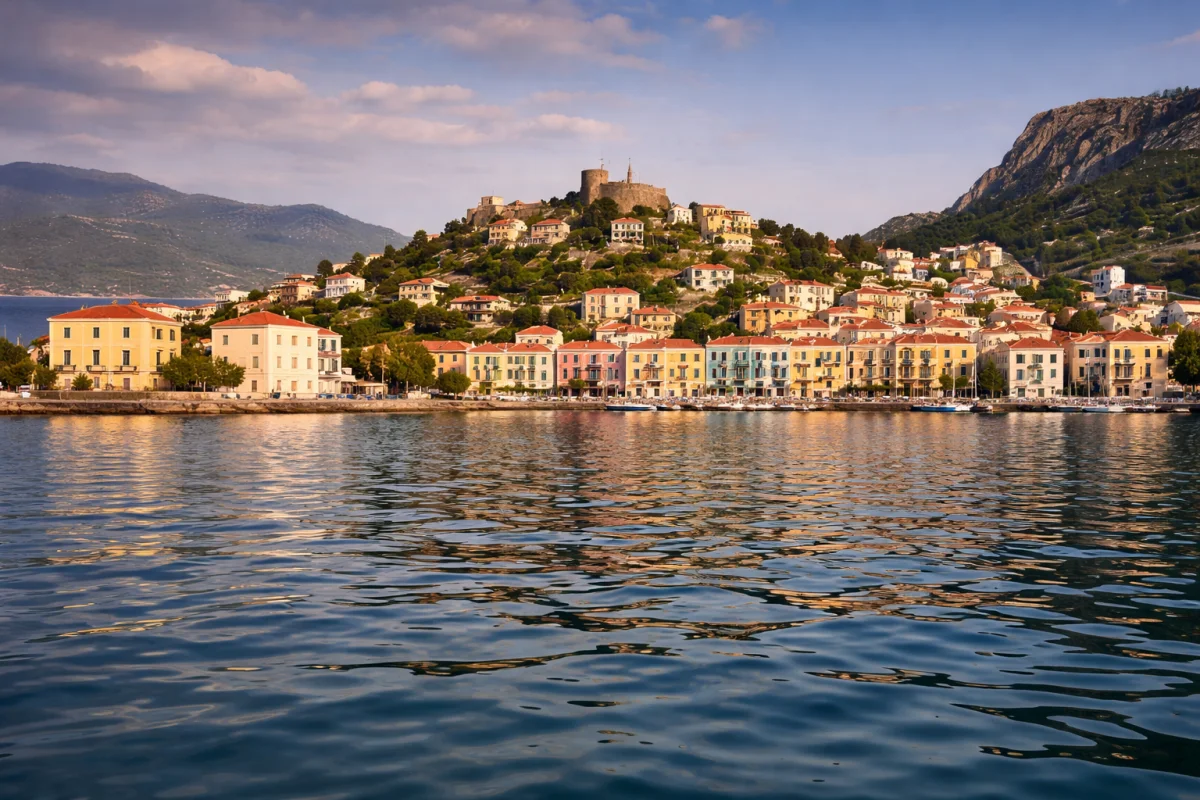
Kastellorizo, is an island at the edge of everything. It does not feel like an island you arrive at by chance. It feels chosen or postponed or reached only after a long chain of decisions. Sitting at the easternmost edge of Greece, closer to the Turkish coast than to any other Greek island, Kastellorizo exists in a state of quiet separation. This is a place where distance is not abstract. You feel it in the silence, in the pauses between arrivals and in the way the island seems to hold its breath between moments. Kastellorizo does not rush to welcome you. The island is small, but it has a big impact on the area. It doesn't have much land, but it does have a lot of history, memories and a feeling of being far away from everything that is familiar.
Geography
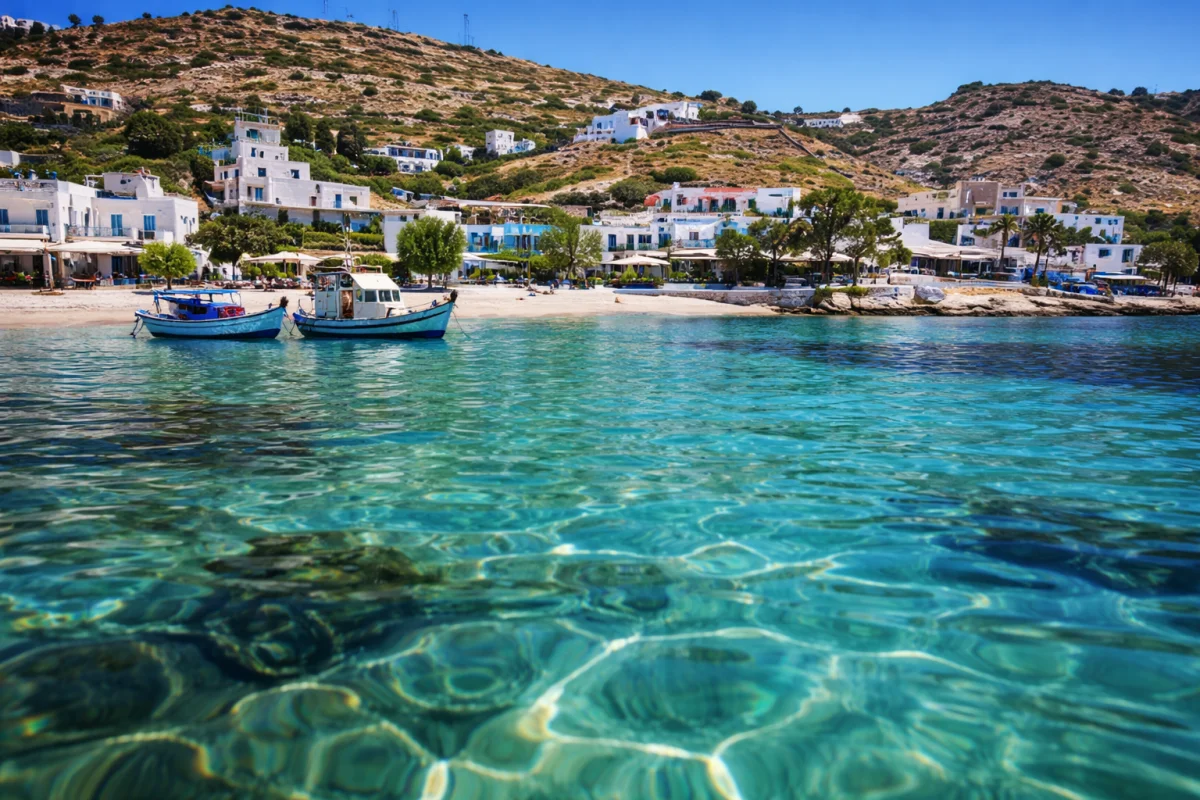
The island of Kastellorizo, also called Megisti, is in the southeastern corner of the Aegean Sea, just off the coast of Asia Minor. The Turkish coast looks close enough to touch from the harbour. Greece, by contrast, feels distant. Not only geographically, but also emotionally. The island is steep and rocky and it rises quickly from the sea. There isn't much flat land. Houses are tightly packed along the shore, making a single settlement that curves around the harbour like a held breath. The sea here is deep and still, its colour darker than in much of the Aegean. The water does not feel playful. It feels heavy and reflective. The horizon feels narrow, compressed by land on one side and open sea on the other.
A Harbour That Holds Everything
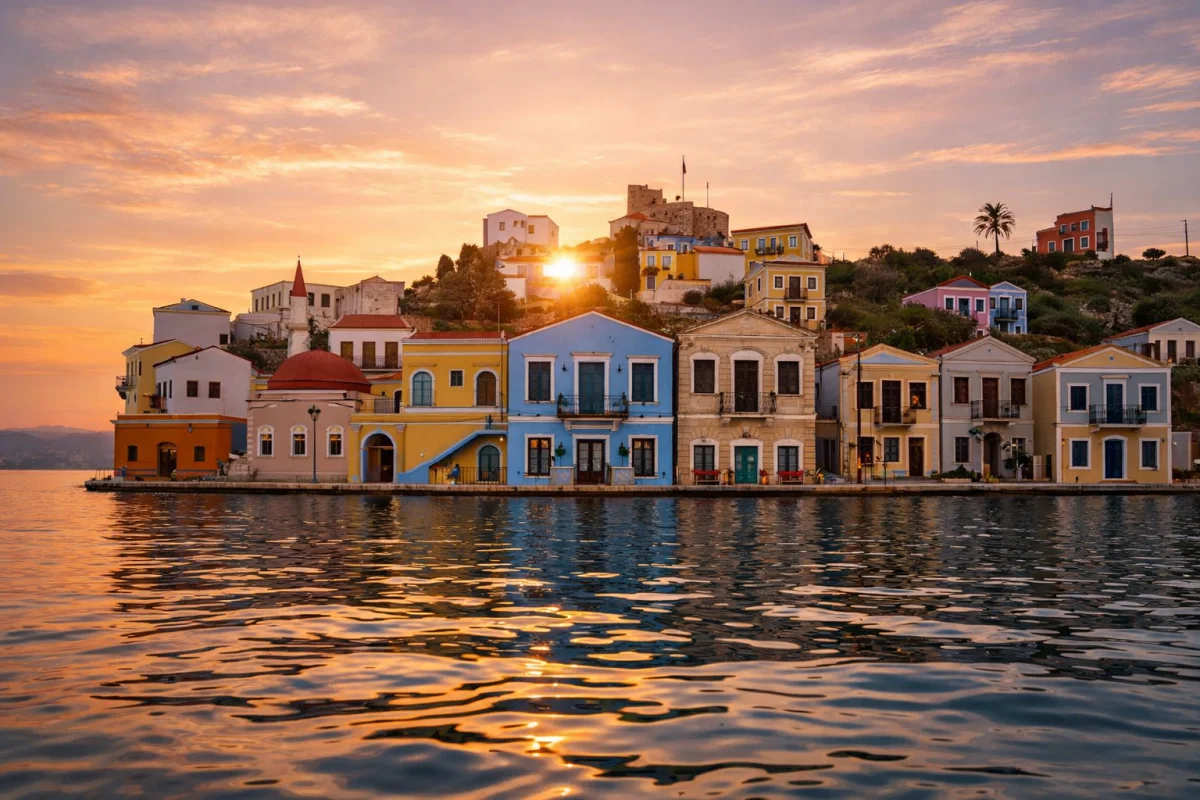
Life on Kastellorizo is concentrated almost entirely around the harbour. There is no inland village, no sprawl. The island’s few hundred residents live facing the water, where arrival and departure are visible events. Neoclassical houses line the waterfront, painted in soft colours that catch the light gently rather than brightly. Balconies hang close together. Windows remain open. The harbour is not a postcard scene. It is a working space, a living room and a passageway. When a boat arrives, people notice. When one leaves, the island adjusts.
A History Full of Absences
Kastellorizo has a lot of movement in its past, not just people coming and going. The island used to be a busy port city that supported a large population through trade and shipping. Its strategic location made it rich, but it also made it vulnerable. Wars, occupations and economic shifts reduced the island dramatically. Fires, conflict and migration emptied much of Kastellorizo during the 20th century. Houses were abandoned. Families scattered. What remains today is a fraction of what once was. That absence is visible everywhere. There used to be people living here, but now there are empty buildings, quiet streets and open spaces. The island does not hide this history. It carries it openly.
A Life Defined by Waiting
Life on Kastellorizo moves at the pace of connection. Ferries do not arrive daily. Flights are limited. Weather is more important than schedules. This creates a particular mindset. People plan loosely. They wait without frustration. Time stretches naturally. Days are simple. Mornings pass quietly. Light and shadow change the way afternoons look. Evenings come early and stay for a long time.
The Sea as a Border and a Horizon
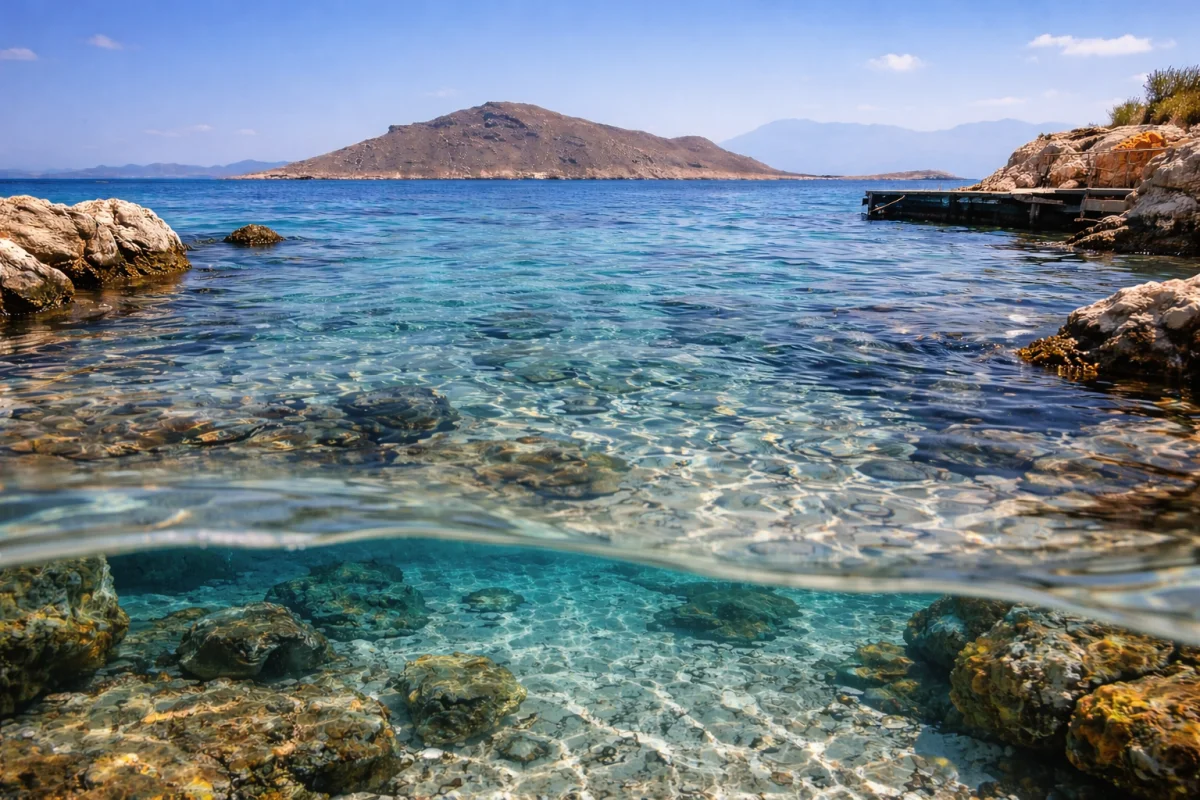
The sea around Kastellorizo feels like a wall and a shield at the same time. It separates people, but it also gives them a sense of who they are. It feels different to swim here, deeper, darker and quieter. Nearby coves and the famous Blue Cave draw visitors by boat, but even these experiences feel subdued. There is no rush, no crowding. Everything feels temporary, borrowed. The sea reminds you constantly of where you are: far out, Far East, far from routine.
Food and familiarity
Kastellorizo's food is personal. There are only a few tavernas where you can eat and meals are cooked in small kitchens. Fish, simple vegetables, bread and olive oil. Nothing elaborate. Nothing unnecessary. Eating here feels personal. The person serving you likely knows who arrived on the last ferry. Conversation drifts easily between locals and visitors. Silence is comfortable.
Tourism That Never Took Over
Kastellorizo is not built for tourism. There are places to stay, but few. There are things to see, but not many. Visitors come because they want to be here, not because it is easy. This intentional difficulty protects the island. It filters visitors naturally. Those who arrive tend to stay present. Those who leave often feel changed in subtle ways.
Why Kastellorizo Feels So Distant and Yet So Close
Kastellorizo feels distant because it is. But it also feels close, emotionally concentrated, focused, stripped of excess. There is nowhere to hide from yourself here. The island reflects back whatever you bring with you. It is a place of edges, geographic, historical and emotional and standing at those edges sharpens perception.
What Remains
People leave Kastellorizo with fewer images and stronger impressions. The sound of water against stone. The quiet of a harbour at night. The feeling of being somewhere that exists mostly on its own terms. Kastellorizo asks to be respected and in that restraint, it becomes unforgettable.