Nisyros does not feel settled. Even before you know why, there is a sense that the ground beneath you is active, that the island is listening as much as it is being observed. This is not an island shaped gently over time. It is an island that emerged through force. Heat, pressure, release and never fully cooled into silence. Life here moves carefully, aware of what lies underneath. Nisyros is calm on the surface, almost restrained, but it carries an unmistakable tension. You feel it walking through villages, standing near the crater or sitting quietly by the sea. The island does not threaten. It reminds.
Geography That Never Fully Sleeps
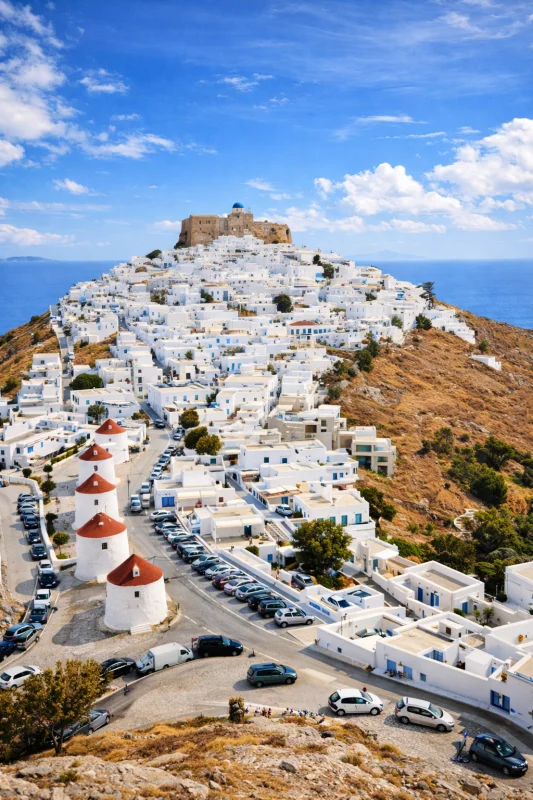
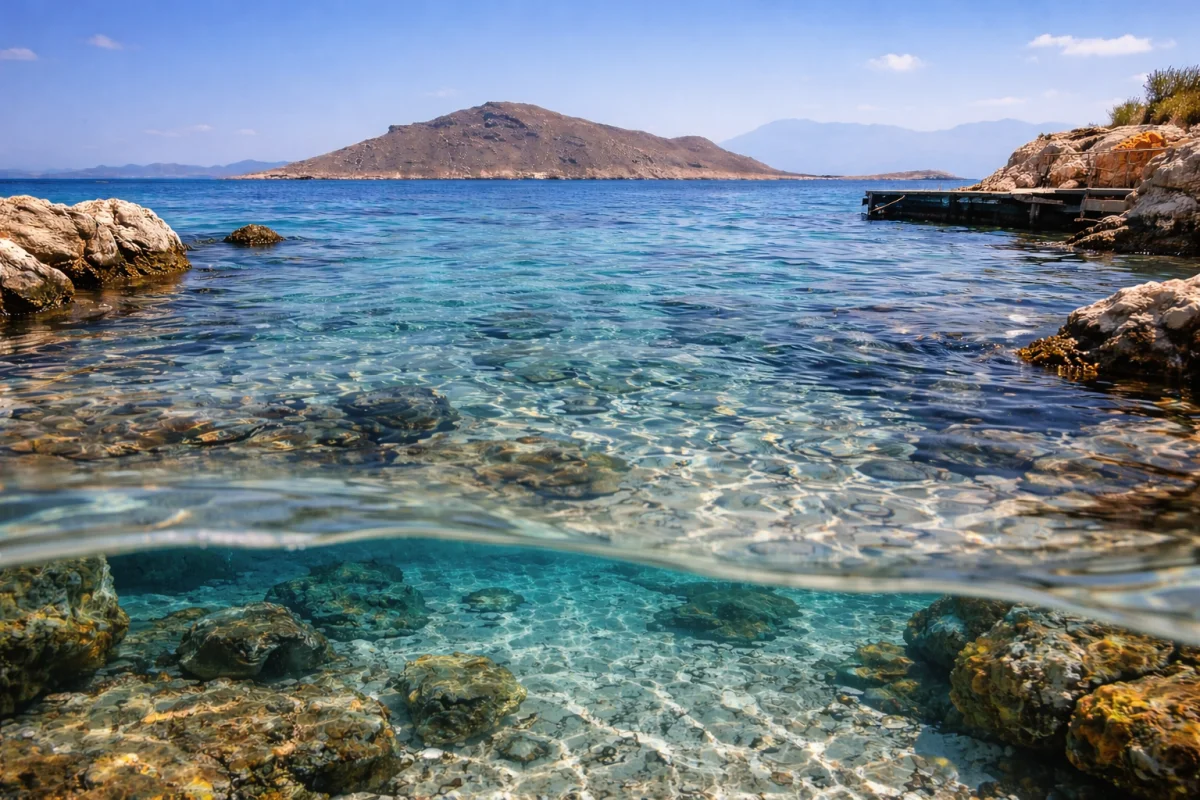
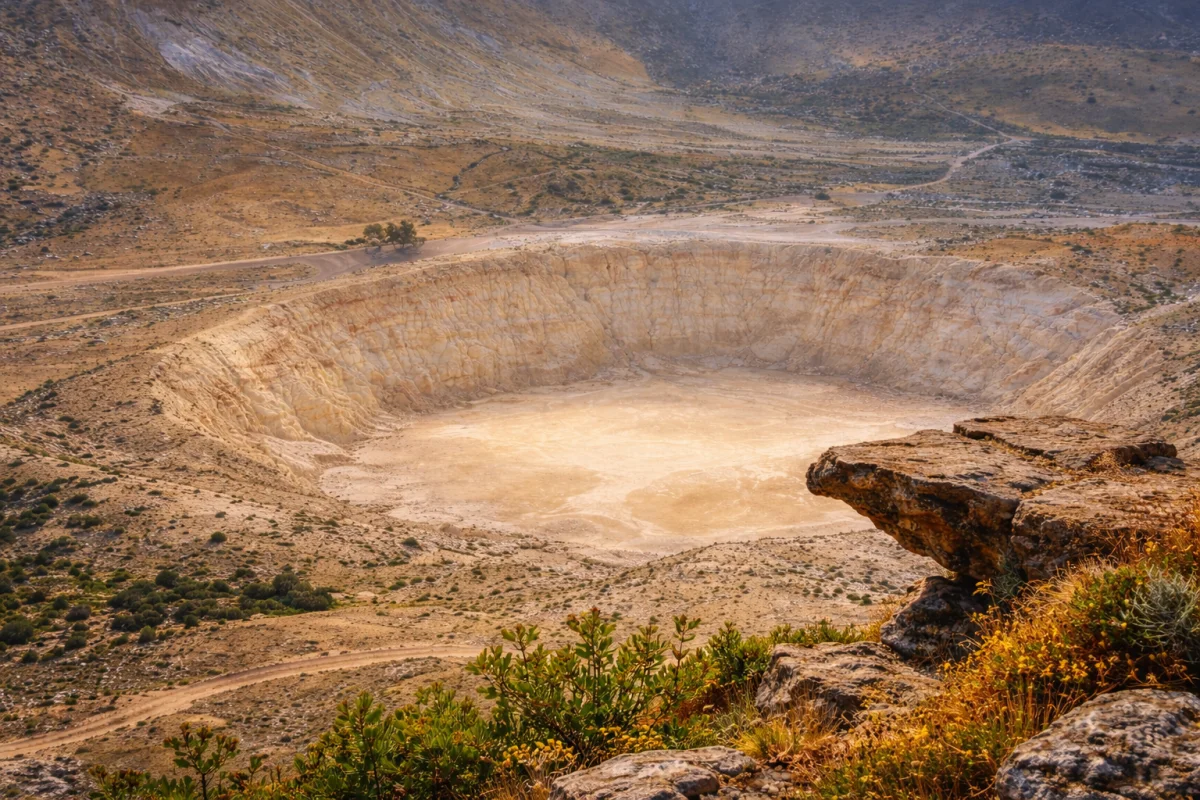
Nisyros sits south of Kos, compact and circular, rising steeply from the sea. It is a volcanic island and unlike many places where volcanic history feels distant, here it remains present and visible. The heart of the island is a large caldera, hollowed out and exposed, its floor cracked and steaming in places. The land feels darker here. Rock holds deeper colour. The slopes don’t feel accidental but shaped by force rather than time. Villages sit higher up, clinging to the edges, as if avoiding the island’s centre by instinct. The sea around Nisyros is clear and calm, but it feels separate. More boundary than extension. A cool edge wrapped around something that never fully cooled.
Villages Built with Awareness
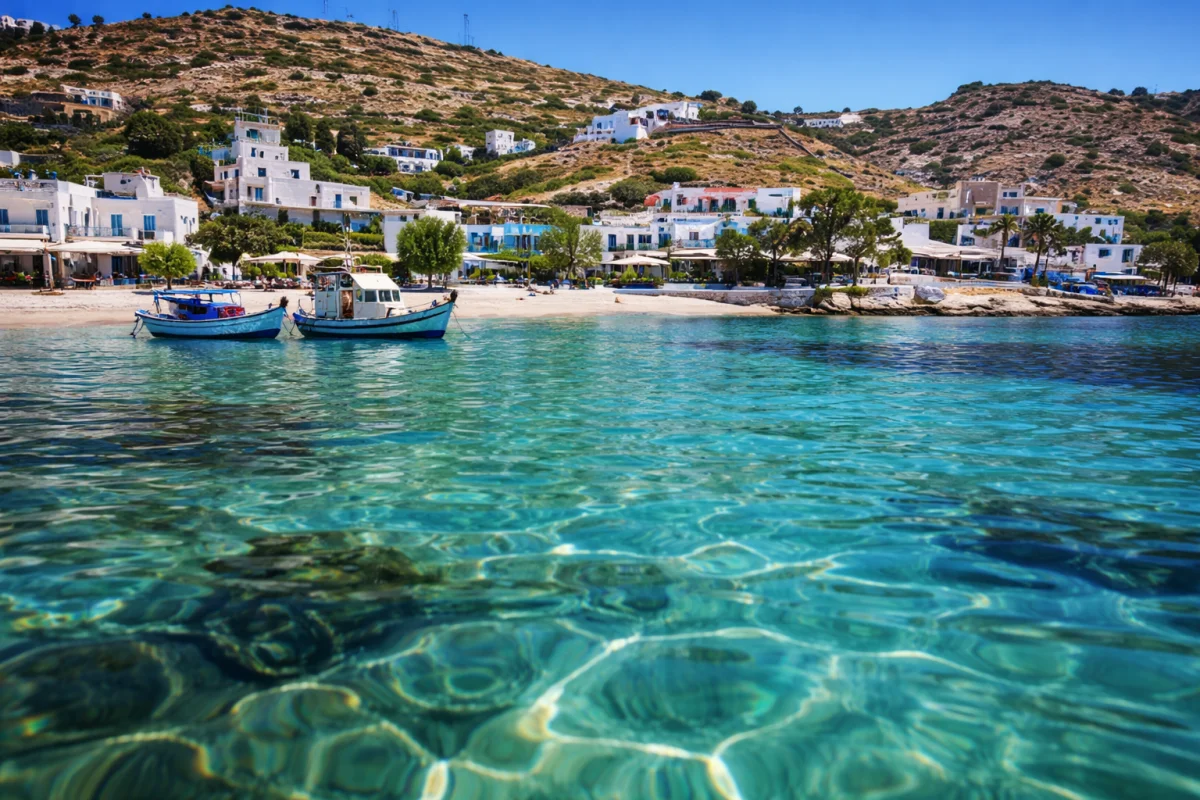
Nisyros has several villages, each placed with care, almost defensively. Mandraki, the port town, faces the sea with white houses and narrow streets, contained and orderly. From these points, the island reveals itself completely. Sea on one side, crater on the other. These villages do not feel decorative. They feel purposeful. Built where they are because they needed to be.
A History Shaped by the Land
Nisyros has been inhabited since antiquity, but its volcanic nature always limited expansion. The island could sustain life, but only within certain boundaries. Agriculture adapted. Settlements remained small. Throughout history, Nisyros passed through the familiar sequence of Aegean rule. Ancient Greek, Byzantine, Ottoman and Italian. Each left traces, but none altered the island’s core reality. The volcano remained the dominant presence. Unlike islands where history overlays landscape, on Nisyros the land always came first.
The Volcano as Daily Knowledge
The volcano on Nisyros is not an attraction in the usual sense. It is a fact. Locals grow up knowing where steam escapes, where the ground smells of sulphur and where not to linger too long. Walking into the caldera feels unnatural in the best way. The ground changes colour. Sounds flat. Heat rises unevenly. You become aware of your body, of your steps, of time passing differently. This awareness seeps into daily life. People here understand impermanence without dramatising it.
Beaches That Cool, Not Entertain
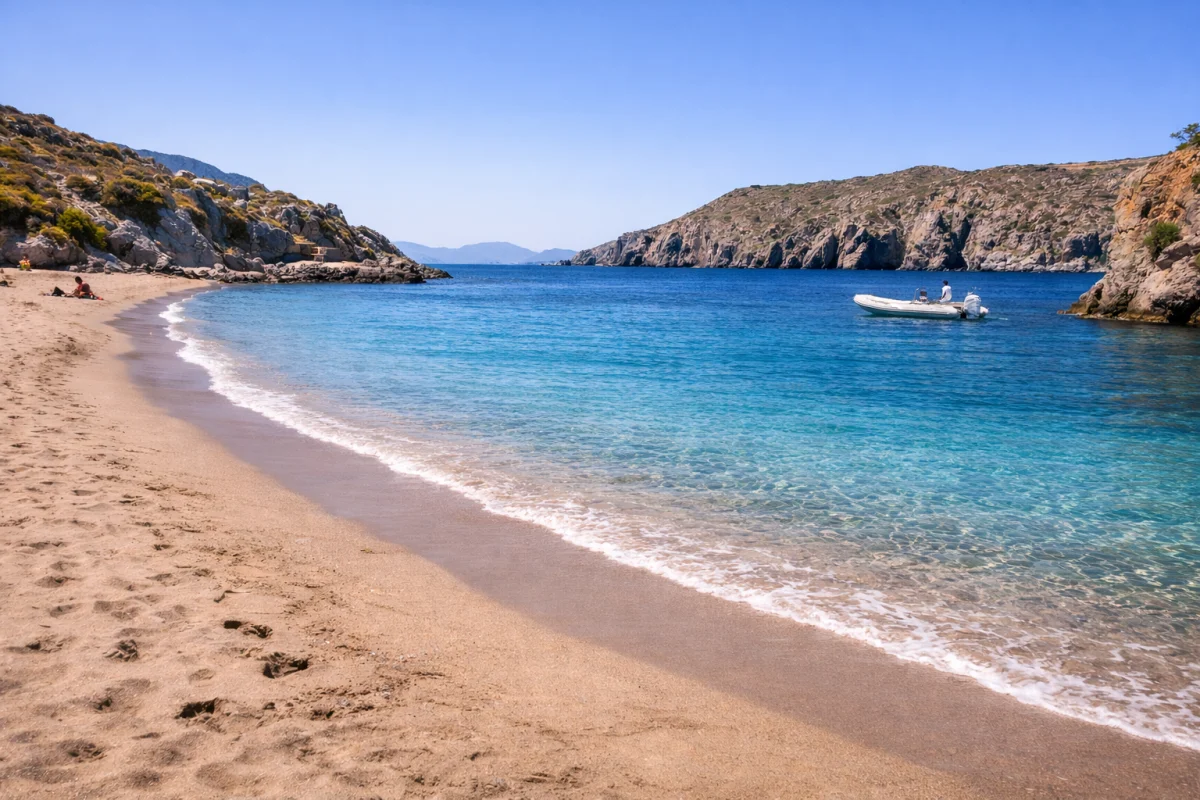
Nisyros’s beaches are few and modest. Most are pebbled, dark and shaped by volcanic stone. The water is clear and deepens quickly. Swimming here feels grounding. The contrast between heat and coolness is immediate. You enter the sea to reset, not to linger. There are no long beach days on Nisyros. The island encourages movement, from village to village, from sea level to elevation, from calm to tension and back again.
Food and Simplicity
Food on Nisyros reflects the island’s limits. Ingredients are local, seasonal and familiar. Dishes are simple, often rustic and shaped by what the land allows. Meals feel quiet. You eat without distraction. Conversations pause naturally. The island’s atmosphere does not invite excess. Eating here feels like part of survival rather than pleasure, though pleasure arrives quietly anyway.
Tourism That Remains Secondary
Nisyros receives visitors, but it does not rearrange itself for them. People come for the volcano, stay for the villages and leave with a sense of having been somewhere different. There are places to stay, places to eat and little else. The island does not expand its offer. It trusts its nature to speak for itself. Those who arrive looking for entertainment often feel unsettled. Those who come with curiosity tend to stay longer than planned.
Why Nisyros Feels Alive
Nisyros feels alive because it is. Not metaphorically. Literally. The island breathes. Steam rises. Ground shifts imperceptibly. Life continues above something that never fully rests. This creates humility. You are aware that the island existed before you and will exist after you, unchanged by your presence.
What You Carry Away
Nisyros stays with you as a sensation rather than a memory. The smell of sulphur in the air. The heat underfoot. The stillness of villages watching over something restless. It is an island that reminds you that calm is not the absence of movement. It is balance.