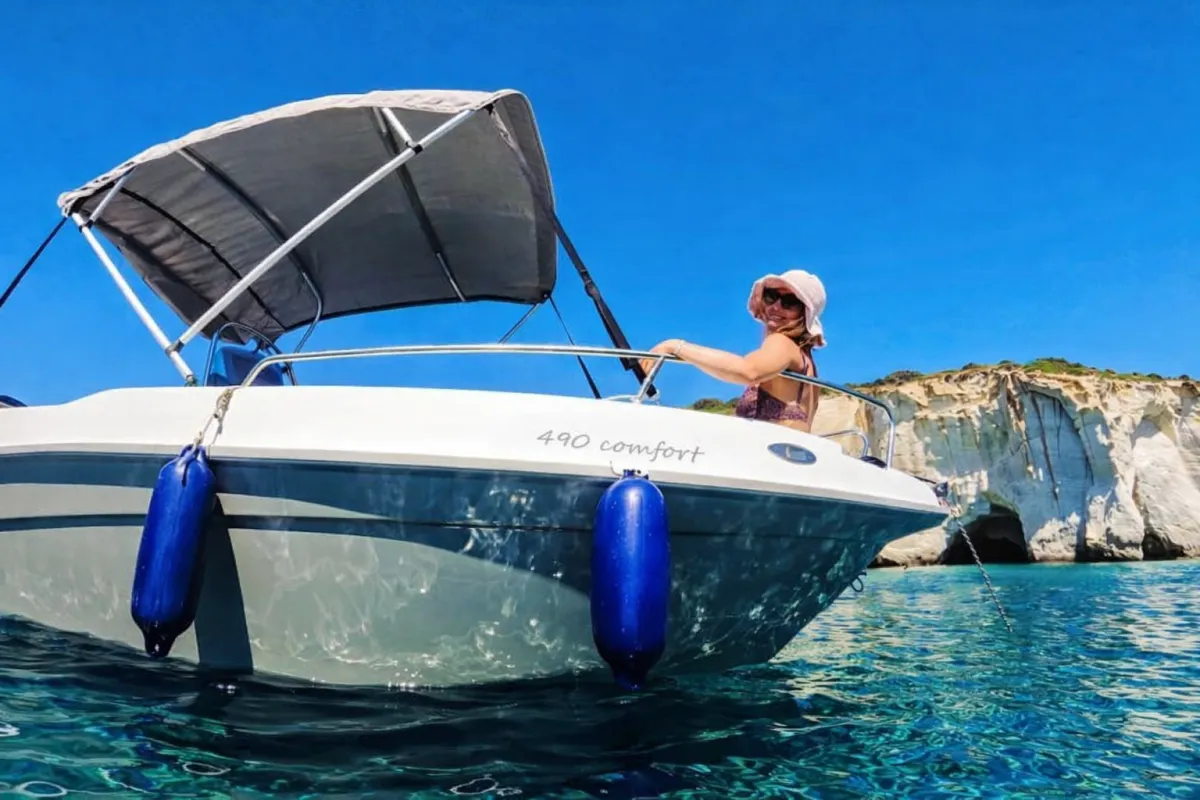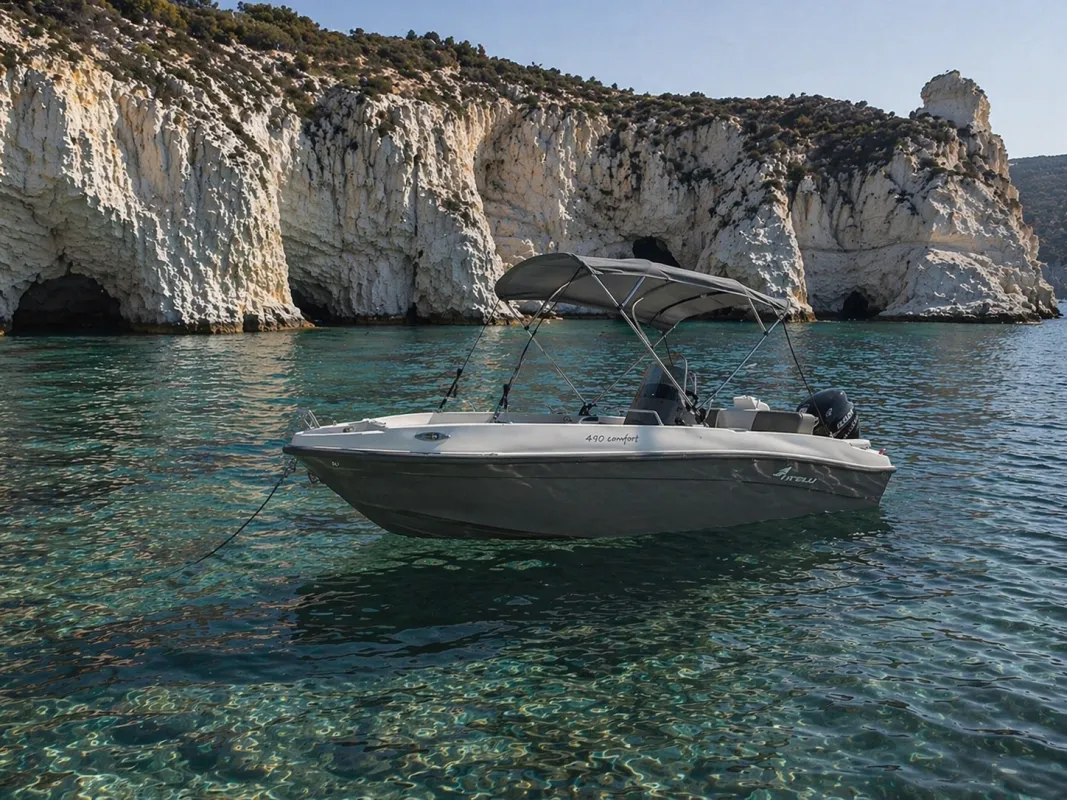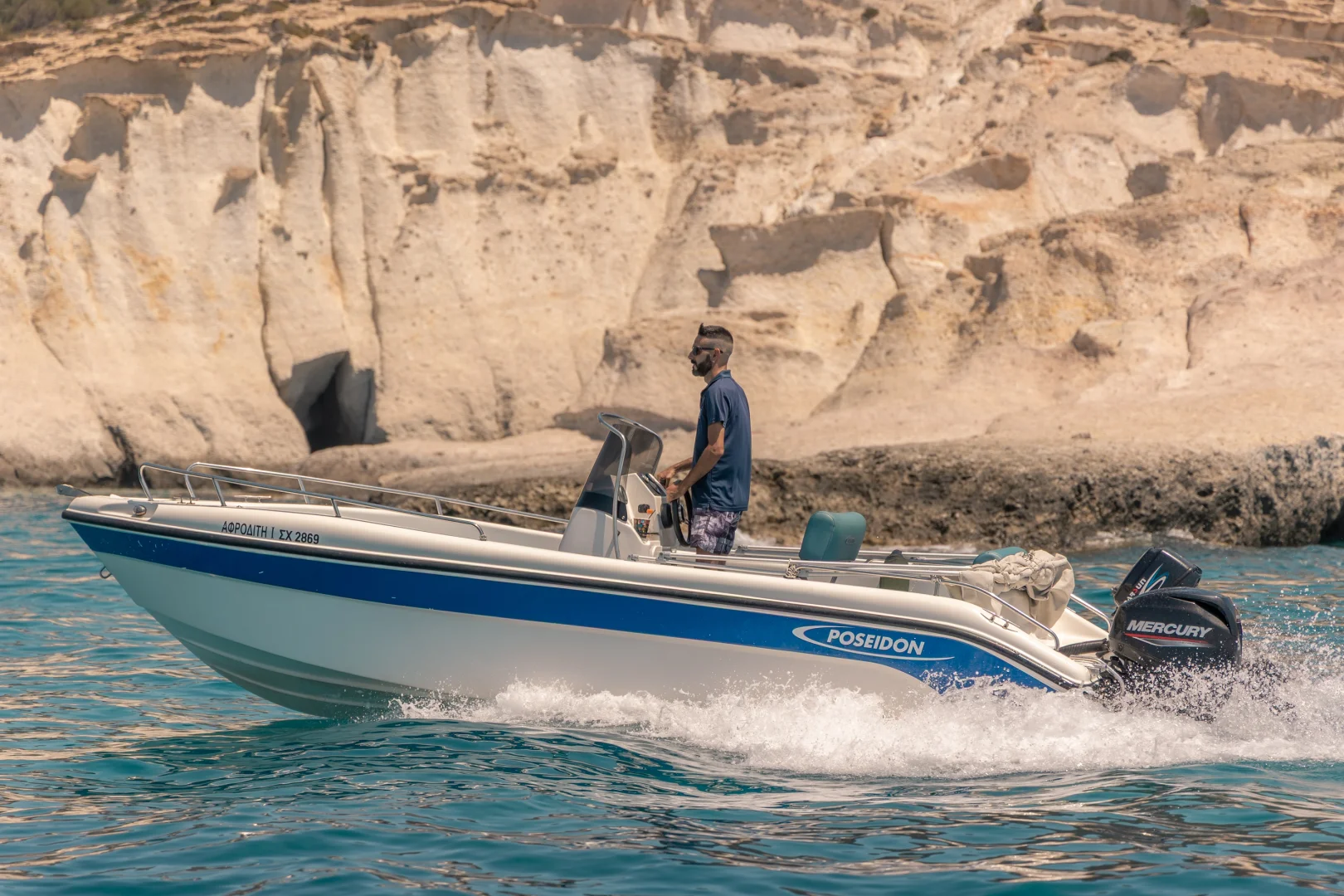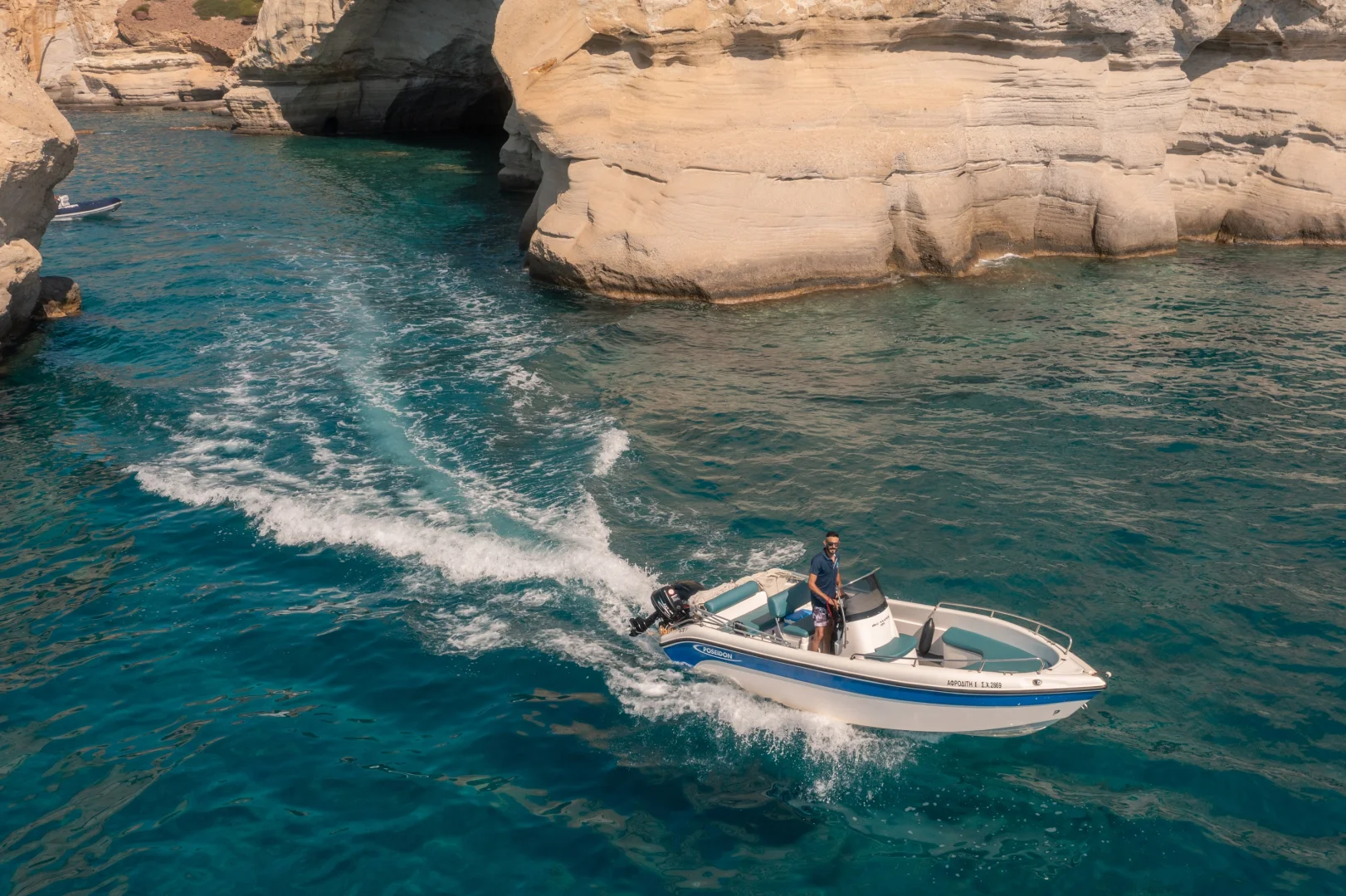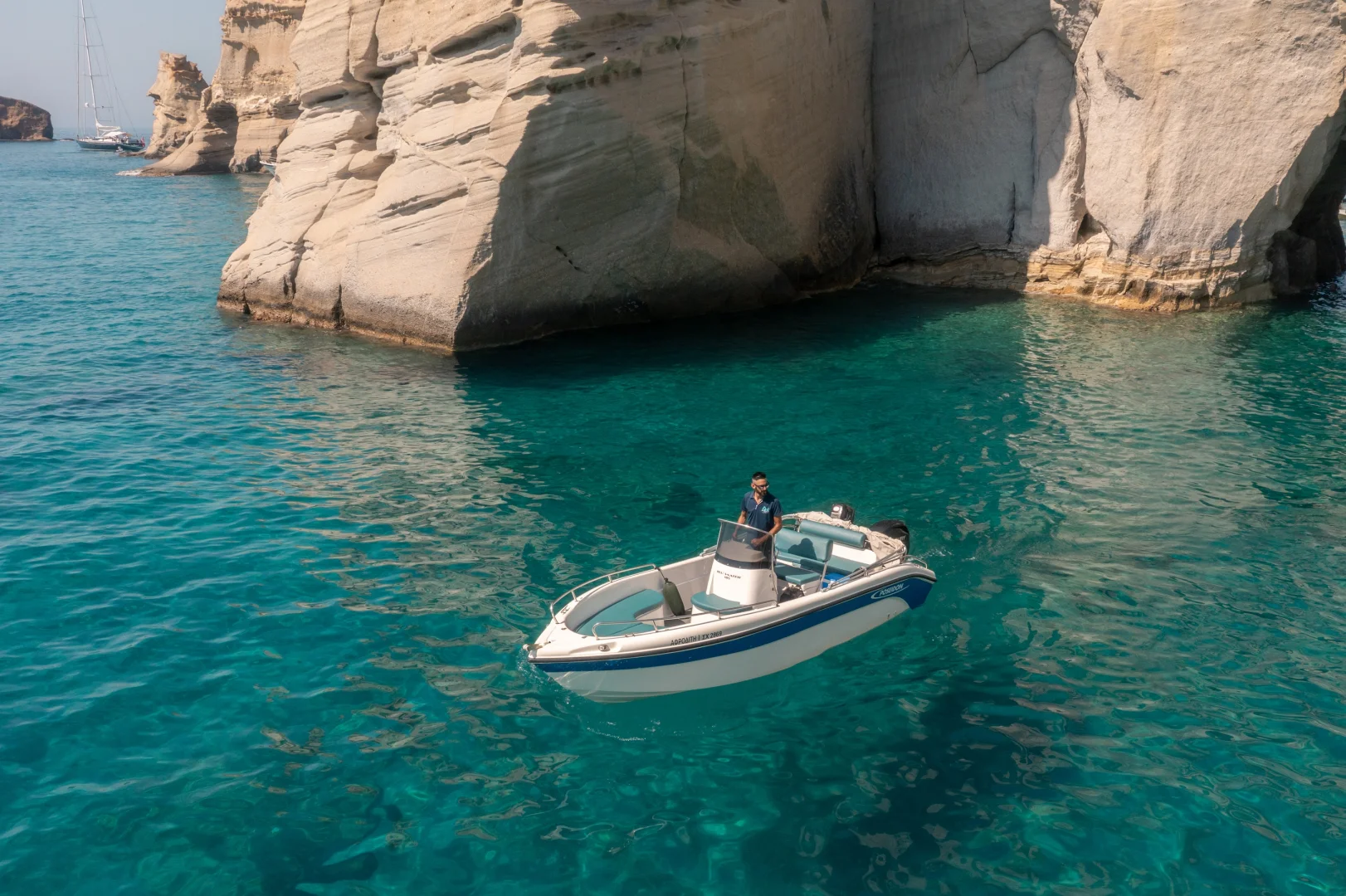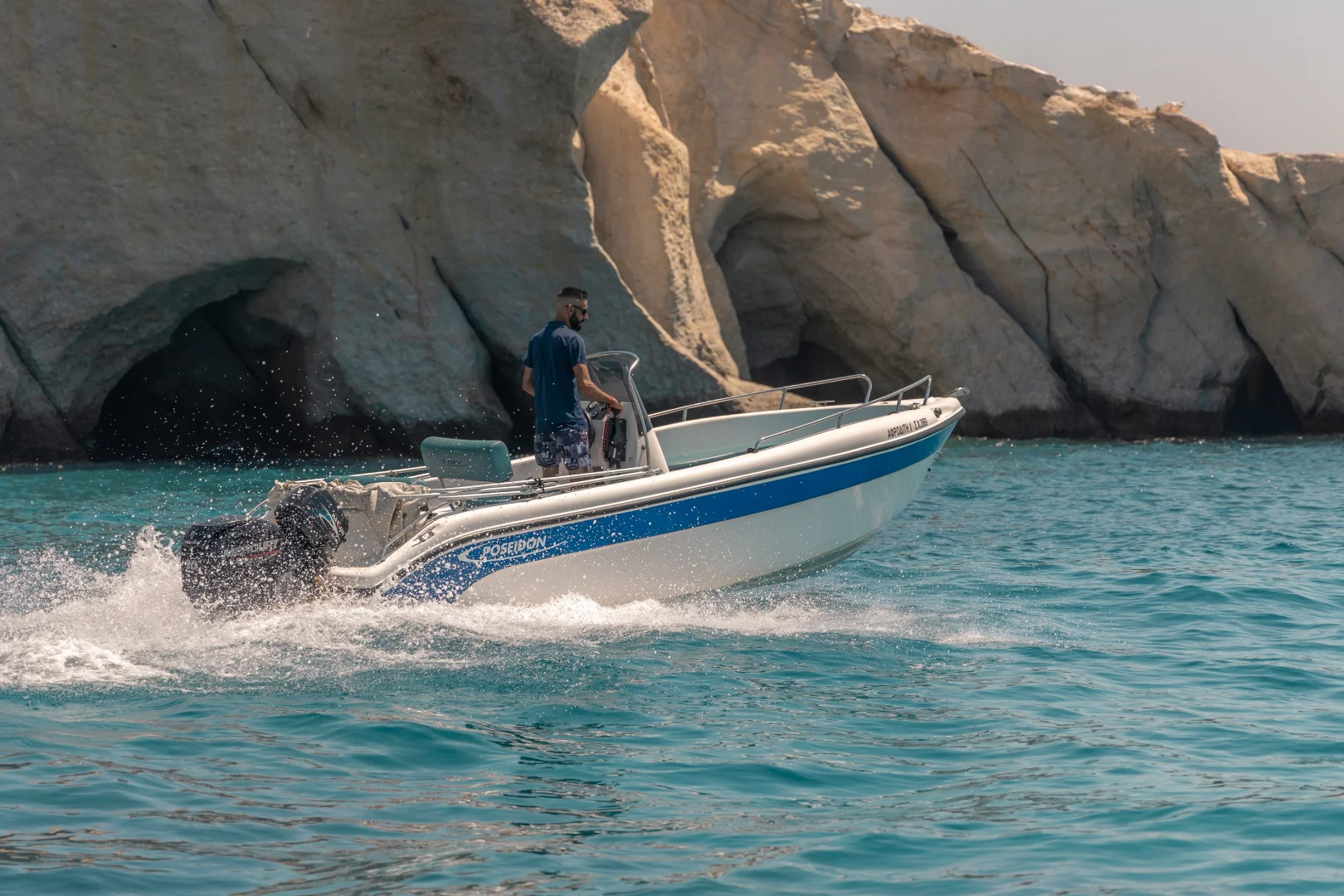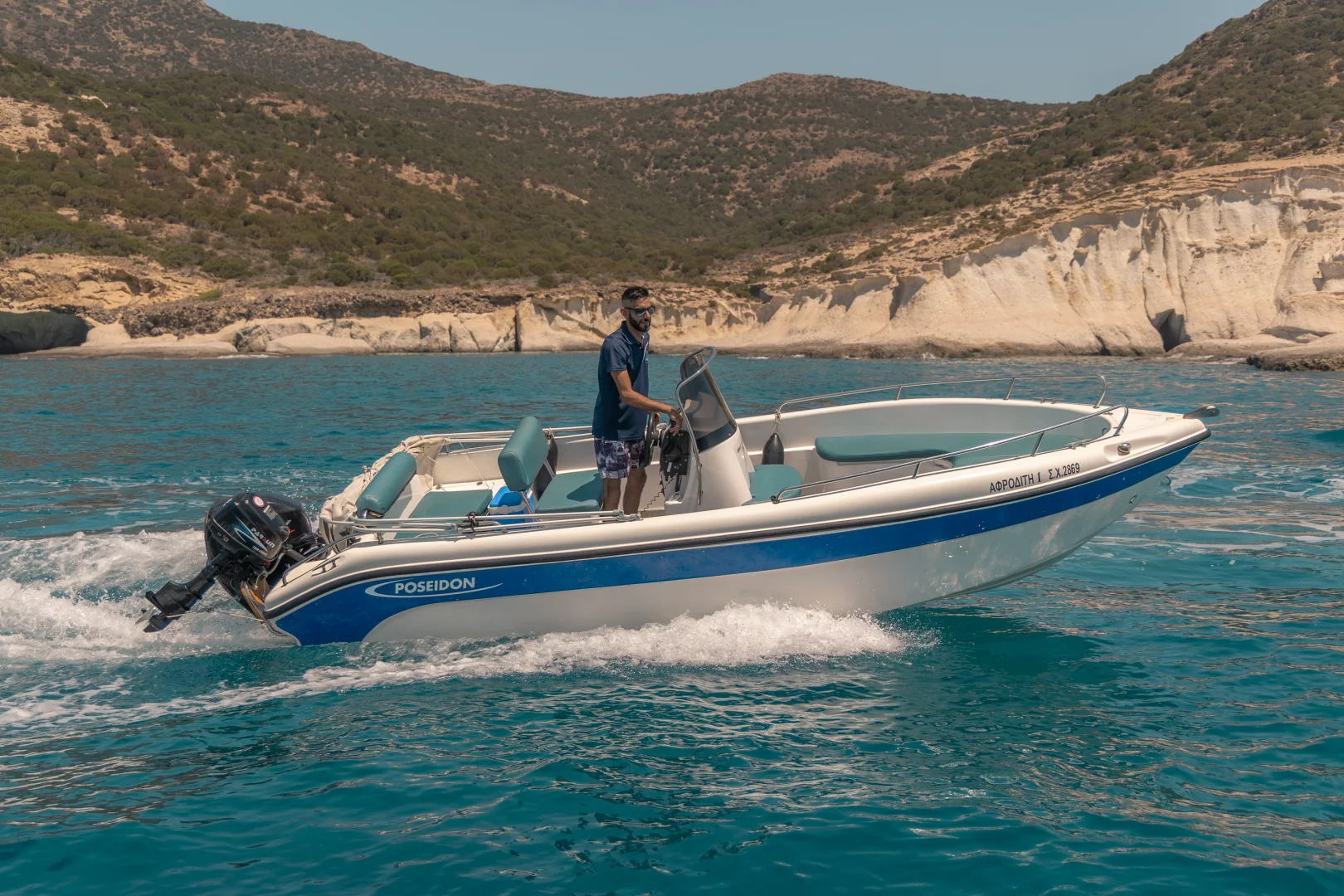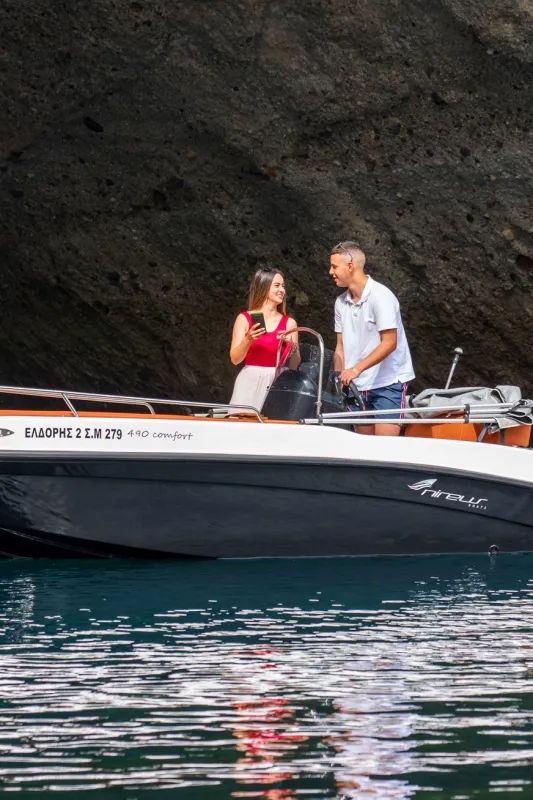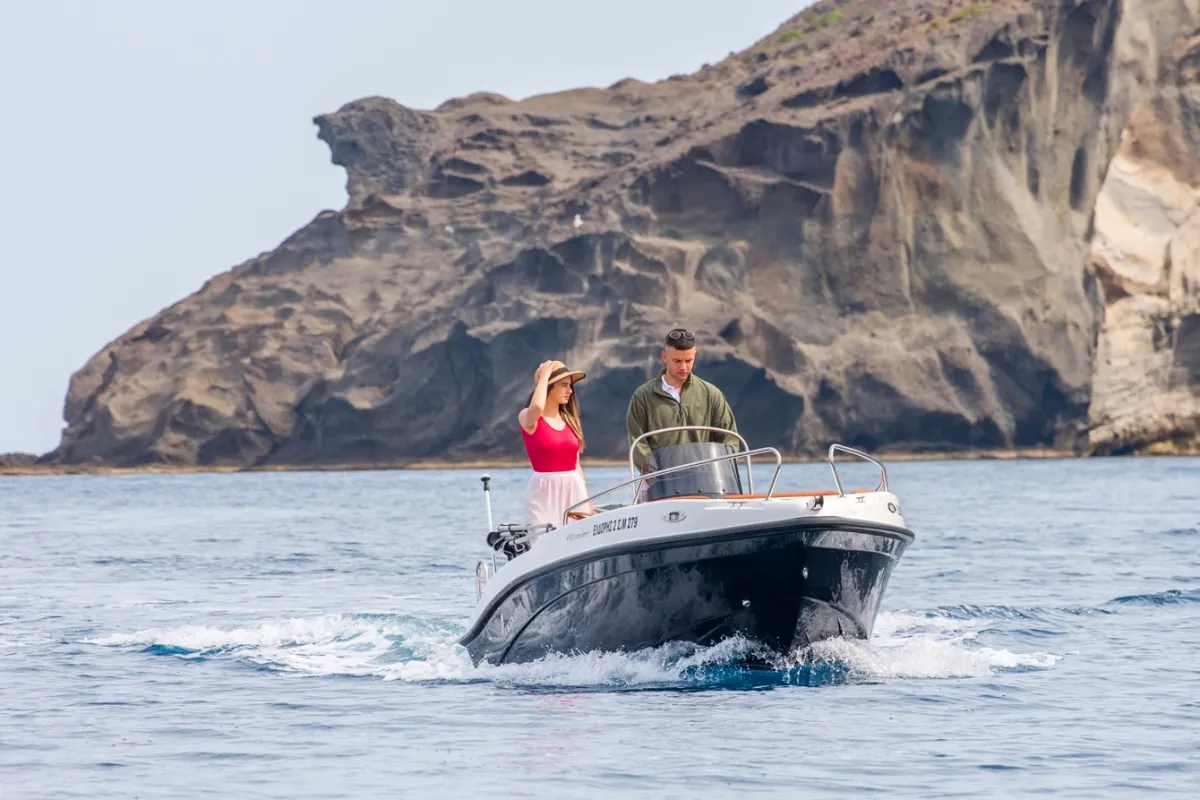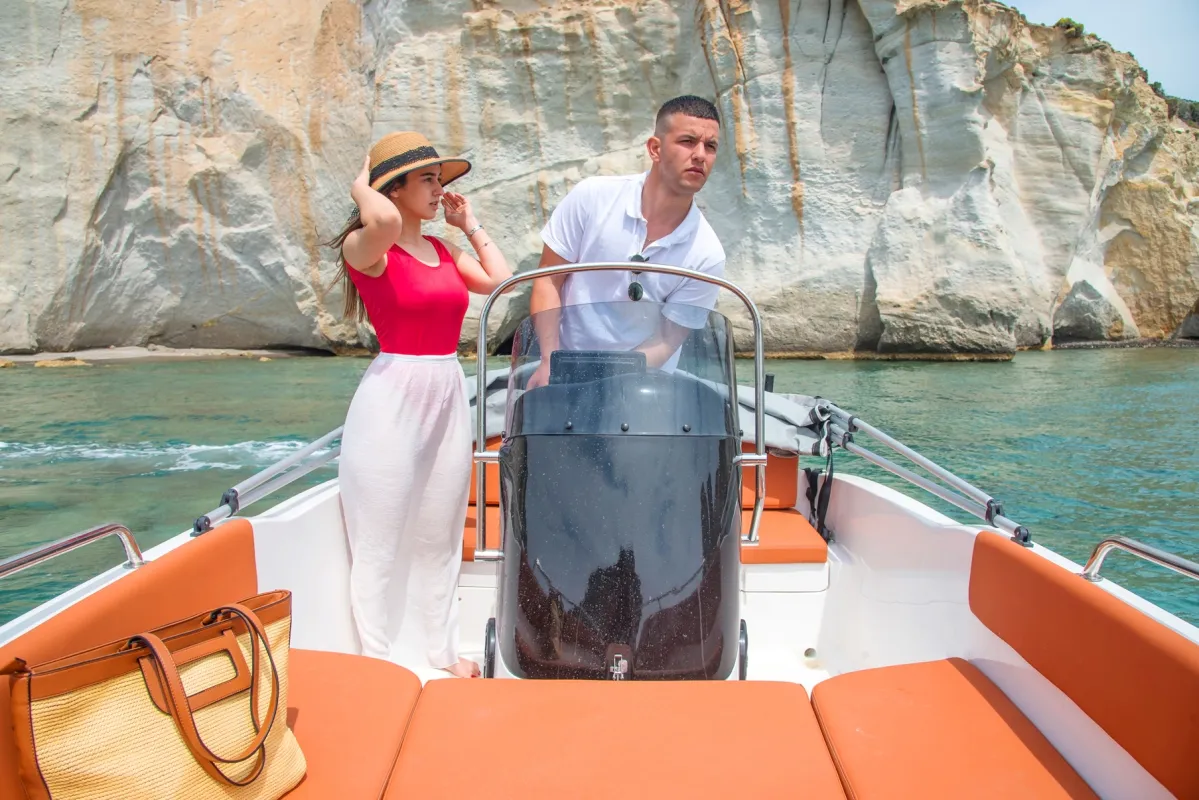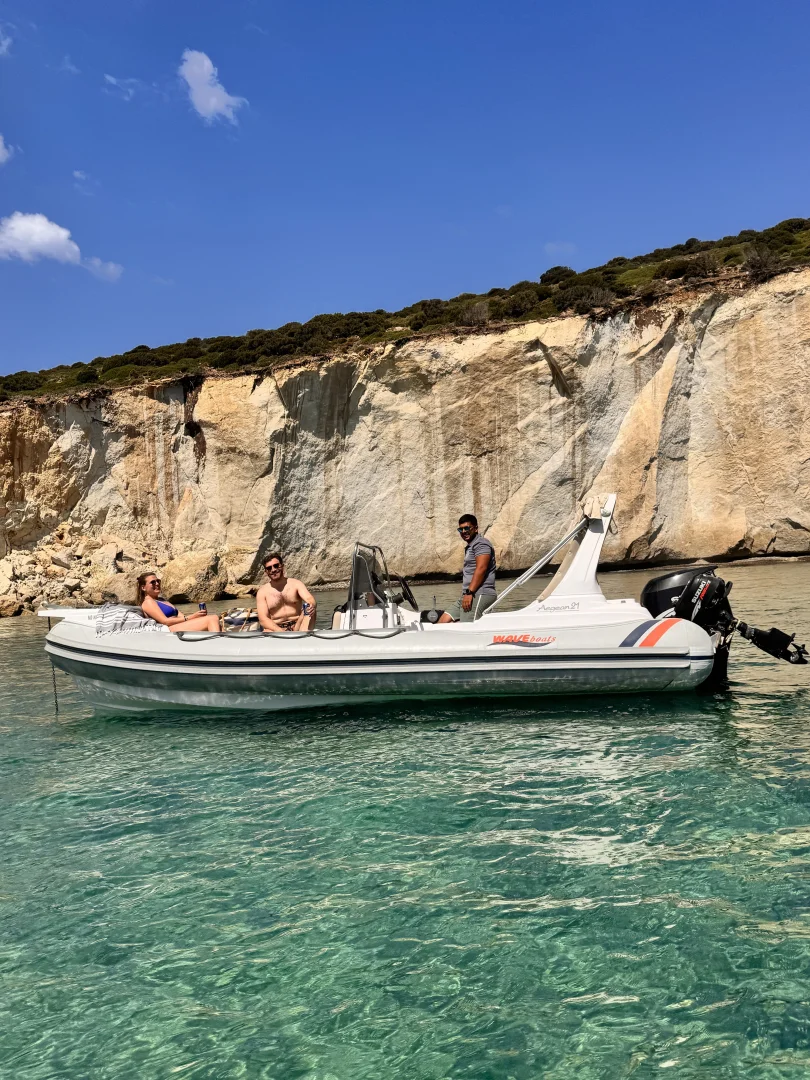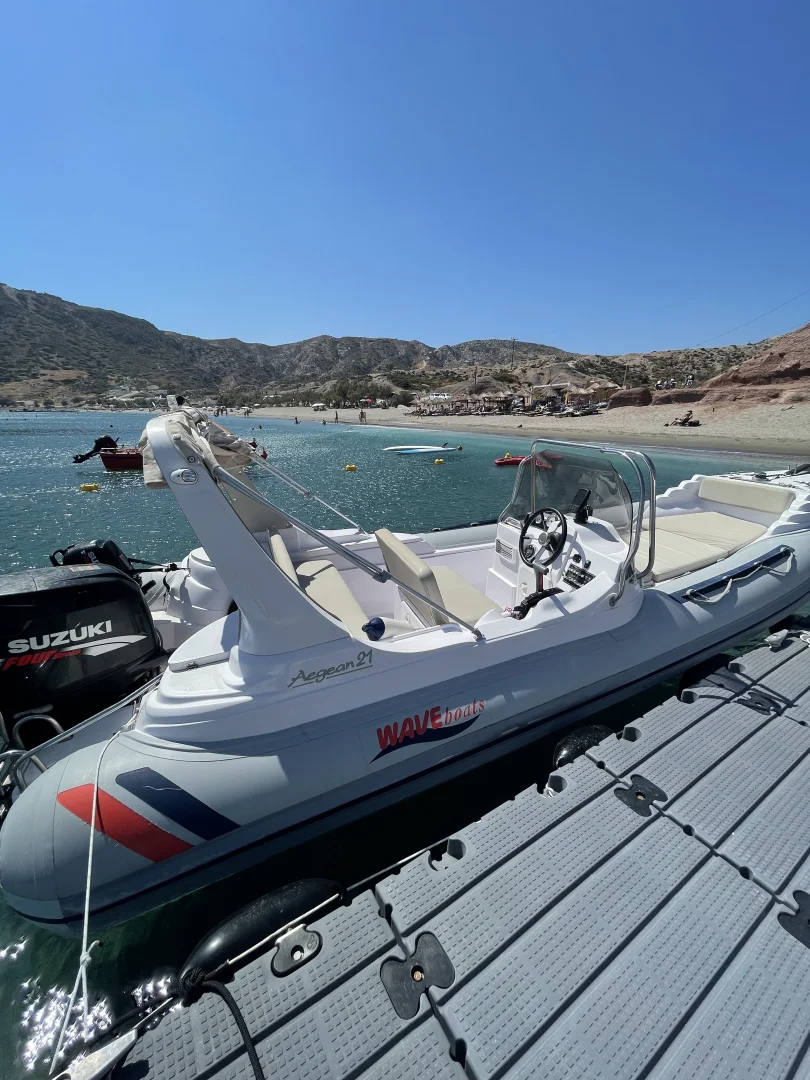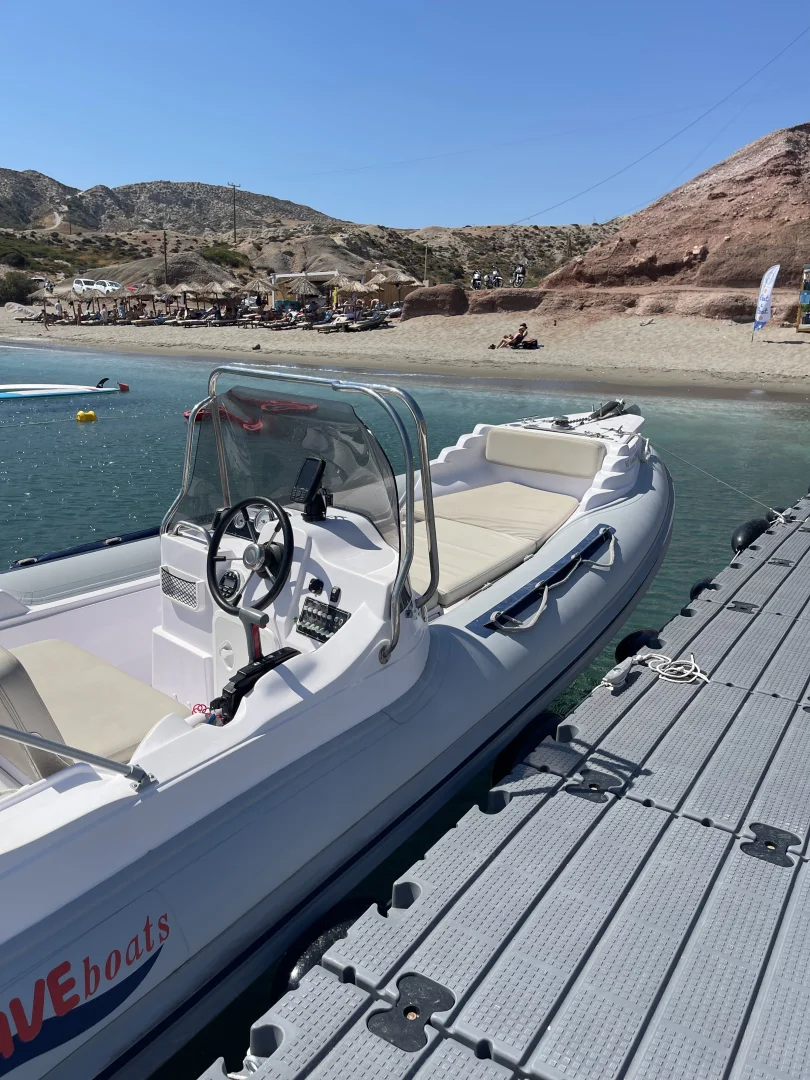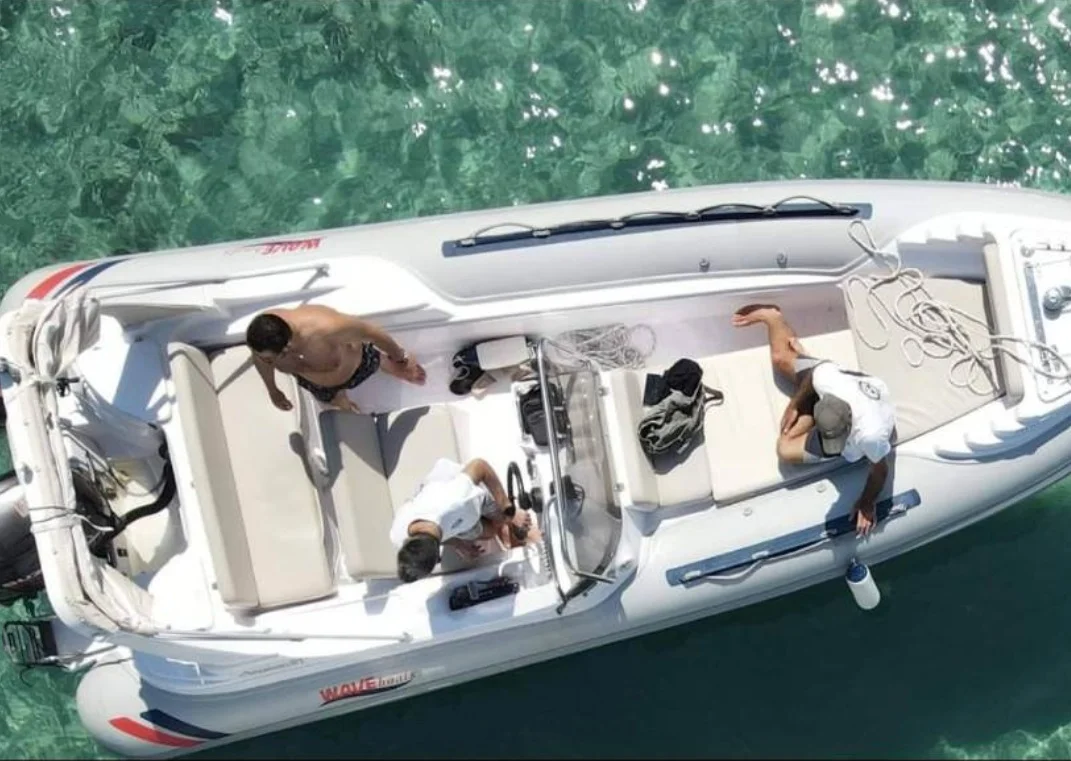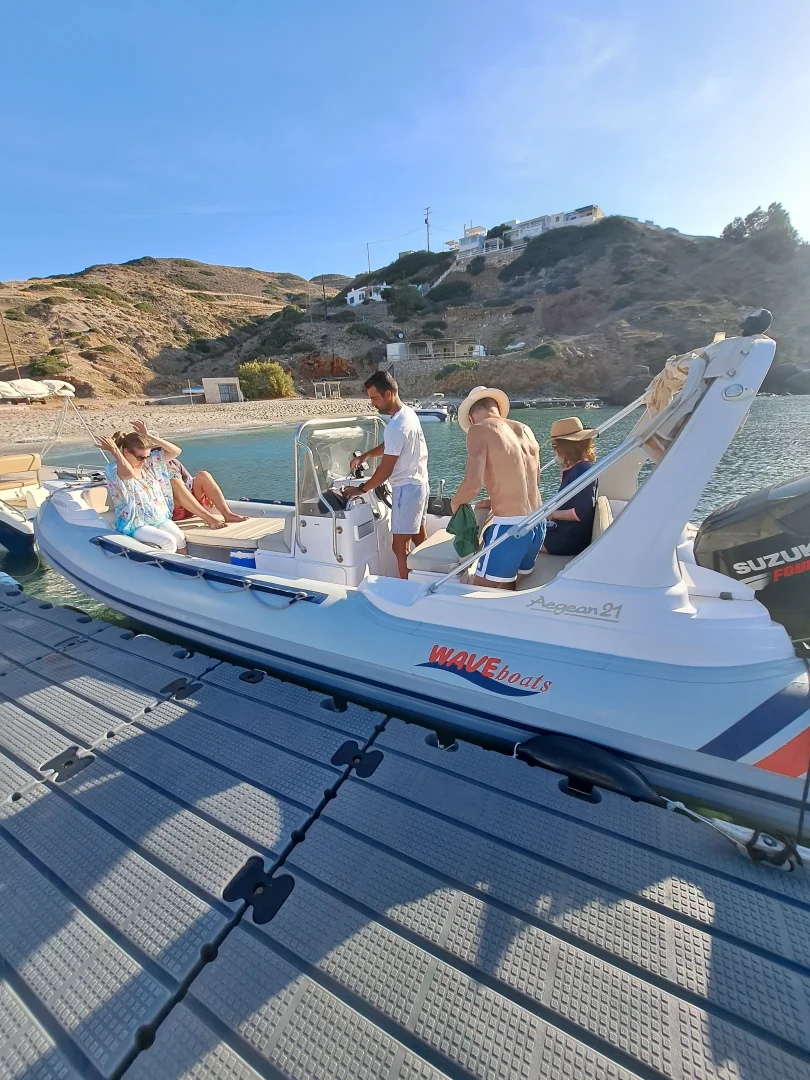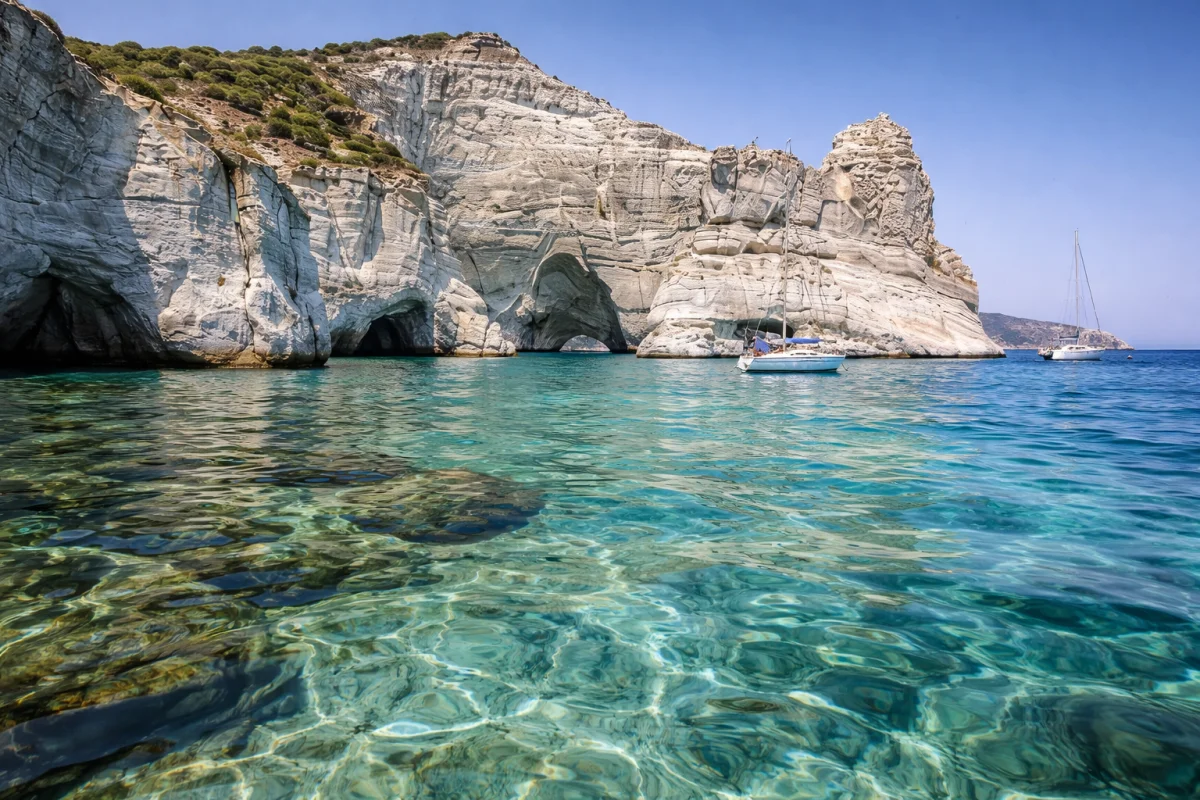
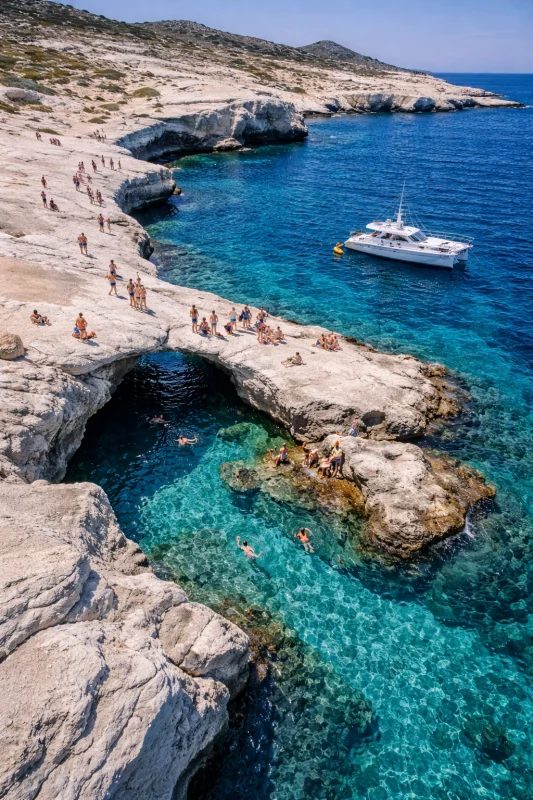
Kleftiko is probably the most well-known and photographed spot on Milos. It's a place where stories, rocks and light come together to make something that will stay with you. Kleftiko is on the island's rough southwestern coast. It is known for its beautiful turquoise waters, tall white volcanic cliffs and caves that have been shaped by the wind and sea over thousands of years. The name "Kleftiko" means "The Bandits' Lair", which refers to the pirates who used this hidden maze of stone as a safe place to hide. Kleftiko was once a place to watch, hide and escape because of the sheer cliffs and the fact that it was hidden from the main sea routes. Today, Kleftiko is one of Greece's most famous natural landmarks. It feels both like a movie set and very old. The only way to get there is by boat because there are no roads leading to it. The trip is part of the experience: the sea opens up, the coastline gets wild and the cliffs look like a dream coming up from the blue.
A Sea and Light Landscape
You will never forget how it feels to get to Kleftiko by boat. The cliffs rise steeply from the sea and their light-coloured surfaces catch the light and reflect it back like marble. Some of the natural stone arches are as thin as bridges, while others are as big as cathedral pillars. They rise above the waves. The colours are always changing. Near the shore, turquoise and pale sapphire. As the sea gets deeper, the emerald gets darker. The bright white cliffs stand out against the clear sky. When the water is calm, the shadows of fish look like drawings on the sand. Some of the sea caves let in narrow beams of light that flicker across the walls like firelight underwater. They feel like rooms carved out of glowing stone. When you swim here, it feels like you're gliding through another world.
Swimming, Snorkelling and Exploring
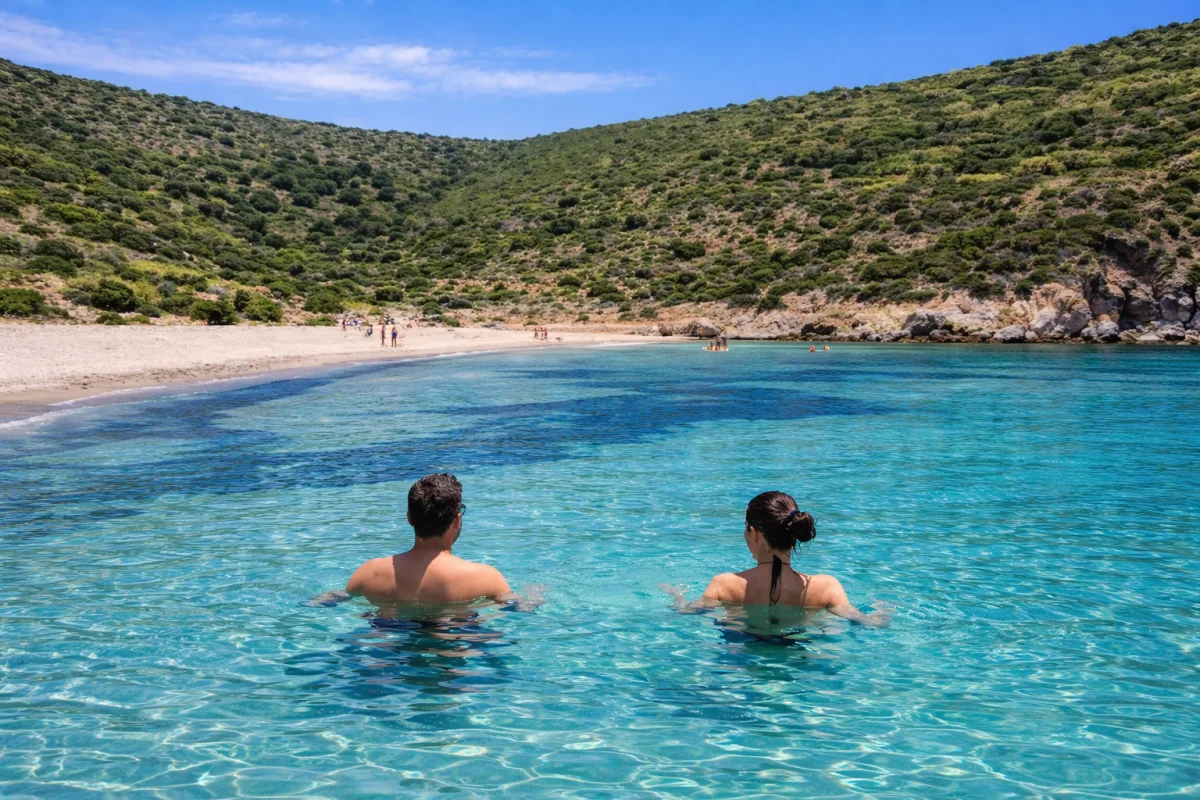
Once the boat is anchored, visitors can swim or snorkel to see the natural caves and arches. The water is so clear that you can see an entire world under it:
Bright marine grass that looks like ribbons on the ocean floor
Small silver fish swimming in the same direction
Sunlight breaking up under the water into shimmering patterns on the sand
Blue shadows where the sea caves go deeper into quiet dark
Some caves are narrow tunnels that you can slide through, following a line of light to the other side. Some are tall rooms where the water softly echoes. The most famous part of Kleftiko is the stone arch. You can swim under it if the sea is calm. A moment that stays with you long after you've left is when you float in the quiet shade below it. Every time you turn, you see a new shape, colour and frame of sea and rock.
How to Get There
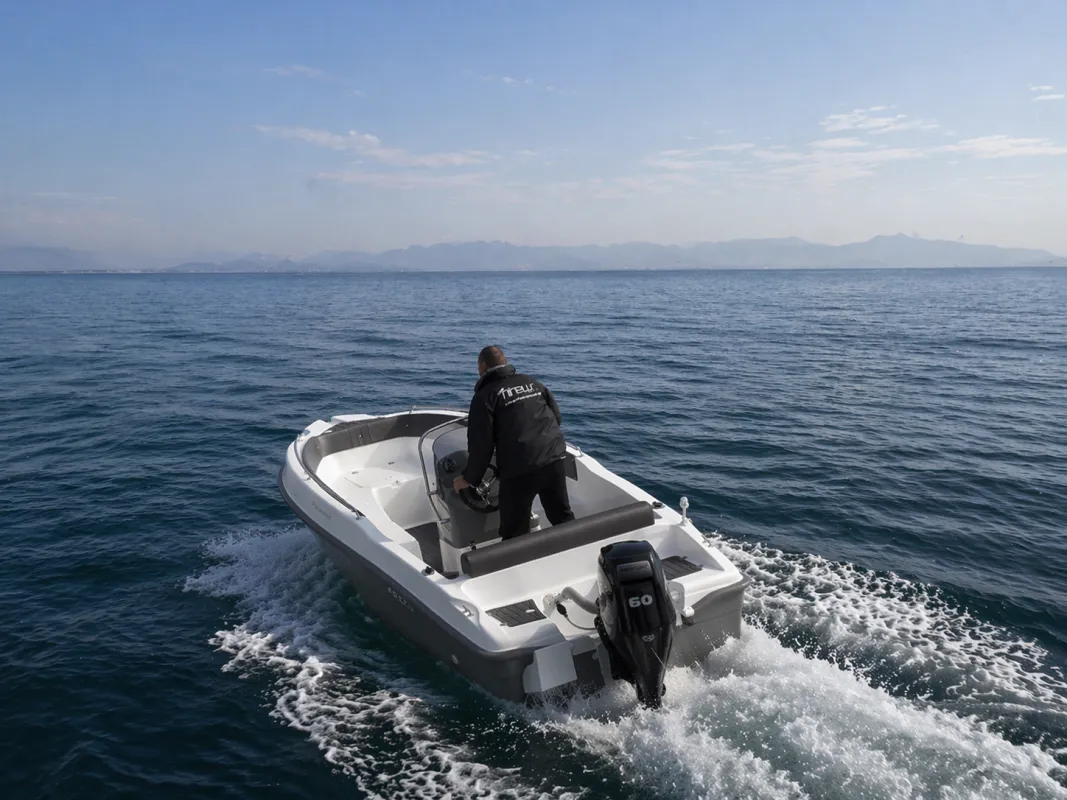
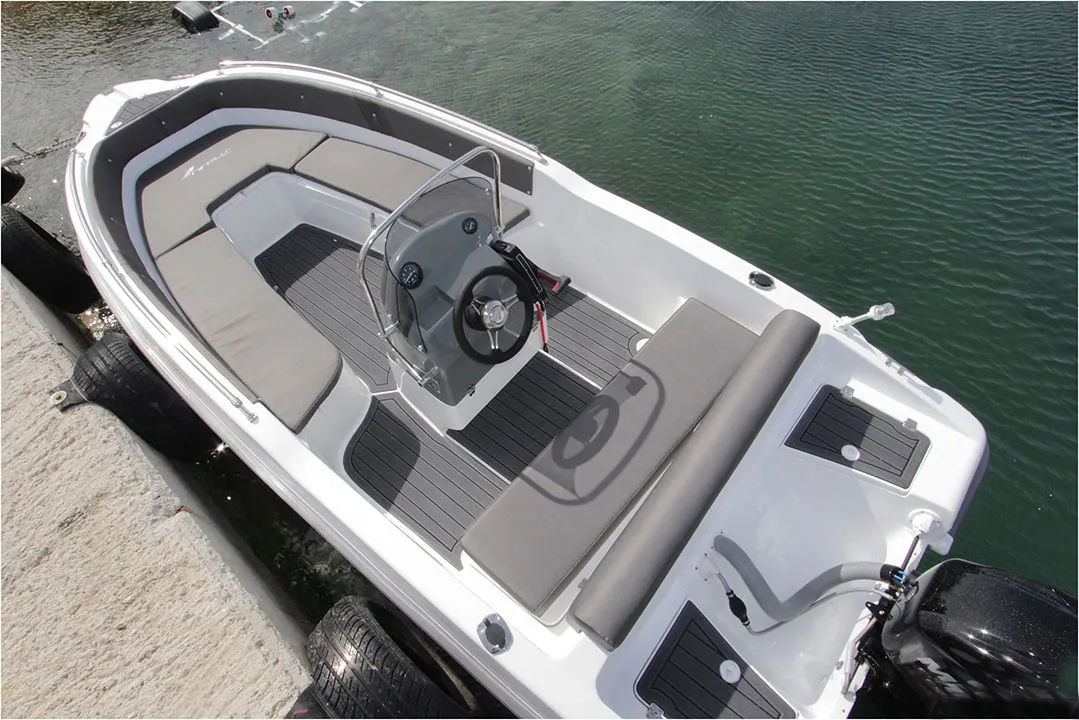
It's easy to visit Kleftiko. You get on a boat in Adamantas, but sometimes you get on one in Kipos or Agia Kiriaki, which are both in the south. As you cross the open Aegean, you can see the coastline change from white villages and hills to steep cliffs and quiet coves. The sea gets smoother and brighter when Kleftiko comes into view. The cliffs look almost fake because they are too big, too white and too sculpted to be random. The trip is calm and beautiful, whether you take a shared day cruise or rent a private boat. It feels like you're going through a story. You don't just "stop by" Kleftiko. It's a place, a time and a memory.
History and Personality
The story of Kleftiko is part of the history of the Aegean Sea. For hundreds of years, the Cyclades were a busy place for naval trade and pirates. Kleftiko's caves and coves used to be used for lookouts for ships that are crossing the sea routes. Secret places where ships could hide when they needed to and safe place for sailors and rebels. Pirates could see the sea from inside the caves without being seen. The cliffs made natural walls and the water passages were ways to get away if danger came. These stories still ring out in the wind that blows through the stones. Kleftiko is more than just a geological wonder; it is a memory.
The Geography
Kleftiko is a part of the island's history of volcanoes. Eruptions happened millions of years ago, leaving behind layers of ash, pumice and lava. The sea and wind shaped these layers into:
Arches
Caves
Towers
Chambers under the water
The cliffs are almost straight up and down and they shine white in the sun. The water is deep and clear and you can see more than 20 metres most of the time. This makes it great for snorkelling and exploring underwater.
Kleftiko looks different at different times of day:
Morning - soft, silver-blue, quiet and calm
Noon - bright turquoise cliffs and sharp light
Late Afternoon - long shadows, warm gold and a calm sea
Sunset - deep blue and rose tones that are quiet and dreamy
The light makes Kleftiko look different. You can go there many times and never see the same view again.
What to Do
Most people who come here spend their time:
Swimming through natural sea channels
Snorkelling in water that is clear and calm
Going into sea caves where the sound changes and the light moves like water
Relaxing on the boat deck and watching the cliffs rise around them
Floating under the arch in the shade
Kleftiko is a never-ending source of inspiration for photographers because of its colours, shadows, reflections, rocks and sky. There is no need to organise or structure anything here. Kleftiko is all about living in the now.
Where to Eat and Unwind
There are no cafés, shops or tavernas here and that's part of what makes Kleftiko so strong.
People who come bring:
Water
Snacks or fruit that aren't too heavy
Towels
Protection from the sun
People often eat lunch on the boat, which floats gently in the bay while the cliffs shine around you.
What Makes Kleftiko Stick in Your Mind
Kleftiko is more than just a beach. Not just cliffs. More than blue-green water. It is a feeling of finding something, a moment of silence, a reminder that beauty can seem old and alive and a place where the sea and rocks seem to be breathing. Kleftiko stays with you because it sounds like the island is talking to you in its own voice, which is raw, bright and unforgettable.