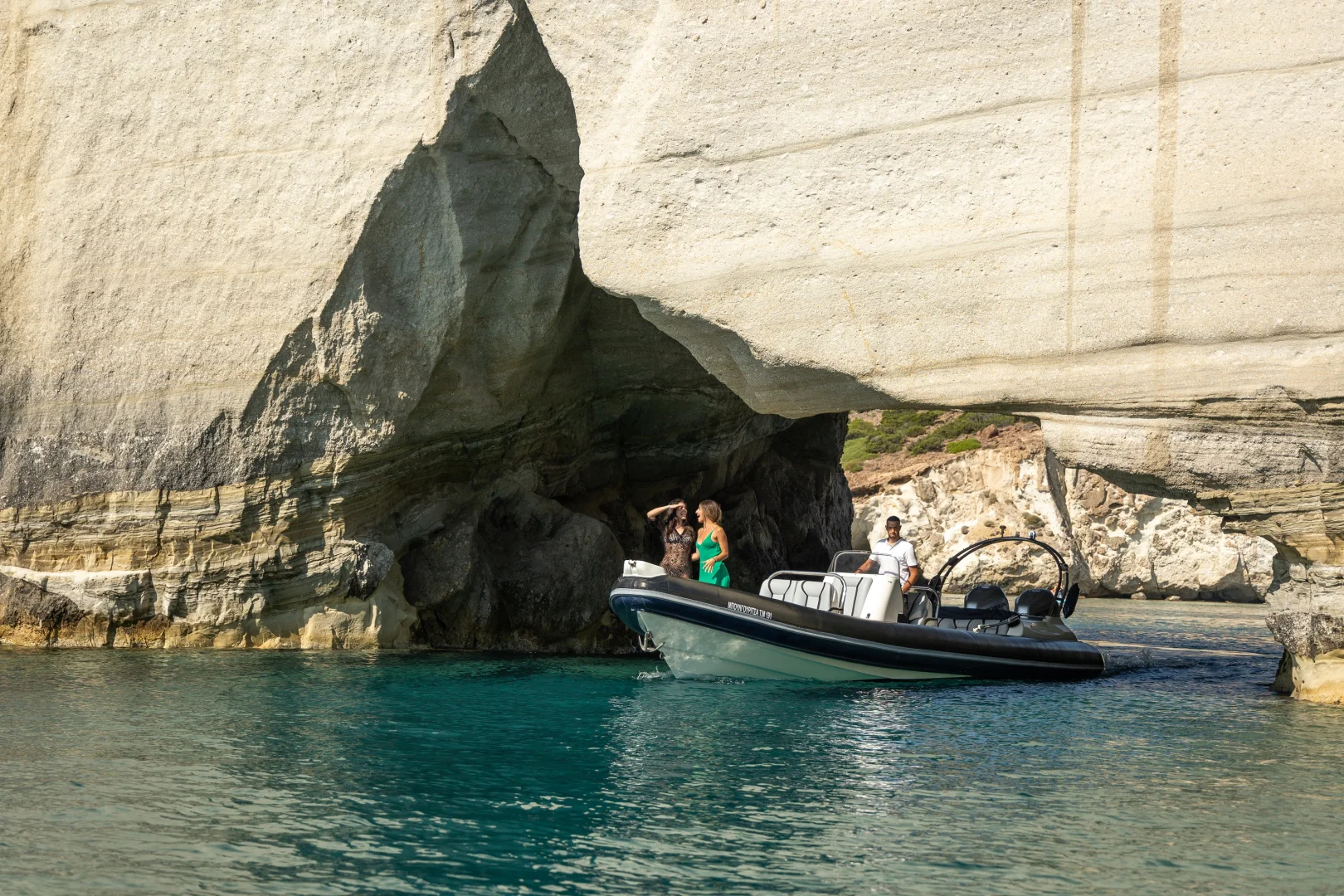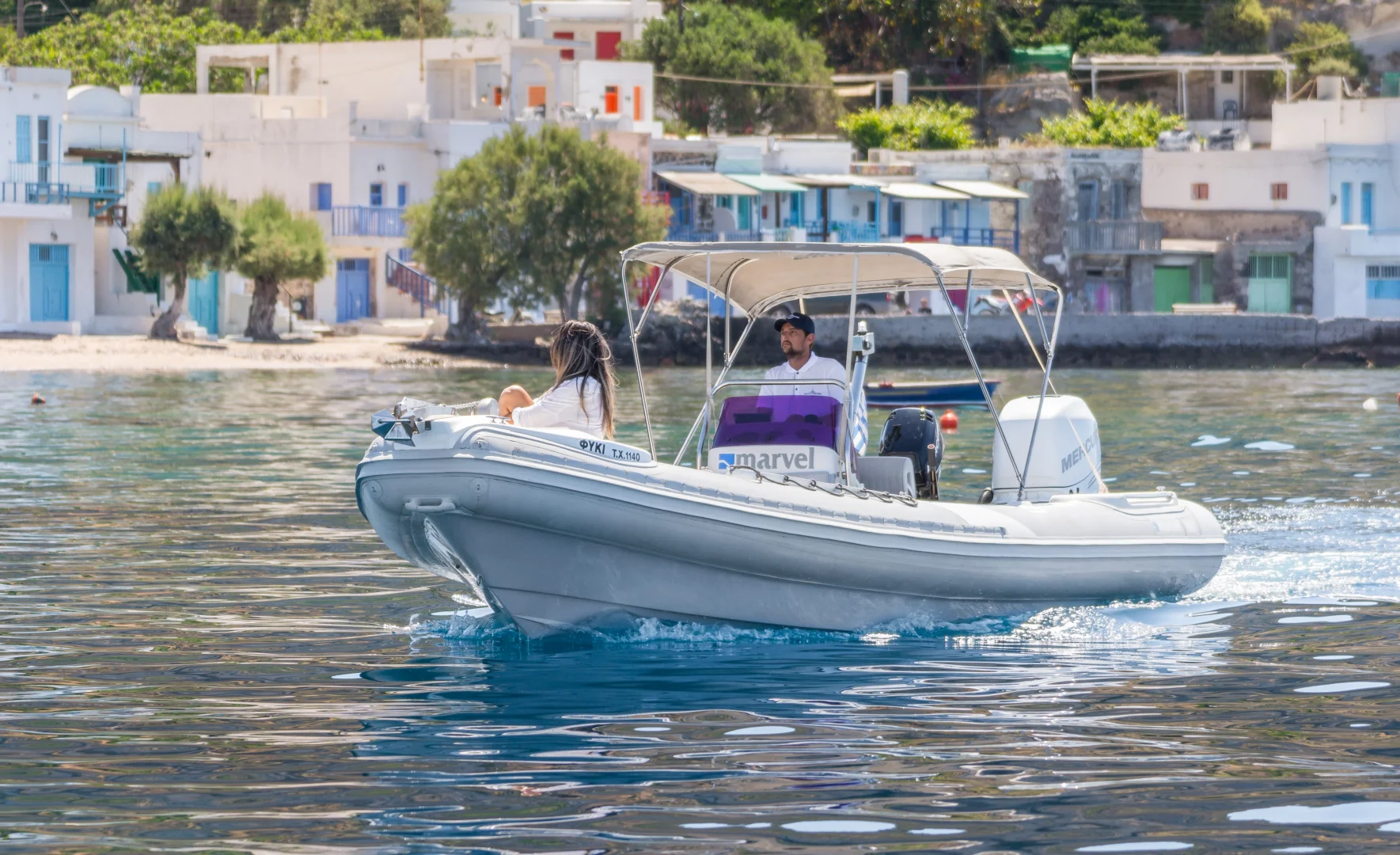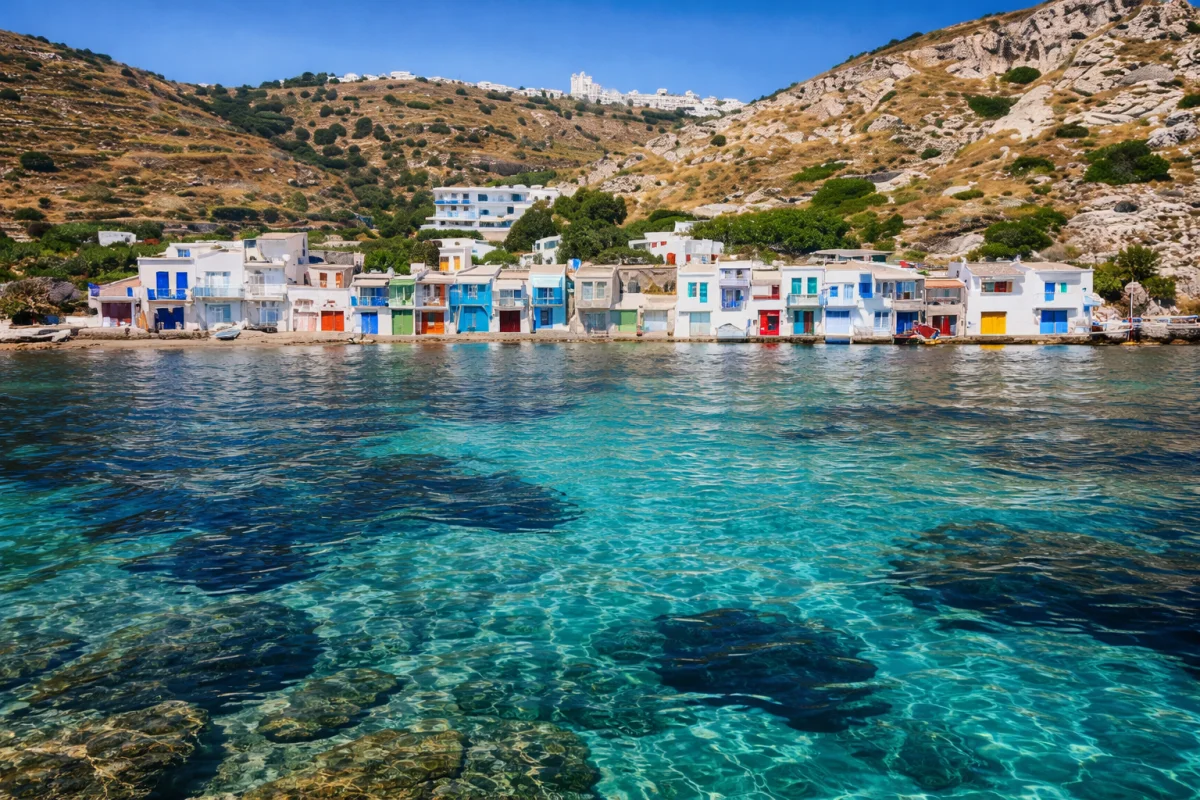
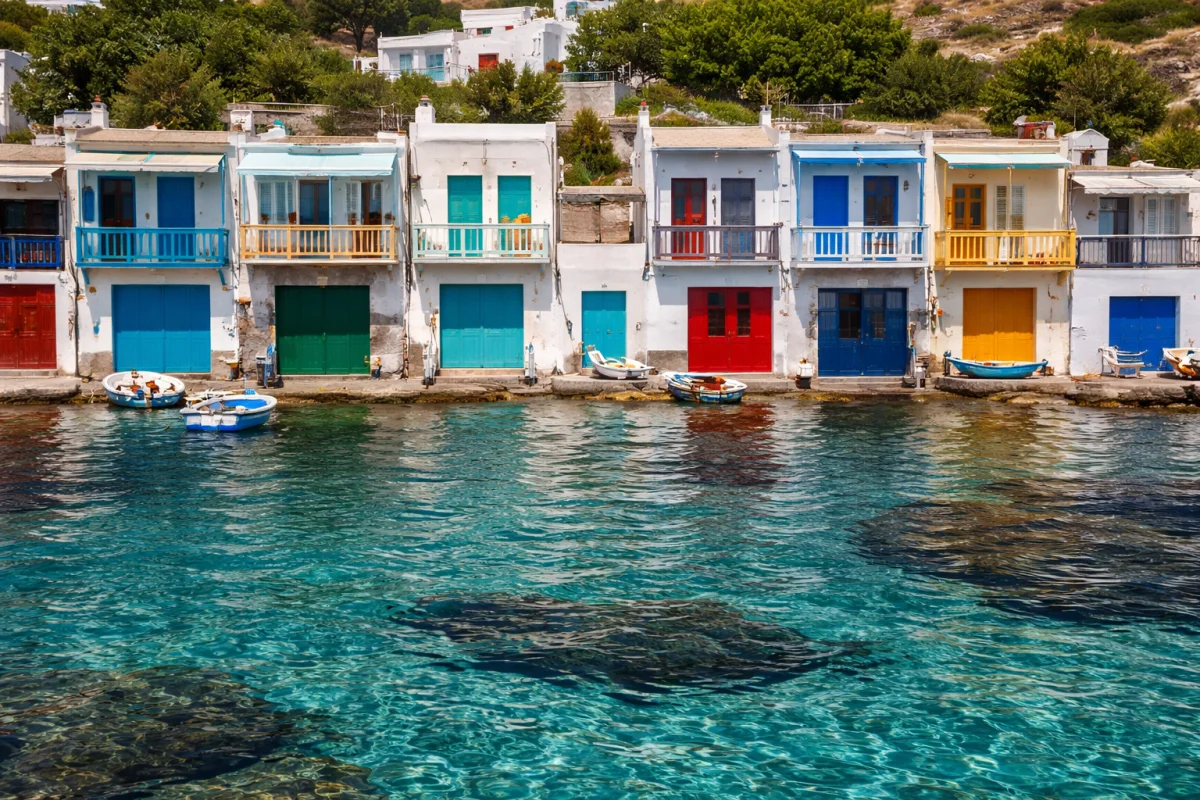
Klima is one of those places that stays with you long after you’ve left, even though it’s small and quiet. It sits right on the edge of the water, tucked beneath the hillside between Triovasalos and Tripiti, with a row of brightly painted syrmata. The traditional fishermen’s houses, lined up like a string of gentle, colourful notes. If Milos had a heartbeat, Klima would be the slow, steady thump that keeps everything grounded. You arrive expecting to see the famous colourful doors. You leave remembering how the place felt.
Arriving at Klima
The drive down into Klima is a moment in itself. The road narrows and curves, the land drops away in gentle slopes and the sea appears below you like a piece of glass shifting from deep blue to soft turquoise. You begin to understand why Klima exists exactly where it does. It’s sheltered by the hillside. It’s hugged by the sea and feels held, protected, almost cradled. When you finally reach the bottom and step out of the car, the whole world slows down. The air smells salty and warm, the sound of the waves is constant but soft and the sun hits the brightly painted doors in a way that makes them glow. Even if you arrive with a busy mind, Klima takes that from you. Like a hand resting on your shoulder telling you, “It’s okay, relax.”
The Syrmata
The syrmata are the heart of Klima. Each one is a small house with a wide door at the bottom. The boathouse and a living space above. The doors were once painted in bright colours so fishermen could spot their home from the sea: red, green, blue, yellow, turquoise and purple, sometimes faded by the sun, sometimes newly refreshed. Today, they look like cheerful little brushstrokes against the rock. Some of the syrmata are still used traditionally. Some have been restored into humble accommodations. Some sit quietly, doors shut, waiting for their owners to return. But none of them feel artificial. None of them feel like they were created for tourism. They are what they always were, practical homes built by people who lived with the sea. When you walk along the row, you can almost imagine the lives here decades ago:
fishermen pushing their boats straight into the water at dawn
families sitting on the steps in the evening
children running barefoot between the houses
nets drying outside the doors
Klima makes the past feel close enough to touch.
The Sea
In Klima, the sea doesn’t sit “next to” the village. It is part of it. Waves brush the steps. Some houses even have ropes tied directly into the sea. If you sit on the small stone ledges, the waves come close enough to sprinkle your feet. If you lean out of a doorway, the sea is right there, greeting you gently. The water in Klima is quiet most days. Soft ripples, slow movement and clear enough to see the rocks beneath. The light plays on the surface in a way that makes you stop and stare without noticing how long you’ve been watching. Swimming here feels like slipping into a warm memory. Everything around you is close. The houses, the hillside and the sound of water tapping gently against wood and stone. It’s one of the calmest swims on the island.
Walking Along the Row
There’s something incredibly peaceful about walking the length of Klima’s waterfront. Your steps fall into a slow rhythm. The sound of waves becomes background music. You pass one colour, then another, then another. Red, blue, green, yellow and turquoise. Each door feels like a personality. Quiet, steady, patient. You reach the end, turn around and walk back and somehow, the colours feel different on the way back. Warmer, softer and more familiar. It turns simple movements into moments.
The Sound of Klima
One of the most beautiful things about Klima is its soundscape. You hear:
water breaking gently against the shore
the soft creak of boats tied nearby
wind brushing past the hillside
footsteps on stone
doors opening and closing quietly
an occasional voice drifting out from a balcony
You might sit beside the sea for five minutes or thirty and the sound never changes. It stays soothing in a way that makes your mind settle.
Klima at Sunset
If Klima has one “famous moment”, it’s the sunset. Not because it’s dramatic or explosive. It’s beautiful because of how gentle it is. The sun drops behind the hill behind you, not into the sea and instead of grand colours across the sky, the warmth reflects onto the houses themselves. The syrmata glow softly, the colours deepen, the stone warms and the sea darkens into a deeper blue. People stand quietly, not looking at the sky but at the way the village changes shade by shade until it settles into early evening. The light during this time feels like a soft blanket pulled over the whole settlement. It’s not a sunset you chase and the one you experience.
The Human Side of Klima
Klima feels like a village full of quiet pride. Not tourists'-happy pride. Real pride. The kind that comes from tradition and endurance and identity. Families have lived here for generations. Boats have been stored in these syrmata longer than most people have been alive. Daily life was built around the sea in a way that still lingers in the air. You feel that history in the small details:
steps worn down by years of use
a hand-painted number faded by salt
a rope so old it has become part of the house
small balconies decorated simply but lovingly
a wooden oar leaning against a wall
These aren’t decorations. They’re traces of real lives and Klima treats those traces with respect.
Why Klima Feels So Emotional
It’s not the colours or the architecture. It’s not even the sea, it is the scale. Klima is small enough that it feels personal. Close enough to the sea that you hear its rhythm instantly. Quiet enough that your mind slows down without any effort. Warm enough that the place feels like it’s offering you a seat beside it.
Who Will Love Klima
Klima is perfect for people who:
enjoy peaceful corners
appreciate tradition and authenticity
love small, intimate landscapes
want to connect with the island’s past
prefer quiet beauty over dramatic scenery
are moved by simple things done well
want to sit by the sea and feel time stretch
If you want crowds, nightlife, shops or noise, Klima won’t give you that. If you want softness, memory and a kind of nostalgic calm, Klima is perfect.
Why You Should Go
Klima shows you a side of Milos that isn’t about beaches or cliffs, it’s about people, about the sea shaping daily life, about tradition that hasn’t been polished for visitors. It’s about simplicity done beautifully. You walk between the syrmata, sit by the water, listen to the waves and something inside you loosens. Klima isn’t a spectacle, it is merely a feeling. One of the most peaceful feelings on the island and if you let it, Klima will stay with you long after you’ve left Milos.