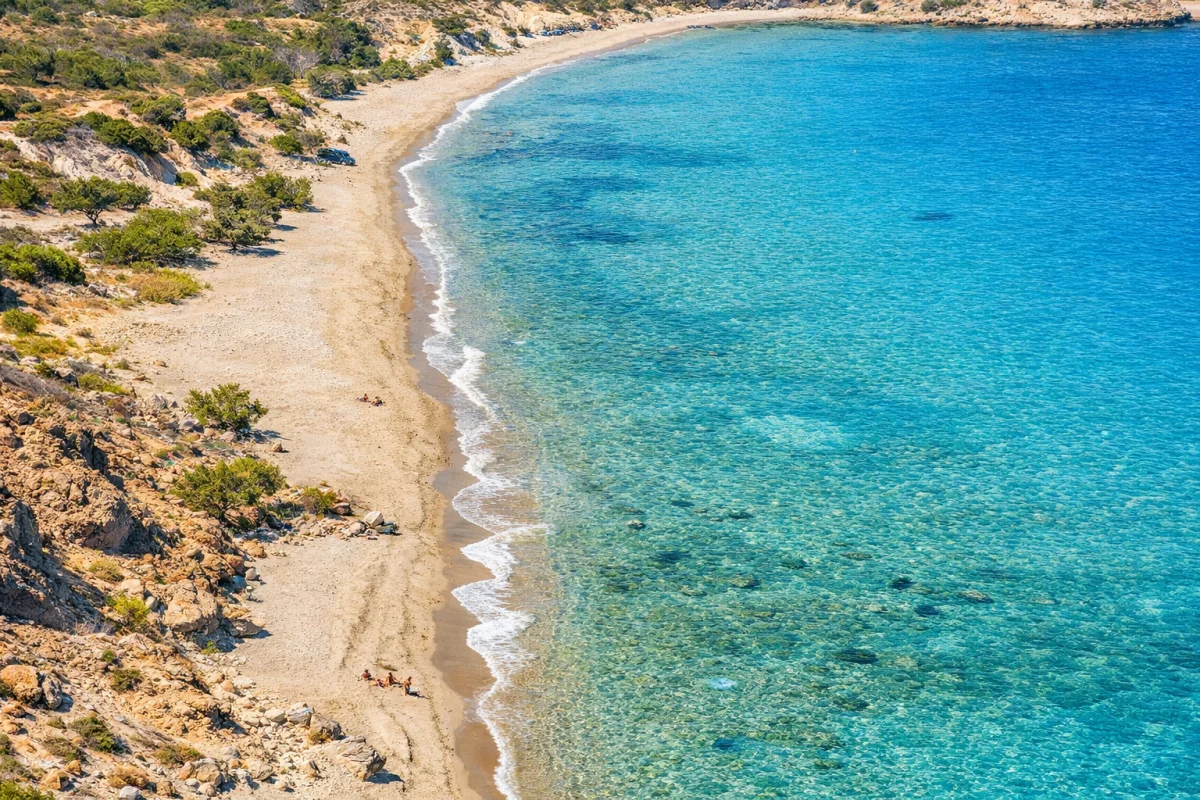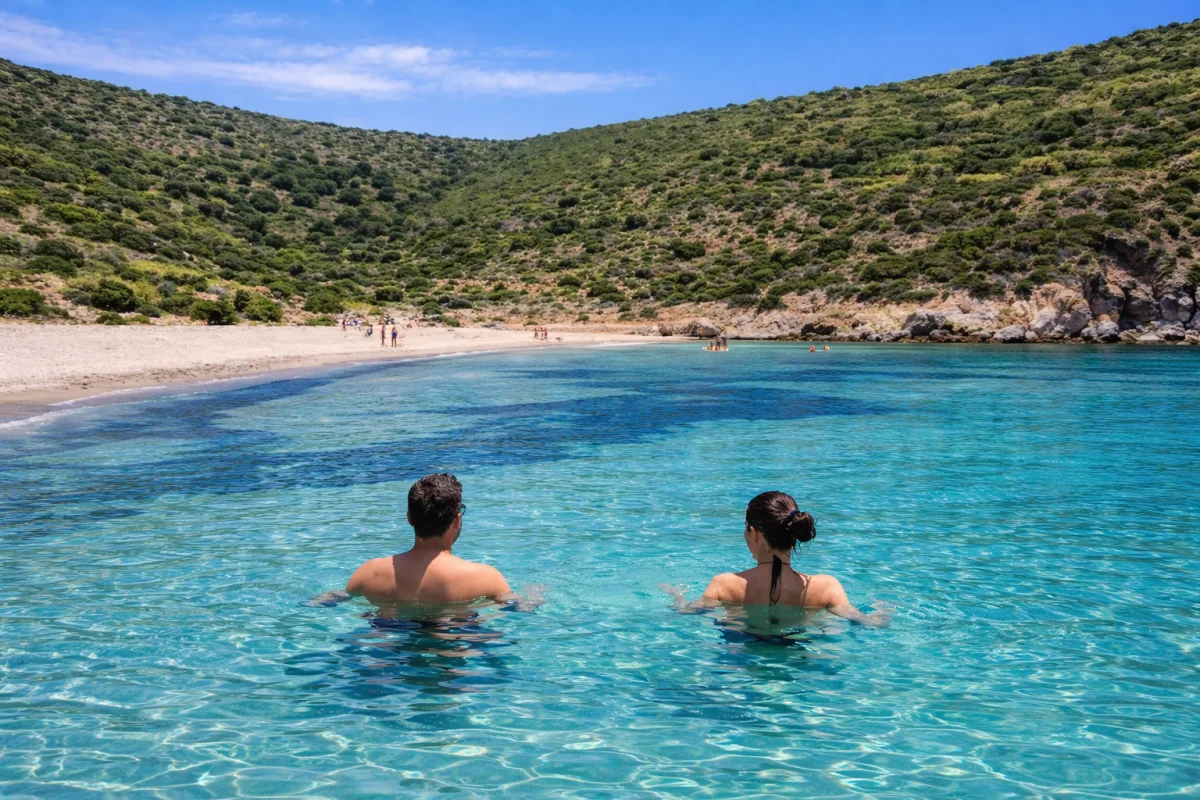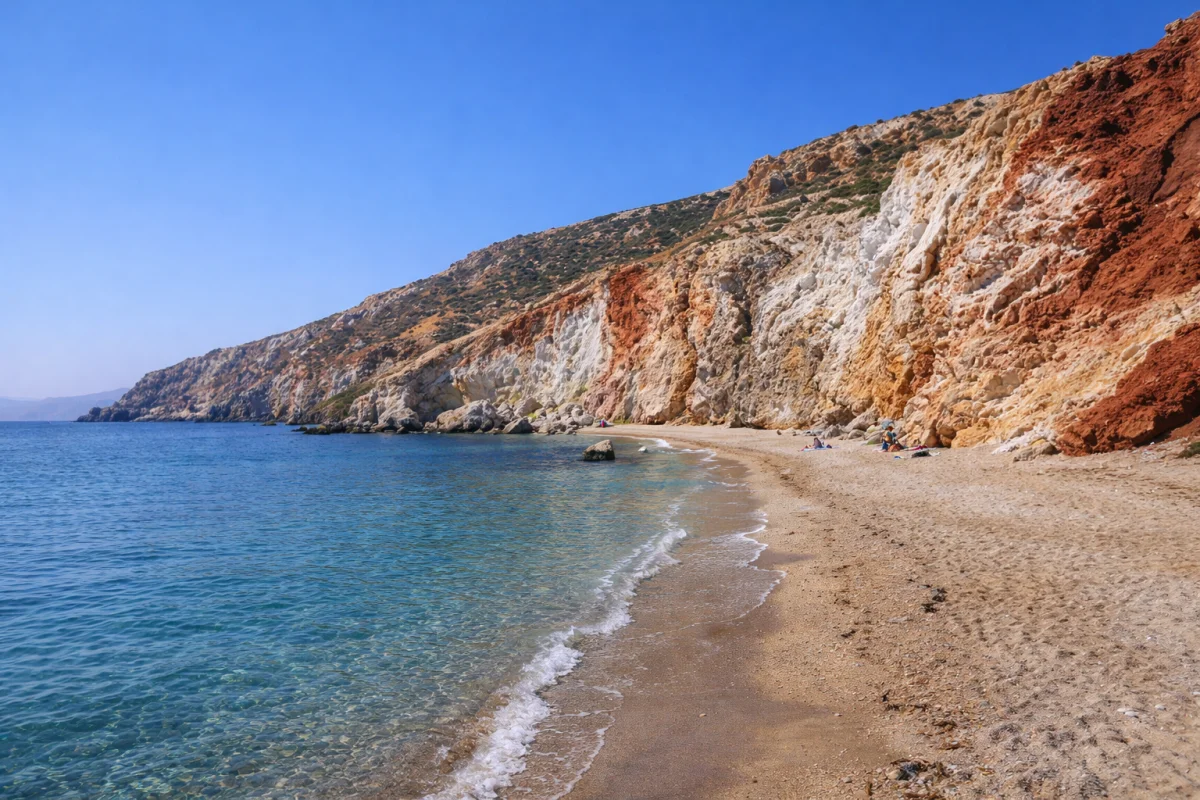
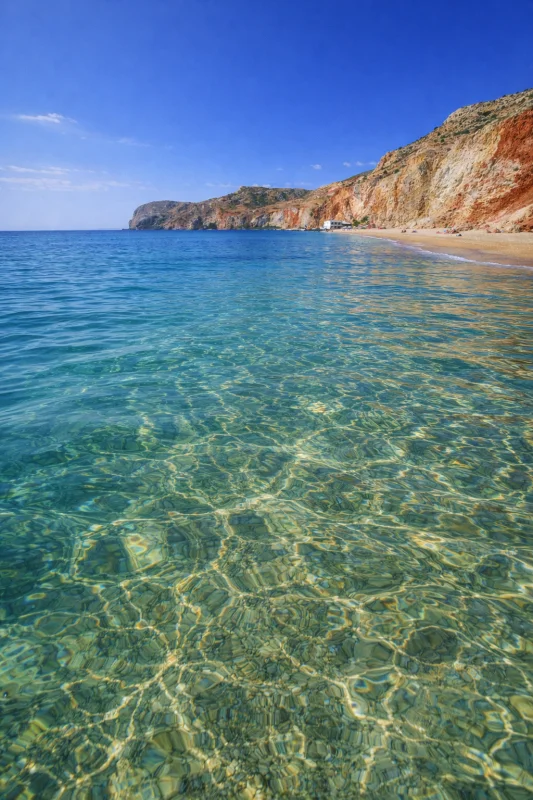
Paliochori is one of the most beautiful beaches on the southern coast. It's where Milos shows off its volcanic heart. As soon as you get there, the landscape looks like a stage: cliffs with red, gold, white and deep rust streaks drop down to a shoreline of warm sand and water that looks like it's lit from below. The Aegean Sea glows in different shades of turquoise and pale emerald and steam rises softly from vents on the ocean floor. The earth smells faintly of minerals. Paliochori isn't just a beach; it's a living reminder that Milos was born from fire. Every colour, every rock formation and every warm pocket of water tells a story about how the island was formed by volcanoes. It is not frozen in time, but it is still gently breathing. The coastline is wide and inviting and it curves around a bay that has been shaped by geological forces for millions of years. The sea is always moving, but it never rushes. It washes over stones that shine in the sun and sand that changes colour based on where you are. Paliochori is beautiful in a way that feels natural, strong and deeply connected to the island's old identity.
Character and History
The story of Paliochori starts long before modern maps or Cycladic villages. It starts in the deep volcanic past that made Milos itself. Volcanic eruptions millions of years ago pushed minerals to the surface, making layers of rock that are high in iron, manganese, silica and sulphur. These minerals eroded over time into the dramatic cliffs that rise above the beach today. The cliffs are not only colourful; they are also geological records. Every layer has its own story. Deep red from iron rusting over time, soft gold from deposits with a lot of sulphur, white from volcanic ash and smokey grey and lavender from copper and manganese. It is, quite literally, a rainbow made by the Earth. In more recent centuries, sailors who were sailing through the southern waters of Milos used Paliochori as a landmark. The mineral-rich ground made natural hot springs and on calm days, fishermen would anchor their boats here to enjoy the warm, healing water that rose from the sand. Long ago, villagers used the geothermal heat to cook meals on the beach and surprisingly, this tradition still exists today in small pockets. Fishermen quietly bury pots of food in the warm sand to let the earth do the cooking. Paliochori never developed into a busy port or crowded settlement. It is a place with nature, colour, warmth and quiet strength.
Geography and Weather
Paliochori is one of the most beautiful and colourful beaches in the Cyclades. With bold, expressive and clearly volcanic geography, making the shoreline look like a painting that is alive.
The Cliffs
The cliffs rise sharply above the sand and have a rough texture with bands of red, yellow and orange that go up and down, ash-grey slopes that have been worn down by erosion, deposits that look like crystals shining in the sun and natural openings in the ground where warm air can escape. The colours change every few metres. From every angle, you can see a new mural that was made over millions of years.
The Sand
The sand is a natural mix of gold that warms, soft pinkish grains and pieces of dark volcanic rock. In some places, when you walk barefoot, you can feel a little warmth coming from geothermal activity below the surface. This is a gentle reminder of the volcanic forces below.
The Water
The water at Paliochori is so clear that it's hard to believe. It changes during the day:
Morning: pale turquoise and calm
Midday: bright green in the sun
Afternoon: a dark blue colour with golden highlights
Sunset: turned into silver and rose
You can see the patterns of the sand under the water because it is so clear. The waves make ripples, ridges and small stones.
The Vibe
Paliochori is peaceful. You can hear the sound of stones cracking under the gentle waves. The wind brushes against the warm rock and you can also hear the seabirds flying around the cliffs and a soft hum of geothermal activity under the sand. The beach never feels crowded, even when other people are there. There is room, both physically and emotionally. Room to breathe, slow down and take in the scenery.
Things to Do
You don't have to rush from one thing to the next at Paliochori Beach. Everything here moves to the beat of the sea and the warmth of the land. Swim in mineral-rich water. In places where geothermal vents heat the sea naturally, the water is clear, calm and warm. You can feel warm water rising from below in small pockets if you get close to some rocky areas. It's a natural hot spring that is soft, full of minerals and very relaxing.
Enjoy the natural hot springs
On the right side of the beach, some small areas of sand may feel warmer. This is because of geothermal activity below the surface. Visitors often dig shallow holes to make their own warm pools. This is a simple, old-fashioned pleasure that has to do with the island's volcanic soul.
Snorkel along the cliffs
The geology above Paliochori is similar to the geology below:
slopes of rocks in different colours
areas of bright green sea plants
schools of small silver fish
rays of sunlight making patterns on the ocean floor
Snorkelling here is calm and colourful, especially near the rockier edges where the water gets deeper and more colourful.
Secret spots
If you walk to the ends of the beach, you'll find small, eroded coves. There are some that have steep pale cliffs, some that have deep red rock and some that have smooth stone shelves. Watch the colours change while you sit.
Bathing at sunset
Paliochori is facing southwest, which means it gets warm light in the evening. At sunset, swimming here is unforgettable. The sea glistens softly and the cliffs seem as embers fading into the night. Boat rides along the volcanic southern coast
Paliochori is often on the southern coast's boating routes that go to:
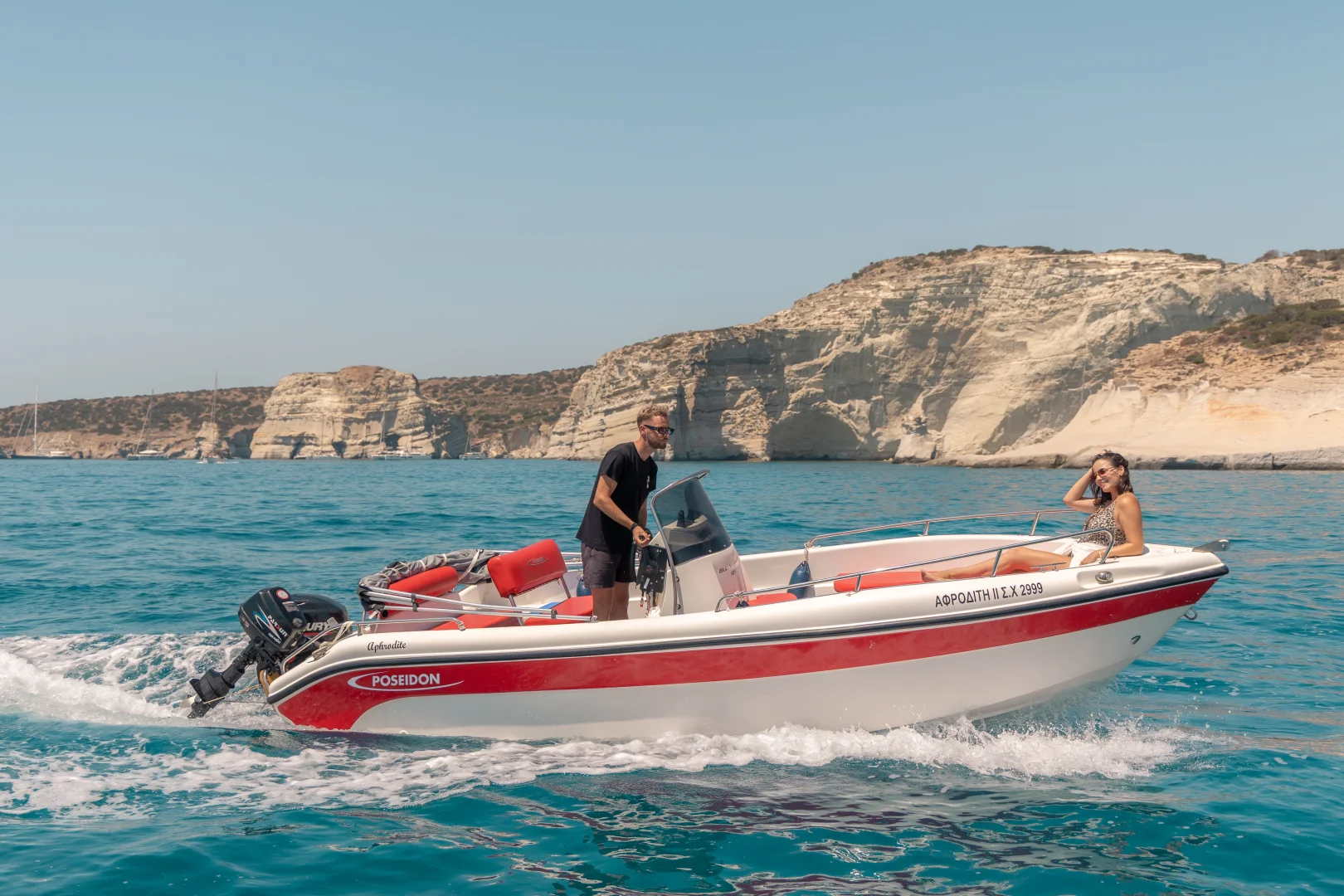
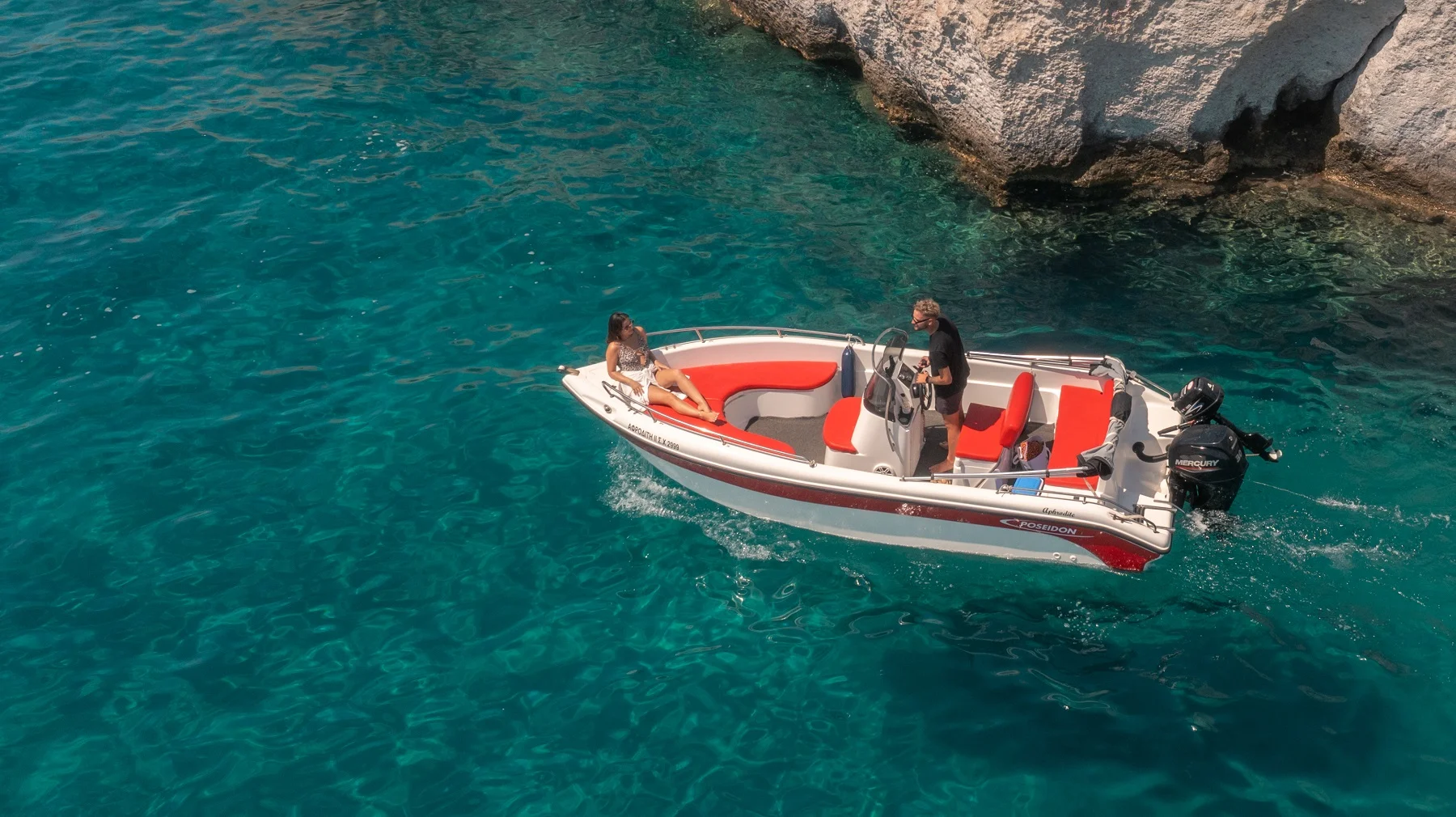
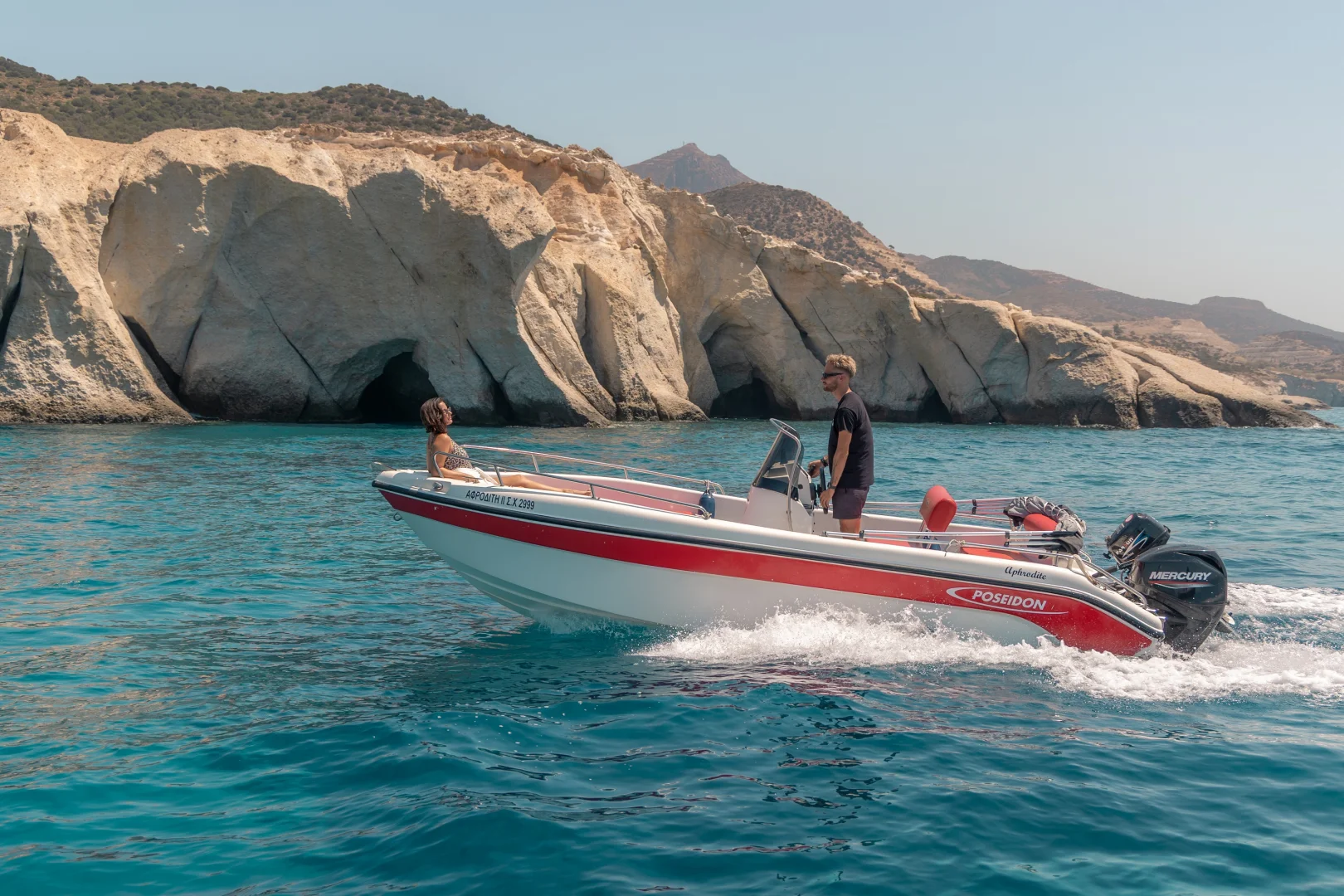
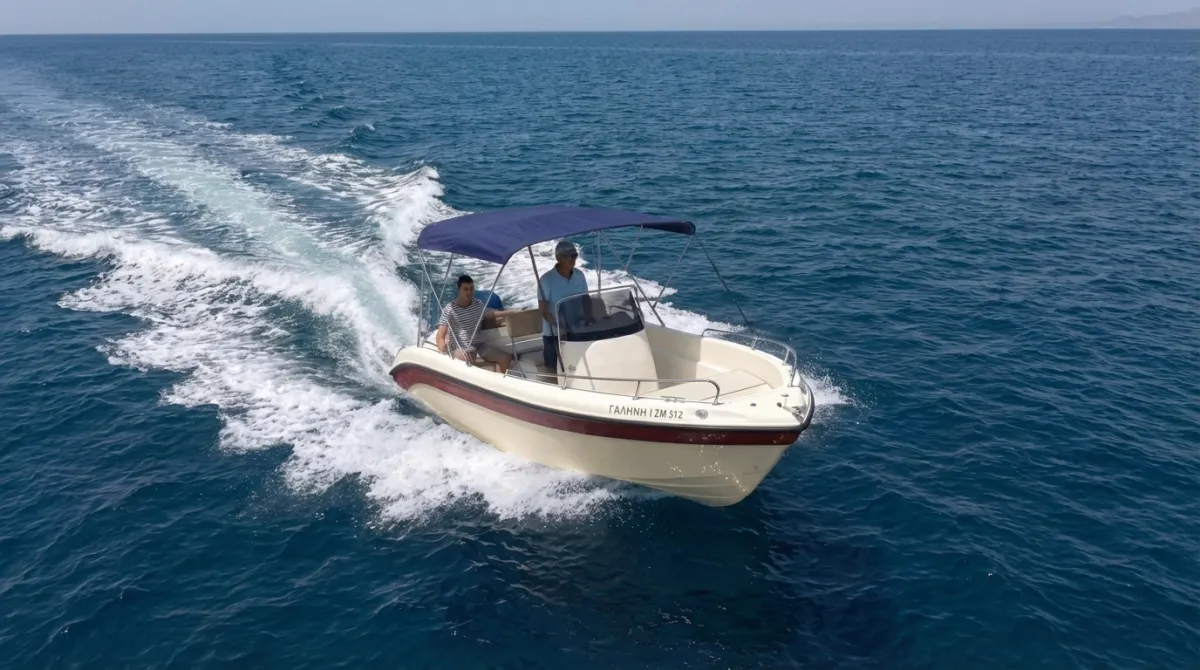
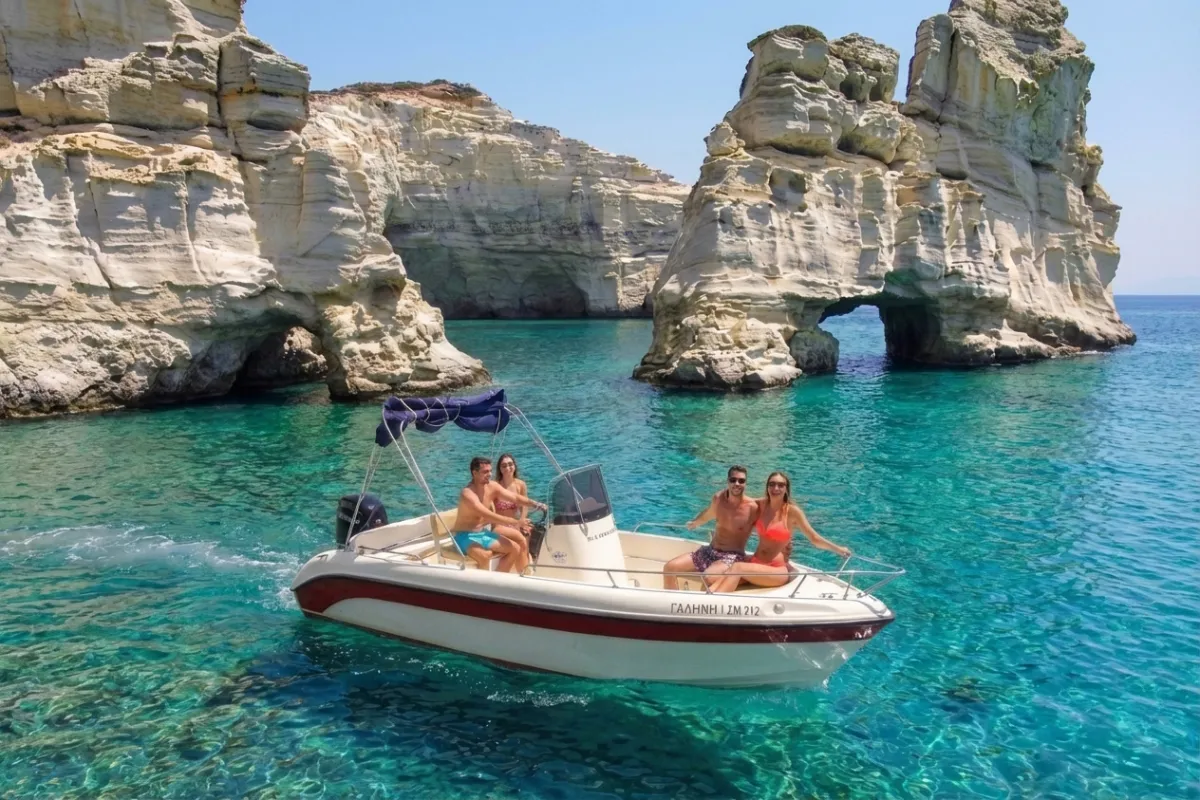
The cliffs of Paliochori look even more dramatic from the sea, with streaks of colour that look like brushstrokes.
Where to Eat and Chill
Paliochori is one of the few southern beaches with a few beach tavernas and cafés. They were all built in a way that doesn't hurt the natural landscape. Tavernas by the sea that cook with volcanic heat. Some tavernas here still use geothermal heat to cook traditional, slow-cooked meals in the sand, like the lamb cooked in the heat of the earth, vegetables cooked on hot volcanic rocks and seafood cooked in clay pots that were warmed by the ground. This isn't just food; it's a link to Milos's volcanic past.
Drinks and coffee with a view
It feels like you're on a balcony looking out over a colourful open theatre when you sit at a café above the beach. Full meals with views of the sea from all sides
Look forward to Cycladic classics:
fish grilled
fresh salads with capers from the area
vegetables that have been baked
fava with lemon
octopus in vinegar
white wine that is just the right temperature
The evenings here are especially lovely, with soft light, warm air and the quiet sound of the sea.
Why Paliochori Stays with You
Paliochori sticks in your mind because the colours don't look real. The water feels alive,.The cliffs tell a story that goes back before history. The earth itself gives off heat and the silence feels full. Paliochori shows Milos just as it is. A volcanic, colourful, old and very calm.