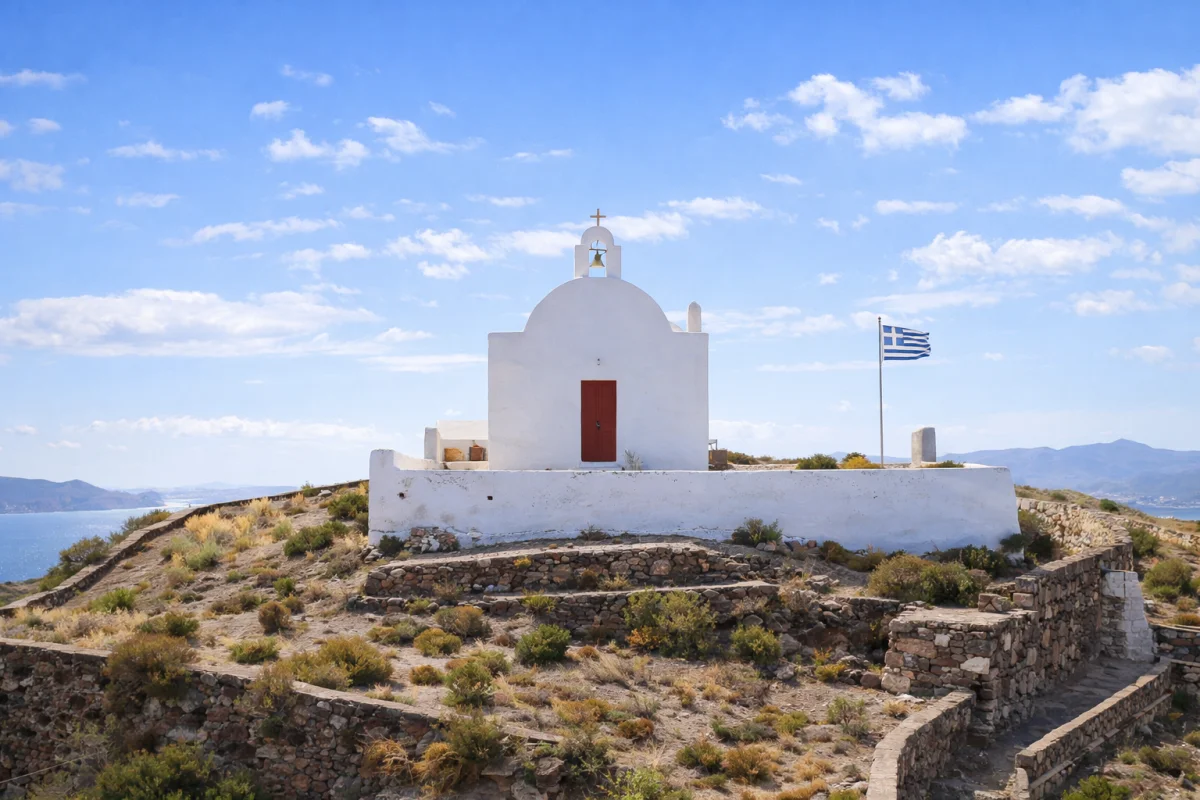
Plaka is quiet confidence. Sitting high above the island of Milos, it watches everything calmly , the sea, the hills, the villages below. You may think you know Plaka from photos: white houses, narrow alleys, blue doors and perfect sunsets. All of that is real. But what stays with you is not what you see. It’s what you feel when you walk slowly through its streets and realise your body has relaxed without you noticing.
Getting to Plaka
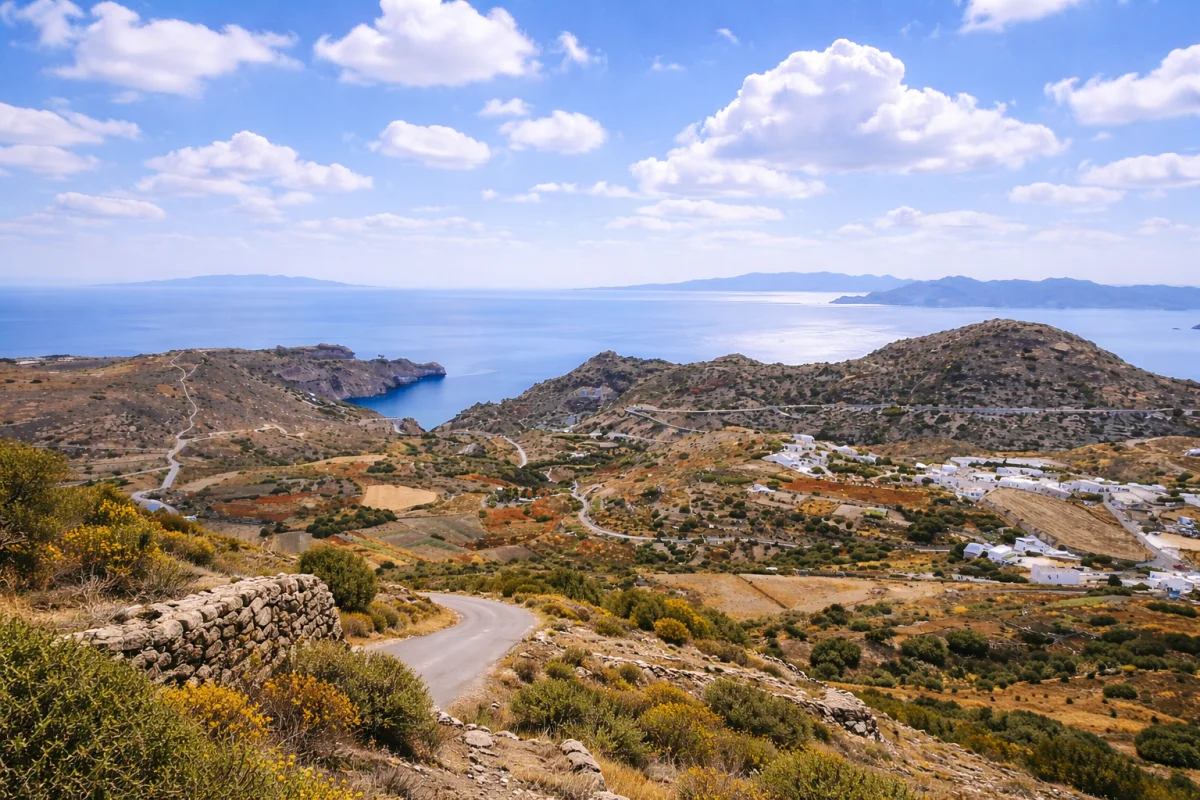
The road to Plaka feels like a quiet transition. As you drive upward, the island gradually opens beneath you. Houses become closer together. Streets narrow. The air feels lighter. You don’t notice the climb at first. Then suddenly, you’re above everything. Parking marks the end of driving and the beginning of walking. Plaka is not meant for cars. Its streets belong to footsteps, not engines. Once you step inside the village, movement slows naturally. White walls reflect the sun. Bougainvillaea spills over balconies. Cats rest in the shade. And then, without warning, the sea appears between two buildings. A sharp blue slice that stops you mid-step.
Streets That Remember Time
Plaka’s streets feel drawn by hand, not designed. Pebble-paved paths twist gently. Alleys loop back on themselves. Some end in small courtyards. Some lead to benches polished smooth by decades of use. Some simply disappear. Every few steps, something small catches your attention: A window frame painted the softest blue. The smell of home cooking drifting down from a balcony. A pot of basil by a doorway or a local woman speaking softly to her neighbour, her voice echoing gently through stone. Plaka feels lived in. It’s not a display village. It’s someone’s home.
The Churches
Plaka is dotted with small churches, but Panagia Korfiatissa and Panagia Thalassitra feel especially present. They sit calmly on terraces and cliff edges, facing the endless Aegean. You don’t need to step inside to feel them. Their presence is enough. You sense the weight of time. Weddings, baptisms, festivals, ordinary prayers, held quietly in their walls. There’s almost always a breeze around them. You sit on a low stone wall. The sea stretches endlessly ahead. Birds pass slowly. The churches don’t dominate the village, they fullfill it.
A Walk That Feels Like Rising Into the Sky
The walk up to Kastro, the old Venetian castle, is slow and deliberate. The steps are uneven. The slope is steady. The path passes through old houses and stone passages shaped more by time than intention. As you climb, the village grows quieter. The air cools, the wind strengthens and the view opens. At the top, everything spreads out: sea on all sides, villages scattered across hills and distant islands floating on the horizon. People naturally fall silent here. You feel small in the best possible way. Sunset draws many people up and yes, it is beautiful. But the real magic is the calm in your chest. The clean wind. The way the sky opens. The way time pauses without being asked. Kastro is not just a viewpoint.
Shops and Cafés
Plaka’s shops feel personal. Small jewellery workshops where someone is shaping metal by hand. Linen clothes hanging quietly outside. Local sweets, handmade ceramics, bottles of homemade liqueur. Nothing feels mass-produced. Cafés and small restaurants appear naturally at turns in the alleys. A few tables on a terrace. A balcony overlooking the sea. A courtyard shaded by flowers. Coffee takes its time. Conversations stay soft. The view quietly stretches across the island. Plaka teaches you how to slow down without saying a word.
Light in Plaka
If Milos is famous for its light, Plaka is where you truly feel it. Morning light is gentle and pale. Midday light bounces off white walls into the alleys. Afternoon softens edges and shadows. Evening makes the whole village glow from within. Light doesn’t just illuminate Plaka, it defines it. You start noticing reflections on stone, colours shifting on walls and the sea changing tone with the sky. Plaka teaches you how to look again.
Plaka at Night
At night, Plaka becomes even more itself. Locals come out for walks. Children play in small squares. Restaurants fill with low conversation and laughter. The air cools. Food scents drift through the alleys. People move slowly because there’s no reason not to and then the sunset gathers everyone quietly. Some stand at village edges. Others climb back to Kastro. The sun disappears into the sea. For a moment, everything stops. Plaka at sunset is a shared silence.
What Makes Plaka Special
Yes, Plaka is beautiful. But that’s not why it stays with you. It stays because it makes you feel held. It sits on a cliff and welcomes people.
Who Will Love Plaka
Plaka is for people who:
enjoy slow walks through beautiful places
appreciate history without needing explanations
love sunsets but prefer quiet ones
value atmosphere more than attractions
want to feel Milos, not just see it
notice small details and gentle moments
enjoy getting lost on purpose
If you’re looking for peace, connection and beauty, it may feel like home.
Why Plaka Stays With You
Plaka makes the world feel big and small at the same time. Its alleys feel like stepping back into something simpler, because climbing to Kastro feels like a quiet victory.