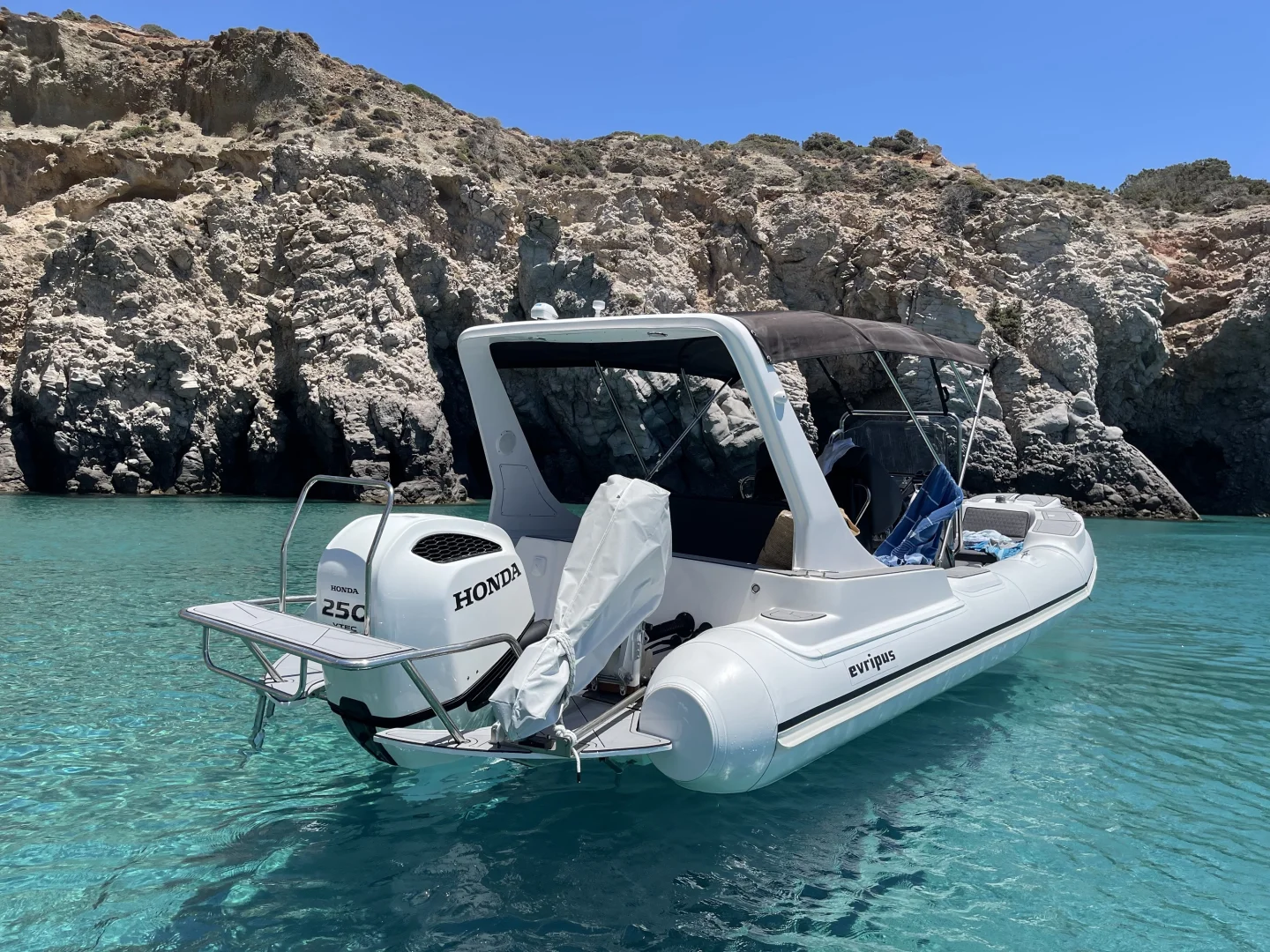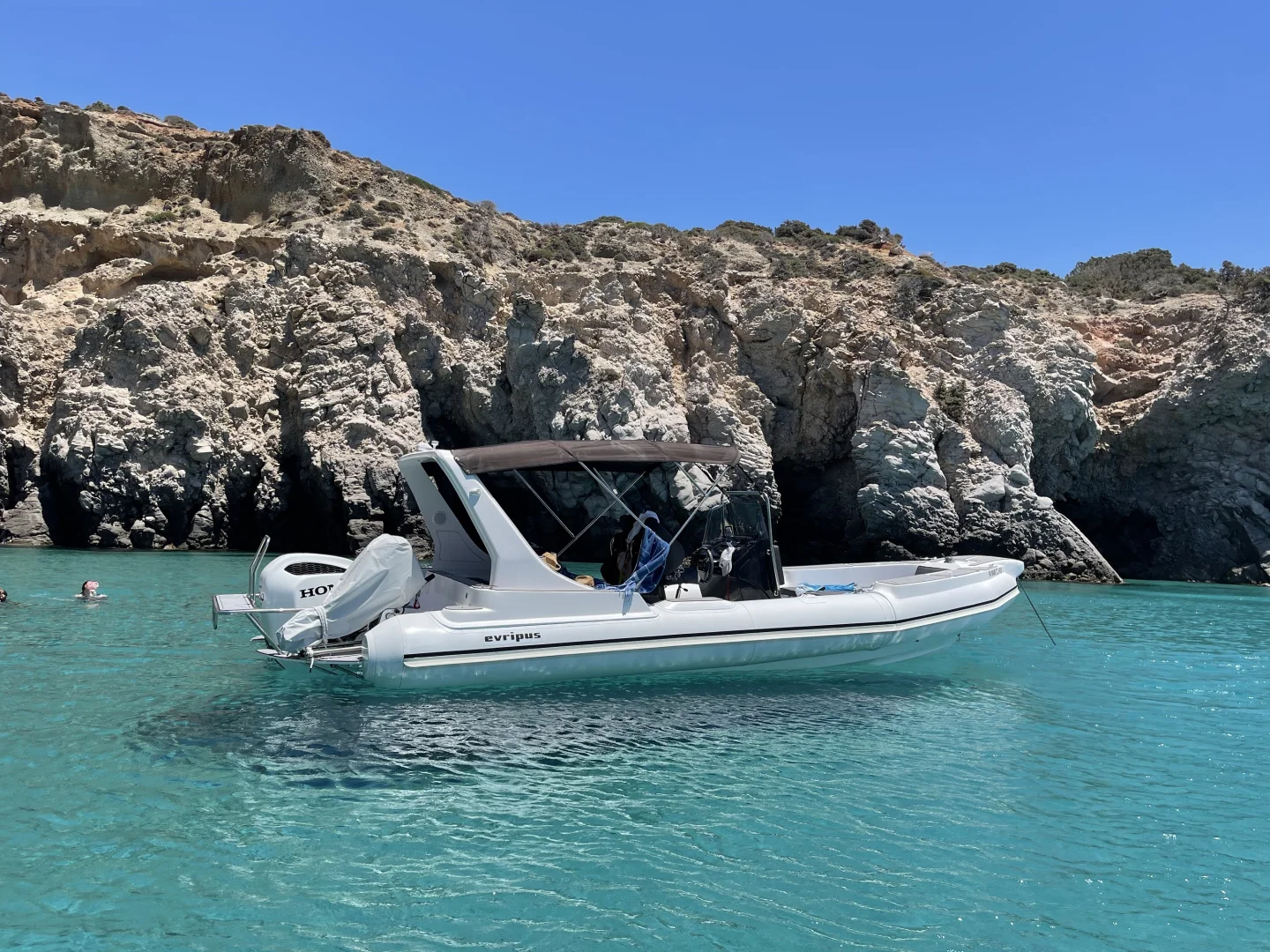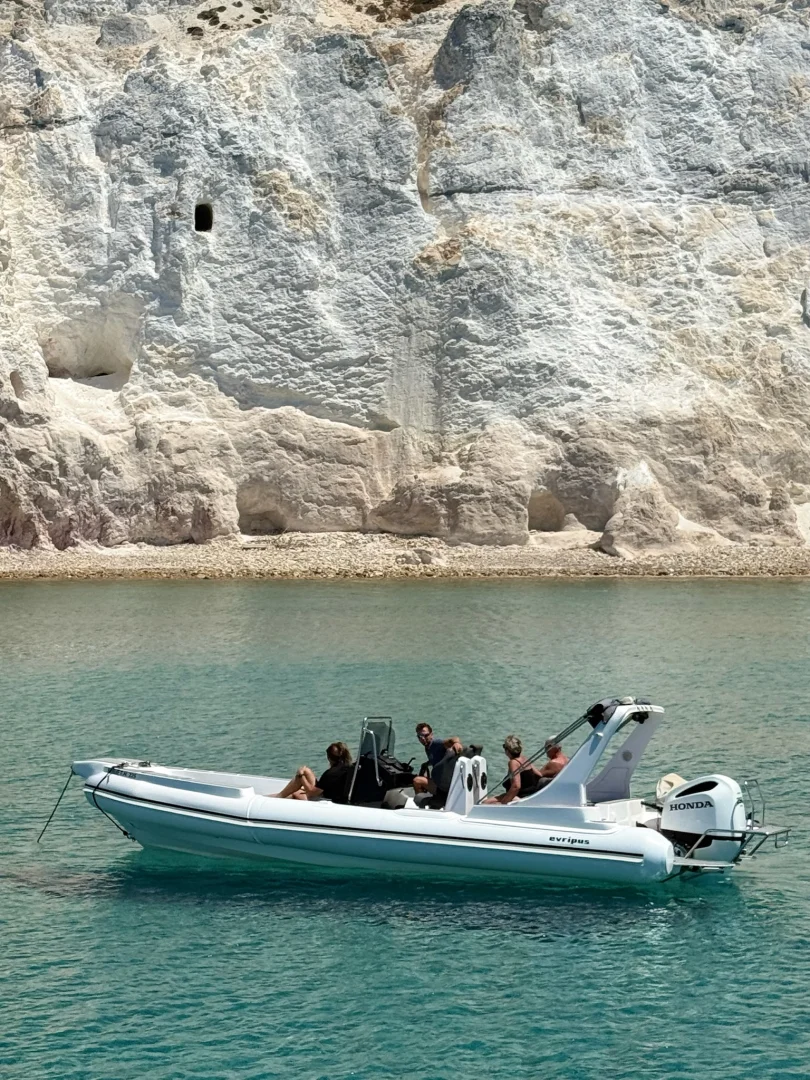
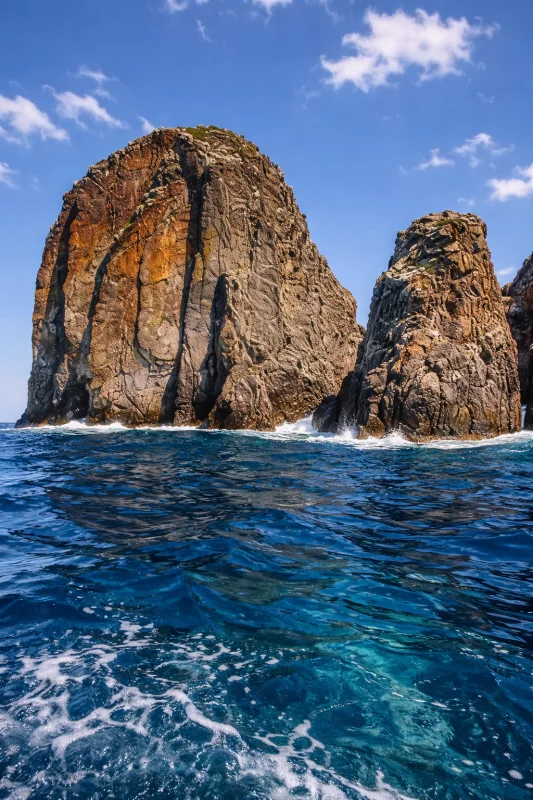
Cape Vani sits at the far northwestern edge of Milos, quiet and remote, shaped by wind, stone and time. It is not a place you accidentally pass through. You go to Vani on purpose, whether by boat, by foot or by driving as far as the road allows and walking the last stretch. The moment you arrive, you feel that this is a different side of the island. There are no beaches here, no shade, no comforts. Just cliffs, sea, wind and silence. Vani does not try to charm you. It shows you its raw volcanic face and leaves you alone with it. Most people who visit describe the same feeling when they leave. Not excitement. Not thrilled. But a quiet kind of awe that sits with you long after.
The First Impression
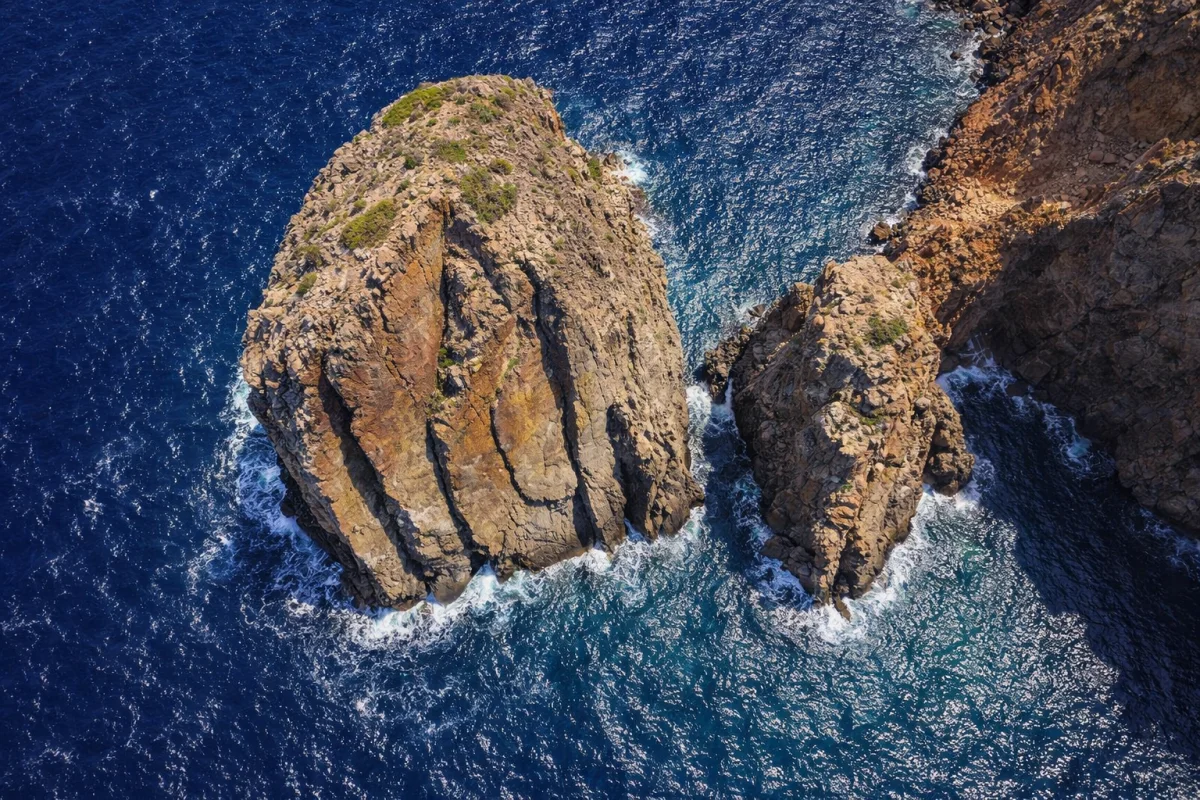
Vani rises from the sea as a dark, powerful cliff. The rock is not pale like much of Milos. It is deep in colour, layered with dark red, rusty orange, thick brown and near-black streaks that tell the story of volcanic force. From the sea, the formation towers over you. From above, it drops into open blue space. Either way, the scale of it makes you feel small, not in fear but in perspective. There are no soft curves here. No symmetry. Just strong, uneven rock that feels ancient, steady and unmoved by anything passing through.
The Old Mining Ruins
Hidden within the rocks of Cape Vani are the remains of one of the oldest manganese mines in Greece. Over a hundred years ago, people worked in this harsh corner of the island, carving industry into stone. Today, the remains lie scattered across the land. Rusted metal. Broken beams. Stone foundations slowly returning to dust. Nothing is restored. Nothing is cleaned. It all simply rests where it was left, quietly ageing with the cliff itself. These ruins do not feel abandoned in a sad way. They feel honest. They remind you that real lives once unfolded here in wind and isolation long before the cliff became something visitors admired from boats.
The Colours of the Cliff
Vani holds some of the deepest colours on the island. Its rock layers look stacked like natural memory. Dark red, rusty orange, burnt brown, near black veins and hints of purple in some places. As the light changes through the day, the cliff transforms. In the morning it feels cool and muted. By midday it glows warm. In the late afternoon it turns copper. At sunset it looks as if it is holding fire inside the stone. It is rare for a single rock formation to feel alive through colour alone, but Vani somehow does.
The Sea Below Vani
The water at Cape Vani is not shallow or playful. It drops quickly into depth. The blue here is heavy, full and powerful. On calm days the sea mirrors the dark cliff like glass. On windy days the waves strike the rock with a steady rhythm that feels older than memory. You do not come here to swim in the usual way. You float. You drift beside the rock. You listen to water echo against stone. It feels peaceful, but in a strong, grounding way rather than a soft one.
The Feeling of Being There
Cape Vani does not offer comfort. It offers presence. There is no shade. No place to linger casually. You arrive, you stand, you take it in and the place feels emotionally large. The weight of land, history and sea seems to settle gently but firmly around you. People naturally become quiet here. Some stop talking entirely. Not because they are told to, but because the place asks for it without words. Even a short time at Vani feels steadying. Not soothing. Not relaxing. Clarifying.
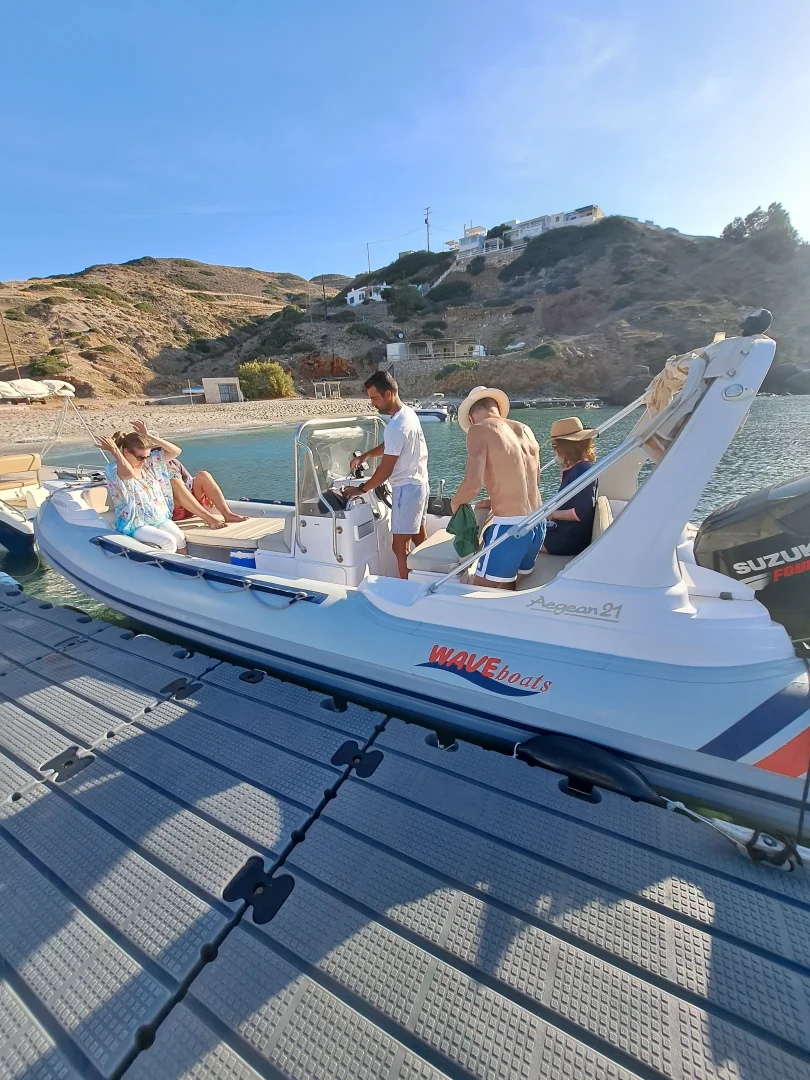
Arriving by Boat
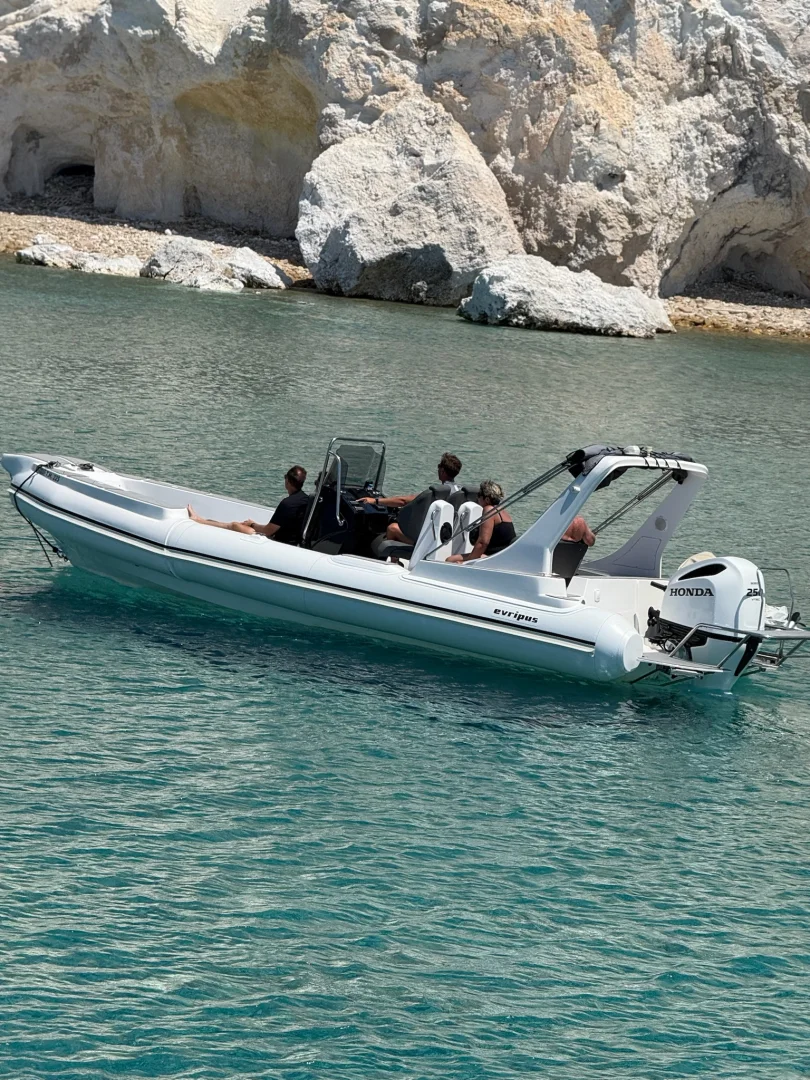
From the water, Vani feels even more powerful. The cliff rises straight from the sea and reveals details only visible up close. Layers of cooled volcanic stone, deep fractures like veins, rough textures hidden by distance and the dark cavities inside the rock. Boat captains usually slow instinctively near the cape. People lean forward to photograph it, but after a while the cameras drop and the silence takes over. It becomes one of those moments that does not need to be captured to stay with you.
Reaching Vani on Foot
Walking to Cape Vani is raw and rewarding. The path is uneven. Dirt, rock and exposed ground guide you forward. As you move closer to the point, the land narrows and the sea widens. The wind strengthens. The world grows quieter. When you finally reach the edge, the view is endless and the drop is steep. From above, the cliff looks like a great wedge anchoring the island to the sea. You do not sit here for long. You stand. You watch. You breathe. And then you move away, carrying the moment with you.
Small Details That Stay With You
Cape Vani shows itself through quiet observations:
The sound of wind curling along rock
The warmth of sun-heated stone
The way the sea shifts colour minute by minute
Tiny pieces of rust left by miners
The taste of salt in the air
The steady hum of open water
None of these feel dramatic while you are there. But later, these are the details that return first.
Who Will Love Cape Vani
Cape Vani is for people who appreciate untouched, powerful landscapes, geology and raw formation, quiet places with emotional depth, moments that make you feel small in a meaningful way, boat trips that offer reflection rather than entertainment and history woven gently into nature. It is not for those seeking beaches, comfort or lively energy.
Why You Should Go
You should go because Vani disconnects you from noise. It shows you its rawness, an ancient, volcanic side of Milos that is rarely seen, The sea here feels deeper and older than elsewhere. Some places impress with beauty, but Vani impresses with presence. You do not leave excited, you leave more quietly, thoughtful and more steady. This creates a rare, special feeling.