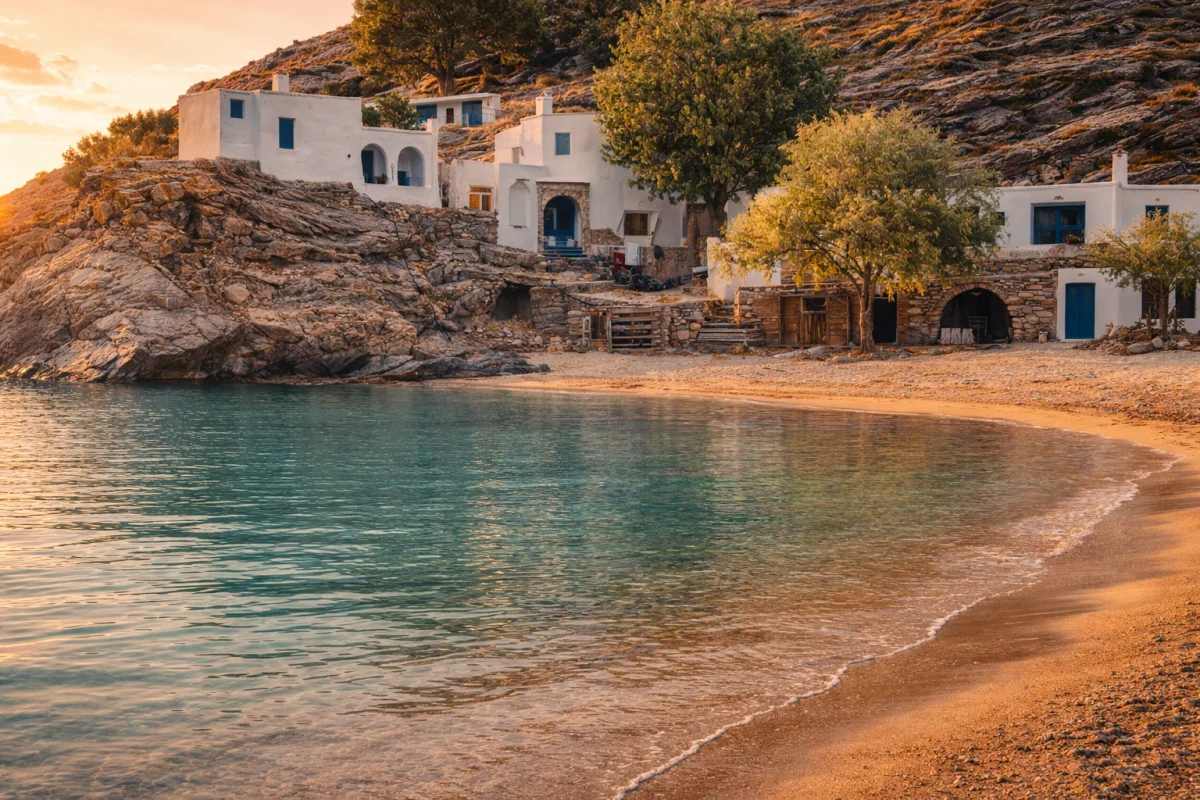
Tinos feels like an island shaped as much by faith and tradition as by wind and stone. It carries movement and stillness in equal measure. On one side, pilgrims arrive with quiet devotion. On the other, villages sit untouched by urgency, holding onto rhythms that feel older than memory. You come to Tinos expecting meaning. You leave carrying a softer version of it.
The Island at a Glance
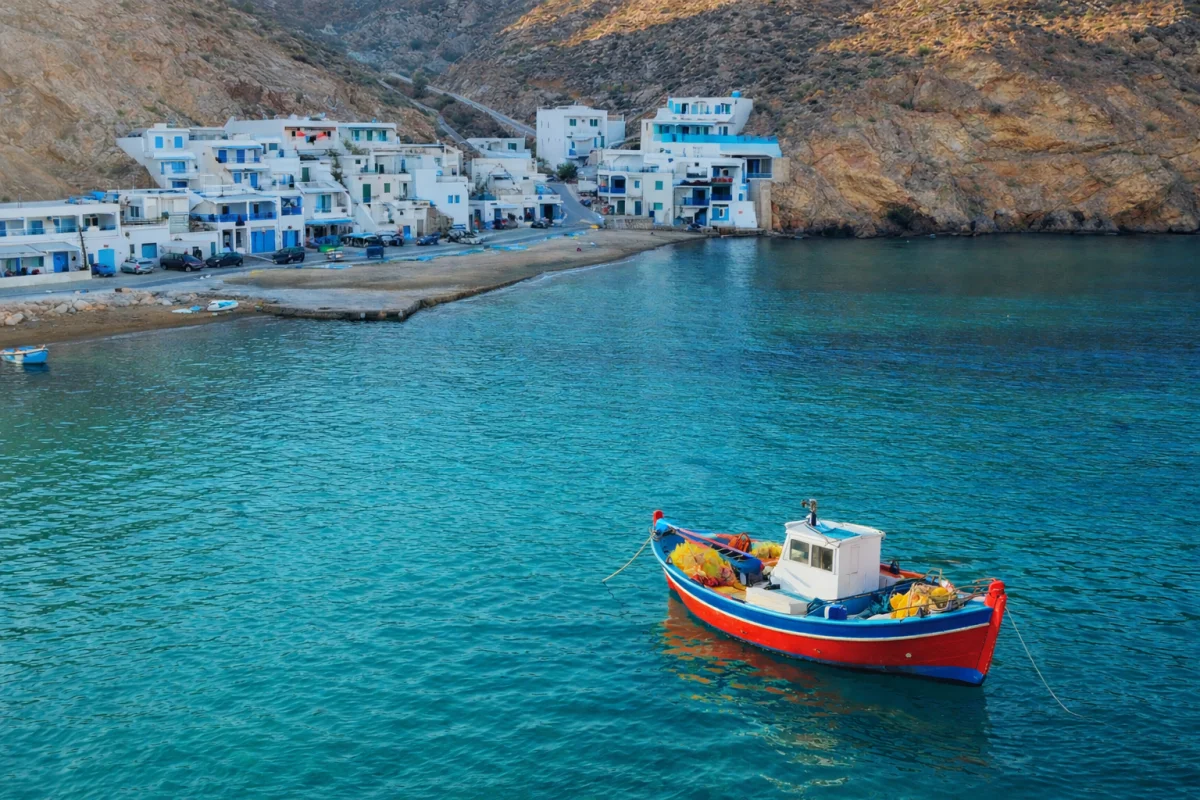
Tinos sits just north of Mykonos, yet feels worlds apart in spirit. It is hilly, open and shaped by terraces that climb patiently across the land. Dozens of villages dot the interior. The coastline unfolds into rocky coves, small beaches and long stretches of open water. The island feels wide, even when distances are modest.
Geography, History & Culture
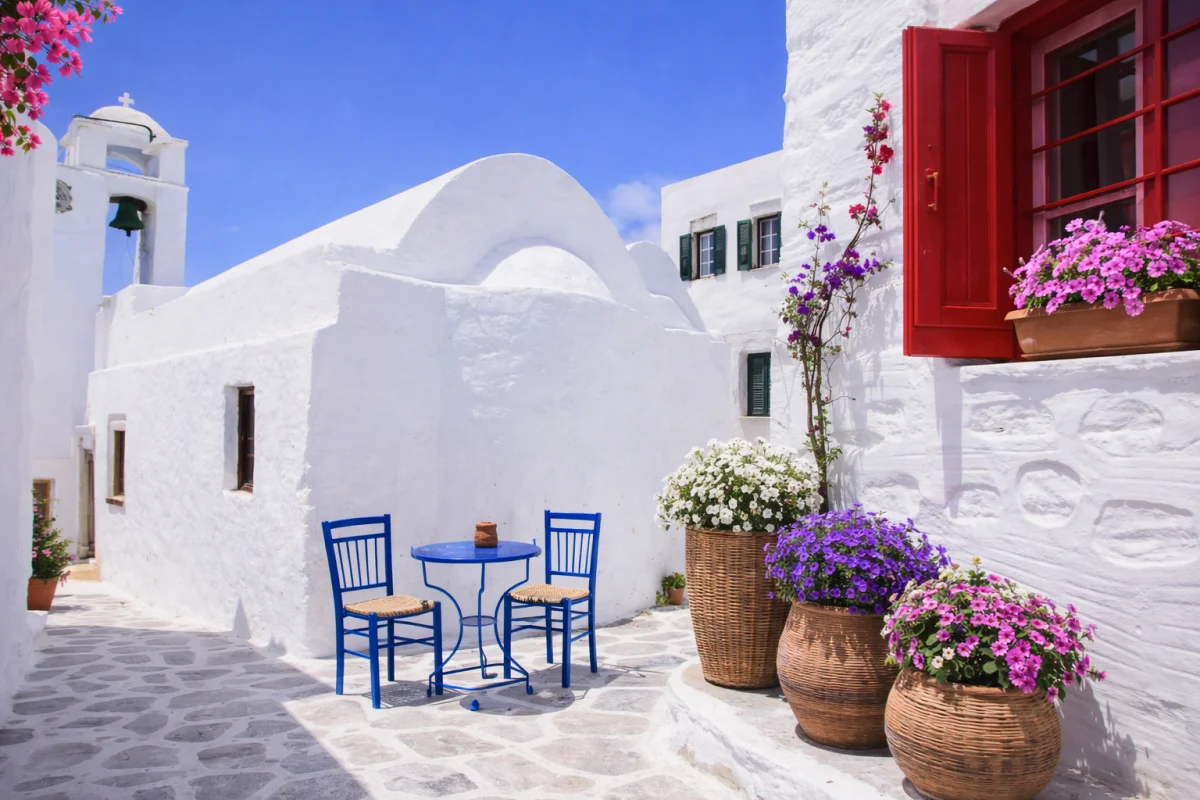
Tinos is shaped by strong winds, dry stone and steady light. Hills go up slowly. Valleys open up without any drama. Stone walls run along the ground like quiet writing. Tinos is one of Greece’s most important spiritual destinations, home to the Church of Panagia Evangelistria, a place of pilgrimage for centuries. Alongside faith, the island holds a deep artistic tradition. Skilled marble sculptors emerged from its villages, shaping both sacred and everyday stone into lasting form. Life on Tinos continues year-round. The island does not empty when summer fades. Schools remain open. Cafés stay warm with conversation. Fields continue to be worked. Visitors enter this life quietly, without disrupting it.
Highlights of Tinos
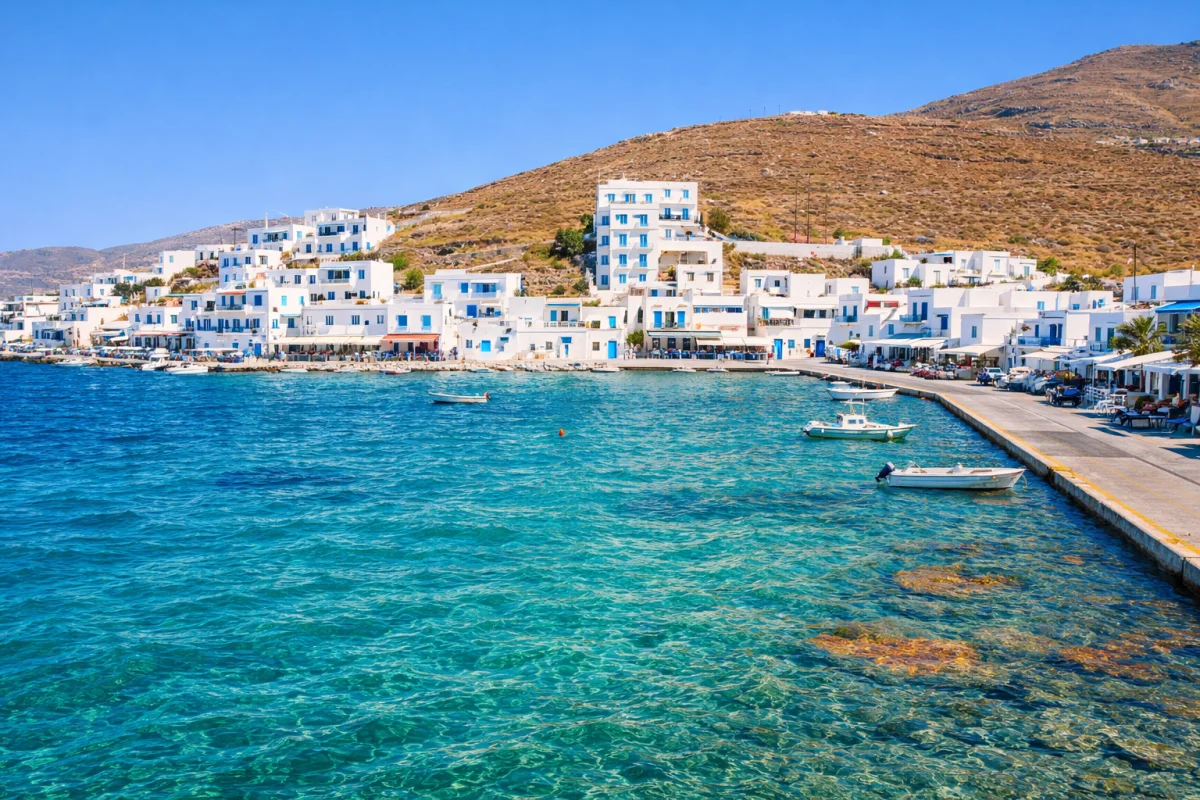
Tinos Town rises from the port with steady purpose. The long path leading to the church is walked with devotion, but the rest of the town unfolds with cafés, shops, quiet streets and everyday movement. Here, sacred and ordinary exist side by side without conflict.
The Marble Villages
Villages like Pyrgos, Volax and Kardiani carry the island’s artistic soul. Stone houses reflect light softly. Workshops remain open. Courtyards gather shade and silence. These villages feel shaped by hands that worked with care rather than force.
The Beaches of Tinos
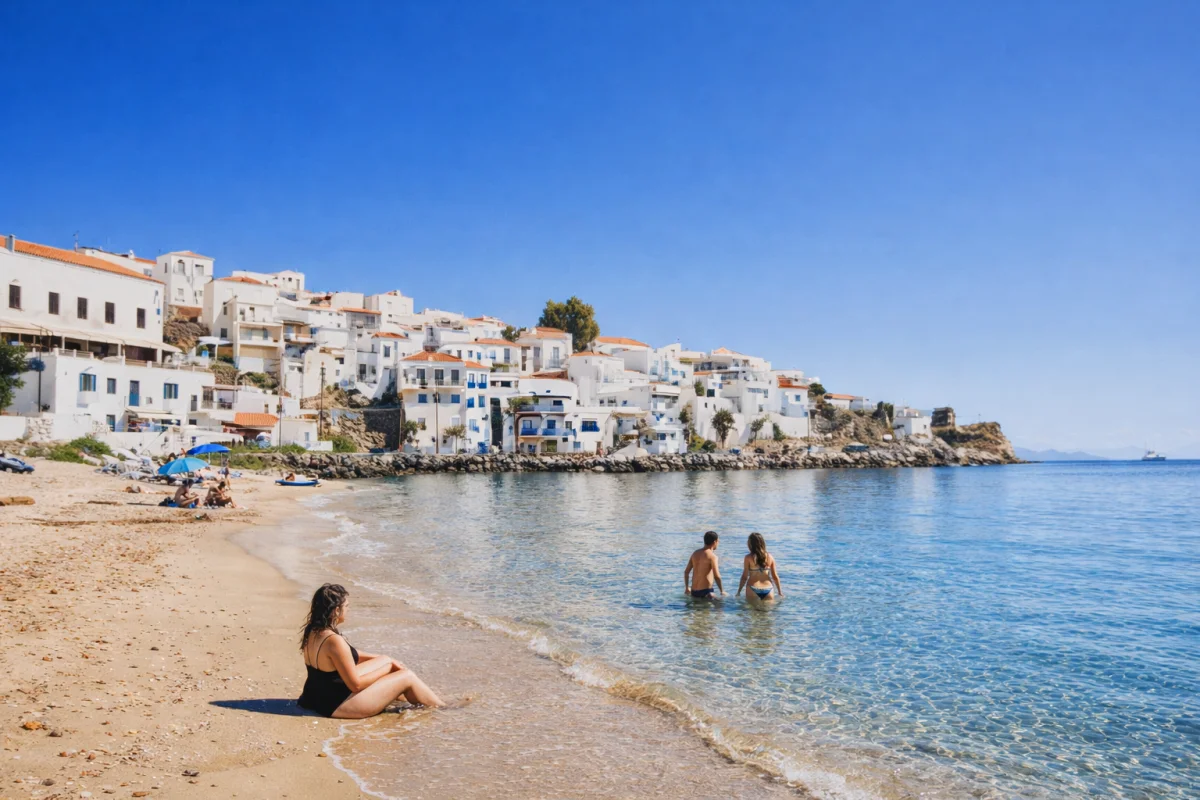
Tinos offers beaches that feel exposed, natural and true.
Kolymbithra
Two bays, steady surf, open horizon.
Agios Fokas
Long shoreline, soft light, calm water.
Livada
Wild, open and untouched.
Rochari
Wide, breezy and free.
The Island’s Walking Feel
Paths climb and fall gently between villages, fields and open sky. You feel the stone beneath your feet. You feel the wind beside you. Movement here feels purposeful without needing a destination.
The Sea and Its Open Power
The sea around Tinos feels wide and alive. Winds shape waves. Light carves the surface into motion. Swimming here can feel strong and refreshing rather than soft and still. The water wakes you rather than cradles you.
The Spirit of Tinos
Tinos carries both spiritual depth and daily simplicity without separating the two. Devotion exists besides farming. Art exists beside routine. Silence exists beside wind. Food is shaped by the island’s soil and sea. Fresh vegetables, local cheese, fish, bread and wine. Meals feel grounded rather than decorative. Hospitality is generous without ceremony. You are fed because feeding is part of life.
Best Time to Visit
May & June
Clear light, open paths, calm rhythm.
September
Warm water, quiet villages, softer wind.
July and August
Brings more visitors, especially during religious festivals, but the island keeps its depth.
Getting Around
A car is the best way to explore the island fully, especially its villages and more distant beaches.
Where to Stay
Tinos Town
Central, social and well connected.
Pyrgos
Traditional, artistic, quiet.
Agios Fokas
Beachside, open, relaxed.
Why Tinos Stays in Your Heart
Tinos stays with you because it feels sincere. You remember the sound of wind through stone villages. The weight of marble under your hand. The calm of paths that led nowhere in particular. Tinos offers you the quiet can follow you home.