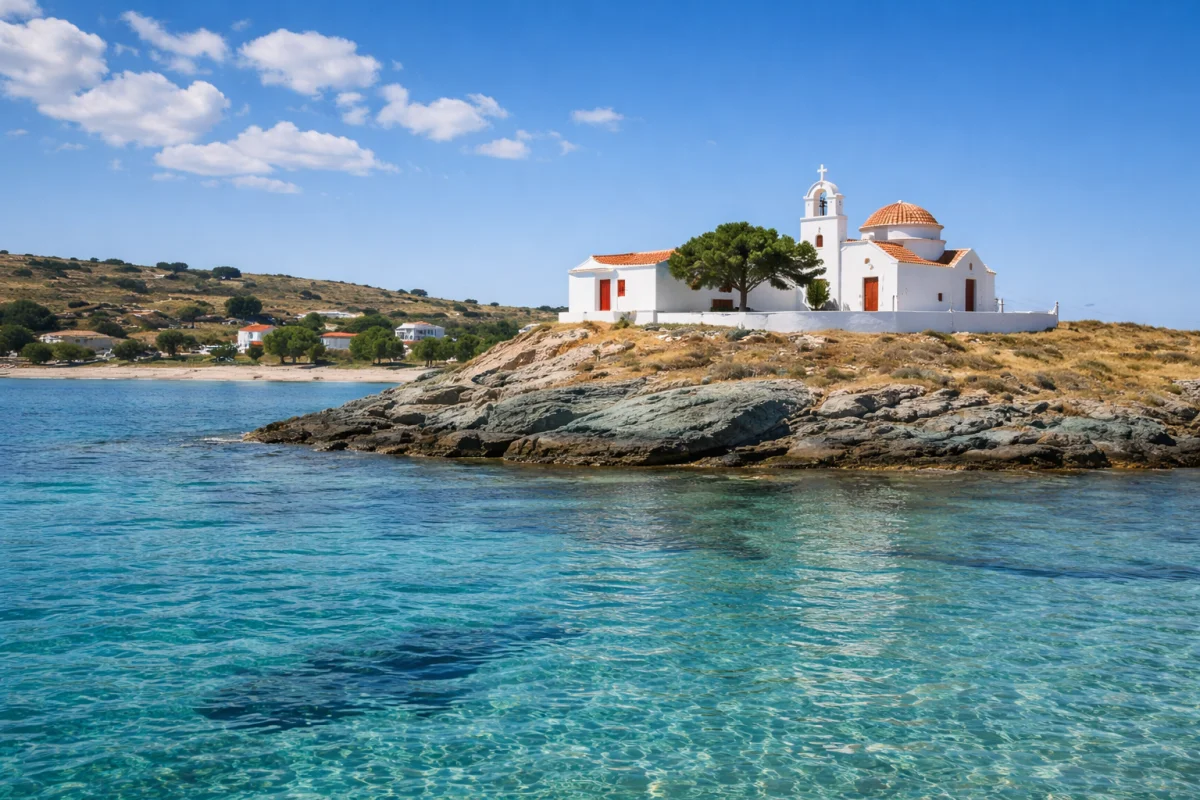
Kythnos sits quietly in the western Cyclades, steady and unbothered, offering warmth without spectacle and calm. You don’t arrive in Kythnos expecting intensity.
The Island at a Glance
Kythnos is one of the closest Cycladic islands to Athens and one of the most accessible, yet it remains surprisingly quiet. It is made of soft hills, long coastlines and dozens of beaches folded into small, welcoming coves. There are two main villages, a lively harbour area and wide stretches of open land in between. The island feels spacious without being large.
Geography, History & Culture
Kythnos is shaped by low hills that roll gently toward the sea. The land feels worn smooth by time and wind. Stone terraces wrap the slopes. Dry earth meets bright water. The island feels open and breathable.
An Island With Ancient Footprints
Kythnos has been inhabited since prehistoric times and was known in antiquity for its natural springs and metal resources. Life in Kythnos feels steady and familiar. People live here year-round. Cafés are filled with local voices long before visitors arrive. Evenings unfold in village squares and along harbour paths. The island does not change its rhythm for anyone.. That is part of its charm.
Highlights of Kythnos
Chora - The Quiet Heart
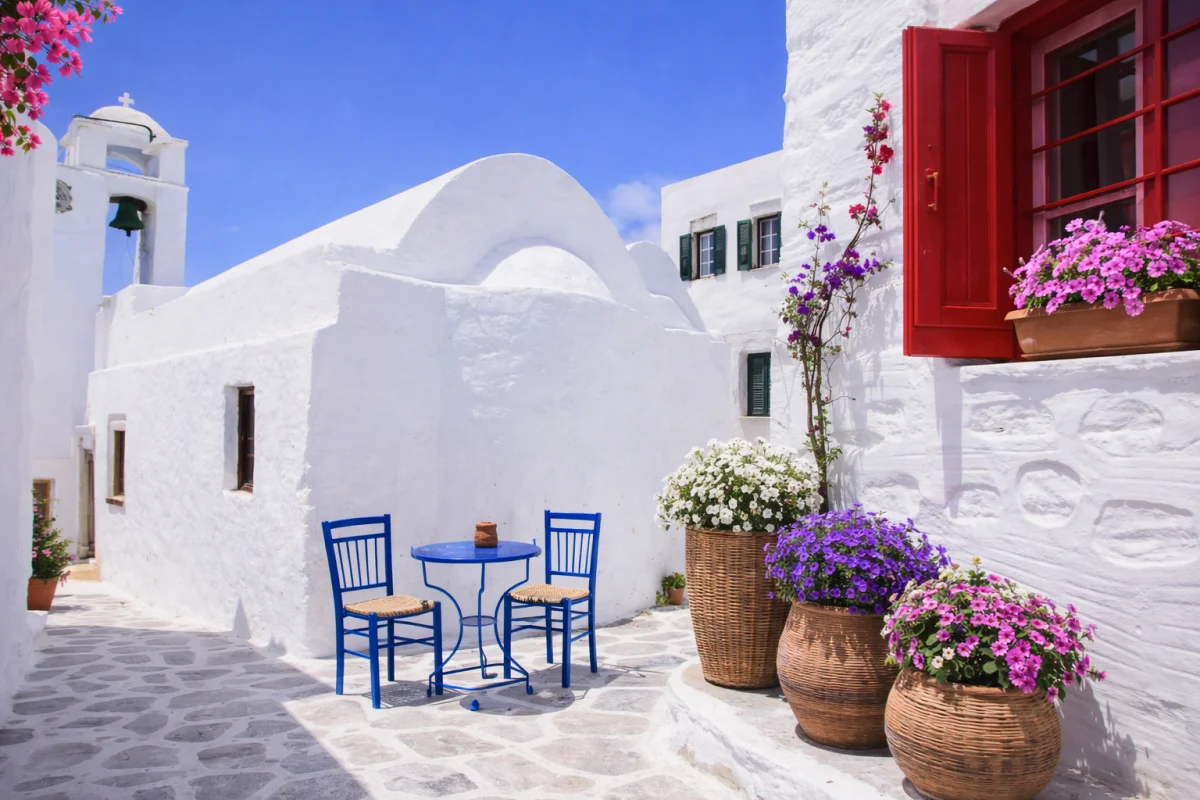
Kythnos Chora rises gently above the land with white houses, narrow walkways and small courtyards that hold shade and conversation.
Loutra - Warm Water by the Sea
Loutra is famous for its natural thermal springs, where warm mineral water flows directly into the sea. Swimming here feels different. The water relaxes your body not through temperature alone, but through stillness.
The Beaches of Kythnos
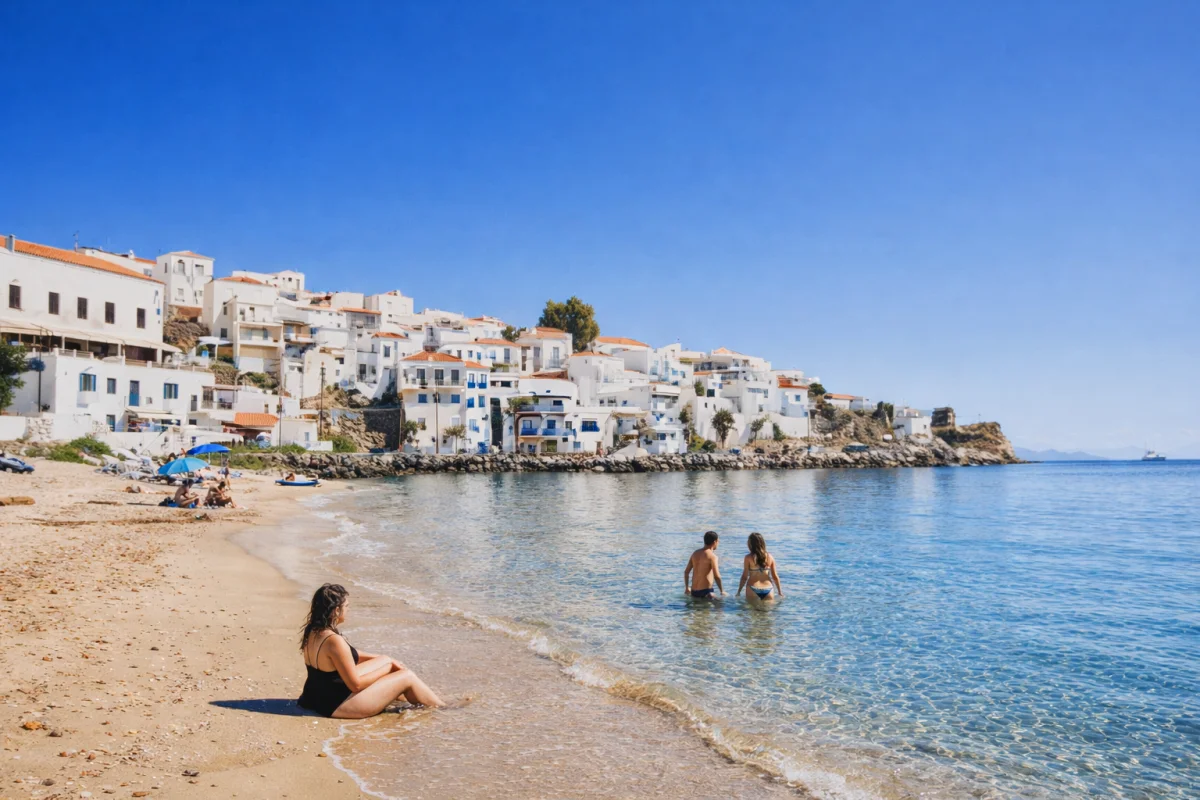
Kythnos holds more beaches than you expect.
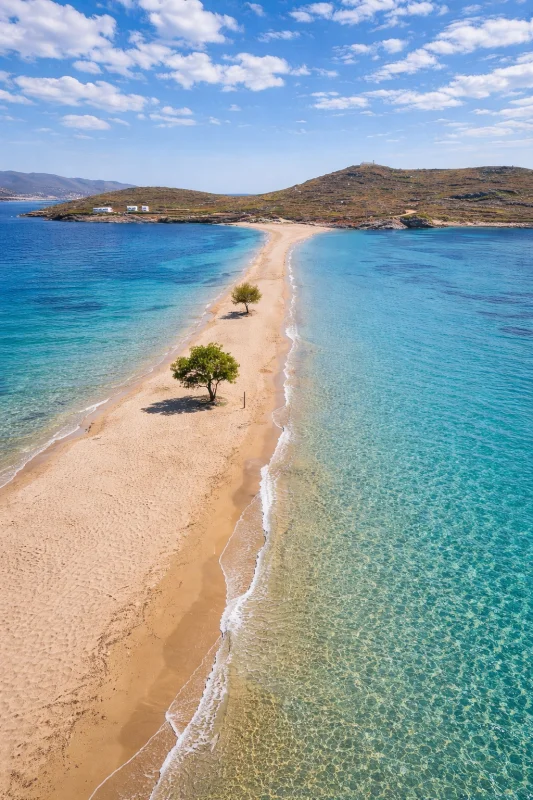
Kolona
A narrow strip of sand connecting two seas, open on both sides.
Apokrousi
Wide, sandy and calm.
Gaiduromantra
Quiet, rocky and private.
Zogaki
Small, sheltered and gentle.
The Island’s Walking Feel
Walking in Kythnos feels unhurried. Old footpaths link villages, hills and beaches without effort. You walk not to reach something spectacular, but to feel movement without pressure.
The Sea and Its Two Faces
The sea around Kythnos changes gently from bay to bay. One side feels calmer, softer. The other holds more wind and movement. Swimming here adapts to your mood, either meditative or playful, always steady.
The Spirit of Kythnos
Kythnos does not highlight itself. It waits to be noticed. Its beauty is quiet, built into daily life rather than framed for visitors.
Food, Hospitality & Local Taste
Food is fresh and uncomplicated. Local cheeses, meat dishes, fish, bread and wine shape meals that feel sincere rather than designed. Hospitality is direct. You are very welcomed.
Best Time to Visit
May & June
Fresh air, open beaches, calm walking weather.
September
Warm sea, soft light, relaxed villages.
July and August
Brings more visitors, but the island never feels rushed.
Getting Around
A car or scooter helps explore the island fully, though many beaches and villages remain connected by short walks.
Where to Stay
Chora
Traditional, quiet, central.
Loutra
Close to the springs, calm and open.
Merichas
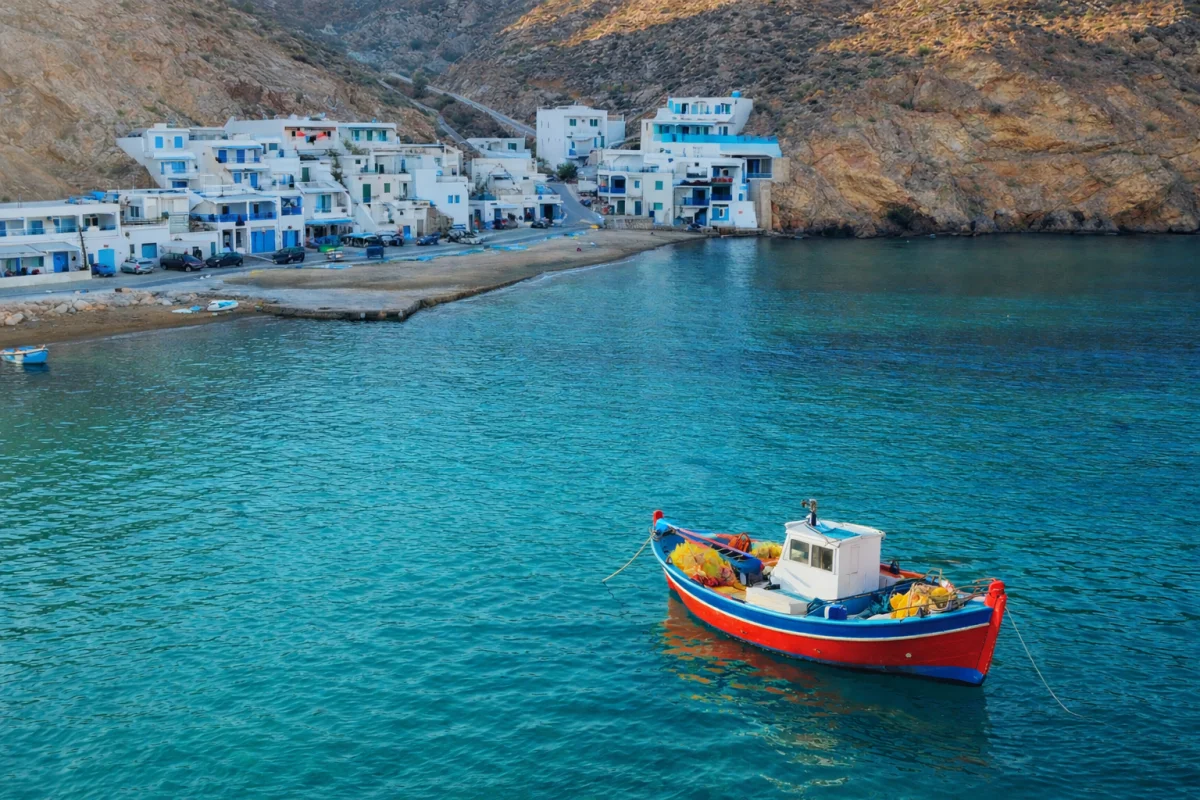
Harbour life, evening walks, social rhythm.
Why Kythnos Stays in Your Heart
Kythnos stays with you because it feels honest. You remember the ease of your days. The warmth of the sea. The sound of quiet evenings. The way nothing felt urgent. Kythnos doesn’t draw you in with intensity. It keeps you calm.