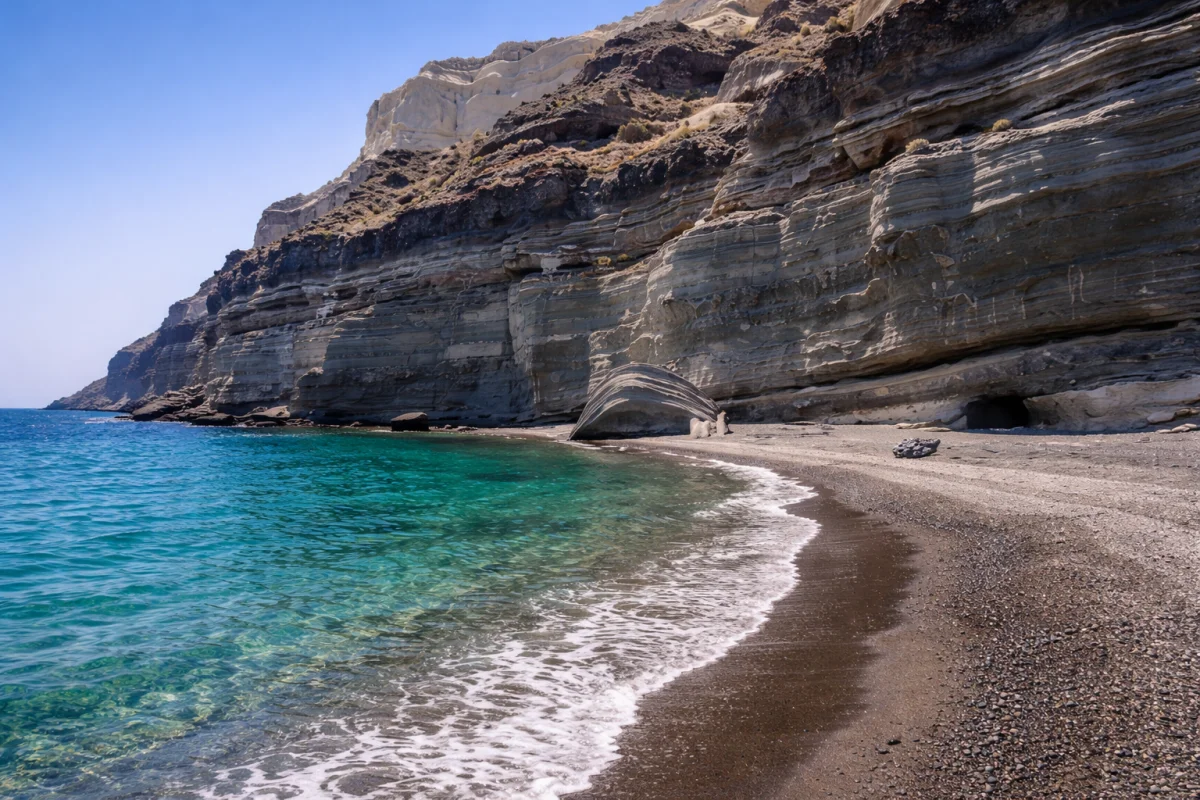
Thirasia is the quiet sibling of Santorini. A piece of the same ancient volcano, shaped by the same eruption, holding the same dramatic geology, yet it feels like a completely different world. While Santorini hums with movement, Thirasia moves gently, like a breath taken after too many rushed steps. It watches the caldera not as a spectacle, but as part of everyday life.
Arriving at Riva or Korfos
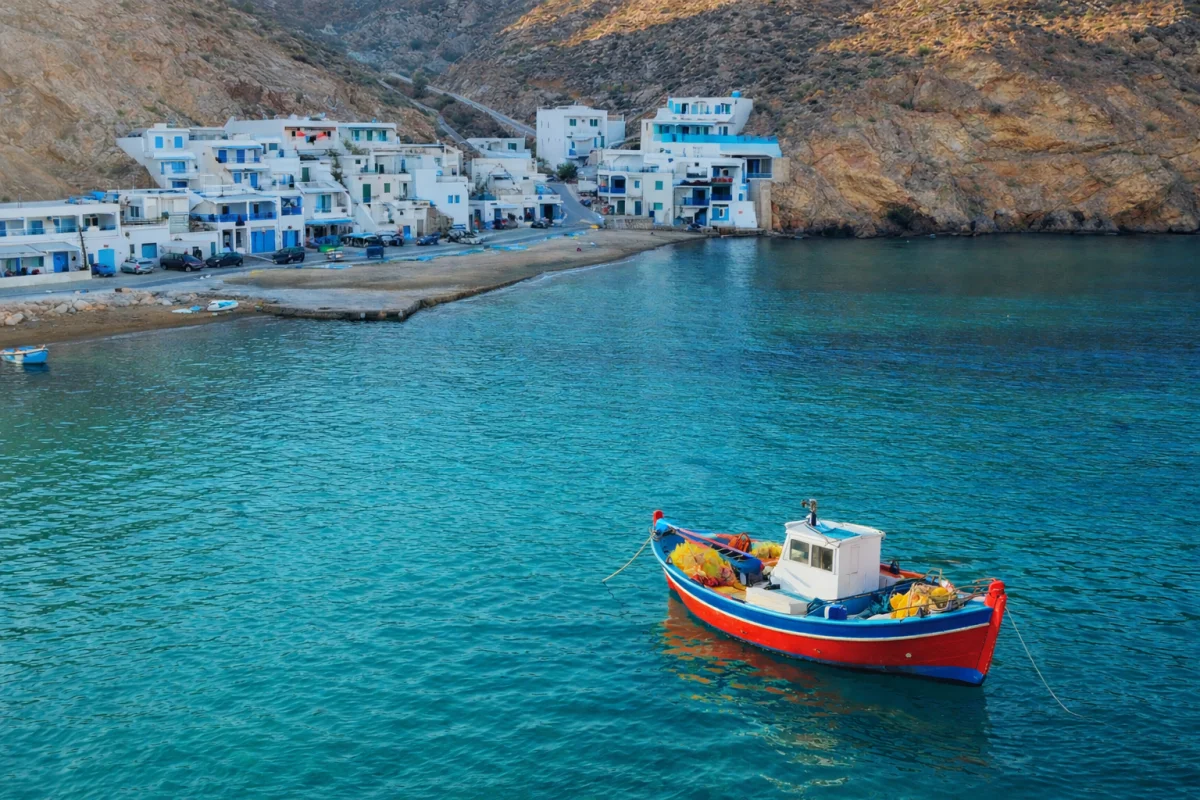
Arriving at Thirasia usually means stepping off a small boat into the tiny port of Riva or the slightly livelier Korfos. The cliffs rise steeply above you, layered with volcanic colours. Reds, blacks and soft whites, telling the story of the island’s explosive past. But unlike Santorini, where every inch feels curated, Thirasia feels raw and honest. The land is the land. The villages are villages. Life is life.
The Climb to Manolas
If you choose to climb the stone steps up to Manolas, the main village, you understand the island immediately. Each step reveals more sky, more sea, more silence. The climb isn’t easy, but it’s steady and with every pause, the view expands. The vast blue of the caldera, the crescent shape of Santorini across the water and the open space that surrounds you. By the time you reach the top, your breath matches the island’s rhythm.
Manolas Village
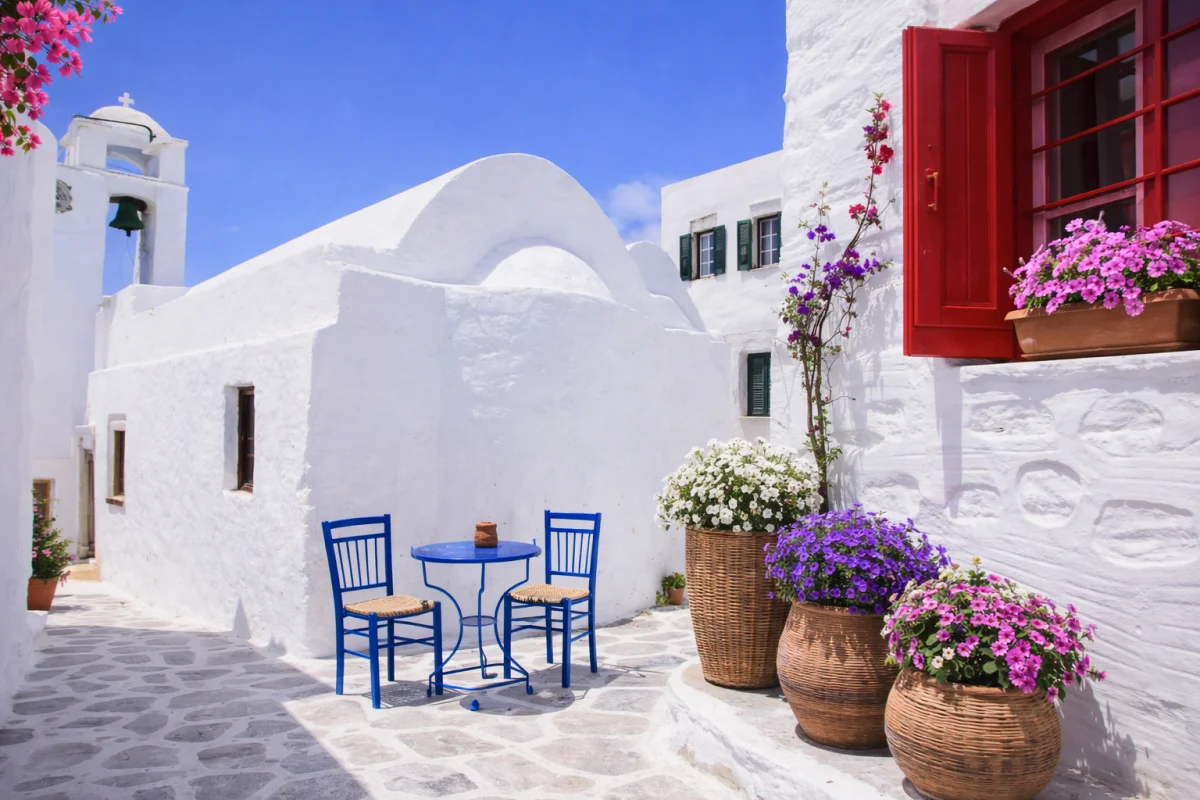
Manolas is a village of colours. Soft blues, warm yellows and deep reds, scattered against the volcanic backdrop. Cats wander freely. Doors sit half-open. Bougainvillaea grows over terraces. You walk along narrow lanes that turn gently rather than abruptly. The village feels authentic, not staged. You don’t feel like a visitor; you feel like a quiet observer of something that has existed long before tourism and will continue long after.
The Rural Landscape
Beyond Manolas, the island opens into fields, terraces carved by hand and paths that wind toward small chapels perched above the sea. Thirasia feels rural in the truest sense. Goats grazing, wind brushing through dry grass and the smell of warm earth rising through the heat. The land feels lived in, not built upon.
Volcanic History
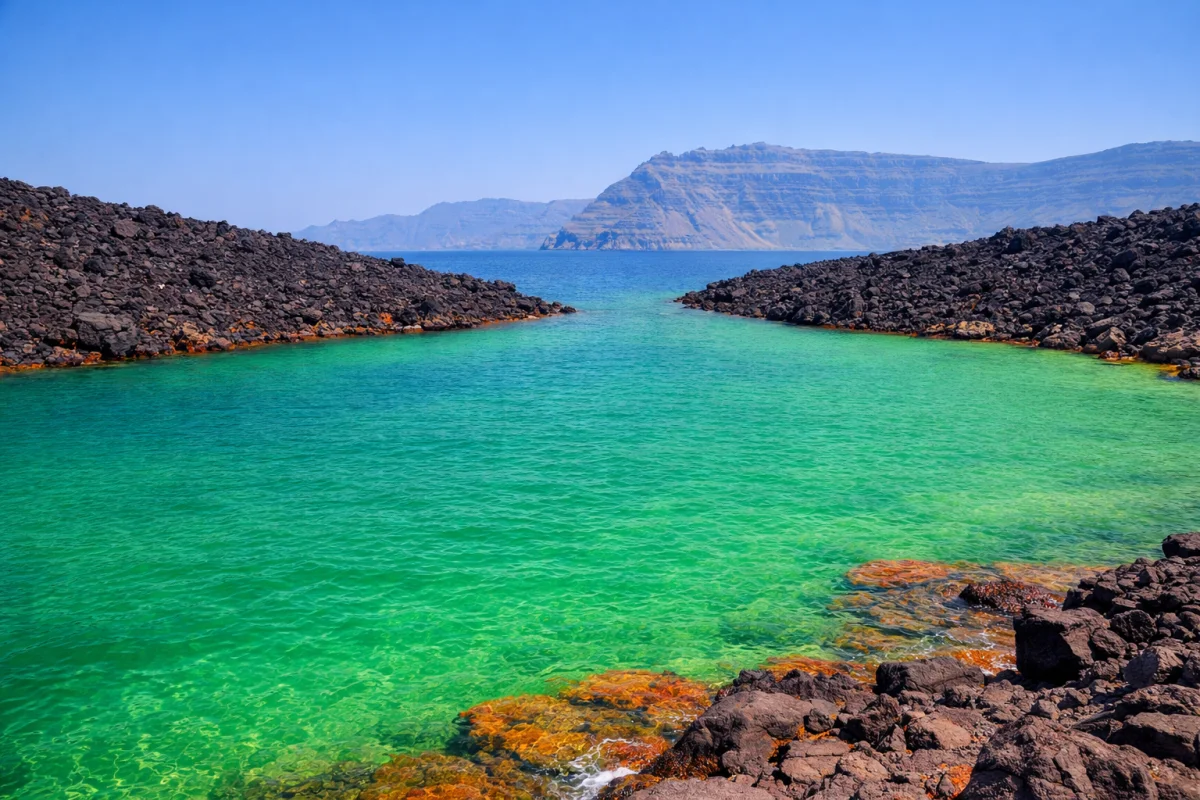
Geologically, Thirasia is inseparable from Santorini. What you stand on is a fragment of the ancient Stromboli-like volcano that erupted around 1600 BCE, shaping the caldera and altering the history of the Aegean. The cliffs are a vertical timeline of that eruption. Each layer a colour, each colour a memory.
Quiet Beaches and Villages
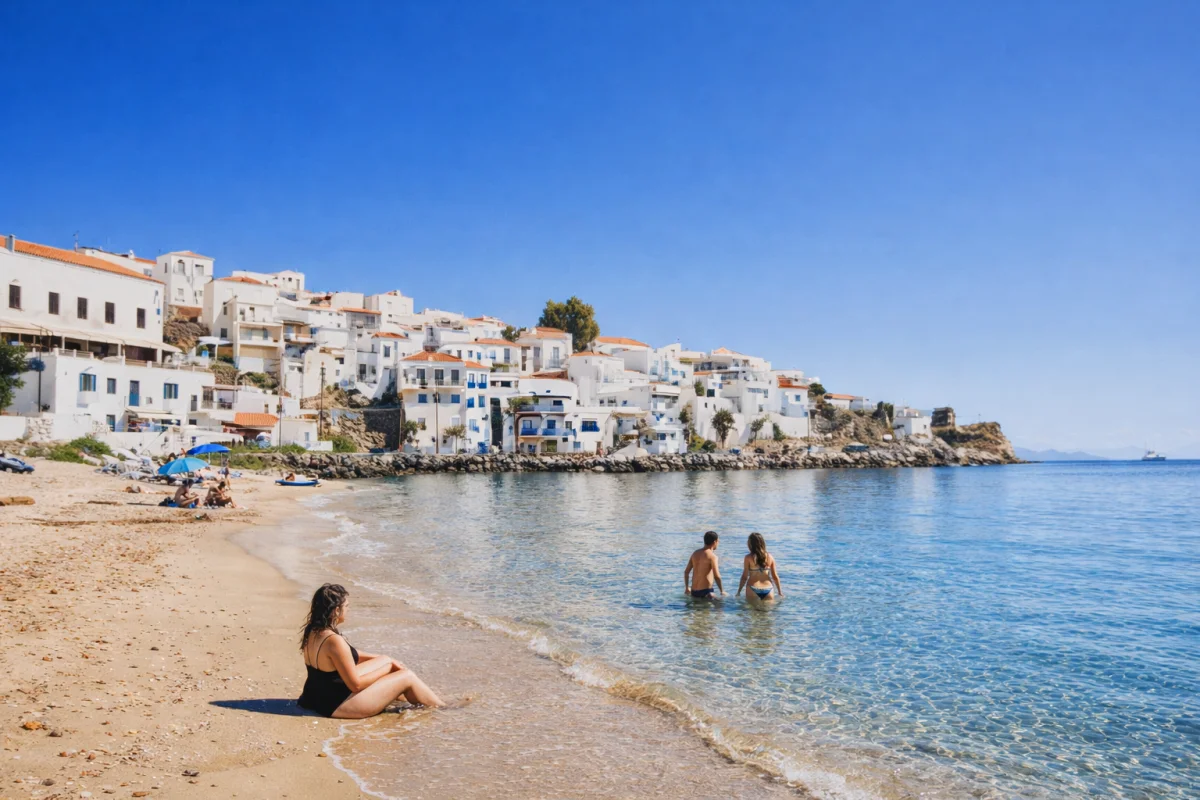
The beaches here are not polished or crowded. They are small, volcanic and quiet. Korfos has a simple charm-fishing boats, gentle water and tavernas serving fresh food pulled from the sea that same morning. Agrilia, almost abandoned, feels like a village paused in time-cave houses, wind-battered doorways, traces of a life lived simply. Every corner of Thirasia feels like a story whispered rather than spoken.
People and Pace
People on Thirasia carry the island’s gentleness. Conversations are warm but soft. Hospitality is natural, never forced. Meals come slowly. Time stretches. You learn very quickly that there is no point in rushing, not because anyone tells you this, but because the island simply refuses to move faster than it wants to.
Views Over the Caldera
The views are breathtaking, but not because they shout at you. They move through you slowly. The caldera far below, the endless blue, the scattered white of houses perched on Santorini opposite you. In the late afternoon, the light becomes golden, warming the cliffs. At sunset, everything softens into pinks and purples and the silence deepens. Evening on Thirasia feels like a different world entirely. The air cools. The stars appear early. The sea darkens into a quiet presence. You might hear a dog bark or a boat engine hum in the distance or nothing at all. It is one of the rare places in the Cyclades where night truly feels like night, which is dark, peaceful and restoring.
Why Thirasia Matters
Thirasia matters because it shows what the Aegean looked like before the rush of tourism. Slow villages, good food, landscapes shaped more by weather than by people and silence that feels natural rather than curated. It reminds you that the caldera is more than a view; it is a place where people live, breathe and exist in real time. If Santorini is the dramatic poem, Thirasia is the quiet line that holds it together.