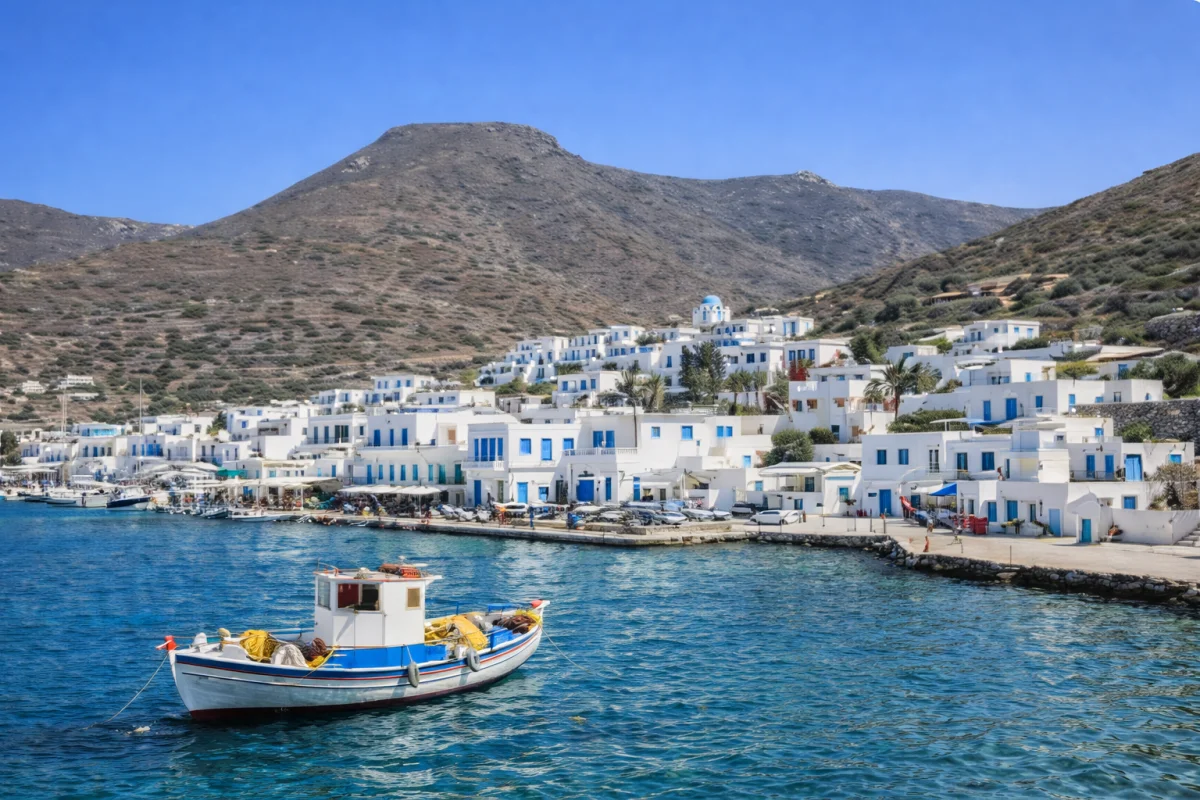
Amorgos doesn’t overwhelm you with noise or crowds or big attractions. Instead, it invites you to slow down, breathe a little deeper and take in landscapes that feel untouched by time. Long, narrow and rugged, it sits on the far eastern edge of the Cyclades, shaped by cliffs, wind and some of the clearest waters you will find anywhere in the Aegean.
The Island at a Glance
Amorgos stretches for almost 30 kilometres. It is slim and mountainous. The roads curve around steep hillsides, opening suddenly to views of deep blue water far below. Villages appear unexpectedly. The lay tucked between slopes or perched above bays. Everything feels peaceful here, even in the busier summer months. People come to Amorgos for different reasons: hiking, swimming, exploring or simply resting somewhere quiet. Almost everyone leaves with the same feeling. A feeling of this island is special in a way that’s hard to explain until you’ve stood here yourself, looking down at the sea from a cliff path with the wind brushing past you.
Geography, History & Culture
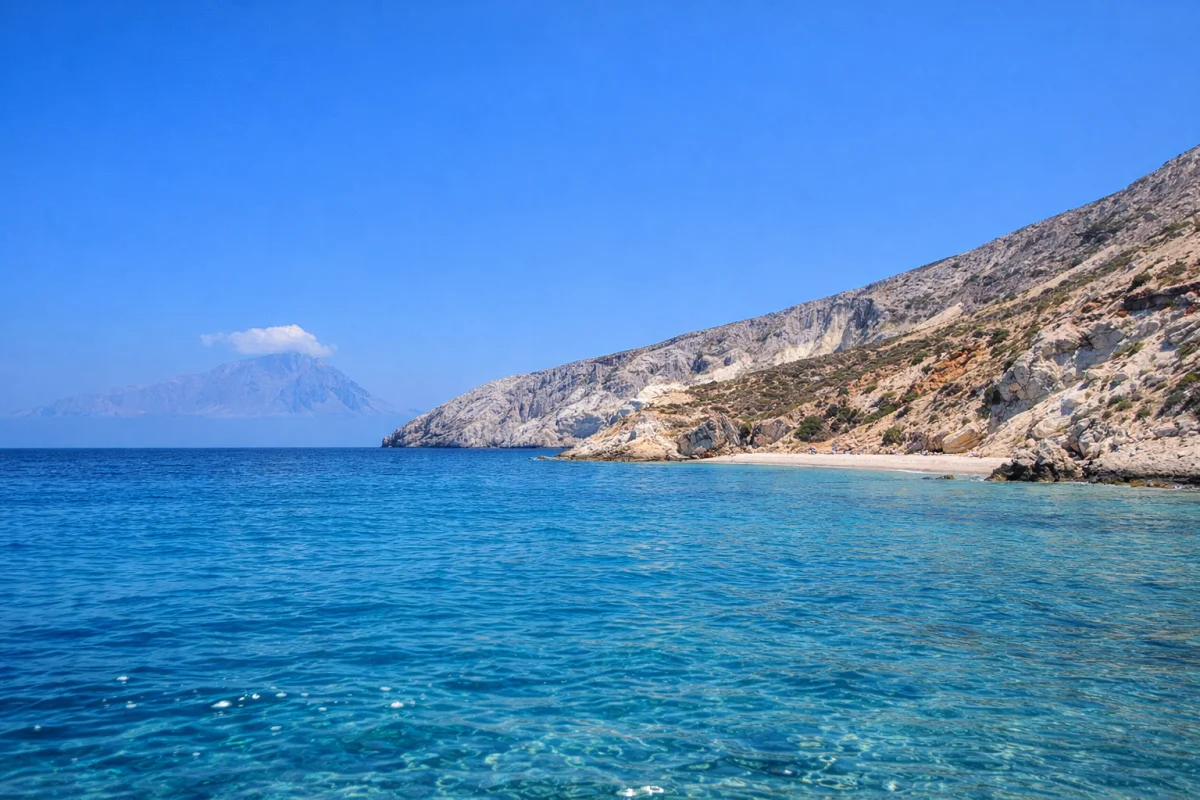
There’s a rawness to Amorgos that you notice immediately. The island is built from layers of rock. Grey, white and ochre, stacked into sharp ridges and vertical cliffs that fall straight into the sea. Valleys open between the mountains, marked by old stone terraces that once supported the island’s agriculture. The coastline twists constantly, creating coves and tiny beaches that feel hidden. Many are reachable only by foot or by boat, which is probably why the waters here are so unbelievably clear. Amorgos rewards effort; the harder the walk, the better the view and the experience.
An Island with Ancient Roots
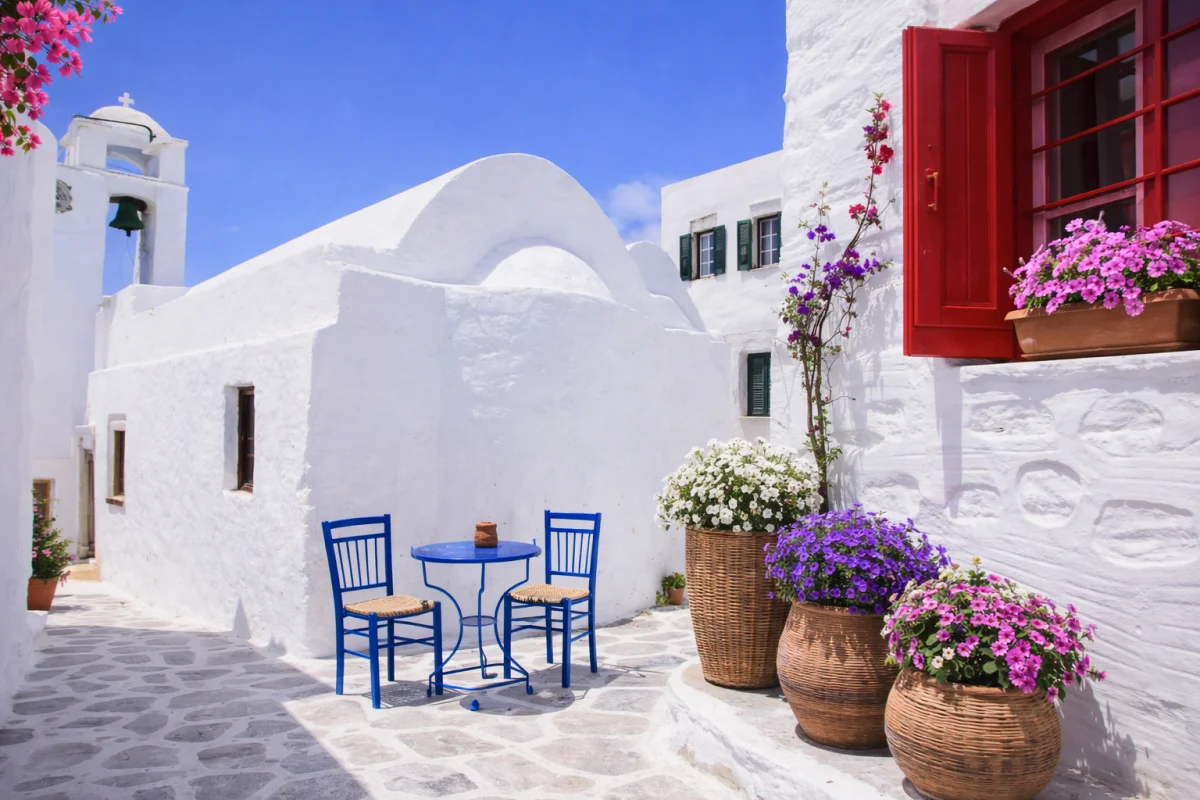
Amorgos has been inhabited for thousands of years. It once hosted three important ancient cities of Minoa, Arkesini and Aigiali. Traces of them still sit quietly on hilltops overlooking the sea. The island produced pottery during the Early Cycladic period, recognisable by its clean shapes and pale colours. Over time, Amorgos passed through the hands of Romans, Byzantines, Venetians and Ottomans, each civilisation leaving behind chapels, towers, paths or place names. Even so, the island has held tightly to its Cycladic character. The villages still look like they belong to another age: white houses with flat roofs, narrow alleys and courtyards full of plants that somehow survive the summer heat.
Life on the Island
People here live simply and close to the land. Many families still make their own wine, cheese, bread or honey. Conversations begin easily, over a coffee in the shade, on a bench overlooking the bay or at small tavernas where locals gather in the evenings. Music also has a strong presence in daily life. During village festivals, traditional violins and lutes echo through the streets long after midnight. If you happen to be on the island when one of these celebrations takes place, you won’t forget it. With locals, visitors, young and old, the entire square becomes one joyful crowd.
Highlights of Amorgos
Chora
If you had to choose one village that captures the soul of Amorgos, it would be Chora. It sits inland, almost hidden, guarded by a Venetian castle perched on a dramatic rock. Wandering through Chora feels like stepping into a story: quiet alleyways that twist unpredictably, tiny squares with whitewashed churches and old houses framed by bursts of bougainvillaea. You don’t come here to “see things”. You come to wander, to stop for a coffee, to climb up to the castle for the view and to feel how calm everything is. Evening is when the village becomes magical. The light softens, the wind cools and people settle into the small tavernas until late.
The Monastery of Hozoviotissa
This is the image of Amorgos that most people know. The Monastery of Panagia Hozoviotissa clings to a cliff high above the sea, so carefully built into the rock that it seems impossible that humans created it. The walk up to the monastery is steep but short and when you reach the entrance, a monk will offer you a glass of water and a small taste of “Psimeni Raki,” the island’s sweet spiced liqueur. Inside, the rooms are narrow, white and peaceful. But it’s the view from the terrace that stays with you: endless blue, stretching toward the horizon and the waves far below barely audible against the cliffs.
The Beaches of Amorgos
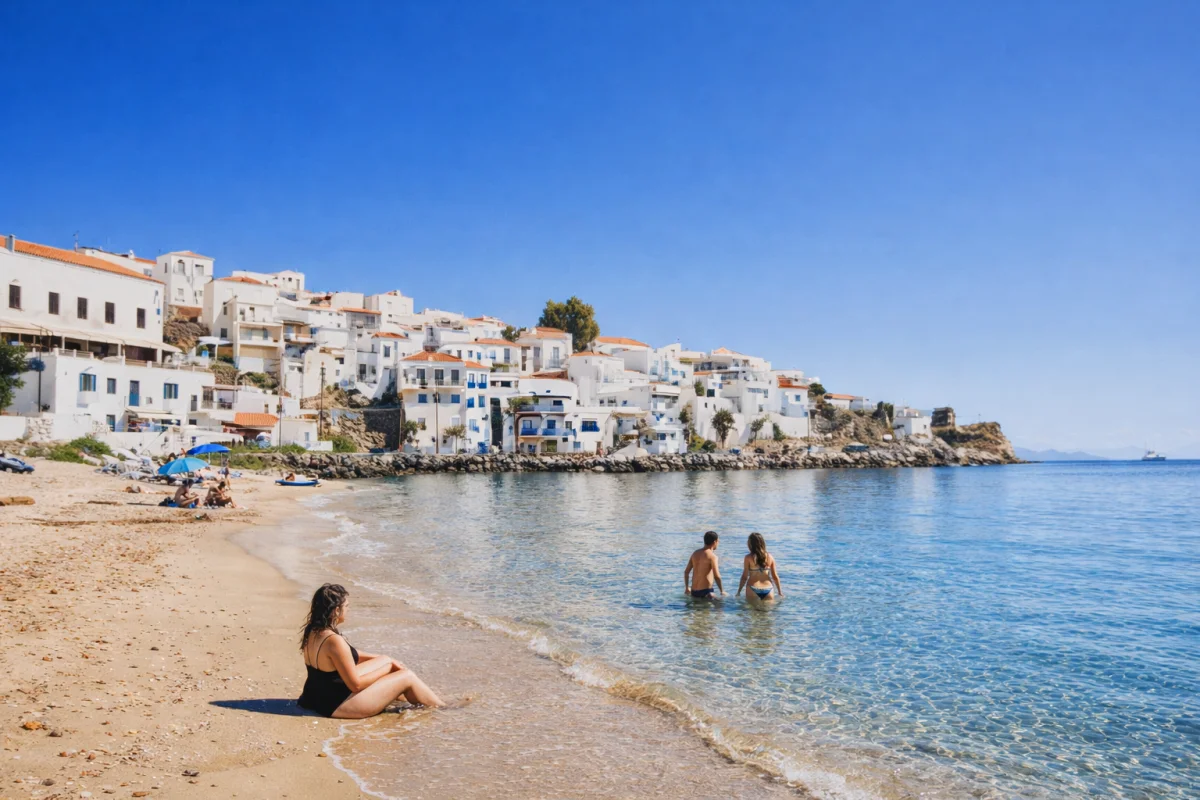
Amorgos doesn’t have long sandy beaches like some other islands, but that’s part of its charm. The beaches here feel natural and untouched, with clear waters that shimmer in impossible shades of blue.
Agia Anna
Rocky, iconic and unforgettable. The water is so clear that you can see the seabed as if looking through glass.
Aegiali Beach
Long, soft-sanded, gentle waves, which are perfect if you’re staying near the bay.
Mouros
A dramatic coastline with deep waters and small caves you can swim into.
Maltese
Calm, sheltered and easy to reach from Katapola.
Levrossos
A small peaceful beach, a short walk from Aegiali, where time quietly slips by.
Katapola
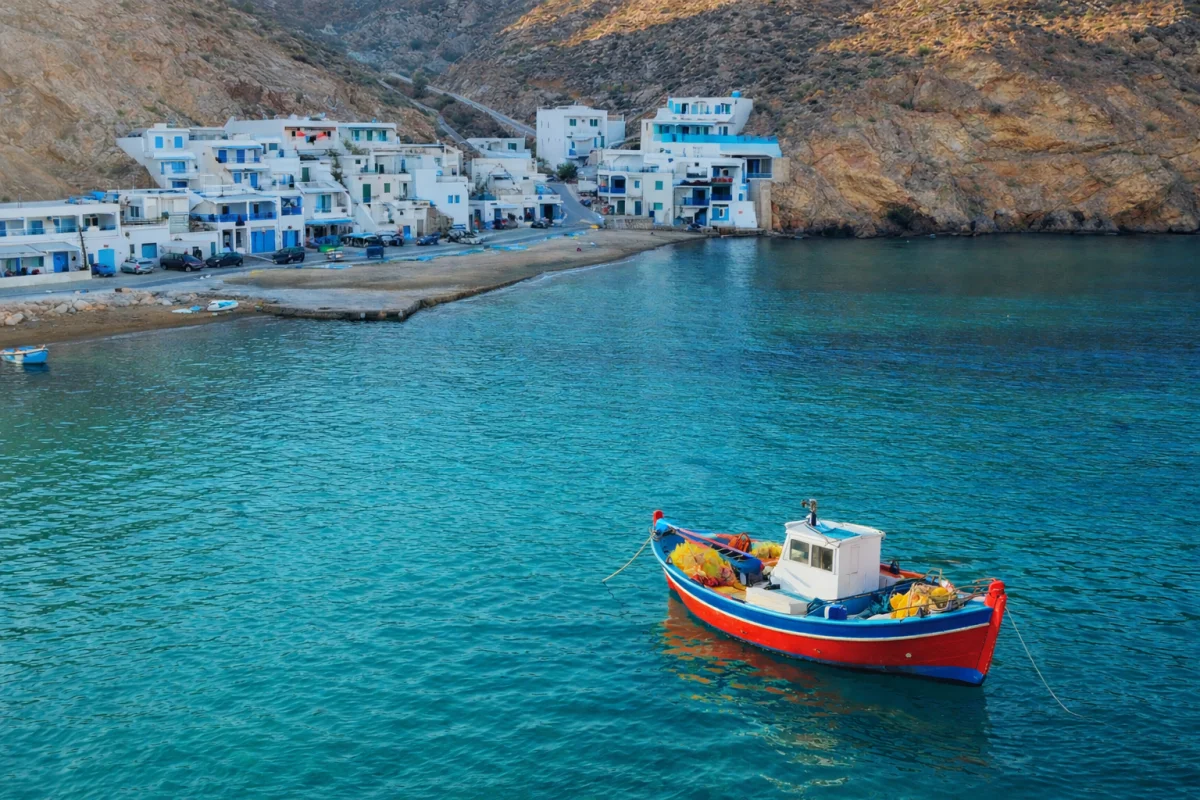
Katapola is one of the main ports, but it feels more like a quiet seaside neighbourhood than a busy harbour. A row of tavernas lines the waterfront, their tables practically touching the water. The bay is calm and the hills around it create the perfect natural amphitheatre for sunsets. Above Katapola sits the ancient city of Minoa. It’s an easy walk and once you reach the top, the view spreads across the bay, giving you a peaceful sense of how life must have felt here centuries ago.
Aegiali
Aegiali sits at the northern end of the island, surrounded by steep mountains that glow golden at sunset. Three small villages: Lagada, Tholaria and Potamos. Sitting above the bay, connected by old footpaths. Each village is beautiful in its own way, offering quiet squares and welcoming cafes where you can pause for a drink and a moment of conversation.
The Island's Hiking Paths
Walking is the one thing that really connects you to Amorgos. There are many well-marked hiking trails on the island that follow old paths that connect villages, chapels and secluded coves. Some trails go along the edges of cliffs, others wind through valleys full of wild Thyme and still others take you past old stone houses that look like they belong to a different time.
Chora → Hozoviotissa → Aegiali: A long, unforgettable path high above the sea.
Aegiali → Tholaria → Lagada: A beautiful loop through old-fashioned villages.
Katapola → Ancient Minoa: Short, gentle and historically rich.
The Sea and Its Clarity
Even if you’ve visited many Greek islands, the waters around Amorgos may surprise you. They have an almost luminescent quality because of the island’s rocky seabed and minimal sand. The underwater world is full of small fish, sea sponges and octopus. Snorkelling here feels effortless, you simply float and watch the marine life drift below you.
The Spirit of Amorgos: Quiet Times and Secret Places
Amorgos is so beautiful that it makes a strong impression. It seems like the island was made for thinking. One reason Amorgos sticks with you is because it is so pretty. You find places accidentally, usually while exploring with no particular destination in mind . These stay with you long after you’ve left.
Food, Hospitality & Local Taste
Food on Amorgos is straightforward, honest and full of local flavour. Many tavernas serve dishes made from ingredients grown just a few kilometres away. Try the slow-cooked “patatato,” the local fava or freshly baked pies filled with herbs. Wherever you go, you’re likely to be offered a glass of Psimeni Raki. It’s not just a drink, it’s part of the island’s hospitality, a warm gesture that makes you feel at home.
Planning Your Visit
Amorgos is beautiful from spring to early autumn, but the moments when the island truly shines are:
May & early June
Everything is green, the flowers are blooming and the temperatures are ideal for hiking.
September & early October
Warm seas, mild days and peaceful evenings.
July and August
Livelier but never overwhelming.
Getting Around
Buses connect you to the main villages and the routes are pretty reliable. However, renting a car or scooter gives you the freedom to explore the remote corners of the island. Some of the best places on Amorgos require a walk and others are reachable only by boat.
Where to Stay
Katapola: Central, convenient and calm.
Chora: atmospheric and traditional.
Aegiali: Relaxed beachside.
Why Amorgos Stays in Your Heart
Amorgos makes you pay attention to moments you’d normally rush past: the sound of the wind on a high ridge, the first dive into crystal water and the glow of the mountains in late afternoon. Some islands dazzle you with big sights. Amorgos works differently. It gets under your skin, quietly, steadily, without trying and long after you’ve returned home, you’ll find yourself thinking about it: the cliff paths, the light, the sea and the silence.
Amorgos is simple, authentic and unforgettable.