The Lighthouse
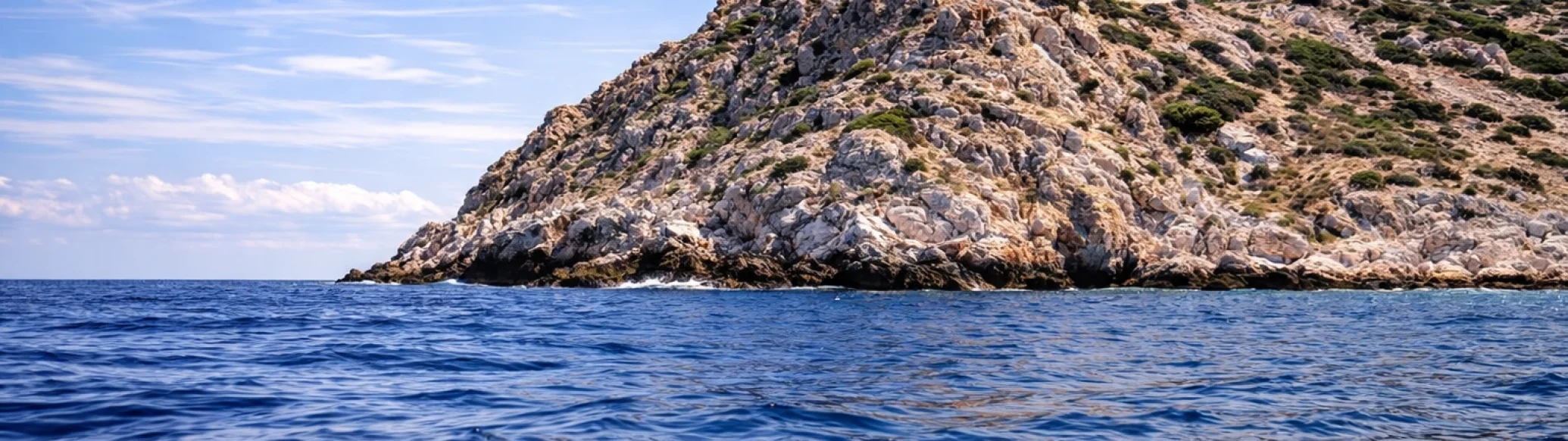
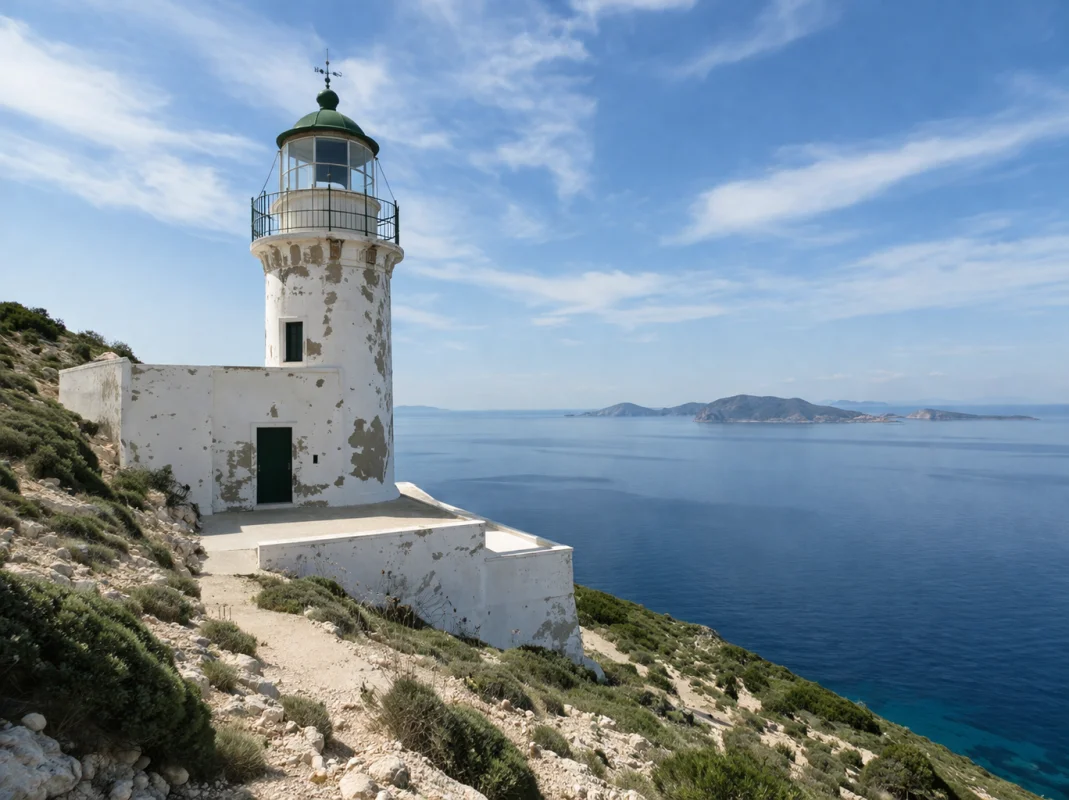
The lighthouse in Poliegos is one of those places that feels far from everything. It stands on the island’s northeastern side at Maskoula, looking out over open sea and silence. Poliegos itself is uninhabited, wild and deeply untouched, so the lighthouse is not surrounded by a village, a café or a road with passing cars. It stands in a place where the land still feels bigger than people.
This is not the kind of lighthouse that becomes famous because it is easy to visit. It is remembered because of how isolated it feels. The tower is built in stone, circular in shape and modest in size, but the setting gives it a much larger presence. It rises above a rough and beautiful island where cliffs, hidden beaches and wild land meet the blue of the Aegean in a way that feels almost unreal. What makes it special is not just the building itself. It is the feeling around it. You do not think of noise there. You think of wind, light, distance and the old human need to guide people safely through difficult waters. In a place as raw as Poliegos, the lighthouse feels less like an attraction and more like a quiet sign of endurance.
Geography, History & Culture
Poliegos lies near Kimolos and Milos in the Cyclades. It is part of the wider island group but feels much more remote than its famous neighbours. The island is known for being uninhabited today, with rough terrain, bright water and a strong ecological character. It has long been connected administratively to Kimolos and over time it has been valued for both its natural environment and its mineral wealth. The lighthouse was built in the late nineteenth century, with sources listing 1897 or 1898. Its stone tower is about 9 metres high and its focal height is around 138 metres above sea level. Over the years, it changed with technology, moving from oil power in its earlier life to a later solar-powered operation. Like many lighthouses in Greece, it also went dark during the Second World War before returning to service. That history matters because it turns the lighthouse into more than a scenic point. It becomes part of the human story of the sea. Before modern navigation became easy, lights like this were deeply important. They helped sailors read a dangerous coastline at night and in bad weather. Even now, when technology does most of the work, a lighthouse still carries something emotional. It reminds us that people once depended on one visible light in the darkness.
Poliegos also has traces of older life beyond the lighthouse. There are signs that the island had inhabitants in the distant past and later there were stockbreeders and a small settlement that is now abandoned. There is also a church dating to 1622, linked to a monastery that no longer functions. So even though Poliegos feels empty today, it is not without memory. It has had people, work, prayer and purpose. Culturally, this gives the lighthouse a deeper place in the landscape. It is not standing on a blank island. It is standing on a piece of land that has slowly changed from use and survival to silence and protection. That contrast is part of what people feel when they approach it. The island is quiet now but not empty of story.
Best Time to Visit
The best time to experience Poliegos and its lighthouse is usually from late spring to early autumn, when boat trips normally run. In practical terms, May to October is the main season for reaching the island by sea. These are the months when the weather is warmer, the sea is more inviting and local boat activity is strongest. Even so, the softer edges of the season are often the most beautiful. May, June, September and October are usually the months that feel a little calmer and easier. The heat is often less intense than high summer and the experience can feel more peaceful. For a place like Poliegos, that matters. You do not go there for crowds and noise. You go there for space, light and the feeling that the day has room to breathe. Summer can still be wonderful, especially if you love swimming and long bright days, but conditions at sea always matter. Boat access depends on weather and wind can shape the experience more than people expect. A calm day can make Poliegos feel gentle and dreamlike. A rough day reminds you that the island is still wild.
Getting Around
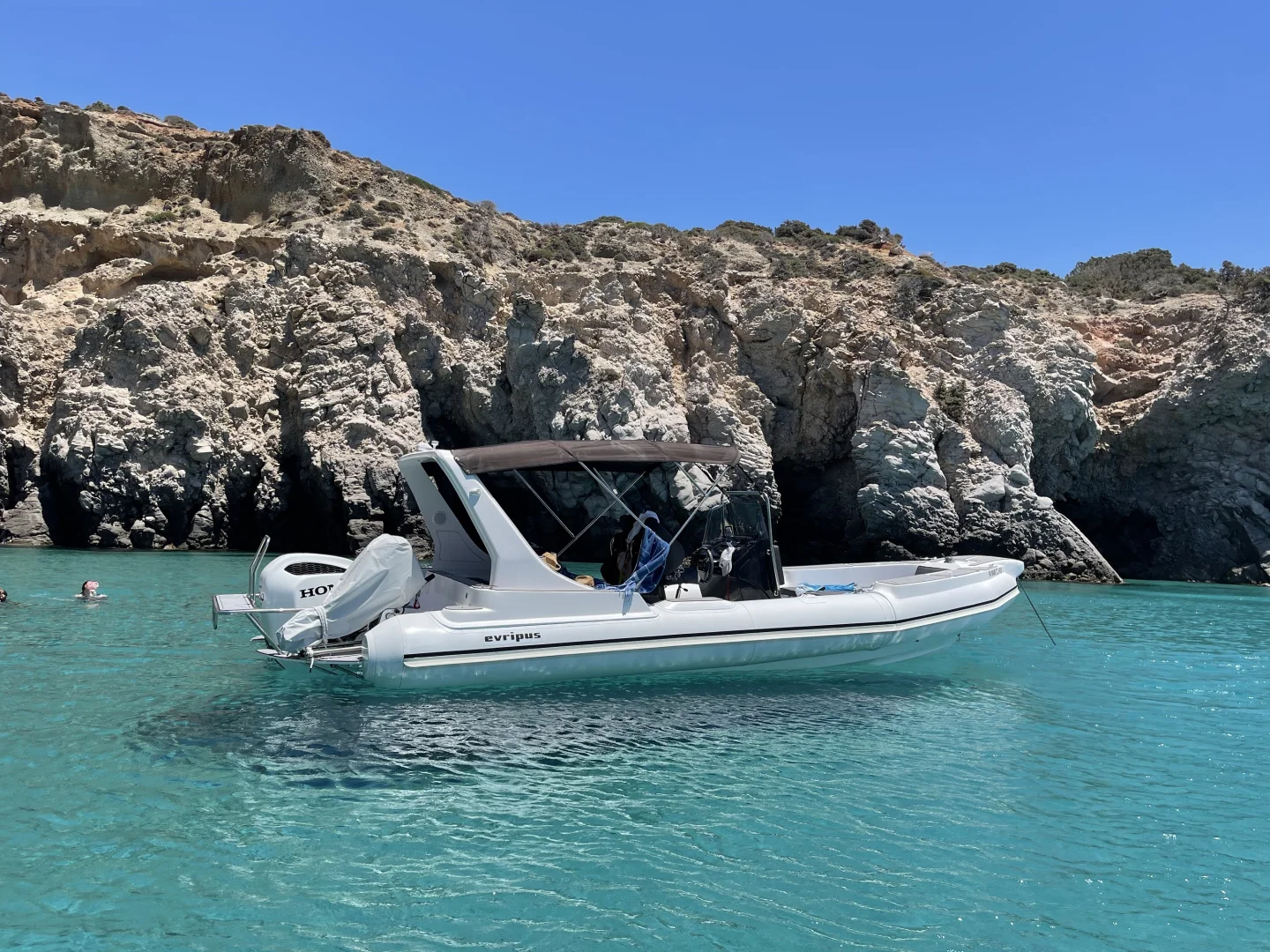
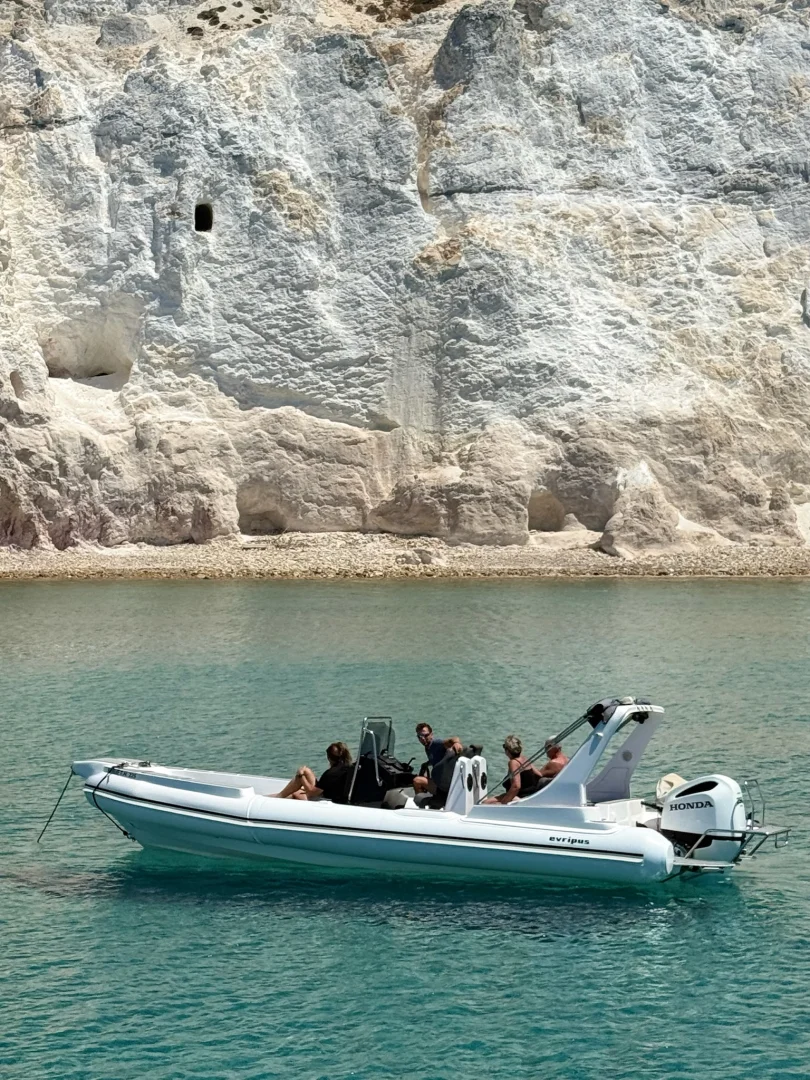
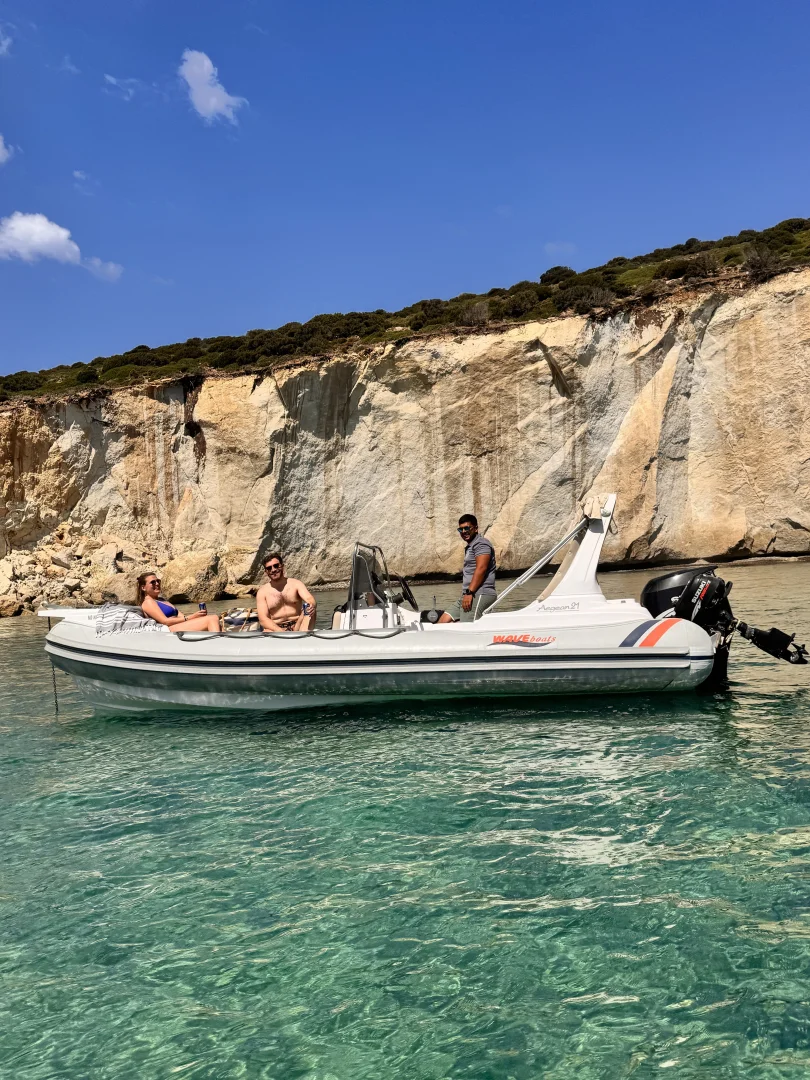
Getting around Poliegos is not like getting around a normal island. There is no everyday tourist infrastructure waiting for you. No easy bus route, no line of rental cars and no organised town centre to walk through. Most people reach the island by boat, usually from Milos or Kimolos and that is also the main way they move around it. To reach the lighthouse itself, you first approach by boat. From the beach below, there is a path of around 30 minutes leading up to the entrance and the route is described as difficult. That means this is not a casual stroll in sandals. It asks for care, proper footwear and respect for the terrain. In truth, that difficulty is part of the identity of the place. The lighthouse is not given to you quickly. You have to come toward it through sea and rock.
What Makes This Unique
What makes the lighthouse in Poliegos unique is the meeting of three things: isolation, memory and beauty. Many lighthouses are beautiful. Many are old. Many are useful. This one feels different because it stands on an island that is still almost entirely in the hands of nature.