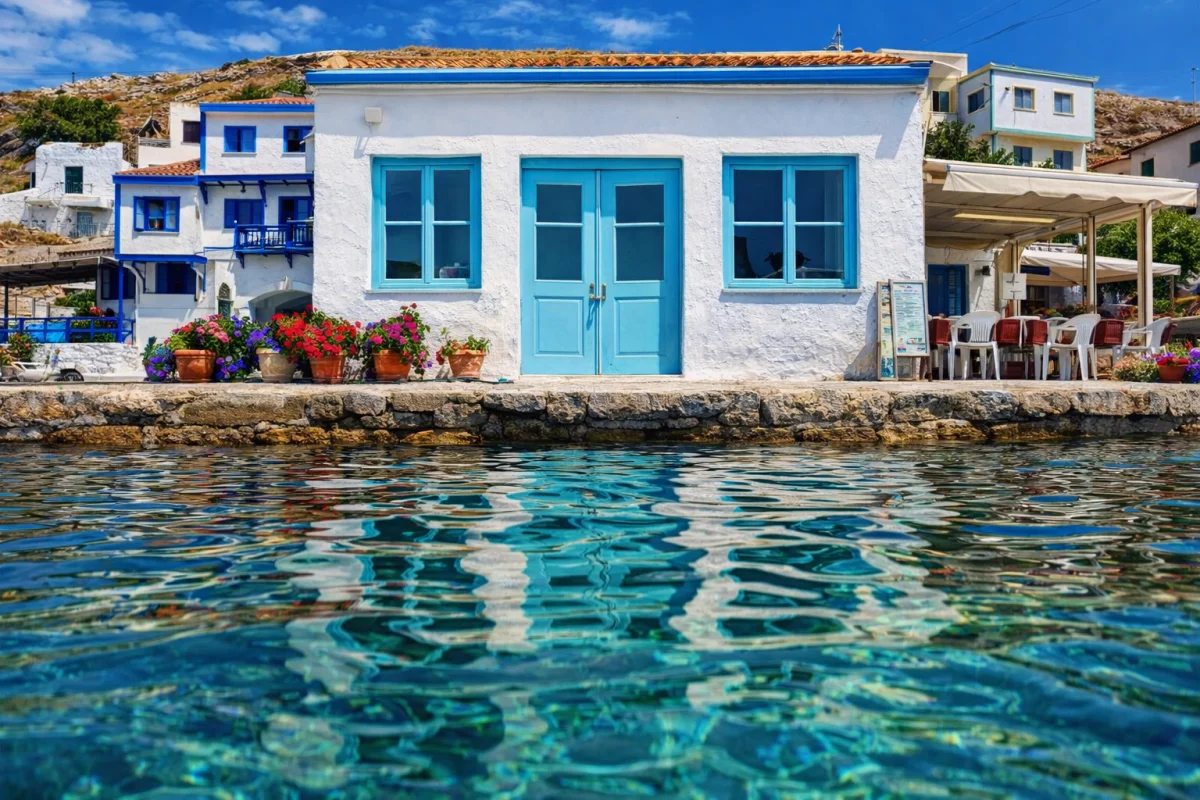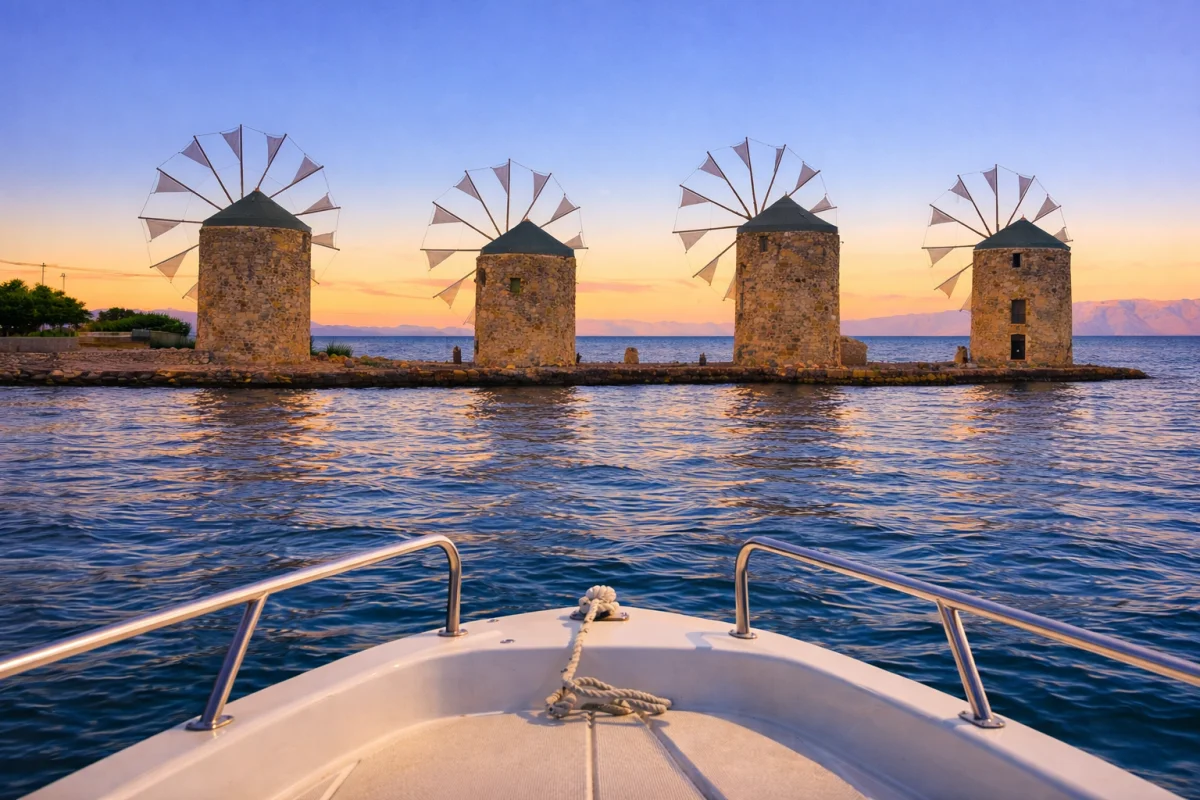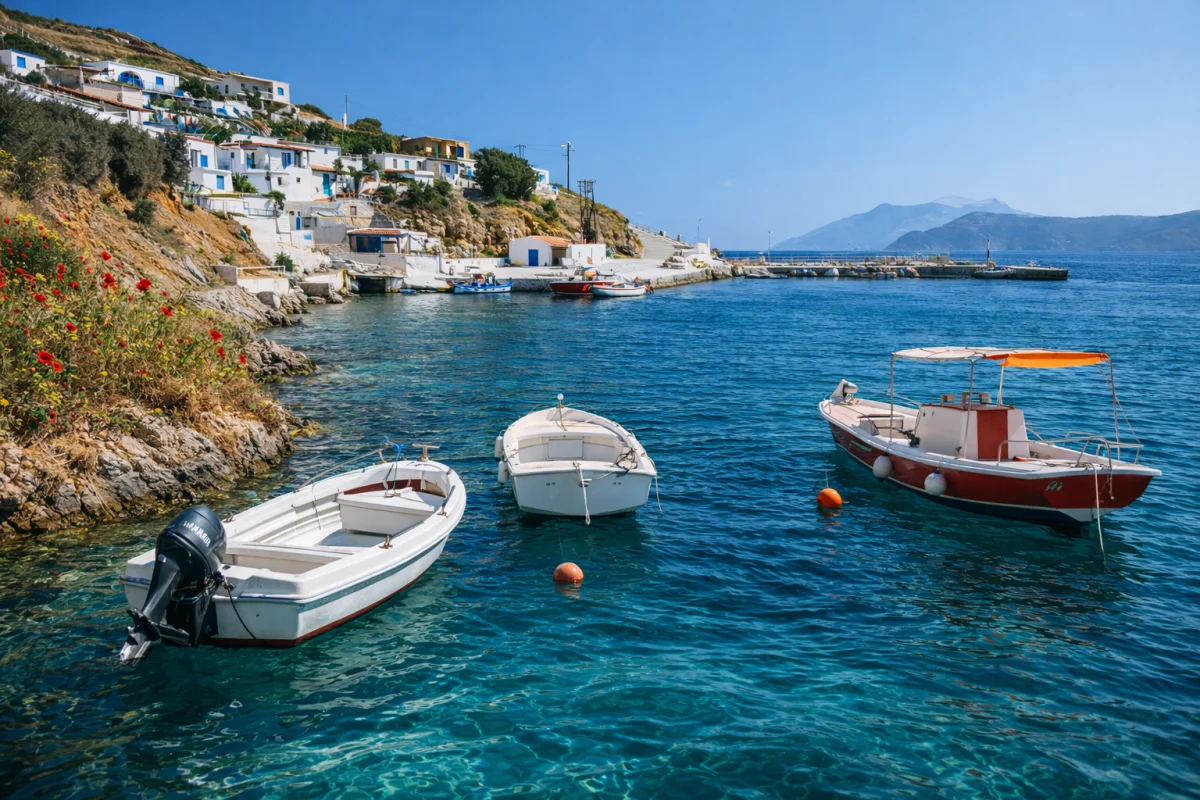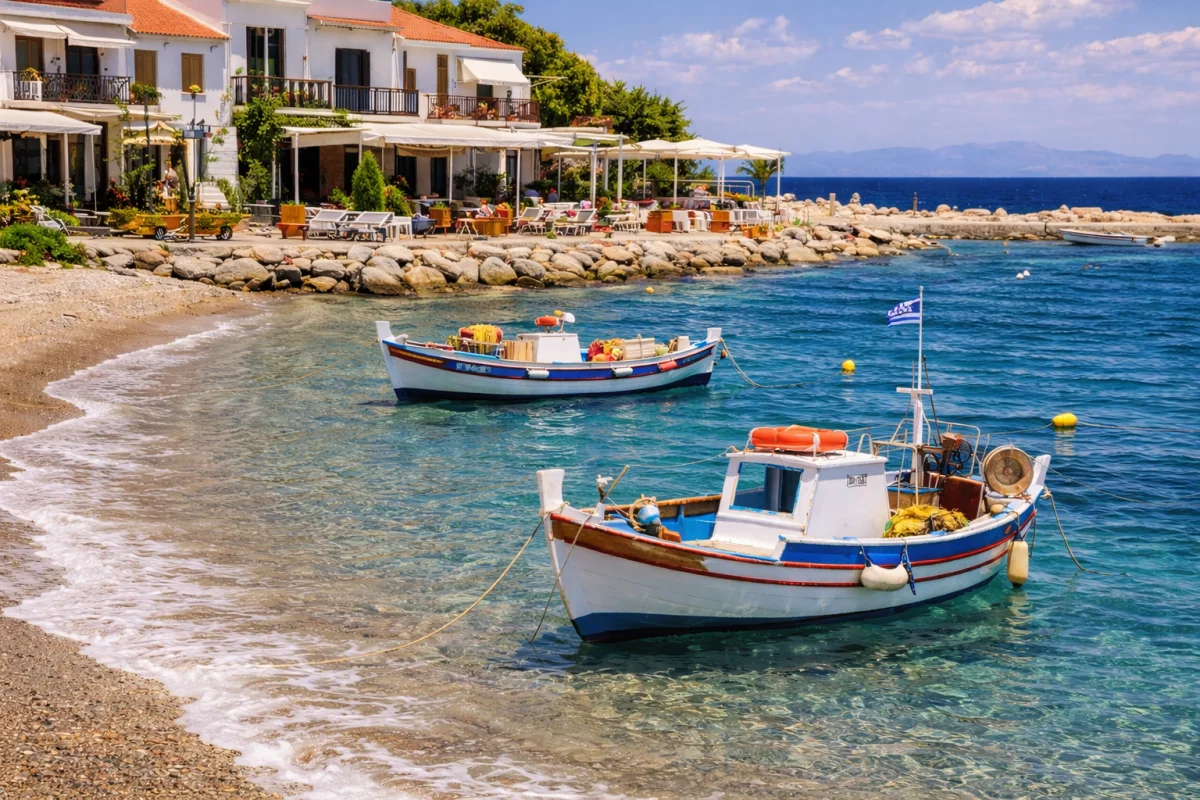
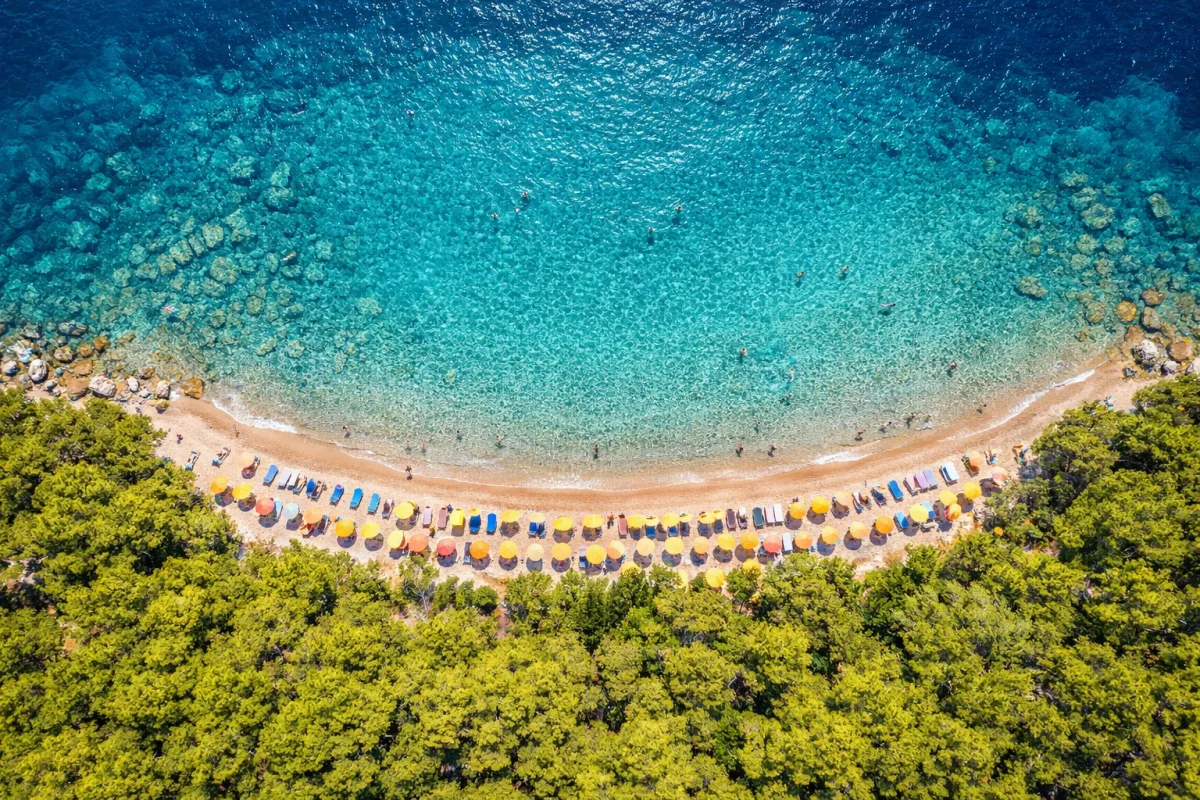
Samos is an island that thinks. It does not shout. It does not try to intoxicate you with stark white minimalism or the frantic energy of a summer party. It is composed. It stands in the eastern Aegean, a green giant resting its chin on its hand, gazing across the narrow strait toward Asia Minor. It is an island of measure. This is the birthplace of Pythagoras, the man who found the music in mathematics and Epicurus, the philosopher of pleasure through moderation. You feel their legacy in the very air. Samos demands a certain intellectual engagement; it asks you to find the harmony between the wildness of nature and the structure of the human mind.
The Green Embrace
If the Cyclades are a study in barren rock and blinding light, Samos is a study in chlorophyll and shadow. It is lush. It breathes. The landscape here is dense and textured. Mount Kerkis rises in the west, a limestone monarch that catches the clouds. The island is draped in forests of black pine and Calabrian pine, vineyards that crawl up the slopes and valleys that hum with the sound of insects and running water. This abundance changes how you feel. You are not exposed here. The land holds you. It offers shade. It offers depth. The green softens the harsh Aegean sun, creating a quality of light that is golden, filtered and gentle on the eyes. It is a landscape that feels protective, like a heavy blanket pulled up to the chin.
The Proximity of Worlds
Samos lives in the tension of the borderland. The Mycale Strait separates the island from Turkey by less than a mile. You can watch the cars moving on the opposite coast. This closeness has defined Samos for millennia. It has always been a bridge. A place where goods, ideas and armies crossed. The famous Eupalinos Tunnel, an engineering marvel of the ancient world, is proof of a civilisation that was confident, capable and connected. Today, this proximity gives the island a worldly weight. It knows it is the edge of Europe. It carries that responsibility with a quiet dignity, absorbing the complexities of history without letting them disrupt its internal rhythm.
The Wine of the Earth
You cannot understand Samos without tasting it. The island is famous for its Muscat wine and the vineyards are not just agriculture; they are heritage.The vines struggle on steep, stone terraces called pezoules, climbing the mountains to catch the sun. Their wine is a tapestry of sweetness, complexity and a weighty past. It was once the wine of the Vatican, favoured by emperors. Drinking it here, under a plane tree in a mountain village, is a communion with the earth. It is not just a drink; it is the distilled sunshine of a thousand summers. It tastes of honey, apricot and the patience of the farmers who built the terraces stone by stone.
Villages of Stone and Silence
The villages of Samos, places like Manolates, Vourliotes or Marathokampos, are not set pieces. They are hives of quiet industry. They sit high in the mountains, hiding in the forests or overlooking the sea from a safe distance. The architecture is distinct: tiled roofs, enclosed balconies and narrow streets that smell of wood smoke and roasting coffee. Life here follows the seasons, not the ferry schedule. In the afternoons, the squares fall silent. The old men sit with their canes, watching the world with eyes that have seen everything and decided that very little is worth rushing for. There is a weight to the silence. It is not empty; it is full of memory.
The Philosophers’ Sea
The water around Samos is calm, clear and inviting. Because the island is large and the coastline is varied, you can always find a bay that feels like your own private discovery, but the sea here feels different than elsewhere. It feels like a medium for thought. Floating in the water off Kokkari or Seitani, looking back at the green mountains plunging into the blue, you understand why philosophers were born here. The beauty of Samos is not distracting; it is focusing. It clears the noise from your head. It allows you to think clearly.
The Centre Holds
Samos feels centred. It does not swing wildly between extremes. It balances the mountain and the sea, the East and the West and the ancient and the modern. It offers a sense of stability that is rare in a frantic world. Samos is an island that seems to have found its centre.
Why It Resonates
Samos offers a gentle reminder that a fulfilling life isn't about overindulgence but about finding a sense of peace. It imparts the Epicurean lesson that genuine pleasure arises from the simplest of things. Shade, water, wine and companionship, when savoured in moderation. When you depart Samos, you're not just relaxed; you're rebalanced. You take with you the fragrance of pine and the memory of sweet wine. You carry the feeling of an island that knows exactly how to be and asks nothing more of you than to find your own quiet measure.