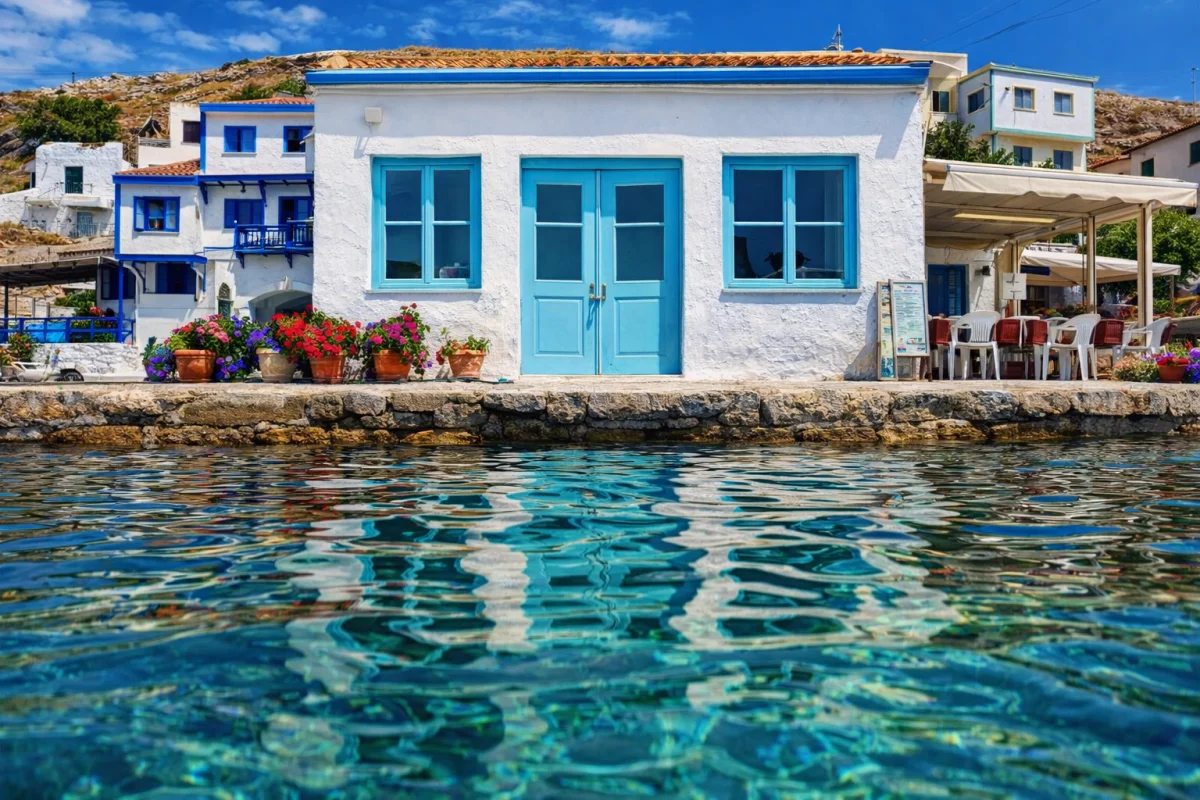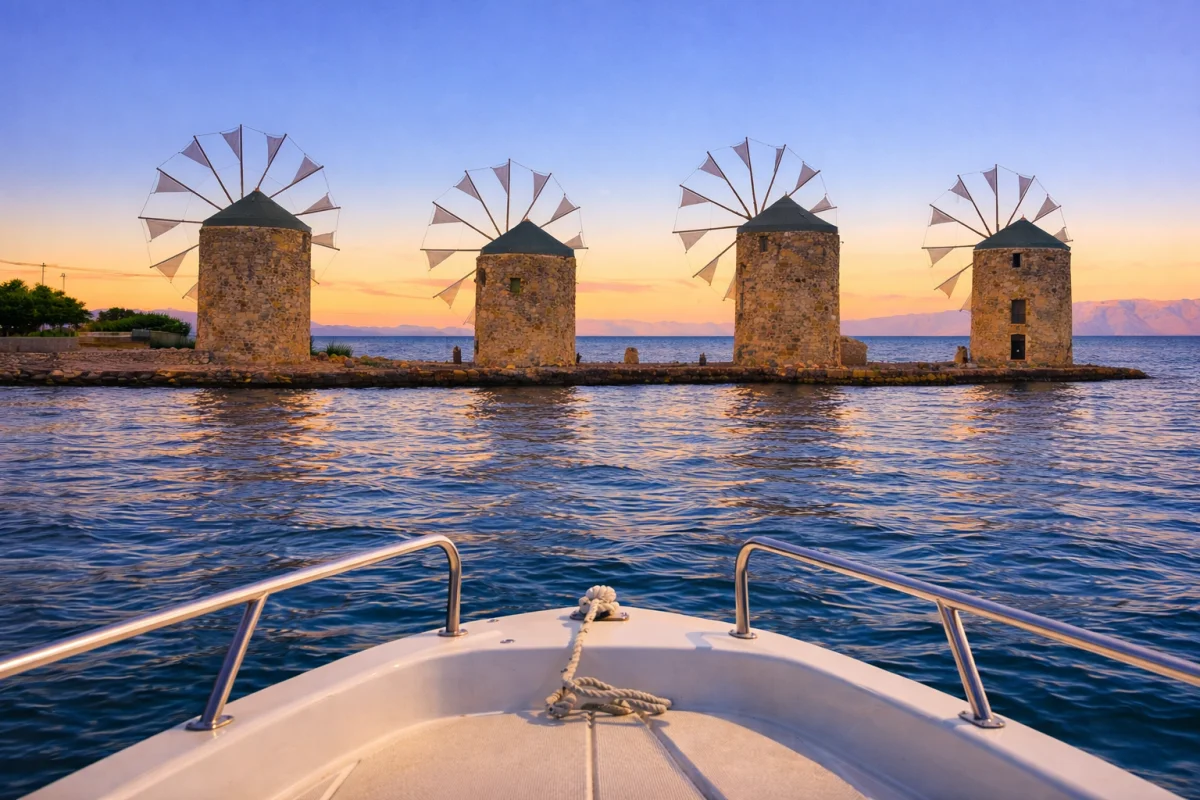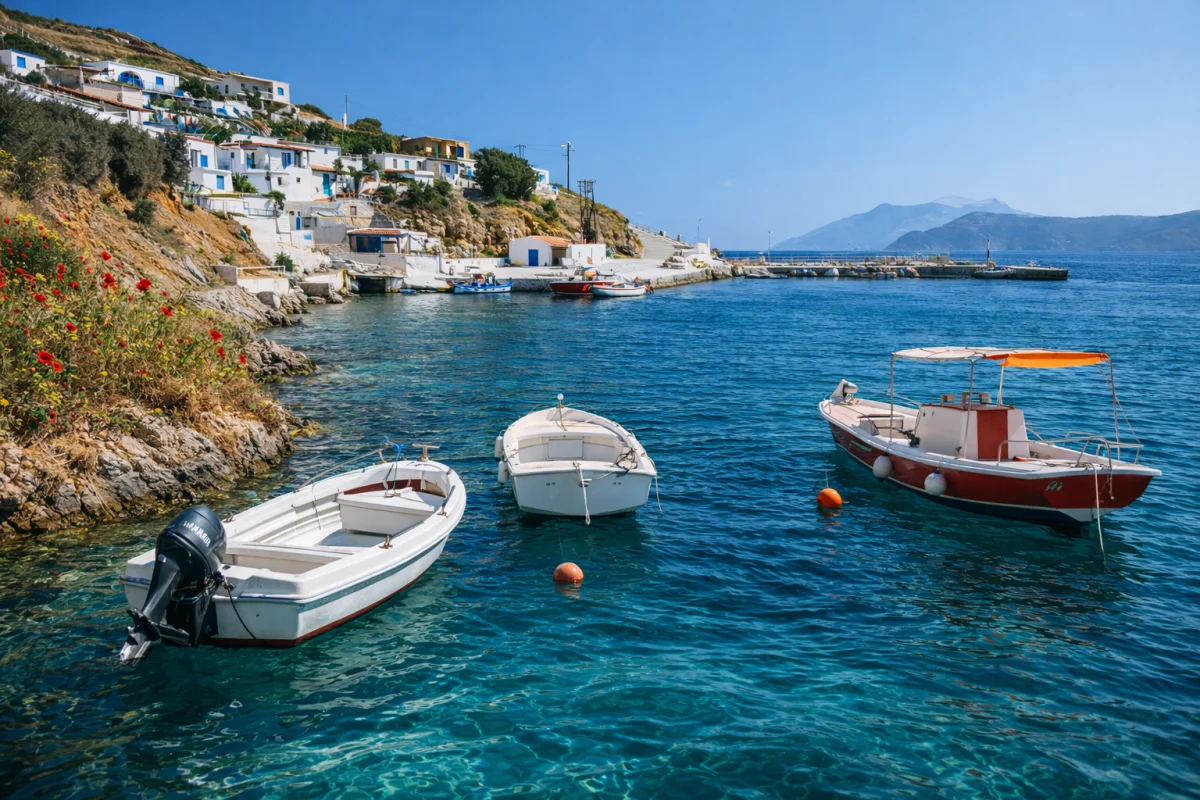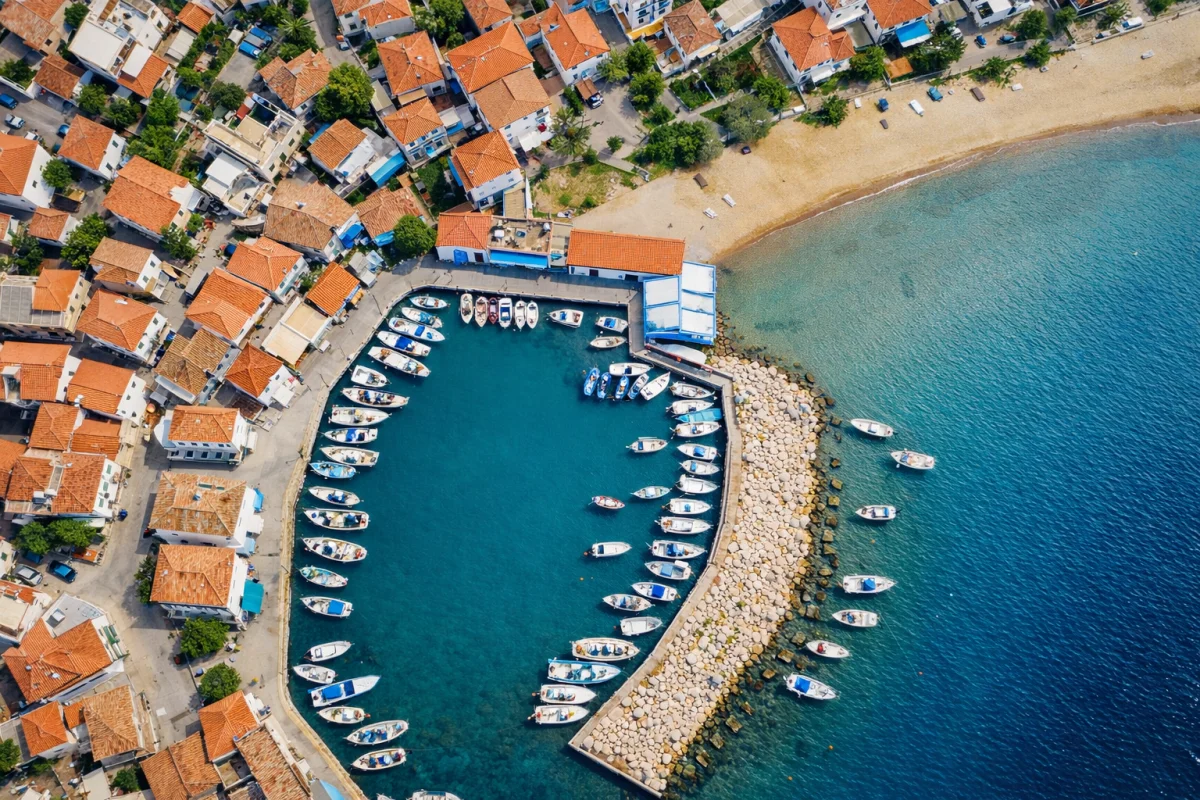
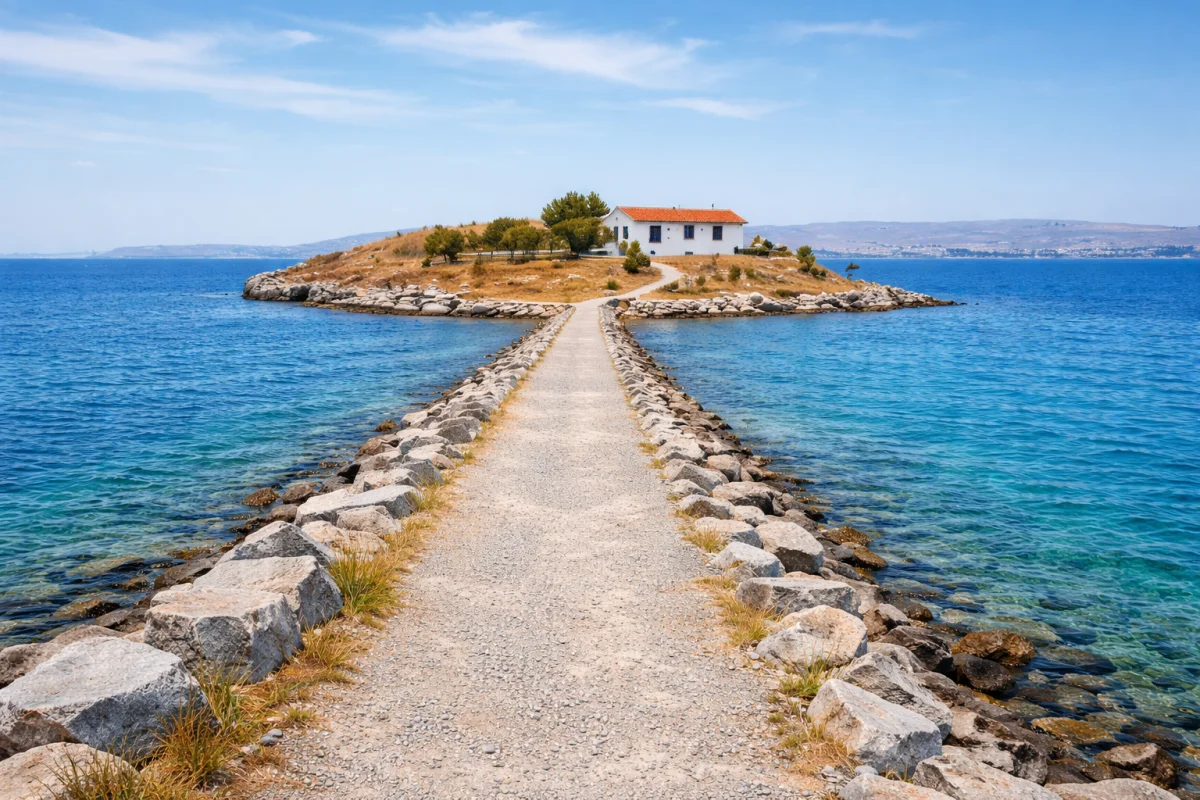
Limnos is an exhale. After the dramatic, vertical tension of other Aegean islands, where cliffs plunge violently into the sea and houses stack precariously on top of one another. Limnos feels like a release. It is a place where the earth decides to lie down and rest. It is an island of horizontality. It spreads out. It rolls. It invites the eye to travel across golden plains of wheat, wetlands and gentle volcanic hills without ever hitting a wall. To arrive here is to feel a physical widening of your internal world. The pressure in your chest loosens. The horizon backs away, giving you room, to finally breathe.
The Anvil of Hephaestus
Mythology tells us that when Hephaestus, the god of fire and the forge, was thrown from Mount Olympus, he landed on Limnos. It makes sense. This is an island of fire and earth, though the fire went out long ago. The volcanic past is not violent here; it is sculptural. The geology is strange and beautiful. In the north, at Faraklo, the rocks have been frozen into bulbous, alien shapes by cooling lava, looking like a landscape from another planet. In the centre, the island defies logic by hosting a desert, the Pachies Ammoudies, where thick sand dunes shift in the wind, a patch of the Sahara dropped into the Mediterranean. This strangeness gives Limnos a mystical quality. It feels ancient, pre-human, as if the land is still working out its own shape, indifferent to the people walking upon it.
The Kingdom of the Wind
Homer called it Anemoeessa, the Wind-Swept. He was right. The wind is the true governor of Limnos. It is a constant, physical presence. It does not just blow; it scours. It keeps the air startlingly clear and the temperature merciful. But more than that, it shapes the psychology of the island. You cannot be precious here. You cannot worry about your hair or your hat. The wind strips away pretence. Life adapts to the meltemi. The architecture is solid, built to withstand the gusts. To live on Limnos is to be in a constant, dynamic relationship with the air itself. It wakes you up. It makes you feel vividly, sharply alive.
A Land That Feeds
Unlike the barren rocks of the Cyclades, Limnos is fertile. It was the granary of ancient Athens, the breadbasket of the Aegean. This agricultural heritage gives the island a feeling of profound self-sufficiency. You feel this when you drive through the interior. It doesn't look like a tourist destination; it looks like a working farm. Endless fields of grain turn gold in the summer. Vineyards, some of the oldest in Europe, cling to the volcanic soil, producing wines that taste of flint and history. Food here is not "cuisine"; it is sustenance. The famous Kalathaki cheese, brined in baskets woven from local rushes, tastes of the herbs the sheep grazed on. The honey tastes of thyme. The wine tastes of the volcano. When you eat on Limnos, you are eating the landscape itself. It is a primal, grounding connection.
Myrina: The Gentle Capital
The main town, Myrina, is one of the most beguiling ports in Greece, but it refuses to show off. It is split by a massive, craggy promontory topped with a Byzantine-Genoese castle, but the castle is not just a ruin; it is a kingdom of deer. Dama-dama deer roam freely among the fortress walls, watching the town below with large, liquid eyes. It adds a layer of fairy-tale surrealism to a town that is otherwise deeply practical. Down below, the neoclassical mansions of the Romeiko Gialos waterfront speak of a time when Limnians travelled to Egypt and returned with wealth and cotton, but the grandeur is faded, softened by time. The town feels lived-in. It belongs to the locals, to the fishermen mending nets, to the grandmothers hanging laundry and to the children playing in the squares.
The Luxury of Space
The beaches of Limnos reshape your understanding of a "crowd". They are vast. You can walk for twenty minutes on Keros beach and not pass another soul. This abundance of space does something to the traveller. On crowded islands, you shrink yourself to fit into the available gaps. On Limnos, you expand. You claim your space. You can swim out a hundred metres and float in water that is turquoise and clear, looking back at a shoreline that looks much as it did a thousand years ago. There is no fight for a sunbed. There is no thumping bass from a beach bar. There is only the sound of the wind and the rhythmic wash of the sea.
Why It Heals
Limnos is not an island for adrenaline. It is an island for restoration. It stays with you because of its quiet power. It is the feeling of walking on a sand dune at sunset, realising you are alone in a desert in the middle of the sea. It is the taste of the sharp cheese and the dry white wine. It is the sound of the wind in the rigging of the boats. Limnos offers you the rarest luxury of modern life: the permission to be small in a wide, open space. It simply offers you the earth, the wind and the horizon and waits for you to remember who you are.