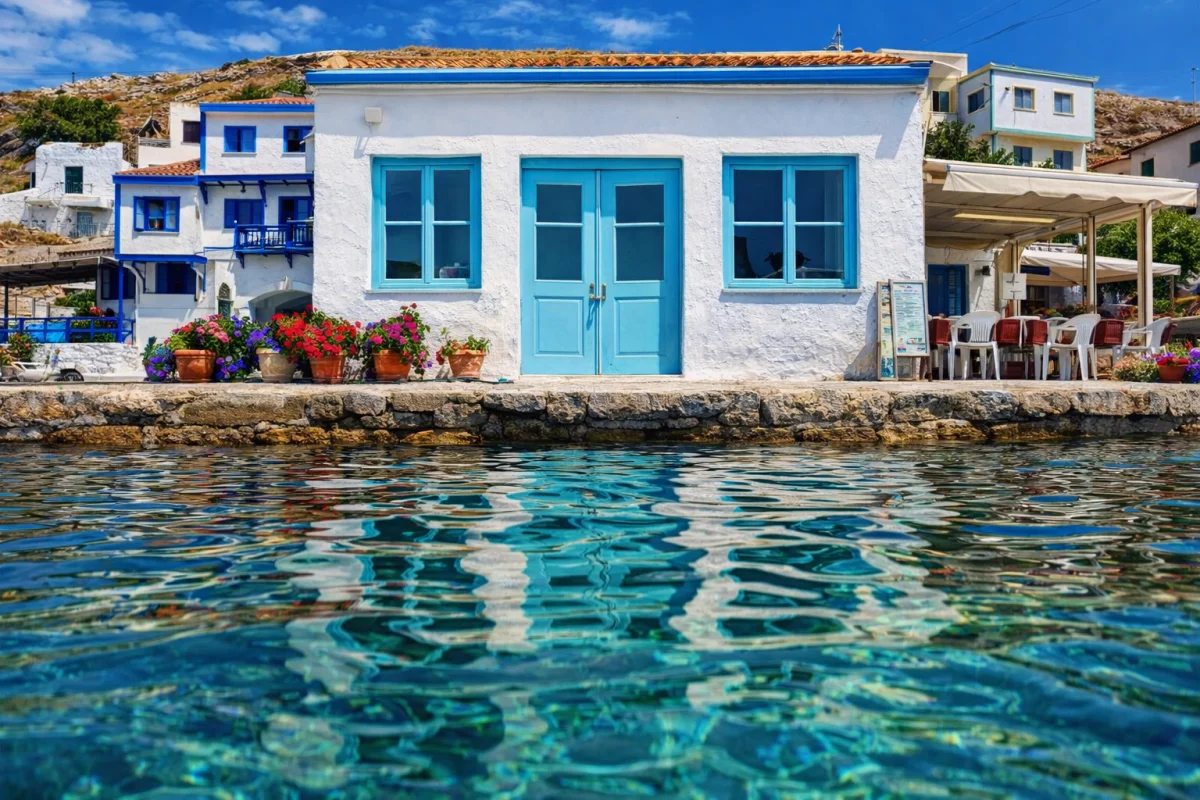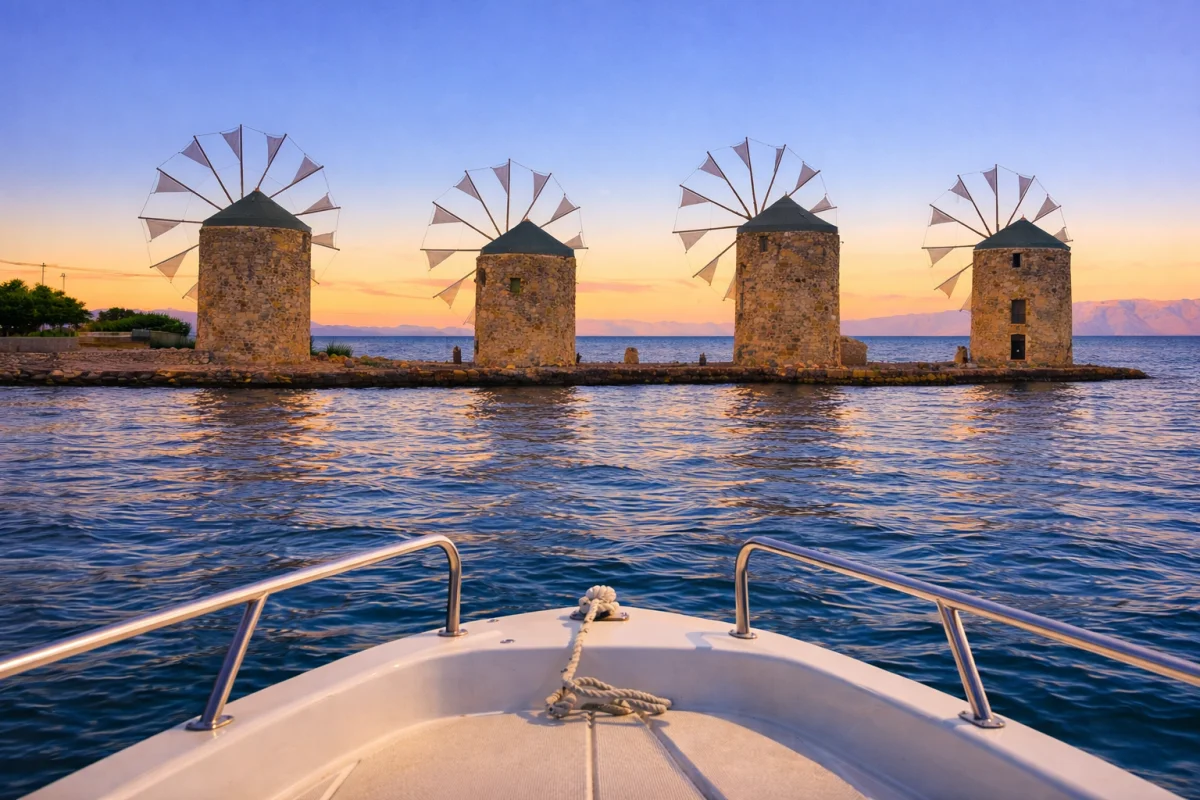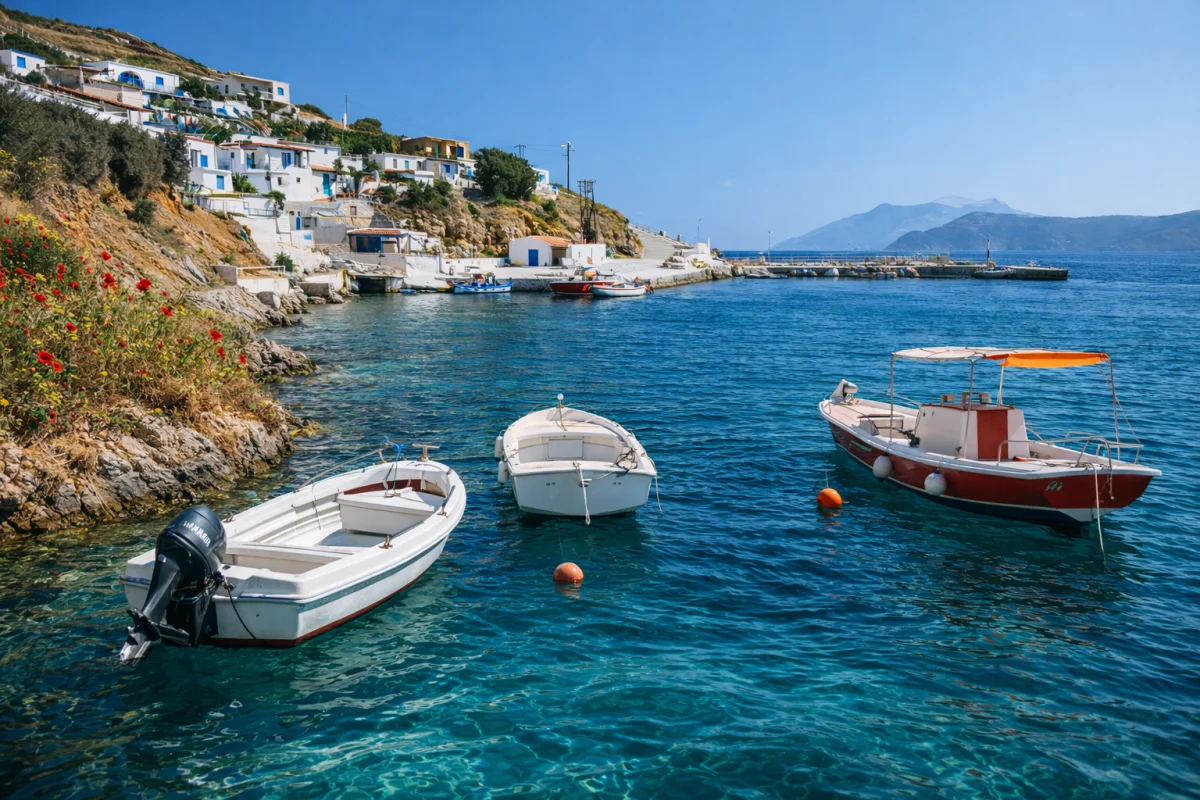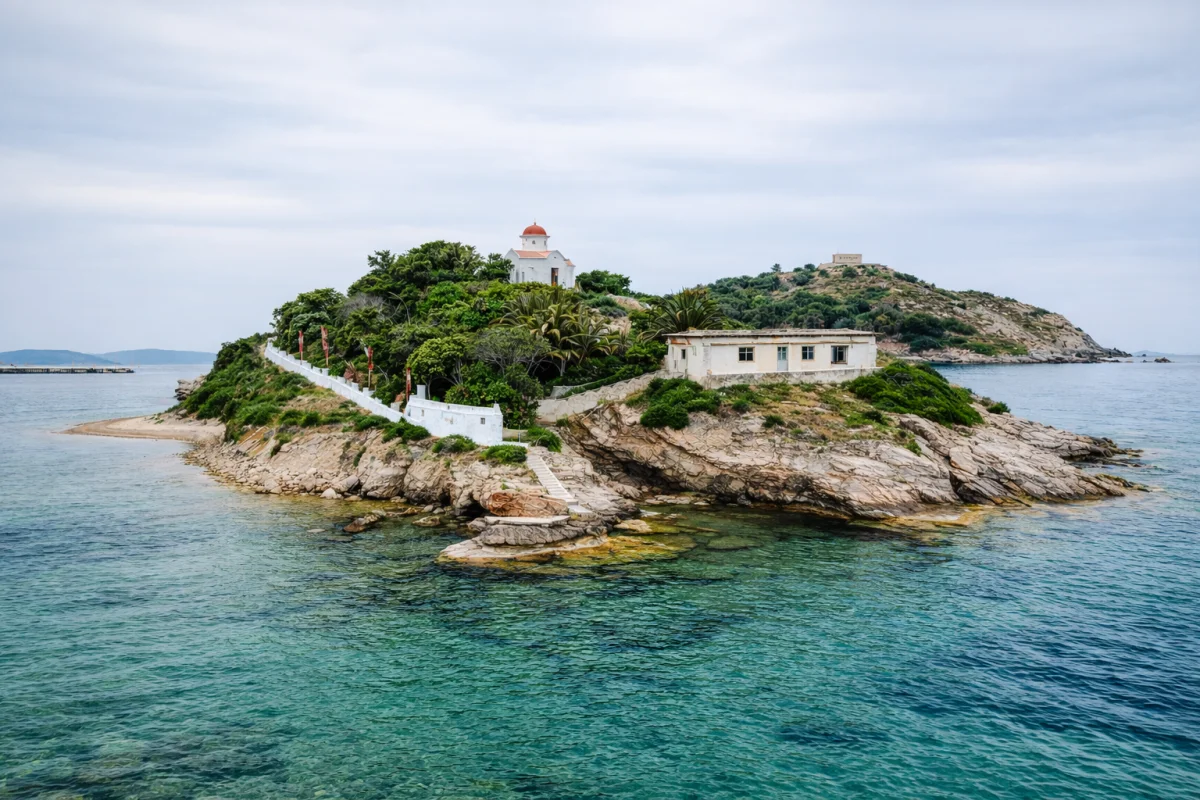
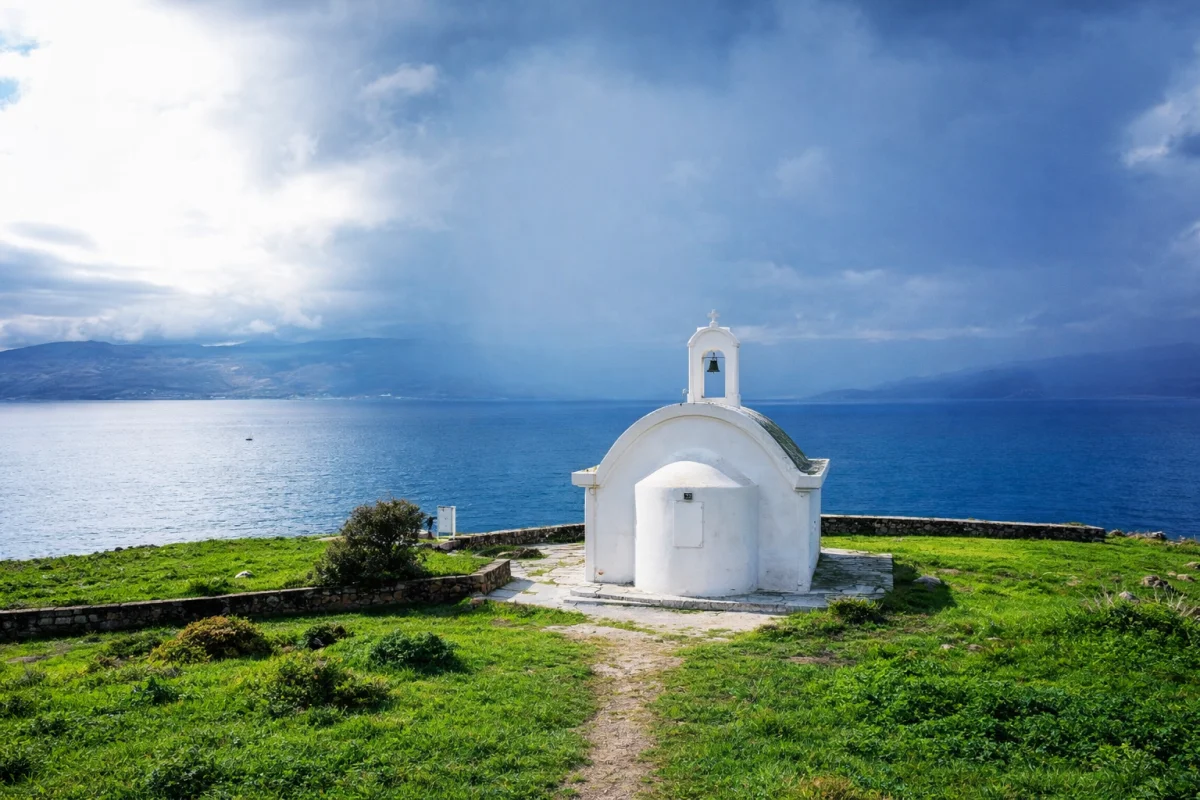
Oinousses is a paradox wrapped in silence. To the naked eye, it is a cluster of small, humble rocks floating off the coast of Chios. It looks dry and sparse, but appearances in the Aegean are often deceiving. This tiny island is a titan in disguise. It is the nursery of captains, the birthplace of shipping dynasties and a rock that has extended its reach to every port on the planet. It does not feel like a holiday destination. It feels like a private estate that has opened its gates just a crack. It exudes a specific kind of confidence. The quiet, unshakeable assurance of people who have conquered the sea, not by fighting it, but by understanding it.
The Geography of a Cradle
The island is small. A scattering of islets protecting a main harbour. The land is gentle, rolling into the sea without drama. It does not have the jagged defiance of other islands. It feels like a resting place. This geography is deceptive. It looks like a place to stop, but for centuries, it has been a place to start. The landscape is sparse because the focus has never been on the land; the focus has always been on the horizon. The soil here didn't need to yield wheat or wine; it needed to yield sailors. It did, generation after generation.
The Amphibious Soul
The soul of Oinousses is not terrestrial; it is amphibious. The people here belong to the land and the water in equal measure. Walk the waterfront and you are not just walking past fishing boats. You are walking past the bronze statue of the Unknown Sailor, a reminder that the sea gives, but the sea also takes. There is a gravity here. Every family has a father, a son or a brother who is currently somewhere in the Atlantic, the Pacific or the Indian Ocean. This creates a unique psychological atmosphere. No matter how far they go, they always come back to this rock. It is the anchor.
The Architecture of Restraint
There is immense wealth connected to Oinousses, but you will not find it screaming for attention. There are no mega-resorts, no flashy nightclubs and no displays of excess. Instead, there is dignity. The houses in the main settlement are beautiful, neoclassical and well-kept, but they are modest in scale. They stand tightly together, facing the harbour, watching the ships come in. This is the aesthetic of "old money" in its most noble form: wealth that values discretion over display. The streets are clean, the schools are funded and the churches are cared for. It is a society built on stewardship, not consumption.
The Disciplined Sea
The water around Oinousses feels different. It is not the playful turquoise of a beach brochure. It is a deep, serious navy. This is a working sea. It is a highway. The children here learn to sail before they learn to ride bicycles. They respect the wind. They understand the currents. The sea is not treated as a backdrop for a selfie; it is respected as a powerful, moody entity that demands discipline. When you swim here, you feel that seriousness. The water is crisp and invigorating. It feels like a baptism. It cleanses you of the trivialities of land life.
The Silence of Competence
The most striking thing about Oinousses is the silence. It is not the silence of emptiness; it is the silence of competence. Things work here. The ferry arrives on time. The streets are swept. The greetings are polite and measured. There is no chaotic energy, no desperate hustle for the tourist dollar. This silence allows you to think. It allows you to walk the path to the monastery, smell the thyme and the salt and feel the immense weight of the maritime history that permeates the rocks.
Why It Commands Respect
Oinousses stays with you because it offers a vision of life that is rare in the modern world: a life of deep roots and vast horizons. It reminds you that you can be small and still touch the whole world. It leaves you with the feeling of the "Odyssey". The ancient, human truth that no matter how far we travel, the soul always longs for the small, familiar rock we call home. Oinousses is that rock, standing steady in the blue, waiting for its children to return.