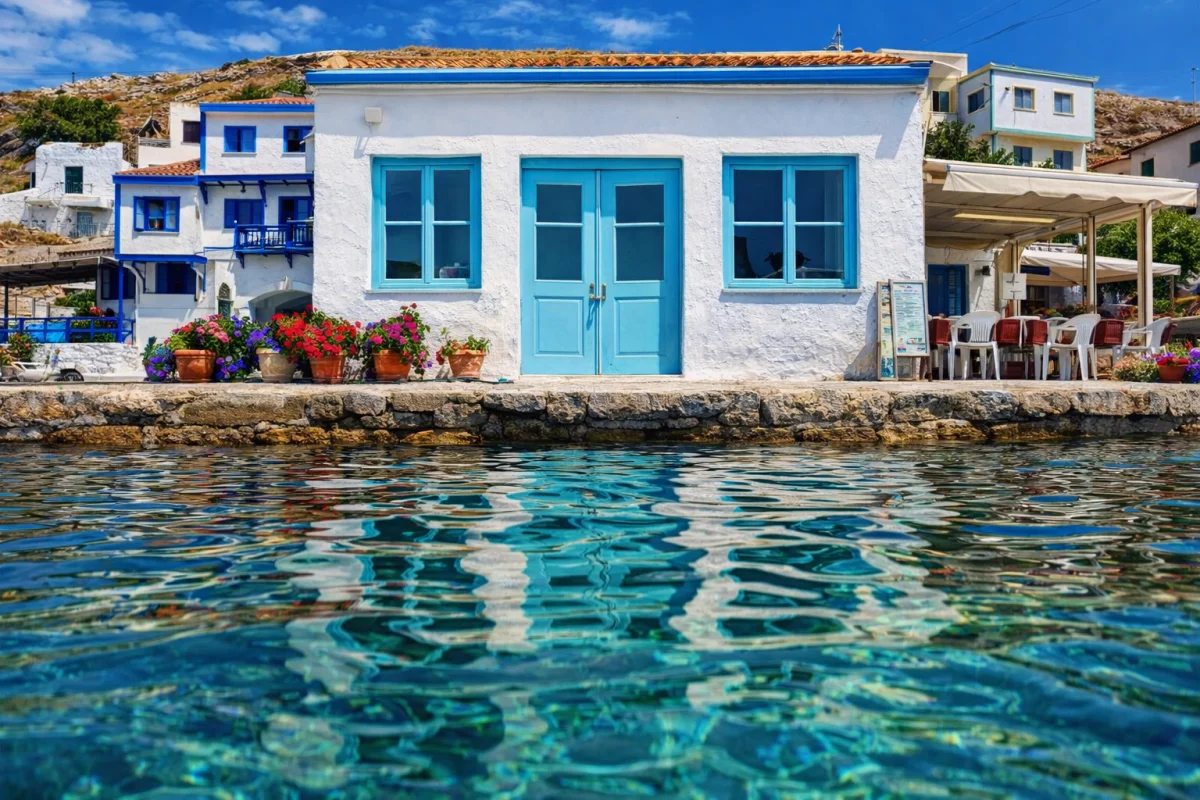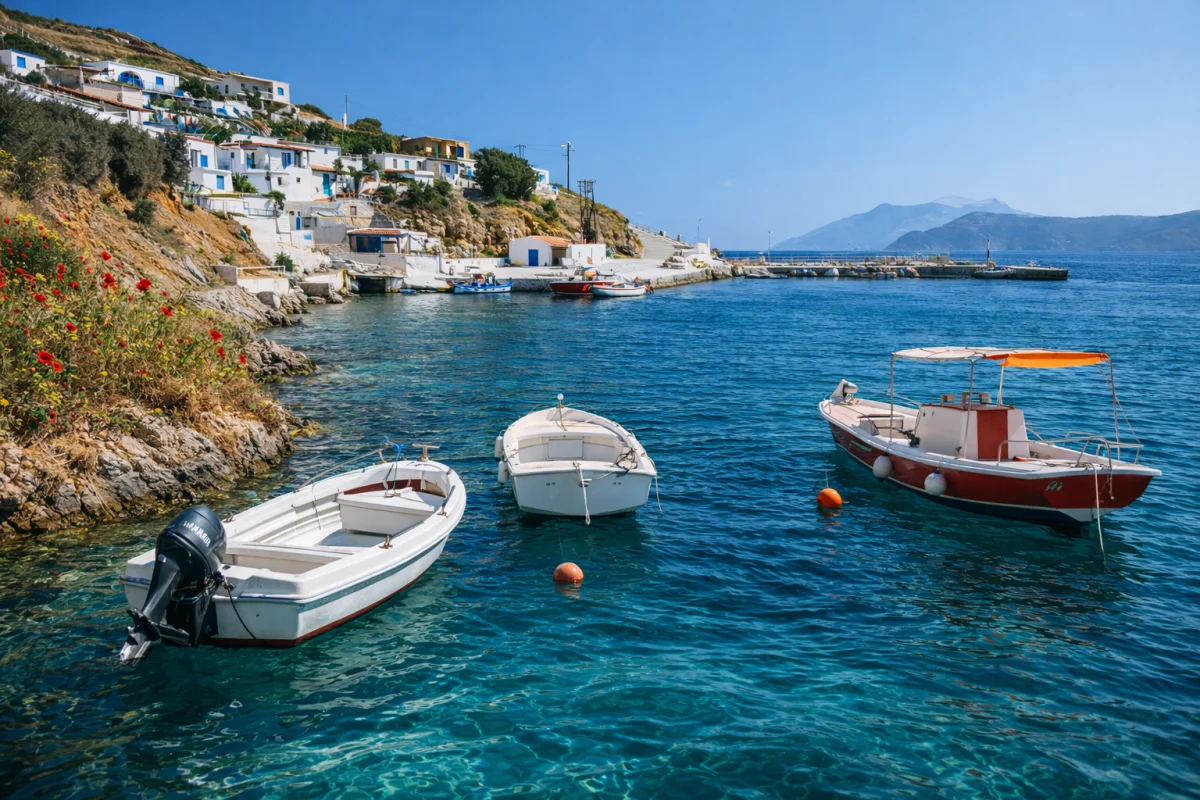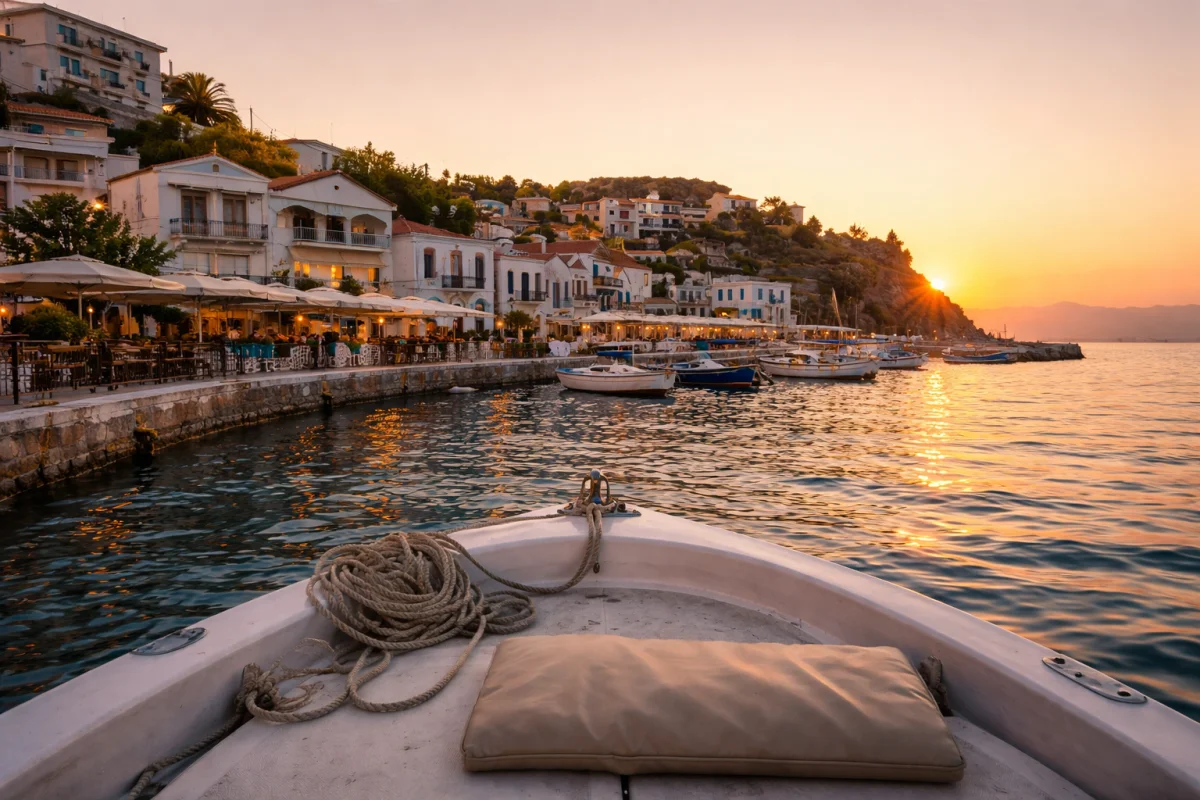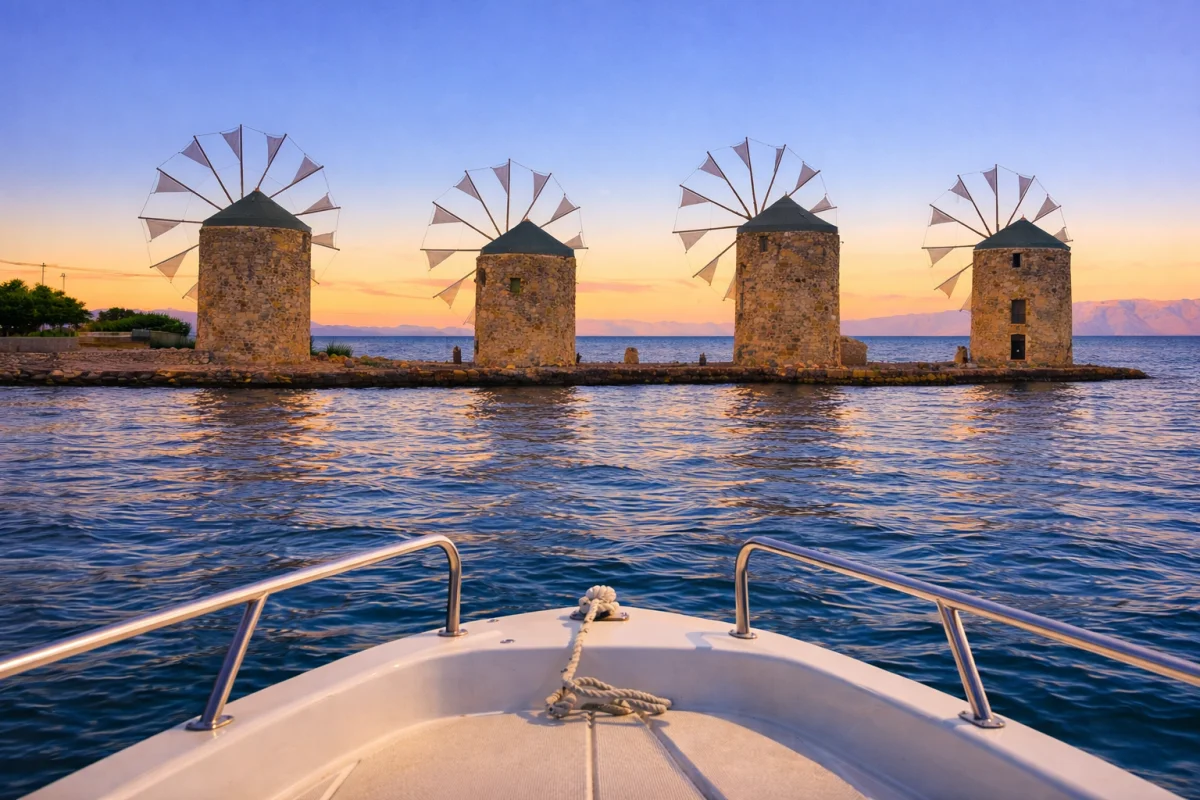
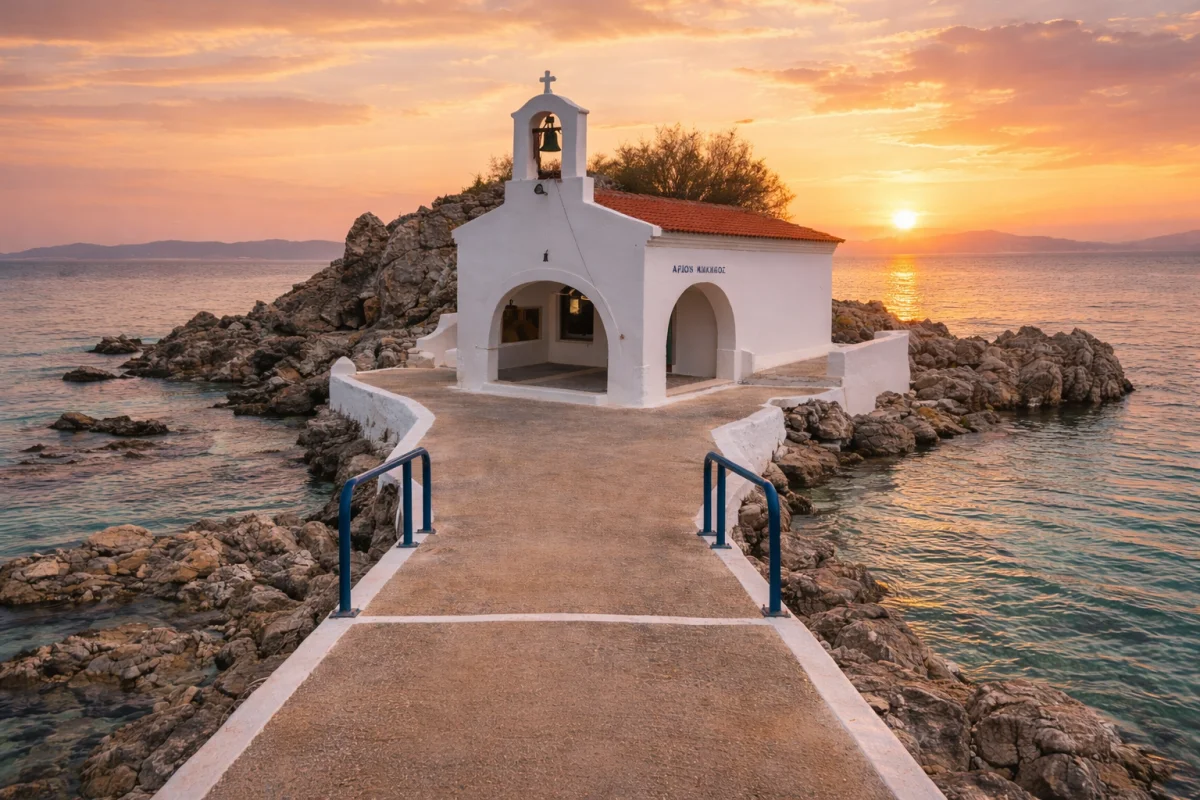
Chios is an island that has existed for too long and seen too much wealth and too much ruin to be concerned with whether you find it pretty. It stands in the northeastern Aegean, a heavy, jagged shape against the horizon, resting in a permanent state of tension. It is a place defined by proximity. Sitting just four miles from the coast of Asia Minor, Chios lives in the shadow of the "other". On clear days, the violet silhouette of the Anatolian mountains feels close enough to touch, a constant reminder of borders, of history and of how easily worlds can collide. This closeness has given the island a specific gravity. It feels watchful. It feels like a place that holds its breath. To travel here is not to escape the world but to confront it.
The Landscape of Resistance
The geography of Chios is a physical language of endurance. It is not one thing; it is a conversation between stone and wind. In the north, the island is skeletal. The mountains are stripped bare by the meltemi, the fierce northerly wind that scours the Aegean. The rock is grey and solid. Villages sit right on the cliffs, staring out at the open water. The landscape is stark but beautiful. The silence feels heavy and it stays with you. As you move south, the tension shifts. The land softens, but it becomes more guarded. This is the region of the Mastichochoria, the mastic villages. Here, the earth is manicured, terraced and tamed. The air changes; it begins to smell of pine, herbs and the distinct, earthy musk of mastic resin. But the softness is an illusion. The South is built on the architecture of fear.
A Fortress for the Living
You feel the human history of Chios most acutely in these southern villages. Places like Mesta and Pyrgi were not built for views; they were built for survival. Walking into them is like stepping inside a stone lung. The streets are like narrow mazes, twisting and turning to confuse the pirates of centuries past. The houses, built close together, form an impenetrable outer wall. There are no windows facing the fields, only stone. But inside this armour, life persists. To walk these streets today is to feel the embrace of a community that learnt, long ago, that safety lies in connection. You hear the clatter of silverware from open kitchens, the murmur of televisions and the low voices of neighbours speaking across balconies. The architecture forces intimacy. It reminds you that for thousands of years, humans have huddled together in the dark, finding comfort in the proximity of other bodies.
The Tears of the Trees
The soul of Chios is bound to a tree that weeps. The mastic tree-a gnarled, humble shrub that grows effectively nowhere else on earth, is the source of the island’s joy and its tragedy. For centuries, the resin from these trees was worth its weight in gold. It made Chios rich. It made the island a jewel that empires coveted. But wealth is a dangerous thing in a volatile sea. The locals call the resin "tears" and the metaphor is too apt to ignore. To harvest it, you must wound the tree. You slice the bark and the resin bleeds out, crystallising into hard, translucent gems on the ground. When you watch a farmer bent over the soil, cleaning the resin under the punishing summer sun, you are witnessing a ritual that has remained unchanged since antiquity. It is a deeply human act: taking pain and turning it into something valuable.
The Weight of History
Chios carries its ghosts. They are not hidden. The massacre of 1822, when the island was decimated during the War of Independence, is not just a date in a book. It is a scar on the collective memory. You feel it in the quiet of the monasteries, like Nea Moni, where skulls are stacked in glass cabinets, not to frighten, but to bear witness. You feel it in the dignity of the people. There is a stoicism here. The locals do not smile to please you; they smile when they mean it. They have seen empires rise and turn to dust. They have learnt that everything is temporary except the land itself. This awareness gives daily life a slow, deliberate rhythm. In the kafenia (coffee houses), old men sit for hours with a single coffee, watching the square. They are not wasting time; they are inhabiting it. They teach the visitor that urgency is a foolish invention.
The Sea as a Mirror
Then, there is the water. The sea around Chios is not a playground. It is deep, dark and notoriously serious. The water is often cold, plunging into ink-blue depths just metres from the shore. When you float in the Aegean here, looking back at the stark cliffs, you feel small. It is a healthy smallness. The sea reminds you that you are just another transient visitor on a rock that has outlived millions of others. The beaches are not lined with rows of identical umbrellas. They are often wild, pebbled coves where the only sound is the rhythmic grinding of stone against stone as the waves pull back. It is a sound that cleanses the mind.
Why We Go
In a world that moves too fast, Chios offers the resistance of stone. In a world that is obsessed with the new, Chios offers the deep comfort of the old. It is an island that asks you to slow down. It asks you to notice the light shifting on the Turkish coast. It asks you to smell the resin and the wild thyme. It asks you to sit in a village square and realise that you don't need to be doing anything to be alive. Chios stays with you because it is substantial. It has weight. When you leave, you don't just take photos; you take a feeling. A feeling of resilience. A sense that despite the wars, the scars and the weeping trees, life finds a way to continue. Quietly. Stubbornly. Beautifully.