Fournoi exists in the margins. It is the quiet breath between the heavy sighs of its neighbours. To the west lies the defiant, rugged spine of Ikaria; to the east, the lush, historical weight of Samos and in the middle, floating in a sea that feels more like a lake, is Fournoi. It is an archipelago of the overlooked. For centuries, this cluster of small islands was a place to pass through, a place to wait out the storm and a place to hide.
The Geography of Embrace
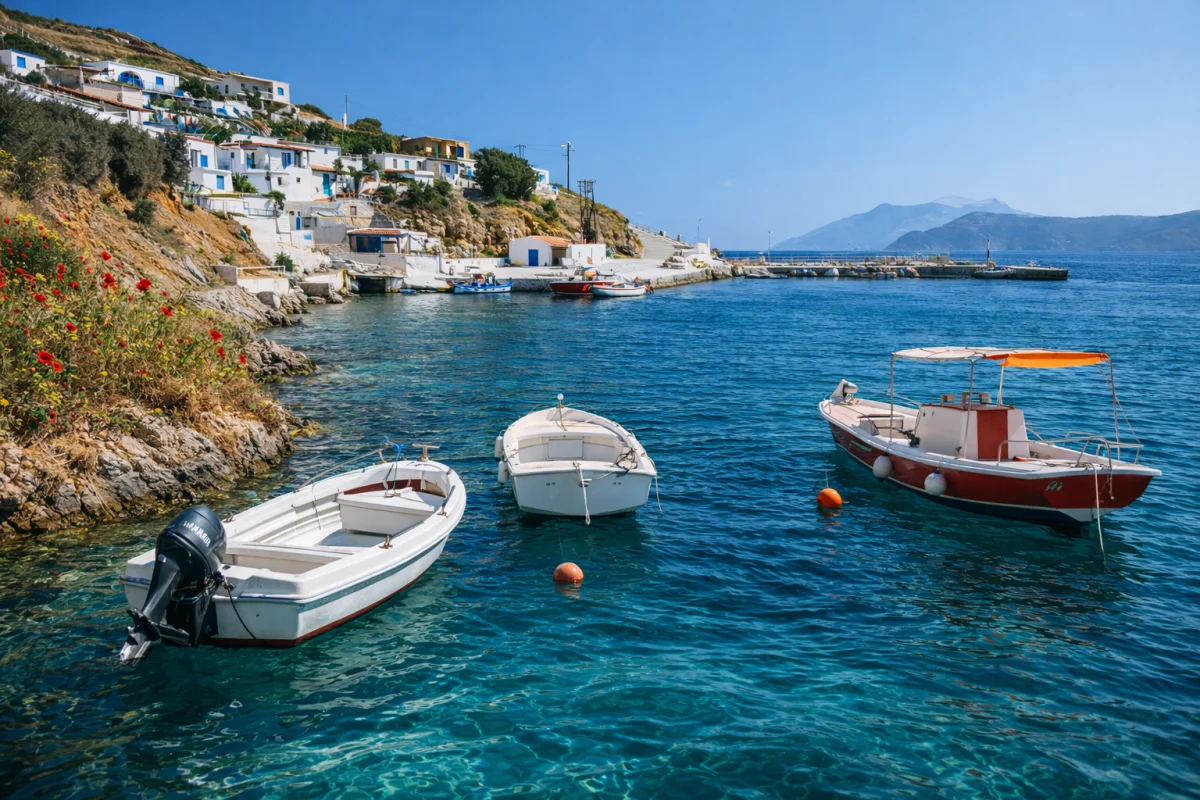
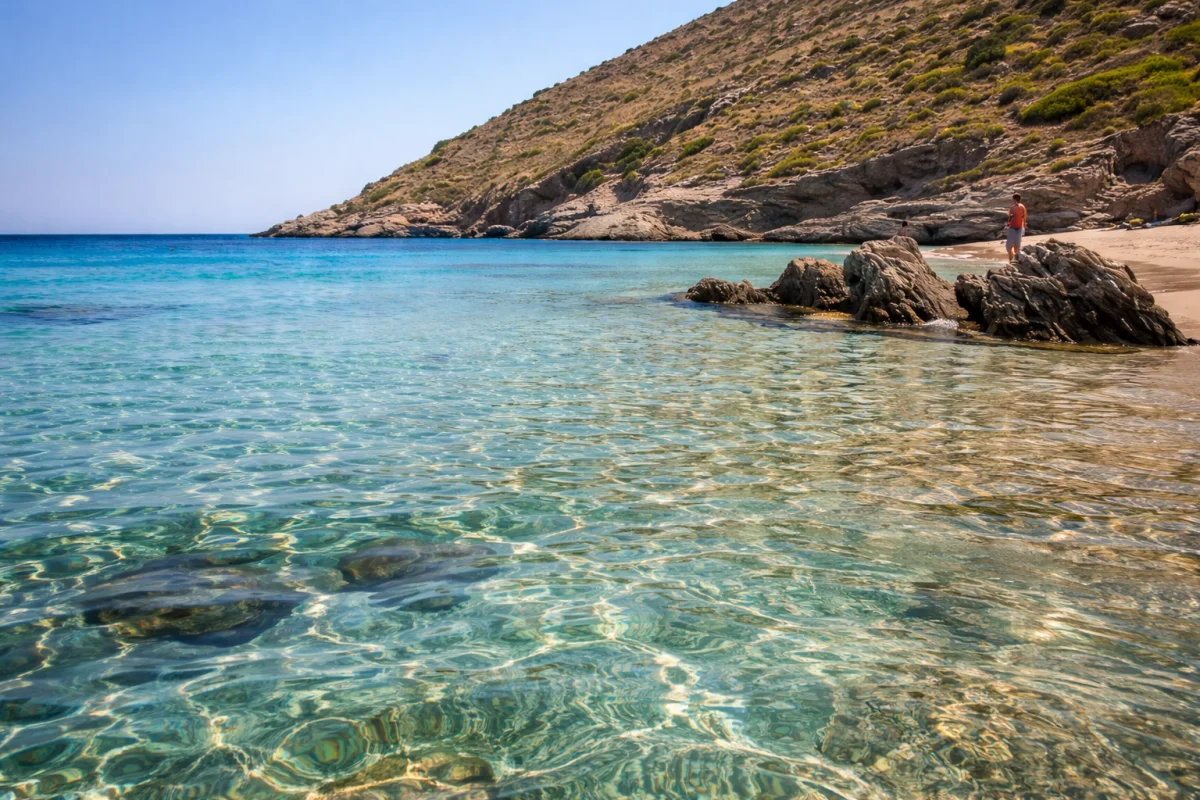
If other islands are fortresses, Fournoi is an open hand. The geography here holds you. The hills are low and worn smooth by the wind, covered in thyme and savoury, sloping gently into the sea but the true character of the land is in its coastline. Fournoi is a lacework of land and water. The island is carved by countless fjords, deep inlets and hidden coves that cut far inland. This geography creates a profound sense of shelter. In these bays, the water is often still as glass, protected from the Aegean’s temper. It is a landscape that encourages a rare human feeling of safety. You are never exposed here. You are always tucked away, held in the curve of the bay, invisible to the open sea.
The Echo of the Corsair
There is a reason pirates loved Fournoi. In the maps of the past, this was a corsair’s paradise. A labyrinth of hiding spots where a ship could vanish instantly. You can still feel that energy today. Not the violence of piracy, but the desire to disappear. Fournoi attracts a specific kind of traveller: the one who wants to drop off the grid. The one who is tired of the curated experiences of the famous islands. To come here is to participate in a centuries-old tradition of lying low. It is a place to take off the costume of your daily life, to stop performing and to simply exist in the quiet.
The Fisherman’s Truth
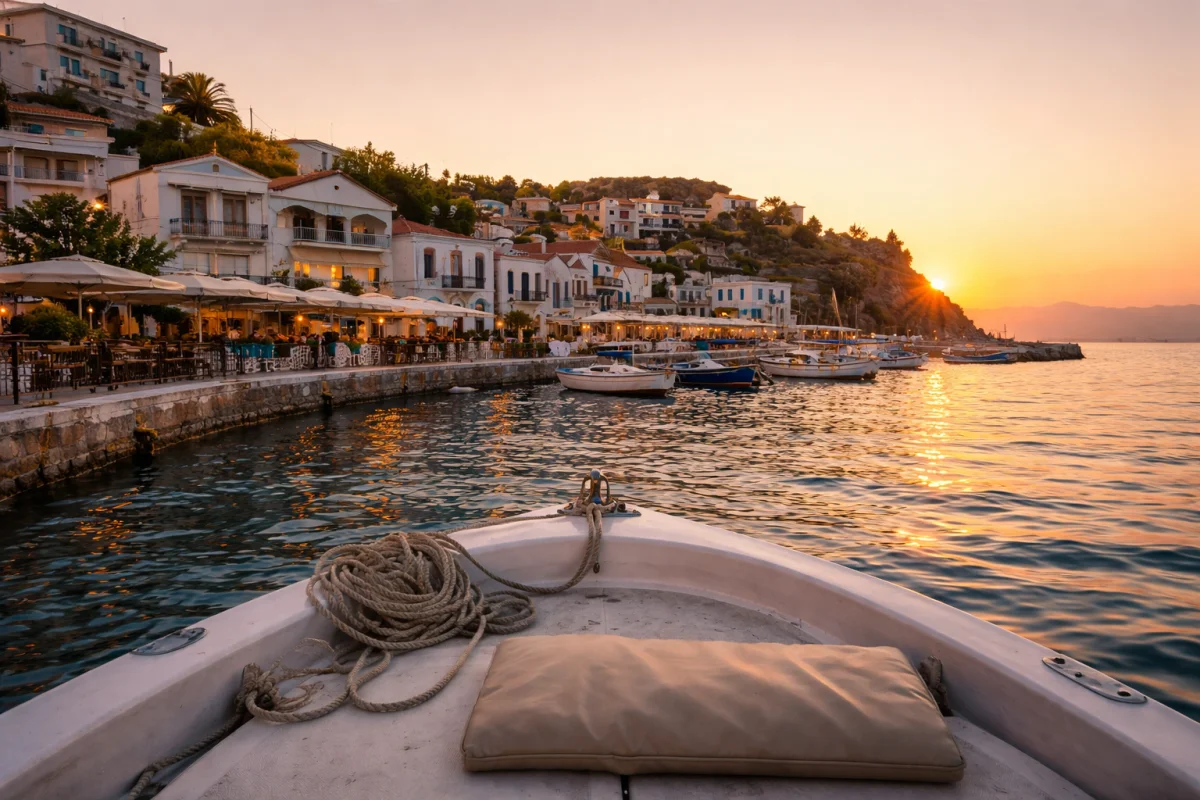
Fournoi does not live off tourism; it lives off the sea. Proportionally, it has one of the largest fishing fleets in Greece. The harbour is not a backdrop for cocktails; it is a workspace. It smells of diesel, salt and drying nets. It sounds like the chug of caique engines at 4:00 AM. This connection to the sea is not nostalgic; it is vital. The relationship between the human and the catch is immediate. There is no supply chain here. The lobster on your plate was likely walking across the seabed a mile away just hours ago. The famous Astakomakaronada (lobster pasta) of Fournoi is not a gourmet invention for foodies. It is the food of the people, born from the abundance of the waters. Eating here feels like a communion with the ocean. It is simple, messy and profoundly real. You eat with your hands, cracking shells, sitting metres from the water, reminded that life is sustained by what we can gather.
The Village as a Living Room
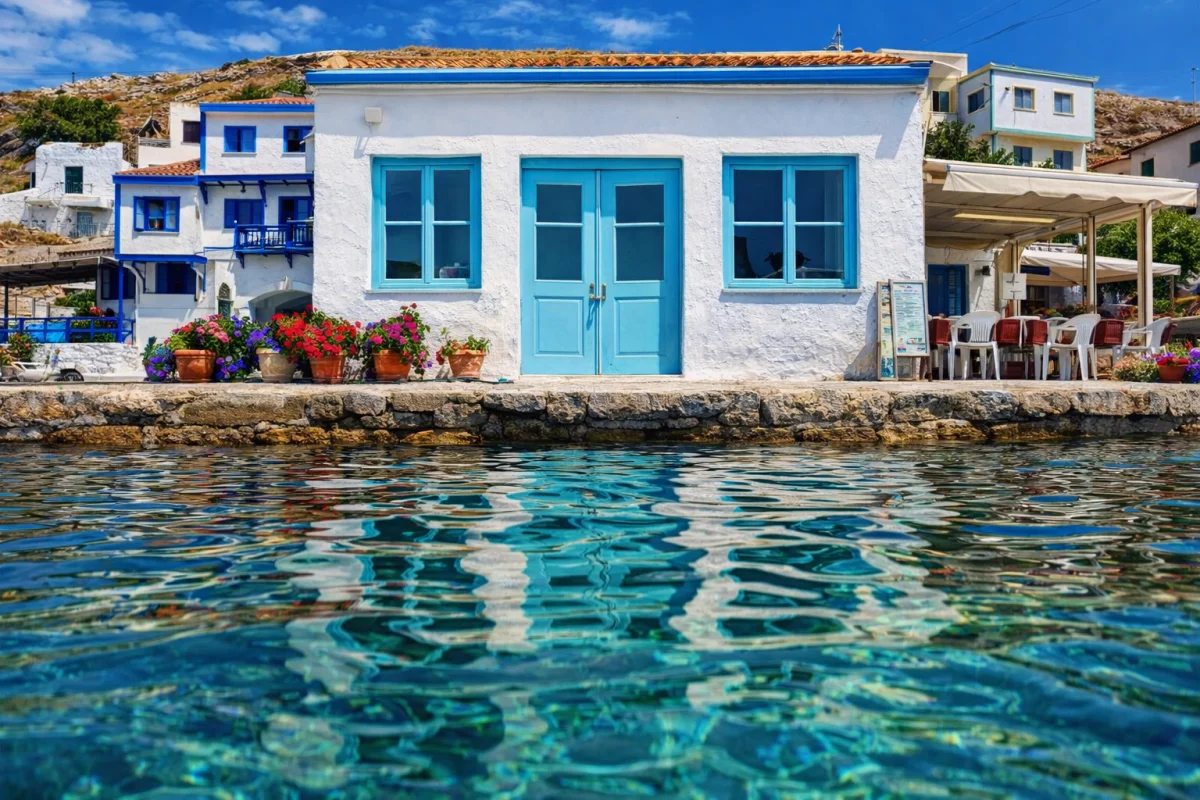
The main town (Chora) feels less like a capital and more like a communal living room, because the island is small and life condenses here. The harbour front is a single, continuous line of taverns, cafés and homes. The line between "public" and "private" is blurred. You walk past a table where a family is eating dinner and they nod to you. Children ride bicycles through the tables. The fisherman mending his yellow nets on the quay is not a photo opportunity; he is working and he might stop to ask where you are from. There is a gentleness to the social rhythm. You don’t need a map. You don’t need an itinerary. You walk the length of the harbour, you say a quiet "kalimeras," and within two days, you are no longer a stranger. You are just another figure in the landscape.
The Luxury of Boredom
Fournoi offers the ultimate luxury: the permission to do nothing. There are no great archaeological sites to check off. There are no "must-see" museums. The island liberates you from the anxiety of FOMO (Fear of Missing Out). You cannot miss out, because there is nothing going on. The days here take on a liquid quality. You wake up. You swim in a bay that looks like a swimming pool. You eat. You sleep. You watch the sun turn the white houses to gold, then to blue. It is a return to a childhood relationship with time, where the afternoon stretches out forever and the only deadline is the setting sun.
A Balance of Being
Fournoi doesn’t experience the manic highs of August tourism or the desolate lows of abandonment. It just keeps humming its own quiet song. It is an island that teaches you that you don’t need much to be happy. You need fresh fish. You need clear water. You need a plastic chair in the shade and a cold glass of wine. You need to hear the wind in the rigging of the masts.
Why It Stays
Fournoi stays with you because it feels like a secret you want to keep. It leaves you with a feeling of lightness. You leave remembering the way the light hits the water in the harbour at dusk, turning it into oil. You remember the taste of salt on your skin that never quite goes away. You remember the feeling of being "in-between", no longer part of the busy world, but not quite lost either. It is a place that reminds you that life can be small, simple and absolutely full, all at the same time. It is the sanctuary of enough.