Corfu does not feel like it belongs to only one story. It feels layered, influenced and quietly confident in its complexity. Sitting at the northwestern edge of Greece, facing both the Ionian Sea and mainland Europe, Corfu has always stood at a crossroads. Armies passed through. Traders arrived and stayed. Cultures overlapped rather than replaced one another. What makes Corfu distinct is not just its beauty but also its ability to hold all of that history without feeling fragmented. The island doesn’t rush to explain itself. It lets you notice, slowly.
Geography That Feels Generous
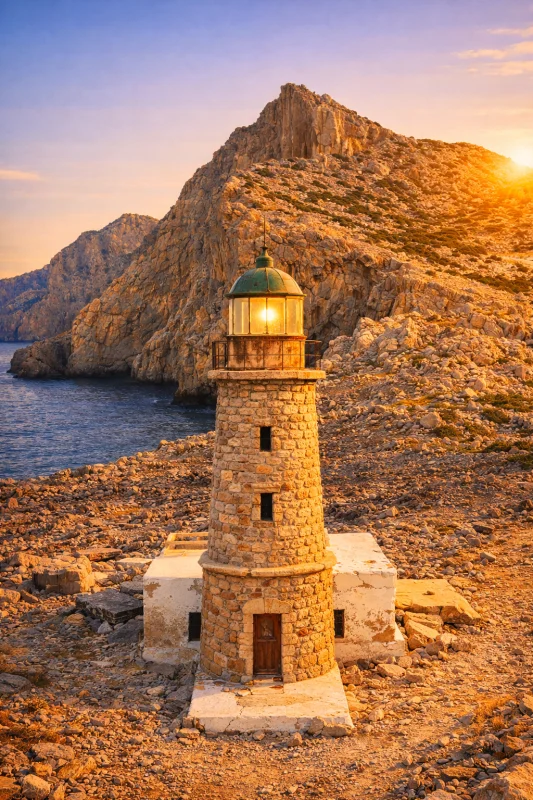
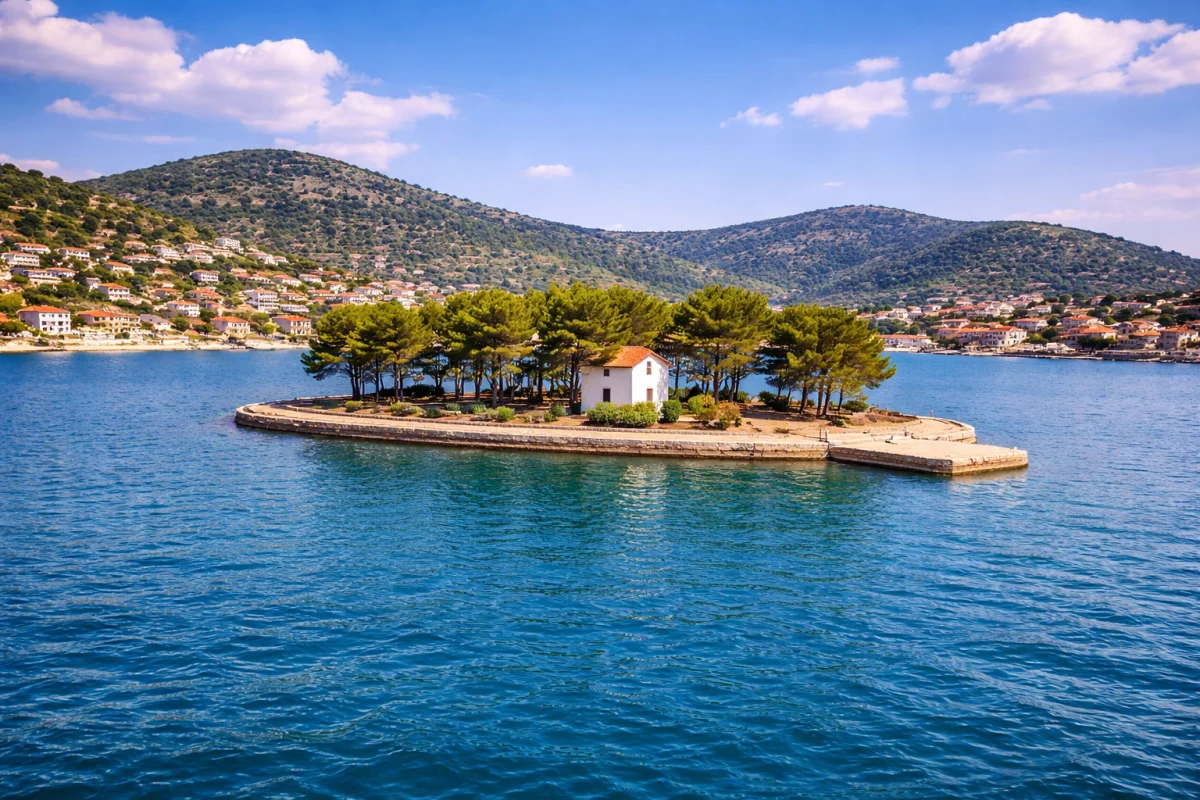
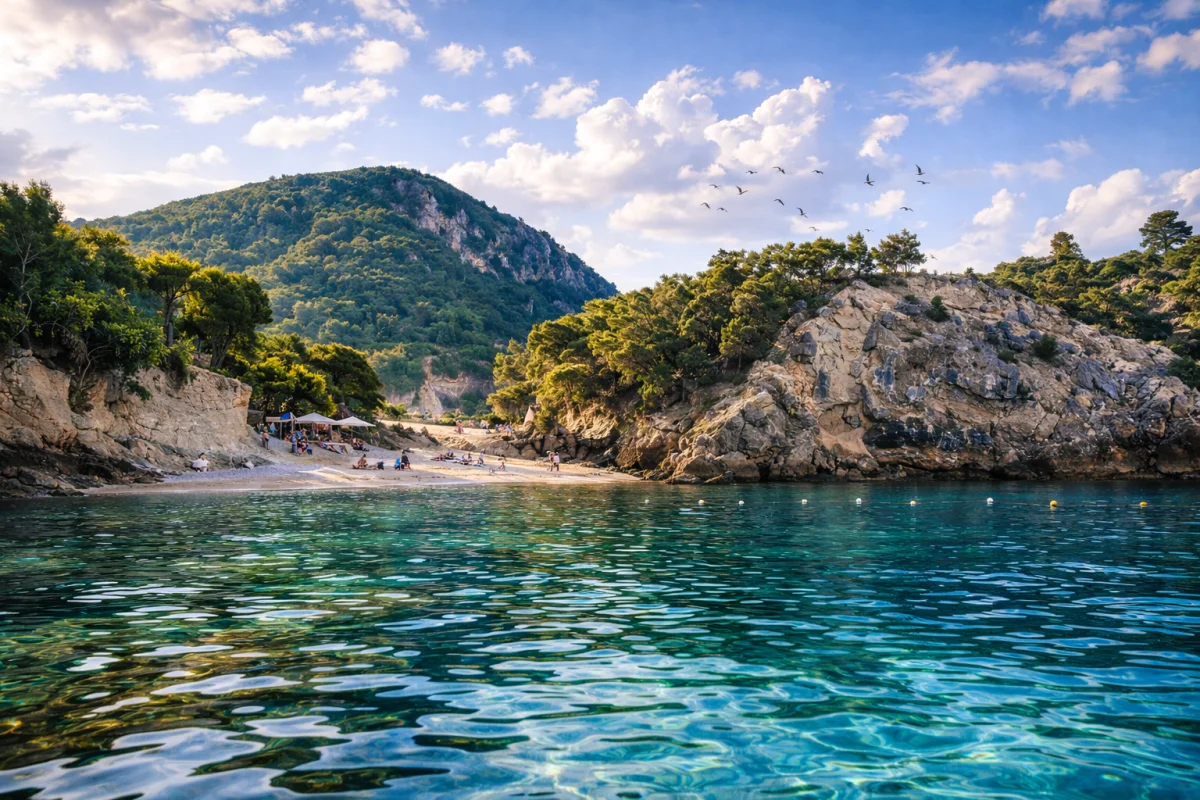
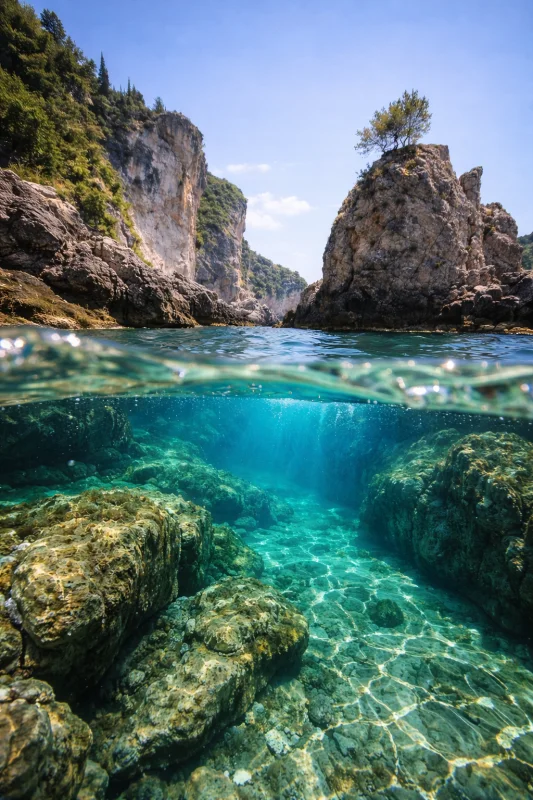
Corfu is green in a way that surprises many first-time visitors. Rainfall is higher here than on most Greek islands and the land responds generously. Hills roll rather than rise sharply. Olive groves run through valleys and over hills, making the land feel consistent and settled. The coastline takes on a different mood depending on where you are. The coastline changes character depending on where you stand. In the north, the land feels abrupt. Cliffs drop straight into deep water, carving out coves that feel secretive and still. Turn west and the landscape opens up. The beaches here are vast and exposed, facing the sunset with a sense of surrender to the horizon. The east is the island’s quieter side. The bays are sheltered, the water moves gently and the light feels softer, almost protective. It is a geography that gives you space to move without making you feel lost. Distances exist, but they don’t feel punishing. You move through Corfu at a pace that allows observation.
The History
Corfu’s history is unlike many islands; it was never occupied by the Ottomans. Instead, it passed through Venetian, French and British hands, each leaving visible marks. Rather than erasing what came before, these periods layered themselves onto the island. Architecture shifted. Urban planning evolved. Customs blended. Corfu learnt how to absorb influence without losing itself. This is why the island feels subtly different. Streets curve differently. Buildings carry different proportions. Public spaces feel more European, more outward-facing. History here doesn’t sit behind glass. It remains part of how the island moves.
Corfu Town
As a living archive, Corfu Town is one of the most distinctive urban spaces in Greece. Built between two fortresses and opening toward the sea, it feels dense, elegant and lived-in. Narrow streets run between tall buildings. Light filters down rather than flooding in. Life here is constant. Shops open early. Cafés fill and empty. Laundry hangs from balconies above stone streets worn smooth by time. The town doesn’t slow down for visitors, but it doesn’t push them away either. You feel that Corfu Town exists because people live there, work there and return to it daily. In the interior, Corfu slows down. Villages rest among olive trees, their stone houses shaped by years of living. Life feels inward and steady, guided by farming, family and routine. Many villages feel unchanged in their essentials. Cafés double as gathering points. Conversations are familiar. People greet each other by name. These places don’t perform tradition. They continue it.
The Sea as Companion
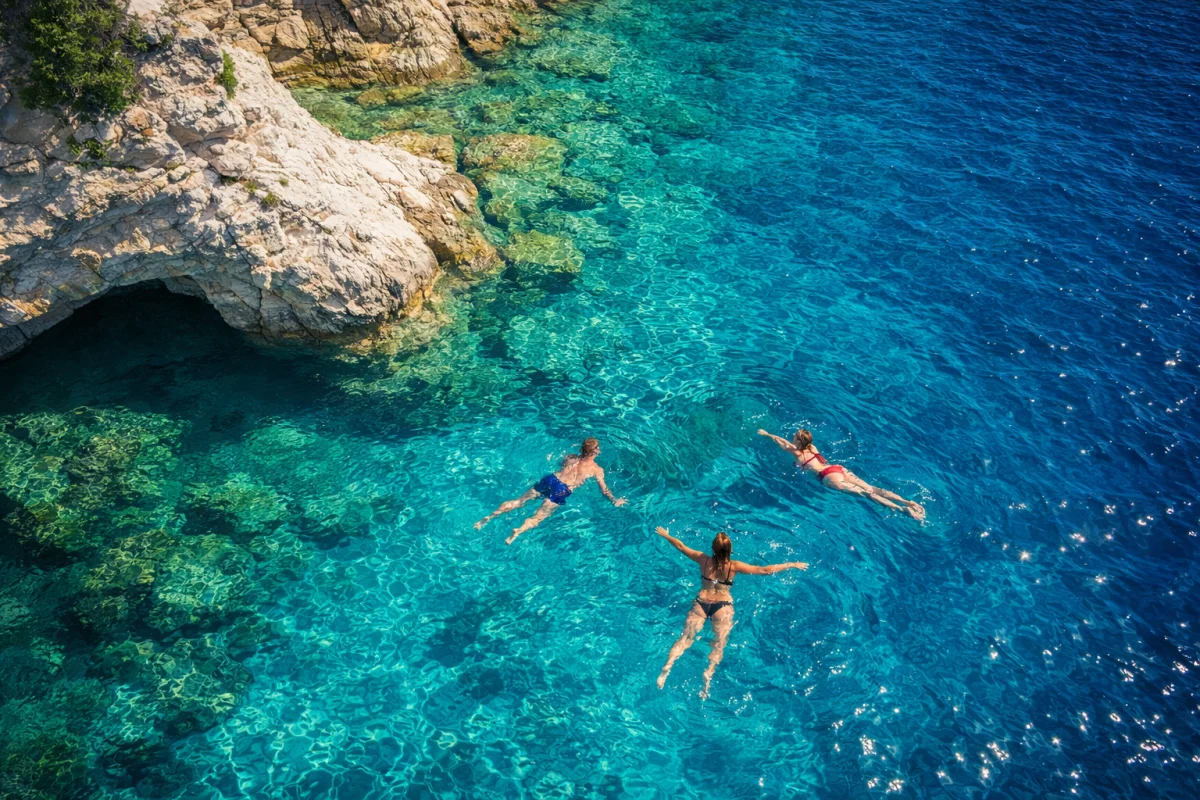
The Ionian Sea around Corfu feels different from the Aegean. It is often calmer, deeper in colour and slower to change mood. Bays remain sheltered. Swimming feels forgiving. Boats move gently. Water reflects light softly. Time by the water stretches. Days unfold easily.
Food That Reflects Mixture
Corfiot food carries influences from across centuries. Food is plentiful and shared easily. Taverns feel local and familiar, where meals are simply part of the day. Food here reflects the island’s history of openness, not by trying to be different, but by being comfortable with complexity.
Movement and Pace
Roads wind through hills and olive groves. Views appear gradually. Time here feels flexible. Days are full but not crowded. You find yourself staying longer in places without deciding to. The island doesn’t compress itself for short visits. It remains what it is.
A Social Island, Quietly So
Corfu is social without being loud. Conversation matters. Sitting together matters. Evenings stretch without effort, following the light instead of a schedule. There is music and celebration, but it stays in the background. They belong to it rather than define it.
Why Corfu Feels Complete
Corfu feels complete because it doesn’t rely on one quality. It holds land and sea, history and daily life and openness and restraint in balance. Corfu feels calm and self-assured.
What Stays With You
People leave Corfu remembering textures rather than moments. The feel of stone streets underfoot. The shade of olive trees. The softness of the sea. The sense of being somewhere that has learnt how to absorb change without losing itself. Corfu doesn’t try to simplify its story. It trusts that complexity can be lived with. And that trust is what stays, long after the island fades from view.