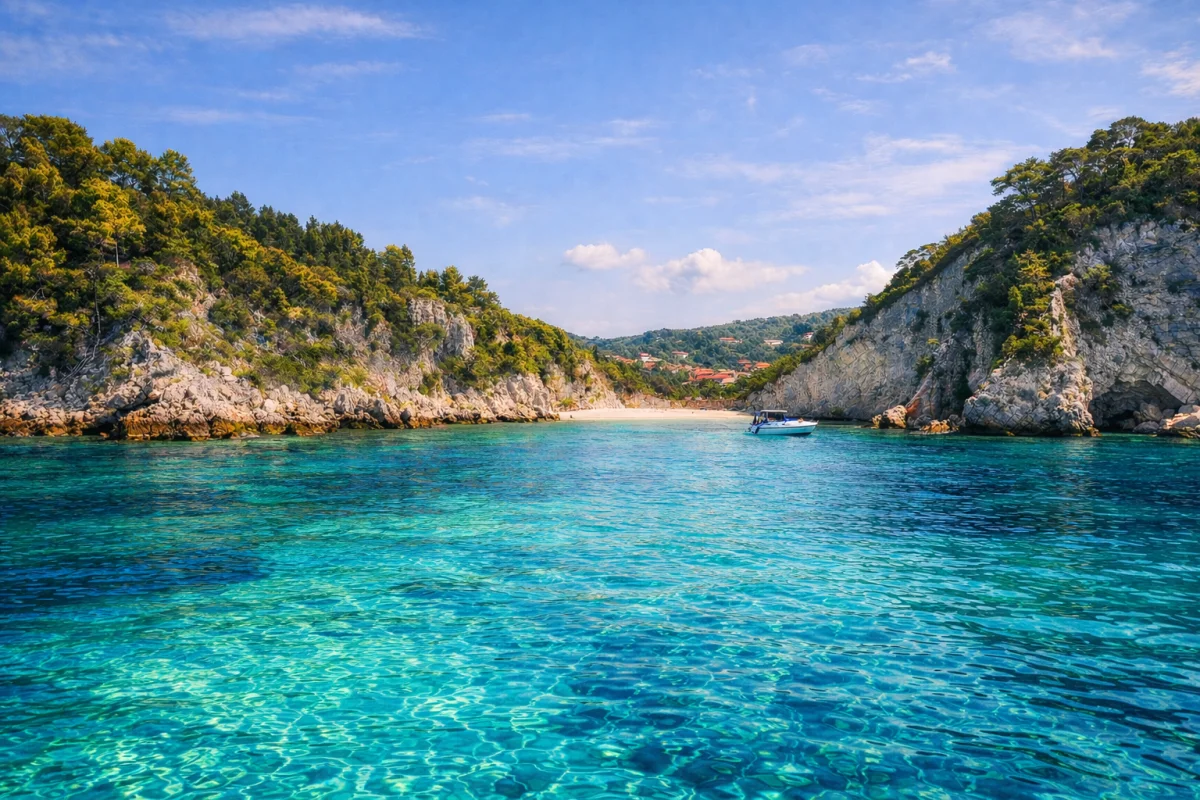
Antipaxos feels less like a destination and more like a pause. Lying just south of Paxos, close enough to reach in minutes by boat, it is small, uninhabited for most of the year and defined almost entirely by water. There is very little here to distract you. No towns. No roads. No sense of progression from one place to another. What Antipaxos offers is space-open, immediate and uncomplicated. This is an island you don’t arrive at to stay. You arrive to stop.
Geography Reduced to Essentials
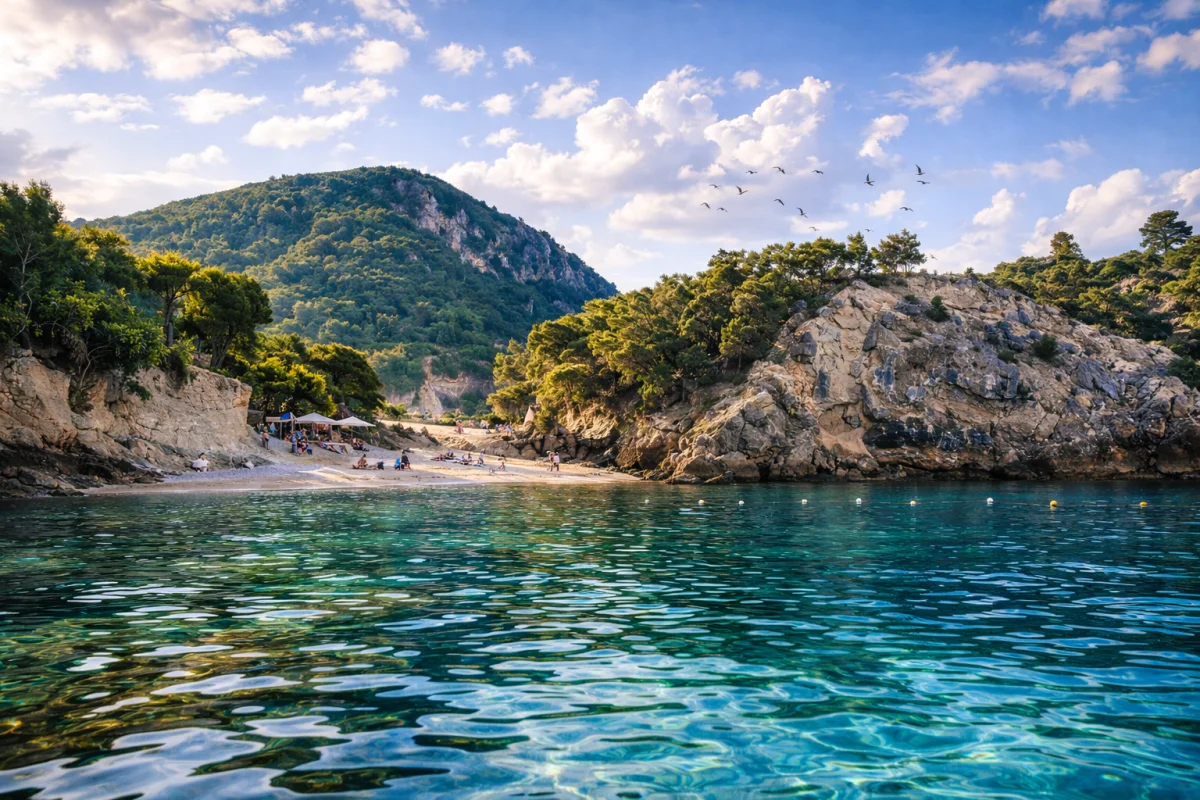
Antipaxos is tiny. You can see most of it from the water before you step ashore. The land rises gently from the sea, covered in low greenery and shaped by wind rather than elevation. There are no hills to climb, no interiors to explore. Everything happens at the edge. The coastline is soft and inviting. Beaches open gradually into the sea, pale sand slipping into water that shifts from clear turquoise to deeper blue with almost no interruption. The island feels designed for floating rather than walking. Because of its size, Antipaxos never feels complex. You understand it immediately.
The Sea as the Main Presence
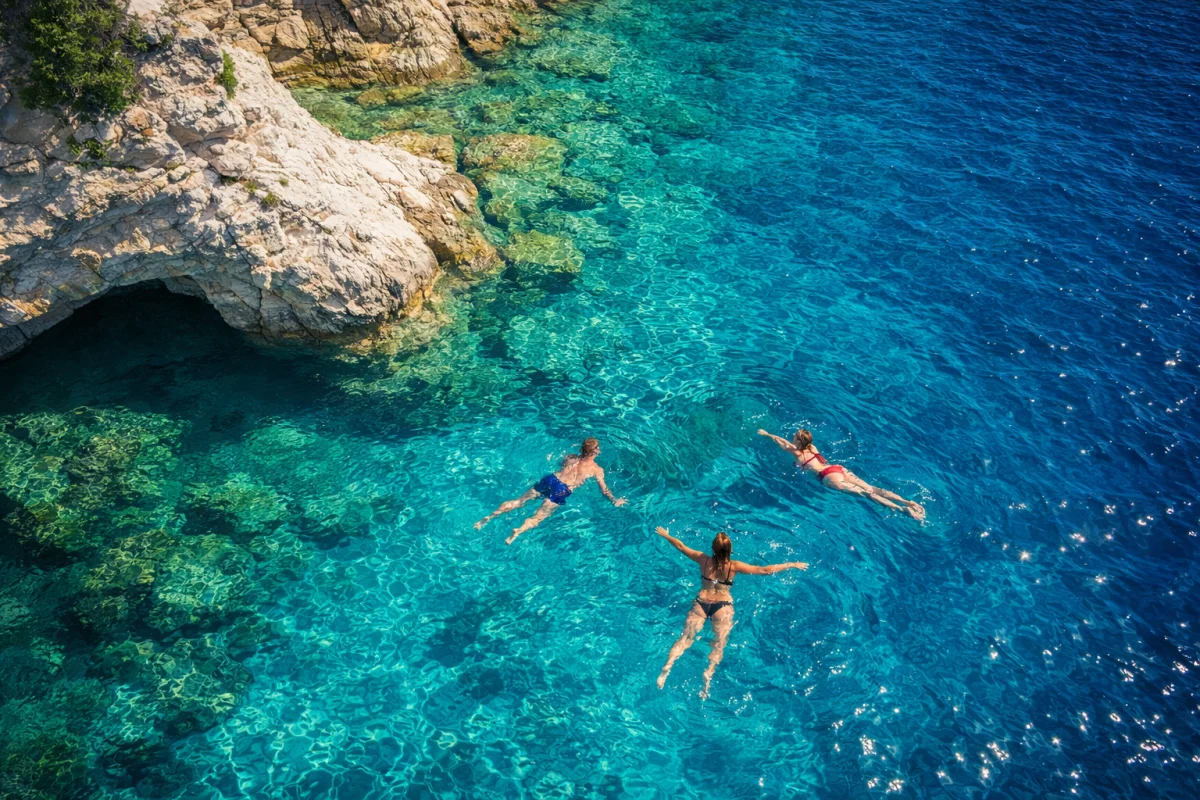
On Antipaxos, the sea is not background. It is the experience. Water surrounds the island so completely that land feels secondary. Something you step onto only to rest between swims. The water here is unusually clear, even by Ionian standards. Light penetrates deeply, revealing sand patterns and subtle changes in depth. Swimming feels effortless. You drift more than you move. The sea stays calm most days, sheltered by Paxos to the north. Waves arrive gently. Sounds are softened. Time stretches. This is water that invites you to stay in it.
Beaches Without Structure
The beaches of Antipaxos are simple and open. They are not shaped or divided. You arrive, you choose a spot and that’s enough. There are no long walks between beaches. You move a few steps along the shore or you swim. Shade is limited. The sun is constant. The experience is direct.
No Villages, No Daily Rhythm
There is no village on Antipaxos. No permanent settlement. A few seasonal structures open briefly in summer, serving food and drinks to those who arrive by boat, then close again when the season ends. Without residents, the island has no daily rhythm of its own. It borrows rhythm from the sea and the sun. Boats arrive in the late morning. People swim, eat and rest. By afternoon, many leave. Quiet returns quickly. This absence of routine is part of the island’s character.
A History of Passing Through
Antipaxos has never been shaped by conflict, trade or long-term habitation. It existed alongside Paxos as grazing land, anchorage and refuge. A place used briefly, then left behind. Because of this, it carries little visible history. There are no layers to uncover. Nothing to interpret. The island exists almost entirely in the present tense. What you see is what it is.
Time That Feels Suspended
Time on Antipaxos feels suspended rather than slow. Without places to go or things to do, minutes lose their structure. You stop checking the time. You notice light instead. The sun moves. The water changes colour. Shadows shift slightly along the shore. This lack of narrative can feel unsettling at first. Then it becomes freeing.
Visitors and Fragile Balance
Antipaxos receives many visitors in summer, but always temporarily. Boats come and go. The island empties and fills repeatedly throughout the day. Because there is no infrastructure to absorb large numbers, the island’s balance remains delicate. Its beauty depends on lightness, on people not staying too long, not building too much and not claiming space. Antipaxos survives by remaining transient.
Why Antipaxos Feels So Intense
Antipaxos feels intense because it removes everything except sensation. There is nothing to interpret, no story to follow and no identity to understand. There is only water, sun, body and rest. This intensity doesn’t come from drama. It comes from reduction.
What Stays With You
People don’t remember Antipaxos for events or moments. They remember colour. Clarity. The feeling of floating without effort. The sense of being held by water and light. It doesn’t change you. It resets you, briefly, quietly. Antipaxos simply offers a place where land disappears just enough for the sea to take over and when you leave, that feeling lingers, not as a memory, but as calm.