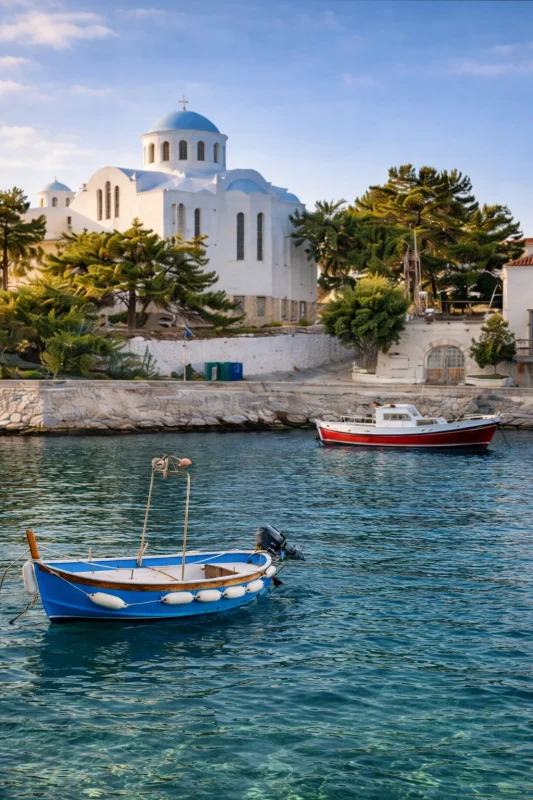
Spetses Island possesses a certain order, a balance between activity and calm, between the old ways and the present. Though near the Peloponnese, it feels separate. Getting there is easy. The port opens slowly and the town reveals itself. Spetses does not rush to explain itself. It allows you to adjust first. This is an island shaped by history, pride and routine. What makes Spetses interesting is not only what you do, but also how you move through it.
Arriving on the Island
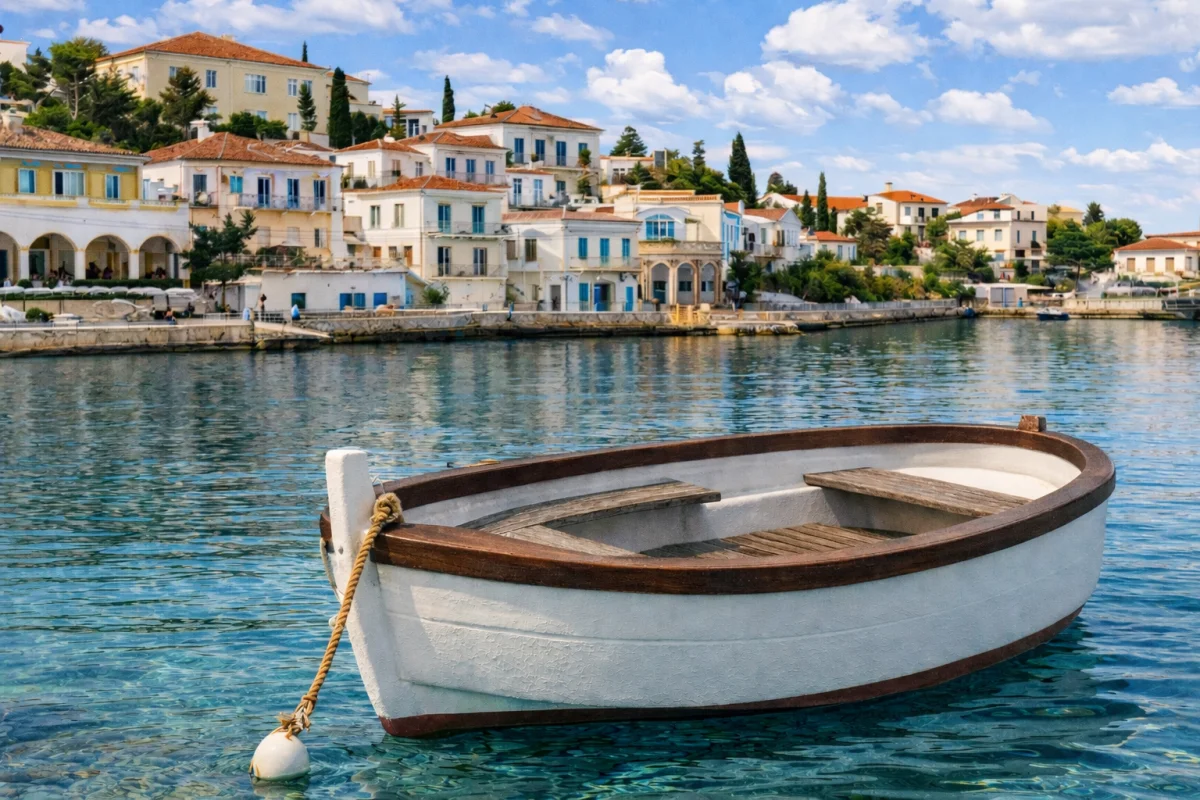
Arrivals usually pass through Dapia, the main port and centre of activity. The harbour feels ordered. Buildings face the water. Cafés line the promenade. There is movement, but it feels controlled. Boats come and go. People walk steadily. Nothing spills over its edges. Spetses feels aware of itself. One of the first things to do is to walk the port slowly. Not to look for anything specific. Just to observe how the island holds its space. This first walk sets the tone for everything that follows.
Moving Without Cars
Cars are restricted on Spetses and that changes everything. People move on foot, by bicycle or by carriage. Time slows here. Distances feel real. Sounds soften. Conversations become clearer. Walking becomes part of the experience rather than something between experiences. One of the most interesting things to do on Spetses is simply to move through it slowly. Walk from Dapia toward the Old Harbour. Notice how the island changes without ever feeling rushed.
Walking the Coastal Road
The coastal road that circles much of the island is one of Spetses’ defining features. Walking or cycling along it becomes a daily ritual rather than a planned activity. The sea stays close. Pine trees give shade. Views open and close naturally as the path curves. You pass quiet swimming spots, old houses and stretches where nothing interrupts the sound of water. This walk works at any time of day. Morning feels fresh and open. Afternoon feels warm and still. Evening carries soft light and long shadows. People often repeat this walk. That repetition becomes grounding.
Swimming as Part of the Day
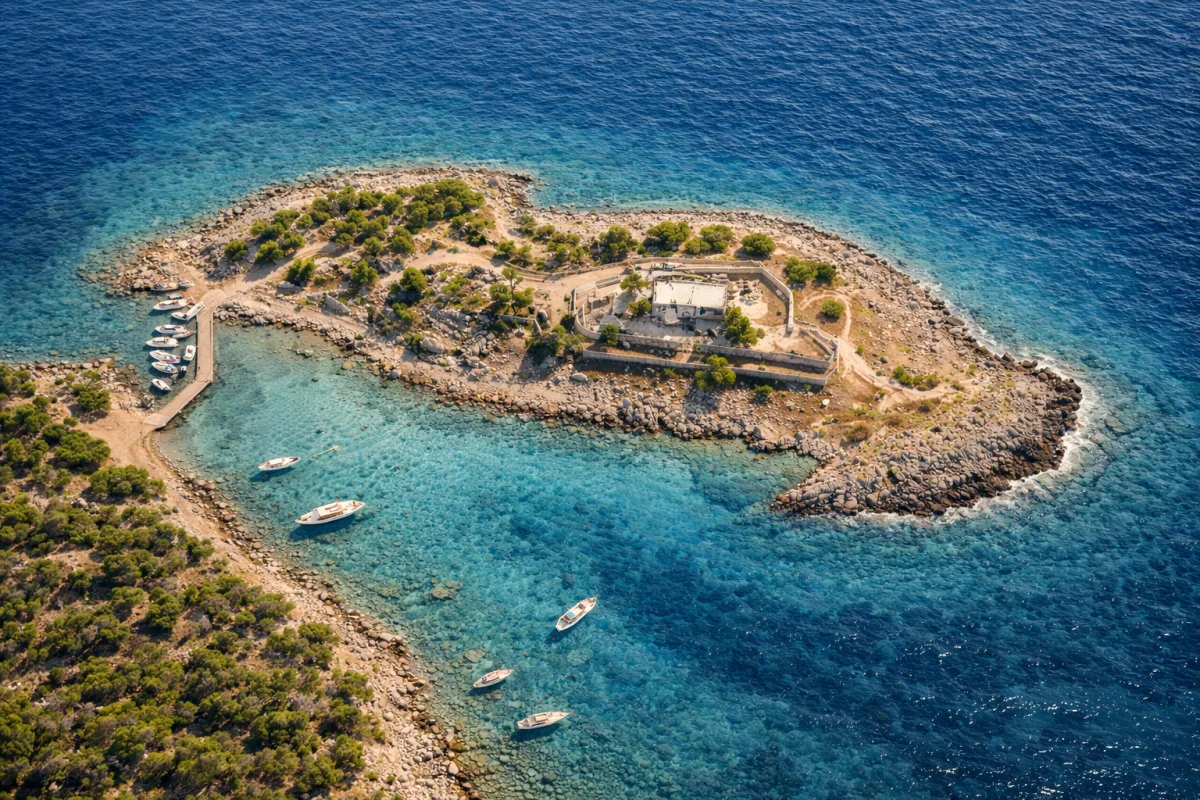
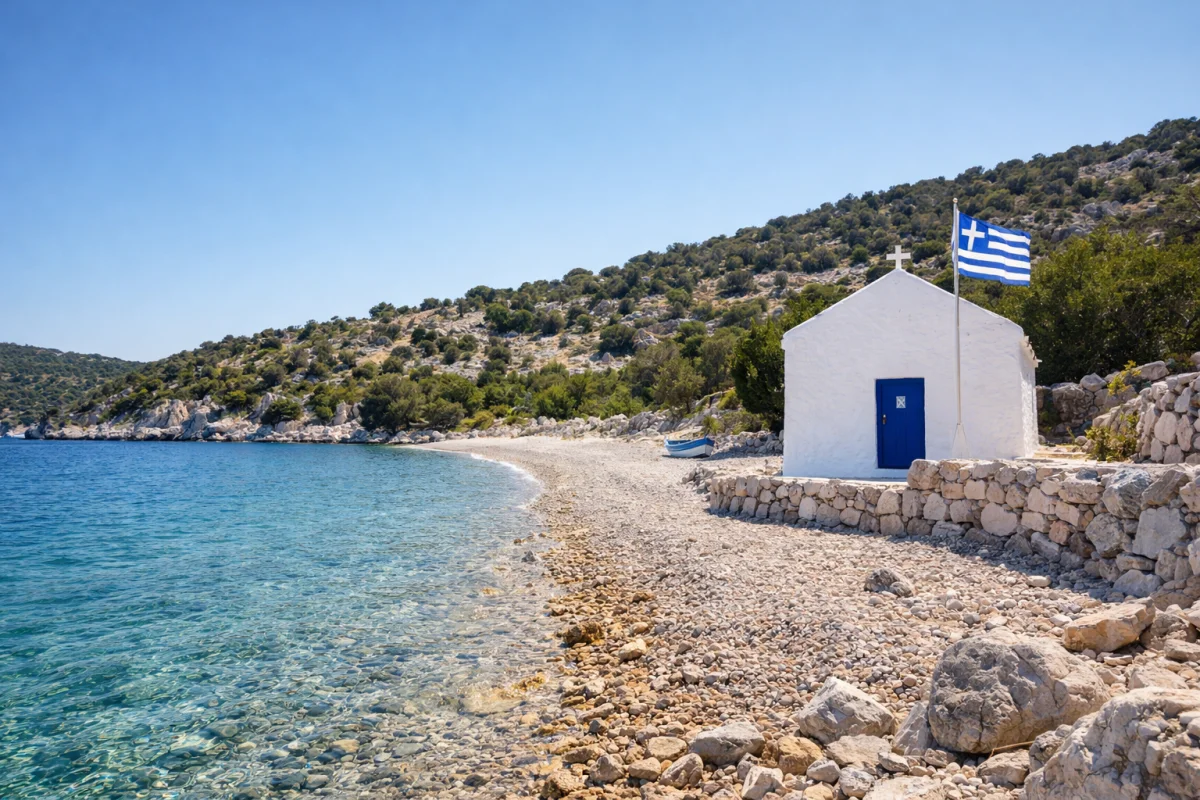
Swimming on Spetses is woven into daily life. You do not plan it carefully. You fit it in. Small coves and platforms appear along the coast. Some are sandy, others rocky. The water is clear and calm, especially on the southern side of the island. Agia Marina feels open and social. Kaiki Beach feels quieter. Further out, swimming spots become more private, reached by foot or bicycle. People swim, dry off, sit for a while and move on. Swimming does not interrupt the day. It completes it.
The Old Harbour
The Old Harbour feels different from Dapia. Slower, softer and inward. Fishing boats are close together. Taverns line the water without trying to stand out. Life here feels settled rather than performative. Spending time in the Old Harbour is about staying still. Sitting by the water. Eating slowly. Watching boats return. In the evening, the harbour fills gently. The sea shimmers with reflected light. Voices are hushed. The atmosphere feels contained.
History and the Sense of Pride
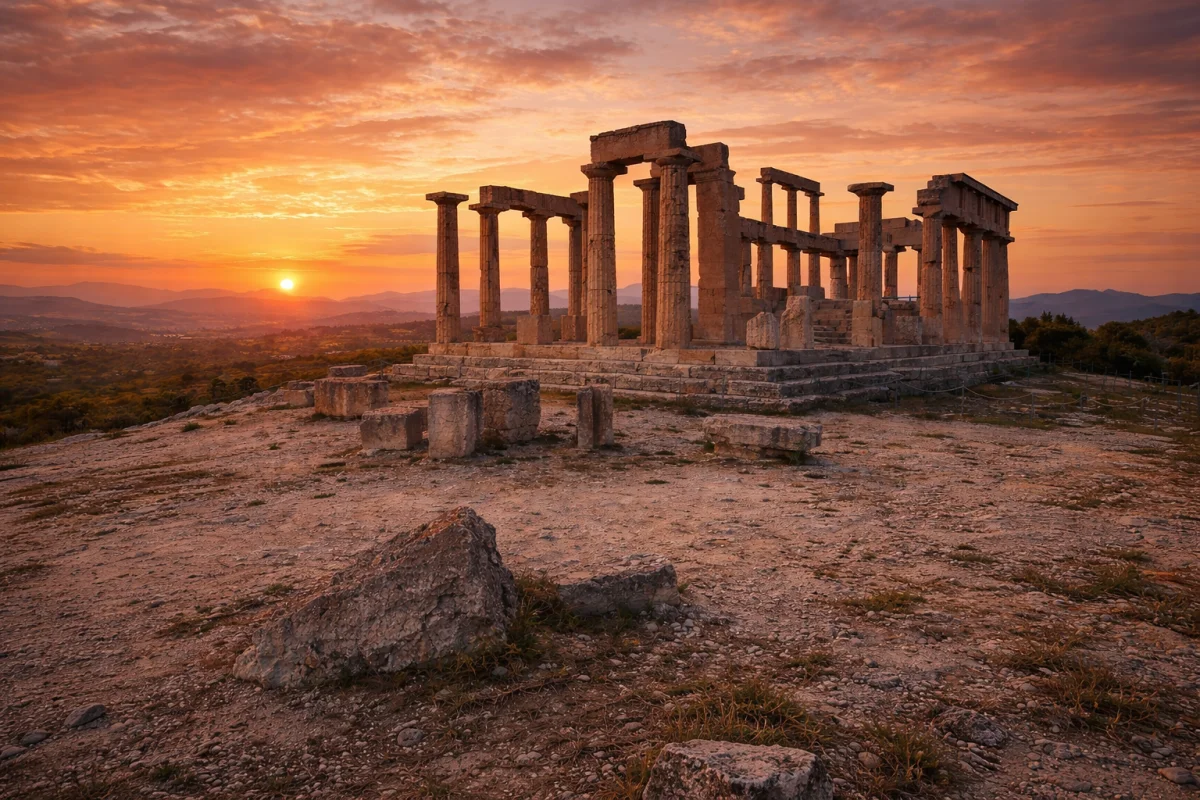
Spetses wears its history openly, yet it doesn't weigh down the present. The island played a central role in the Greek War of Independence and that legacy remains part of its identity. The island's historic houses and mansions sit within daily life. You pass them while walking. You see them while swimming nearby. One of the most meaningful things to do on Spetses is to notice how history and routine exist side by side. The past does not dominate. It supports. Walking past the old mansions shows the island’s past wealth and strength at sea. The buildings feel solid. Visiting them is not about grandeur. It is about understanding scale, structure and permanence. Thick walls. Large rooms. The sea in view. These spaces slow you down. Sound softens. Light changes. The past feels closer.
Walks
Beyond the coast, pine forest takes over. Inland walks feel cooler. Paths wind through trees. Light filters in. The smell of pine remains. These walks offer contrast. After time by the water, the forest pulls attention inward. You notice breath. Footsteps. Wind moving above you. Inland walks are not demanding and are meant to be taken slowly.
Eating
Eating on Spetses is slow and relaxed, following the island's pace. Taverns serve familiar food. The most basic meals served would be fish, vegetables, bread and simple desserts. Menus are readable. Choices are clear. Eating often becomes the anchor of the day. Lunch stretches into the afternoon. Dinner settles the evening. Food here supports routine.
Evenings Without Noise
Evenings on Spetses feel composed. The island does not change character after dark. It softens. People walk the port. Sit along the water. Gather at familiar tables. Lights reflect gently. Sound remains low. There is no pressure to move elsewhere. No sense that something is being missed. The island feels complete in its own space. Small, Repeated Moments. What makes Spetses interesting is how often moments repeat without becoming dull. The same swim. The same walk. The same café. Repetition becomes familiar. Little changes stand out. Different light. Different breeze. Different faces.
Why Spetses Feels Balanced
Spetses works because it holds itself together. History, daily life and nature stay in proportion. Things to do here are not separate from being here. Walking, swimming, eating and sitting are not activities to check off. They are how the island functions.
Leaving the Island
Leaving Spetses feels orderly. Boats depart. People move on calmly. The island stays with you through rhythm rather than memory. Through pace rather than image. Spetses simply remains with you.