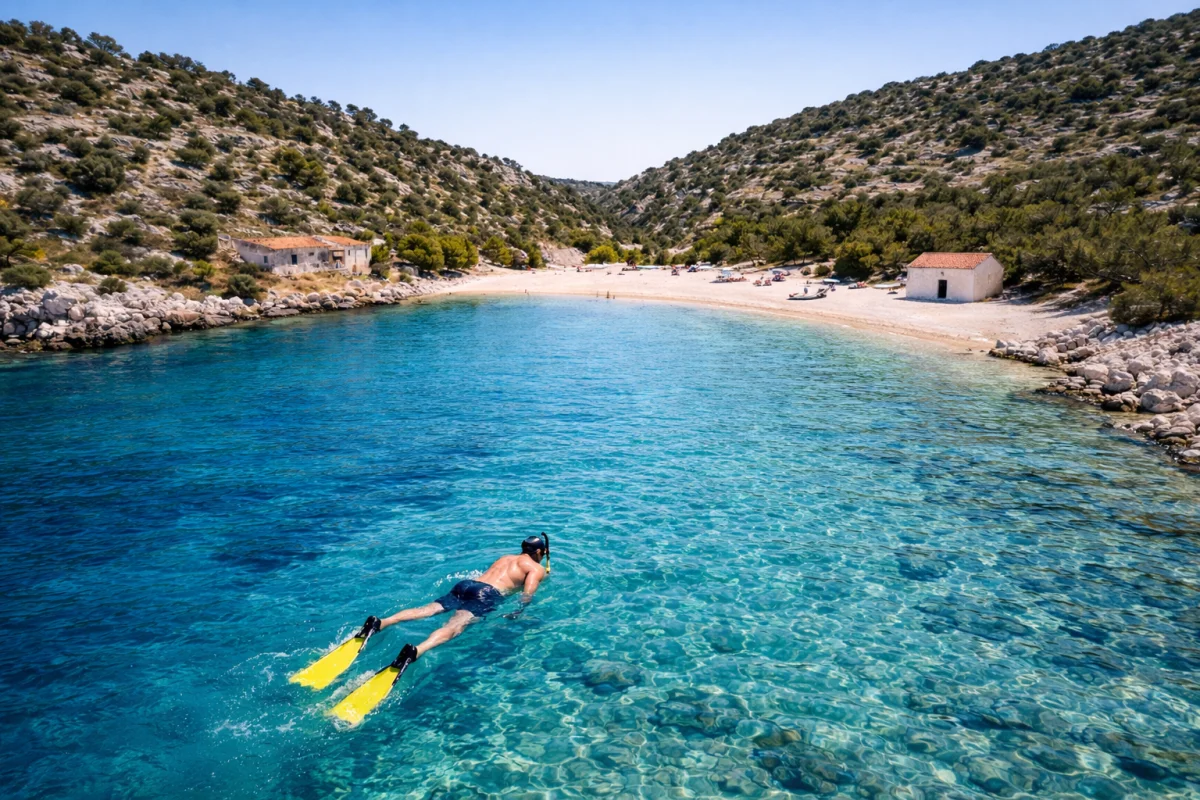
Dokos sits quietly between Hydra and the Peloponnese, close enough to both, yet separate from their movement. There is no port town, no obvious centre and no sense of arrival in the usual way. You come to Dokos, because you choose to. This is not an island built for comfort or variety. It is an island shaped by openness, silence and long stretches of stillness. What makes Dokos interesting is not what it offers to do but what it allows you to stop doing.
First Impressions and Arrival
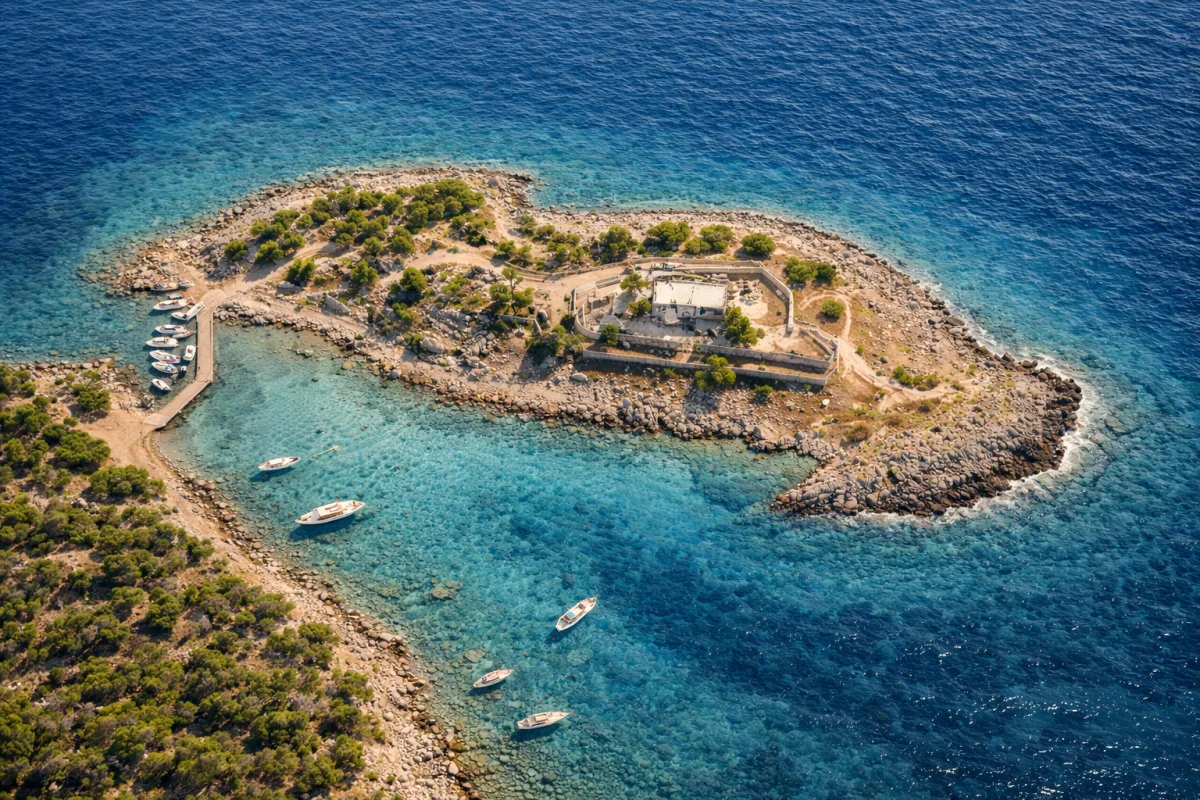
Arrival on Dokos is simple. You come by private boat or water taxi. There are no ferries, no schedules to follow once you are close. The shoreline appears dry and pale, shaped by rock and low vegetation. Nothing rises suddenly. Nothing announces itself. Stepping onto the island feels unfinished in the best way. There is no clear path forward. No signs. No instructions. You orient yourself slowly, using the land and the sea rather than markers. This lack of structure sets the tone immediately.
The Shape of the Island
Dokos is low and open. The hills rise gently. The land feels exposed. Plants stay low. Shrubs, dry grasses and scattered stones dominate the landscape. There are no forests here. Shade is rare and valuable. You feel the sky above you at all times. This openness changes how you move. You walk slower. You stop more often. Paths exist, but they are faint. Old routes were made by animals and repeated footsteps rather than planning. You follow them instinctively or you leave them altogether.
The Coast and the Sea
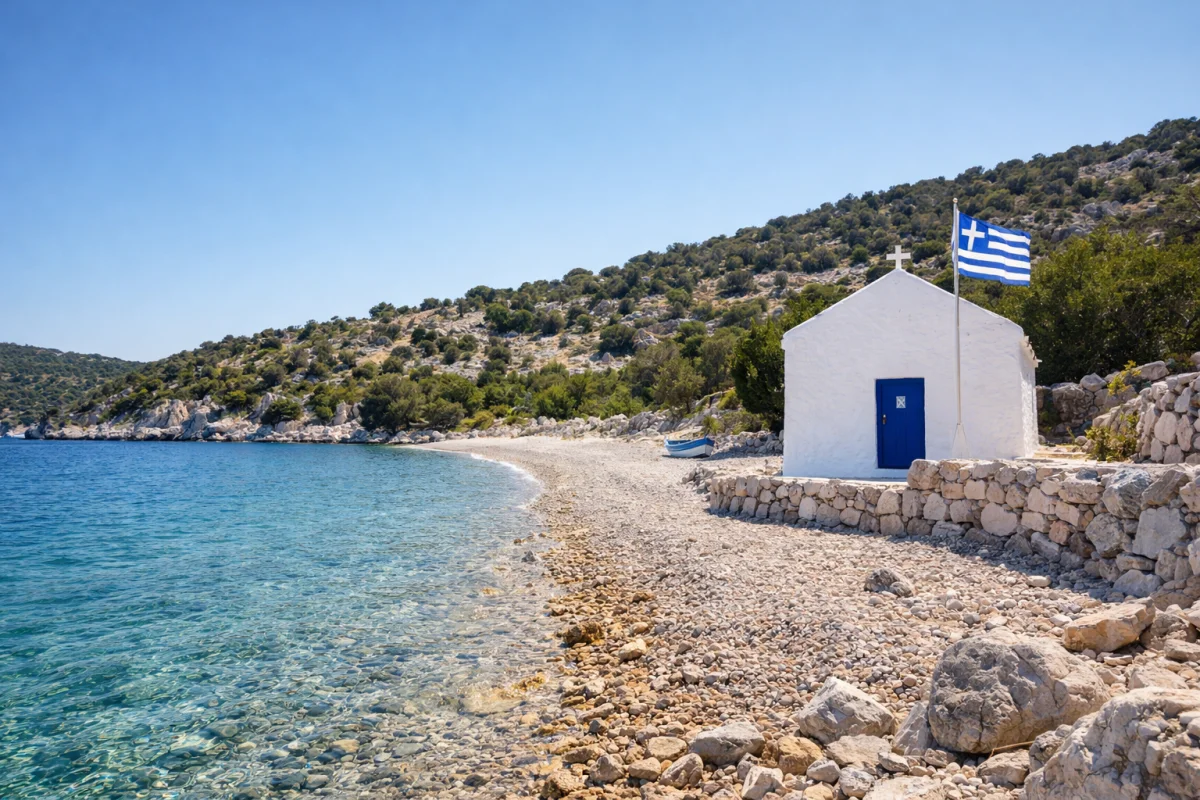
The coastline of Dokos is quiet and irregular. Small coves appear without warning. Some are wide and open, others tucked between low rocks. Most beaches are pebbled or rocky, with deep water close to shore. The sea here feels exceptionally clean. Clear, still and steady. Swimming feels calm and private, even when others are nearby. There is no background noise. No boats passing constantly. Often, the only sound is water moving against stone. Swimming becomes something you do slowly. You enter the water without hurry. You tend to stay longer than planned.
Swimming as the Main Activity
On Dokos, swimming is not one activity among many. It is the centre of the day. You swim in the morning to cool down. You swim again in the afternoon because the water draws you back. You might swim in the evening, when the light softens and the island quiets even further. There are no organised beaches. No umbrellas. No music. You bring what you need. You take it with you when you leave. The simplicity changes your relationship with the place. Nothing is permanent except the land and sea.
Walking Without Purpose
Walking on Dokos is different from walking on inhabited islands. There are no villages to reach. No cafés waiting at the end of the path. The land opens gradually. Views stretch toward Hydra, the Peloponnese and the open sea. You feel distance clearly. Space feels wide and uninterrupted. Walking this way empties the mind, rather than cluttering it. Thoughts decelerate. You notice the heat, the wind and the ground beneath your feet.
The Quiet Island
The silence here is remarkable. It's not the kind that makes you uneasy, that leaves you feeling vulnerable. It's a silence that feels complete. There are no engines. No crowds. No constant movement. Sound carries far and then disappears. This silence changes how you behave. Conversations drop naturally. You listen more. Even the little sounds, like footsteps or water splashing, feel so loud. Silence on Dokos is not something you notice once. It stays with you.
The Absence of Infrastructure
Dokos has no shops, no taverns and no accommodation in the usual sense. A few scattered houses exist, used seasonally, but daily life does not revolve around services. This absence is not a lack. It is a defining feature. You arrive prepared. You plan simply. Food, water, shade. Nothing is provided and nothing distracts. Your attention stays on the island itself. Time stretches when there is nothing scheduled to interrupt it.
Staying Overnight
Those who stay overnight on Dokos experience the island differently. The light changes, the sea darkens, the sky opens and the stars appear clearly, without competition from artificial light. Night on Dokos feels wide and still. You feel small, but not uncomfortable. The island does not press in. It holds space. Sleeping here feels deep and uninterrupted.
The Feeling of Exposure
Dokos is not soft. There is little protection from sun or wind. You feel weather clearly. Hot during the day, cool at night. This exposure creates awareness. You adjust your pace. You respect the conditions. The island does not adapt to you. You adapt to it. Swimming, walking, resting and eating all blend into one another. You do not look at the clock often. You notice light instead. Hunger. Fatigue. Comfort. The island encourages presence without effort.
Why Dokos Feels Different
Dokos feels different because it removes layers rather than adding them. There is no performance, no identity to project and no expectation to meet. The island offers land, sea and time. That is all. What you do with those things is up to you.
Leaving the Island
Leaving Dokos often feels abrupt. Not because you are ready to go, but because the island does not prepare you for departure. You pack quietly. You look back often. The island remains unchanged as you pull away. Dokos does not linger through memories of places or moments. It lingers through a feeling of stillness that follows you. It reminds you how little is needed for a day to feel full. Dokos stays with you.