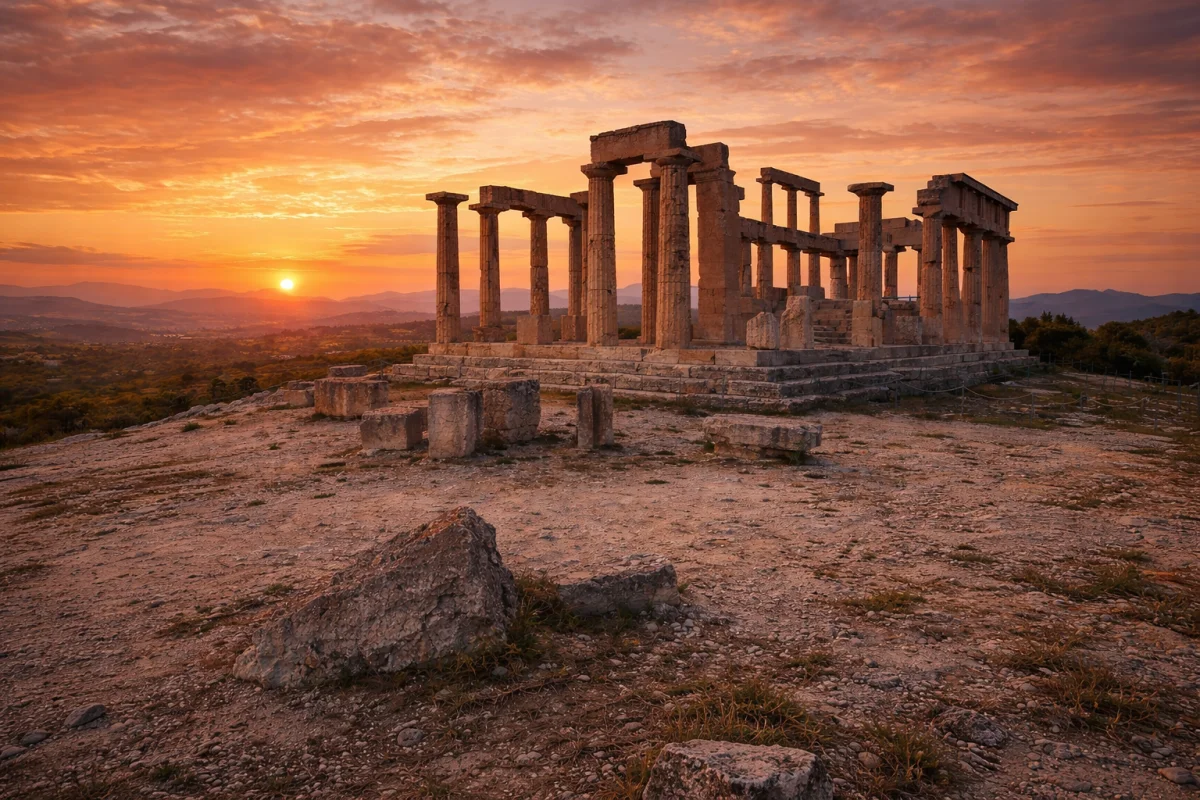
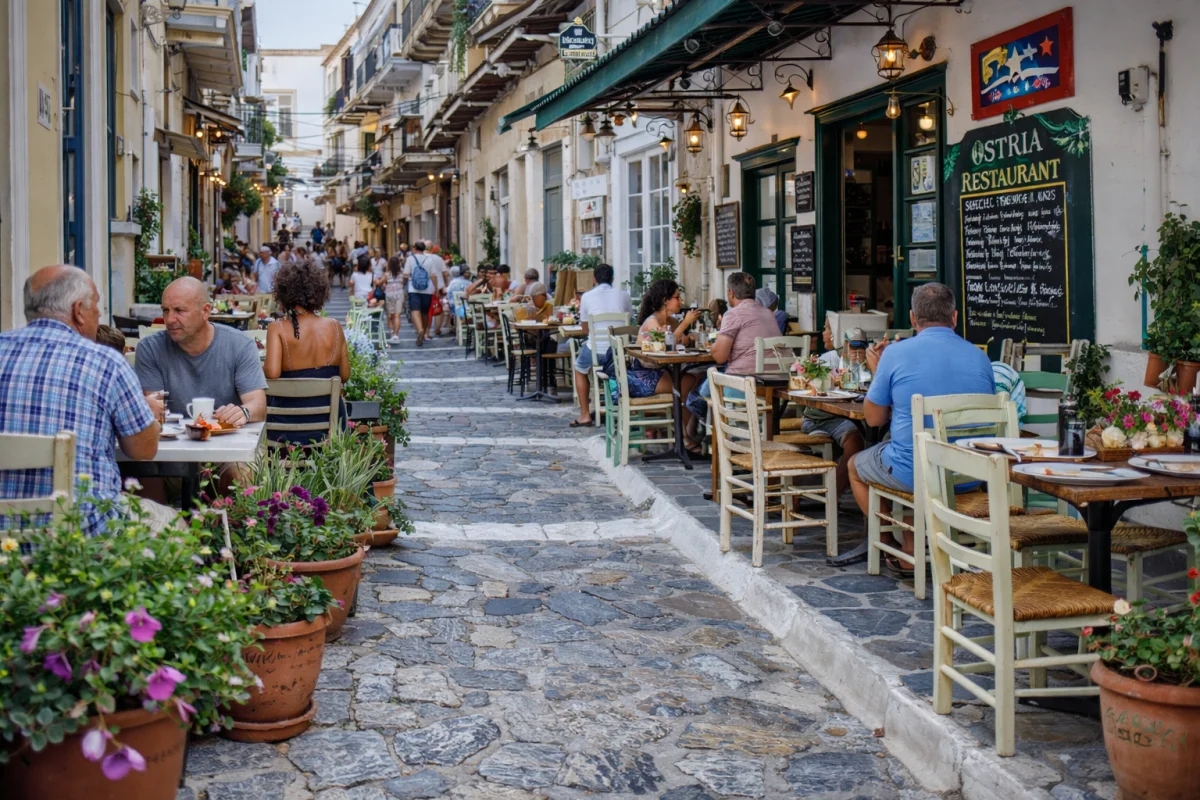
Hydra works differently. There are no cars. No motorbikes. No traffic sounds filling the background. Movement happens on foot, by boat or at the pace of a donkey climbing a stone path. Hydra feels close to Athens, yet completely removed from it. The distance is not measured in miles but in rhythm. Time moves slower here, not because nothing happens, but because nothing rushes. What makes Hydra interesting is not a list of attractions. It is the way daily life is structured around walking, waiting and paying attention.
Arriving at the Port
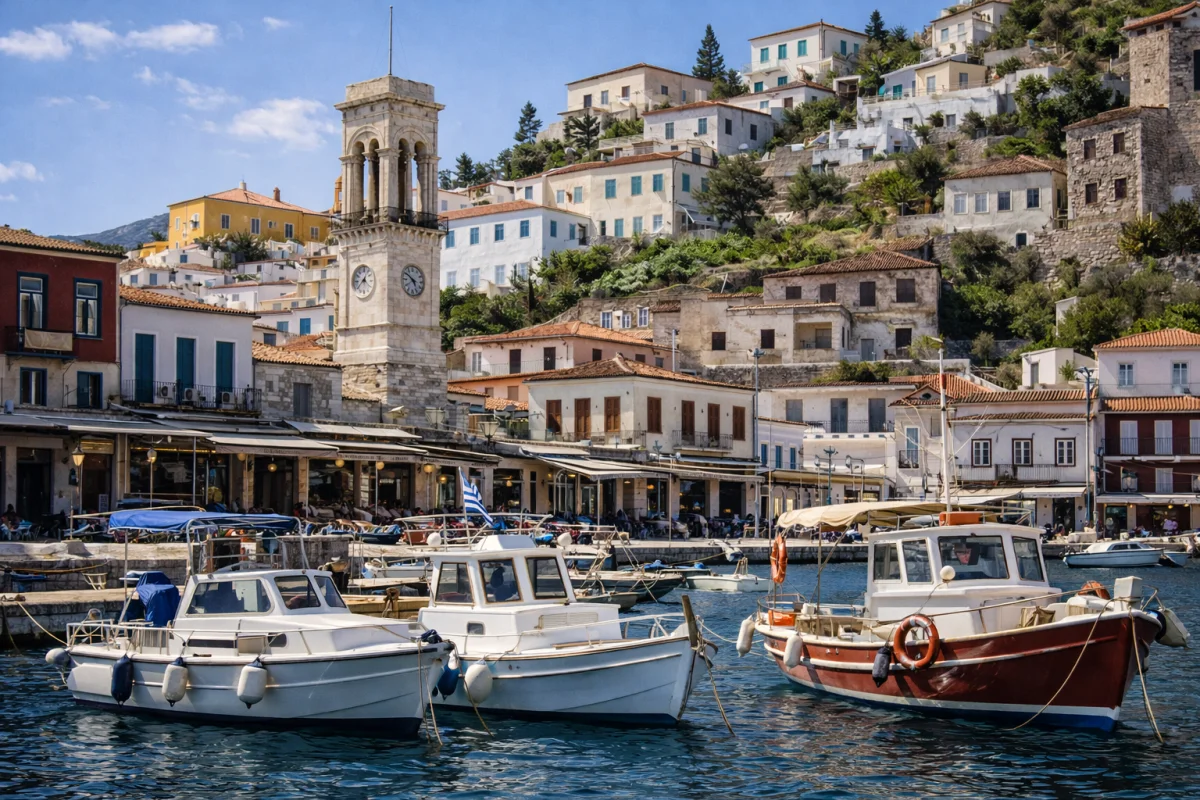
The port of Hydra is the heart of the island. Houses rise steeply behind it, packed closely together, their balconies facing the water. When ferries arrive, there is movement and noise, but it fades quickly. The island absorbs it. One of the first things to do on Hydra is simply to stay near the port. Sit somewhere without a plan. Watch boats come and go. Watch supplies arrive by hand or animal. This is not something staged for visitors. It is how the island functions. Spending time here helps you adjust. You stop checking the time. You start noticing small details. You hear the sound of water against the stone. Footsteps in the distance and the voices carrying across the harbour.
Walking Without Direction
Walking is part of life on Hydra. Every turn is remembered. Walking is not something you do between activities. It is the activity. Narrow stone lanes lead away from the port and climb quickly. Some paths are steep. Others bend unexpectedly. Houses press close. Shadows offer relief from the sun. One of the most interesting things to do is to walk without a destination. Let the island guide you. Follow the stairs upward. Take paths that narrow. Turn around when the view changes. Walking here slows thought. It forces attention.
Exploring The Island
Whilst walking and you get higher, Hydra opens up. The port grows smaller. The sea stretches wider. From above, the island feels quiet and contained. There are many places where people stop without sitting down. A wall. A step. A corner where the view suddenly appears. These pauses are not planned. They happen naturally. From the hills, you understand Hydra’s shape. Dry land. Rock. Sea on all sides. The island feels exposed but grounded. There is not much greenery, but what exists feels earned.
The Sea
Swimming Close to Town
Hydra does not have traditional beaches near the port. Instead, swimming happens directly from rocks, ladders and small platforms. One of the simplest and most satisfying things to do is to swim close to town. You walk a few minutes, find a spot and enter the water. No preparation. No equipment beyond what you carry. The water is clear and deep. You feel the temperature immediately. Swimming here feels refreshing and direct. There is no easing in. After swimming, people sit on rocks to dry. The conversations start so easily. There is no awkward silence.
Swimming Further Out
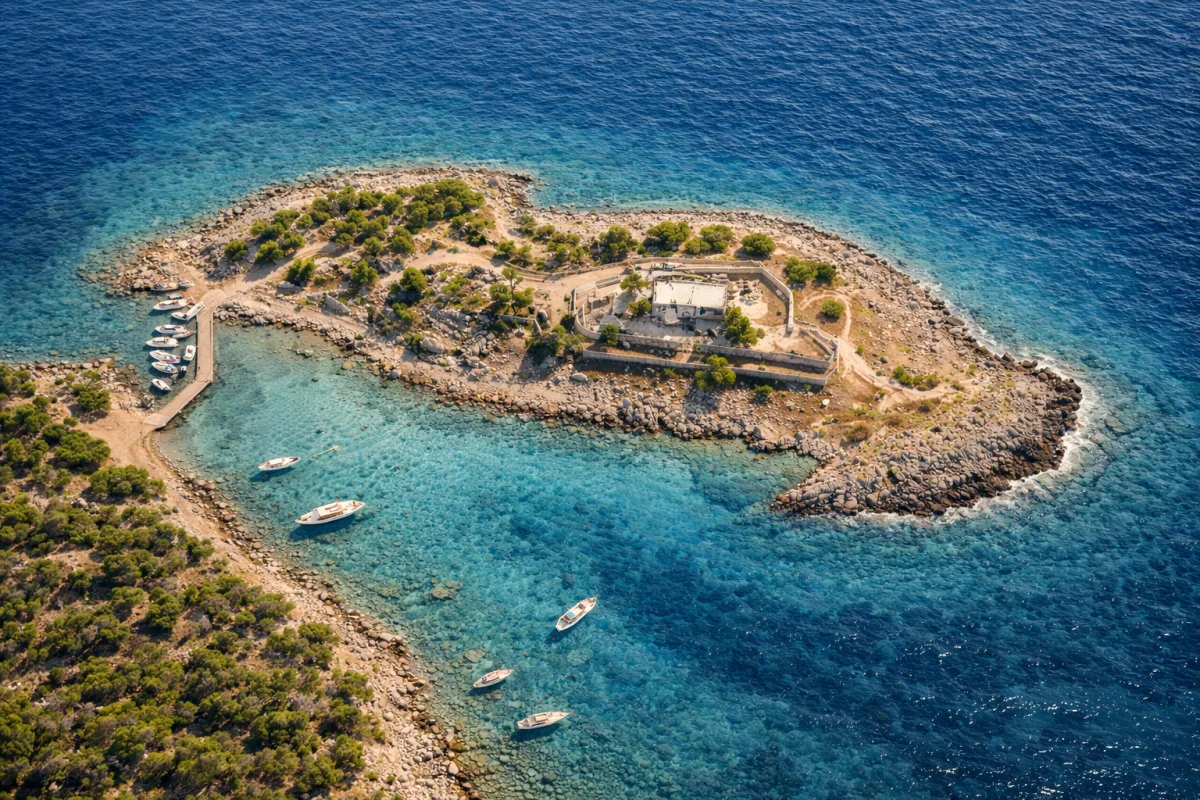
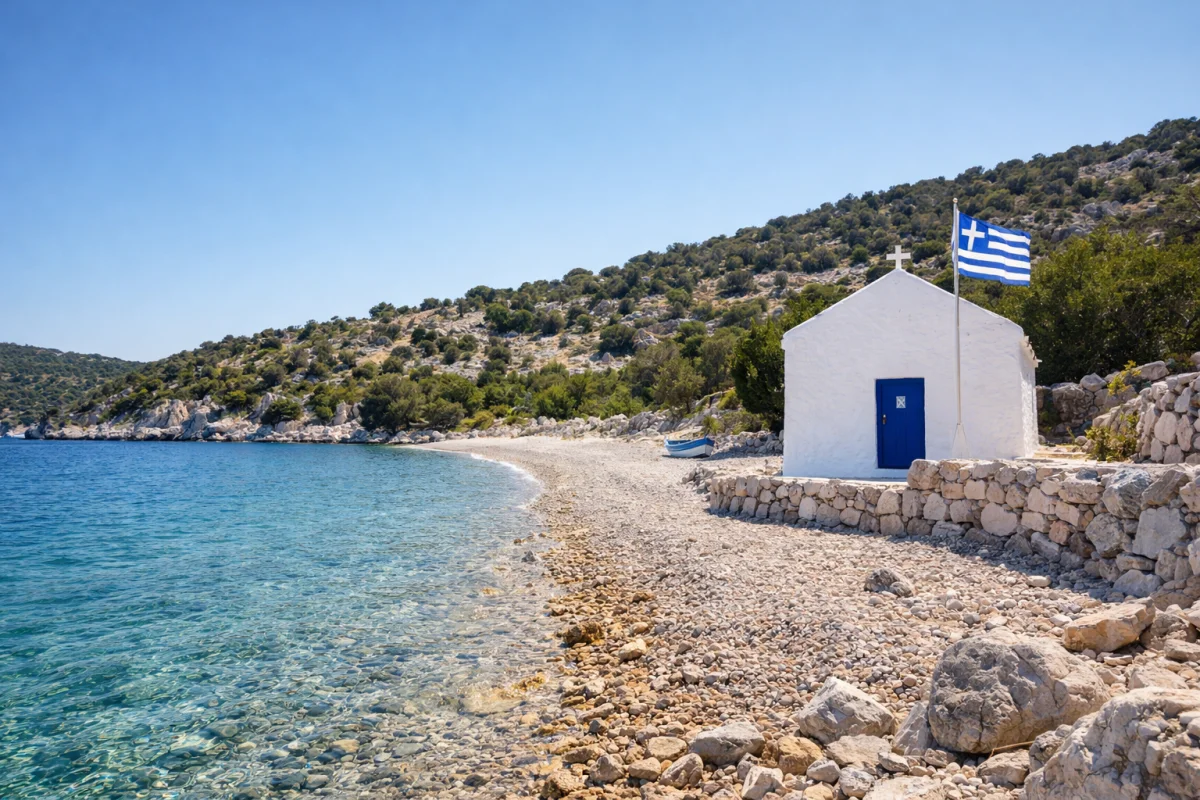
Walking along the coast takes you to quieter swimming spots. The further you go, the fewer people you see. The island stretches out. Paths hug the shoreline. Some places feel almost private, especially in the morning or late afternoon. The sea stays close. The sound of the port disappears. Swimming here feels different. Quieter. More contained. You are aware of space, light and movement. These swims often become the most remembered moments, not because they are dramatic, but because they are uninterrupted.
Eating Slowly by the Water
Eating on Hydra is not about chasing the best place. It is about choosing a table and staying. Many taverns sit directly at the edge of the port or along the coast. Boats pass close. Water reflects light upward. Meals unfold slowly. Ordering food here is simple. Fish. Bread. Vegetables. Wine. Nothing feels complicated. Portions arrive when they arrive. Plates are cleared without hurry. One of the most interesting things to do is to eat at different times of day. Late lunches stretch into the afternoon. Early dinners happen as light fades. Meals feel like markers of time rather than events.
Visiting the Old Mansions
Hydra has a strong architectural presence. Old stone mansions, built during times when shipping and trade shaped the island’s wealth. Visiting these buildings gives insight into how life once worked here. Thick walls. High ceilings. Simple layouts. The architecture feels practical, not decorative. These spaces feel quiet even when people are inside them. Sound softens. Movement slows. When you leave Hydra, you feel a sense of how closely life here was tied to the sea.
The Port at Night
Hydra is calm in the evenings. The port fills gently. Lights reflect on the water. Conversations remain low. One of the best things to do at night is nothing specific. Walk once around the harbour. Sit. Listen. Watch people pass. There is no pressure to move on. No sense that something else is happening elsewhere. The island feels complete in one place. The lack of vehicles makes nights feel especially quiet. Sound carries clearly. Silence feels intentional.
Taking a Boat Along the Coast
Boat trips around Hydra are short but revealing. From the water, the island looks even steeper. Houses cling to rock. Paths become visible lines across the land. Being on a boat gives you a sense of distance without leaving. You see how isolated some parts of the island are. How little has been added. Swimming stops from boats feel natural. You enter the water away from everything. You float. You climb back aboard. Nothing interrupts the moment.
Donkeys as Part of Daily Life
Donkeys are not decoration on Hydra. They are part of how the island works. Supplies move on their backs. Construction materials. Groceries. Furniture. Watching this happen is one of the more interesting daily scenes. It reminds you that the island functions without modern shortcuts. Seeing animals move through narrow streets reinforces the sense that Hydra lives by its own rules, quietly and without explanation.
The Absence of Noise
One of the most striking things to do on Hydra is to notice what is missing. No engines. No horns. No constant mechanical sound. This absence changes how you feel. Thoughts slow. Conversations feel clearer. Even walking feels different. The island teaches you to listen again. To wind, footsteps and to water.
Doing Less Than Planned
Many people arrive on Hydra with a plan. Most leave having done less than expected. This is not failure. It is an adjustment. The island encourages you to cancel intentions. To stay longer in one place. To repeat the same walk. To swim again instead of moving on. Doing less here feels productive. You leave feeling rested rather than entertained.
Why Things to Do on Hydra Feel Different
What makes Hydra interesting is not the number of things available. It is how fully each simple thing is experienced. Walking replaces transport. Sitting replaces scheduling. Swimming replaces distraction. The island removes options so that what remains feels complete.
Leaving Hydra
Leaving Hydra often feels quiet. There is no rush at the port. No final view to capture. The island does not perform a farewell. You leave with fewer images and more feeling. A sense of time stretched and simplified. Hydra does not give you stories to tell loudly. It gives you a different pace to carry back with you and that, in the end, is what makes time spent here stay with you longer than expected.