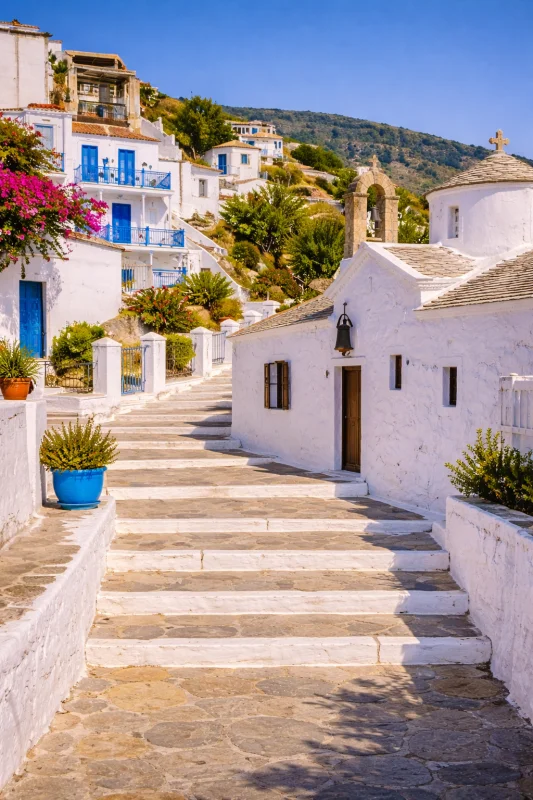
Skopelos feels calm the moment you arrive. The island seems comfortable being exactly what it is. It sits in the Northern Sporades, close to Skiathos, but the difference is clear right away. There is less movement here. Fewer voices. More space between things. Skopelos does not feel like a place built around arrival. It feels like a place that continues whether you are there or not.
The Shape of the Island
Skopelos is green and steep. The land rises quickly from the sea. Pine trees cover most of the island, often reaching right down to the water. Shade is part of daily life here. The roads curve slowly. Hills block views, then suddenly open them. The landscape feels close, almost protective. You are rarely exposed for long. Forests, stone and slope shape how you move. Nothing feels arranged. The island looks the way it does because this is how it grew.
The Coast and the Sea
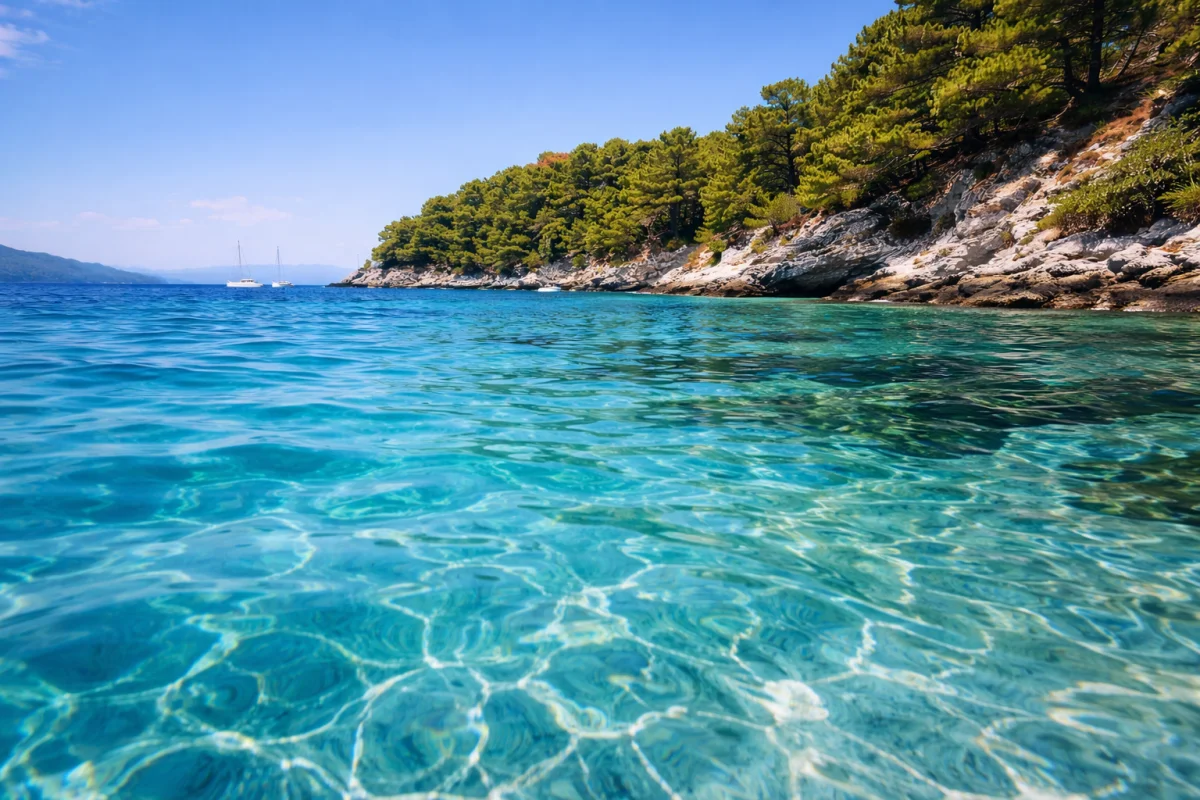
The coastline, rather than presenting a uniform face, fractures into a series of diminutive bays, rocky outcrops and slender stretches of sand or pebbles. The water is deep and clear. It gets dark quickly as you swim out. There is less shallow space here. Swimming feels quiet and focused. The sea does not feel playful. It feels present. Often, the only sounds are water against stone and wind moving through trees. Even when others are nearby, the place holds its own stillness.
Living with the Land
People have lived on Skopelos for a long time. Life here was never easy, but it was steady. The island offered wood, shelter and access to the sea. In return, it demanded work and awareness. There were threats over the centuries. Pirates. Shortages. Hard winters. People adapted instead of leaving. Settlements spread across the island. Paths connected homes, fields and churches. That way of living left marks that are still visible. Stone walls. Old routes. Buildings that follow the land instead of cutting through it.
Skopelos Town
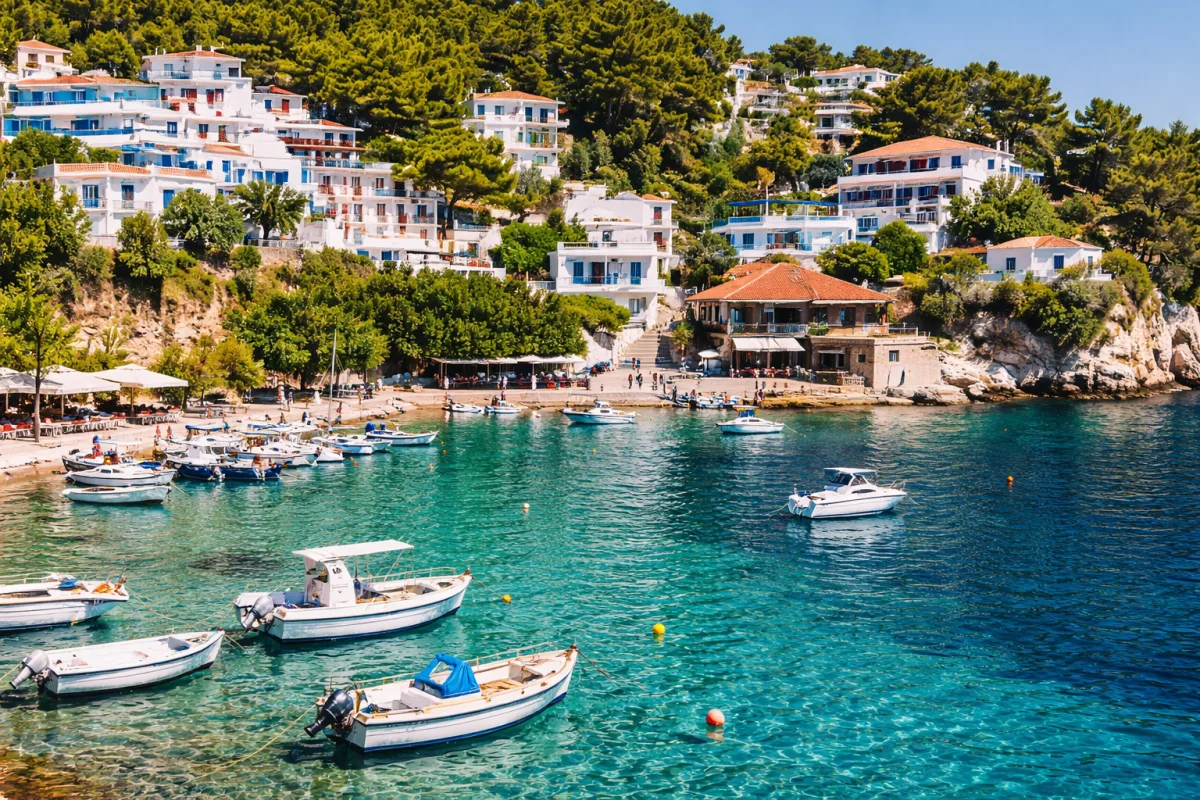
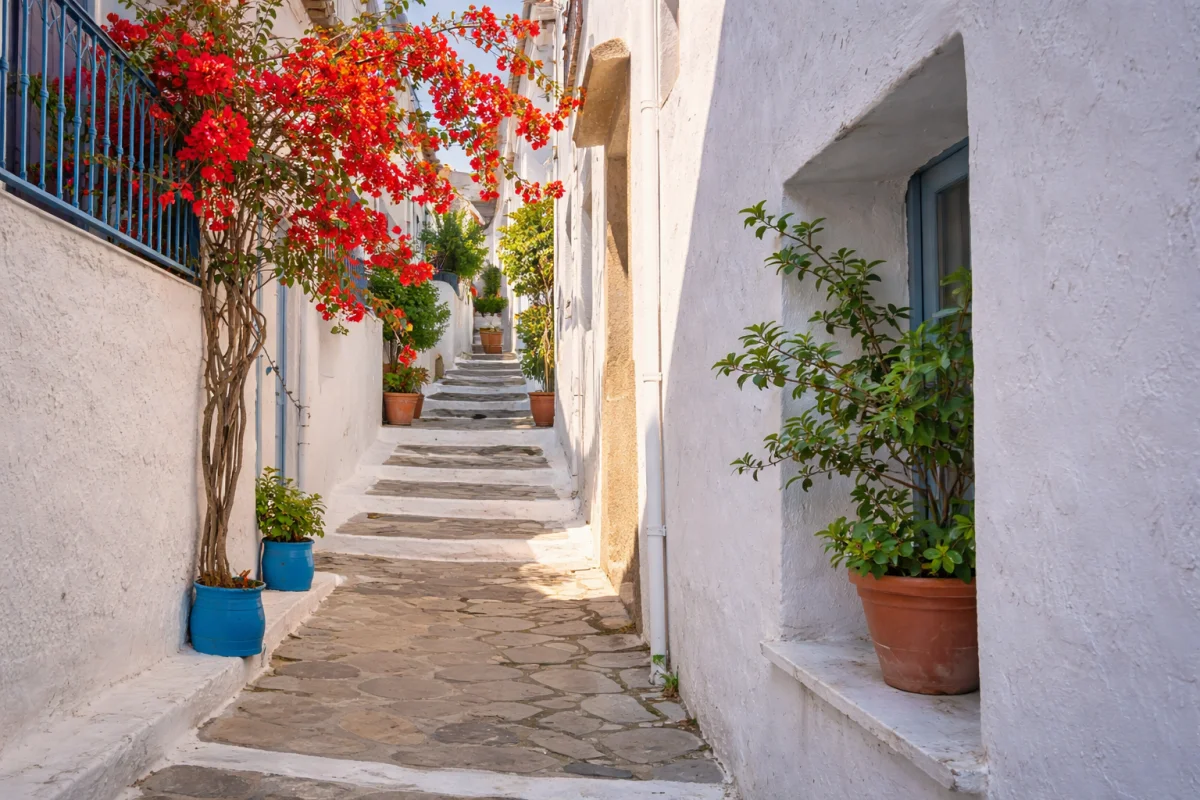
Skopelos Town rises above the port in layers. Houses lean into the hill. The streets are narrow and uneven. Life feels ordinary. The port is active but not loud. Boats come and go. People meet, talk and move on. Nothing feels hurried. Even in summer, the town keeps its rhythm. Away from the port, the town turns quiet quickly. Small streets, steps and shaded corners create space to slow down without trying to.
Daily Life
Villages like Glossa feel older and more inward. Glossa sits high above the sea. Wind passes through its streets. Views stretch far, but life remains close. Daily life across the island feels practical. People know their routines. Shops open when they need to. Time stretches naturally. Tourism exists, but it does not control the island. Skopelos does not rearrange itself. Visitors fit into what already exists.
Beaches as Places, Not Attractions
Beaches on Skopelos feel like places people have always gone, not places made for visitors. Some require effort. A walk. A drive. A bit of patience. That effort changes how you arrive. You stay longer. You move less. The landscape sets the tone. Trees offer shade. Rocks define edges. The sea feels close but never crowded.
What Skopelos Feels Like
Skopelos settles in slowly. Days feel full without being busy. Silence feels normal. The island feels held together by routine, nature and habit. Forests press in. The sea stays deep and steady. Villages remain where they have always been. Being here does not feel like escape. It feels like stepping into a place that already knows how to live.