Skiathos greets you with a scent before it greets you with a sight. Even before the ferry lowers its ramp, the wind carries the smell of heated resin and salt water. It is the scent of pine forests baking in the Mediterranean sun, a fragrance so thick and specific that it anchors you instantly. This island does not challenge you with harsh landscapes or enigmatic ruins. Instead, Skiathos offers a kind of immediate, open-armed embrace. It is lush, accessible and vibrant. If you see Skiathos only as a place for easy summer days, you miss what lies underneath. Beyond the noise of the port, the island moves to a quieter, deeper rhythm. Skiathos feels divided in a quiet way. There is the energy of arrival and there is the silence you find once you step into the forests. It holds the memory of fear in its stones, yet offers a landscape of total safety.
A Landscape That Breathes
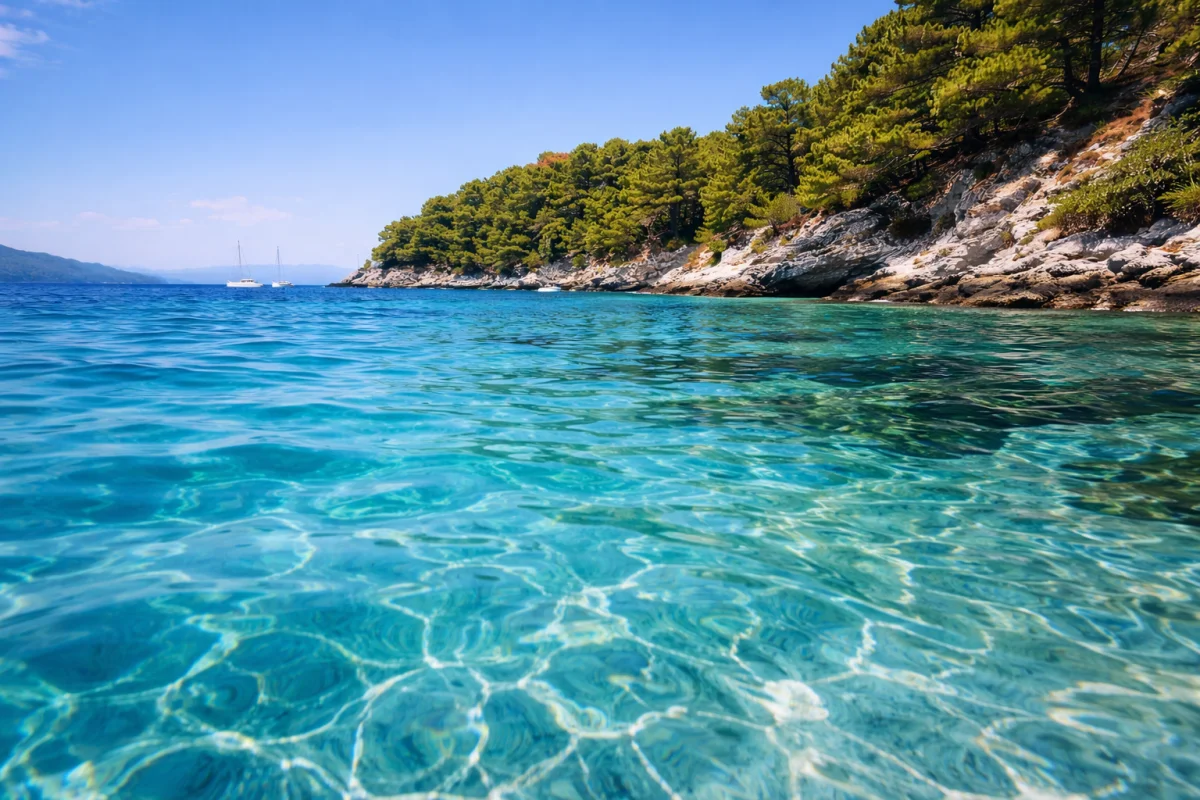
In a country famous for white rock and blue domes, Skiathos is defiant in its greenery. This is the heart of the Sporades and water is present here in a way that feels rare in the Aegean. The island is draped in a heavy cloak of Aleppo pines. These are not manicured parks; they are dense, living forests that roll over the hills and do not stop until they touch the sea. The geography dictates the mood. The south is the island’s gentle face. Here, the land slopes softly into the water, creating a chain of sandy bays that feel protective. The water is shallow, the wind is blocked and the horizon feels wide but welcoming. Cross the spine of the hills to the north and the island changes its language. The northern coast faces the open sea. The cliffs are jagged, stripped bare by the wind. The waves hit the rock with a heavier rhythm. This is the wilder side of Skiathos, a reminder that even a gentle island sits alone in a vast sea.
The Sea as a Presence
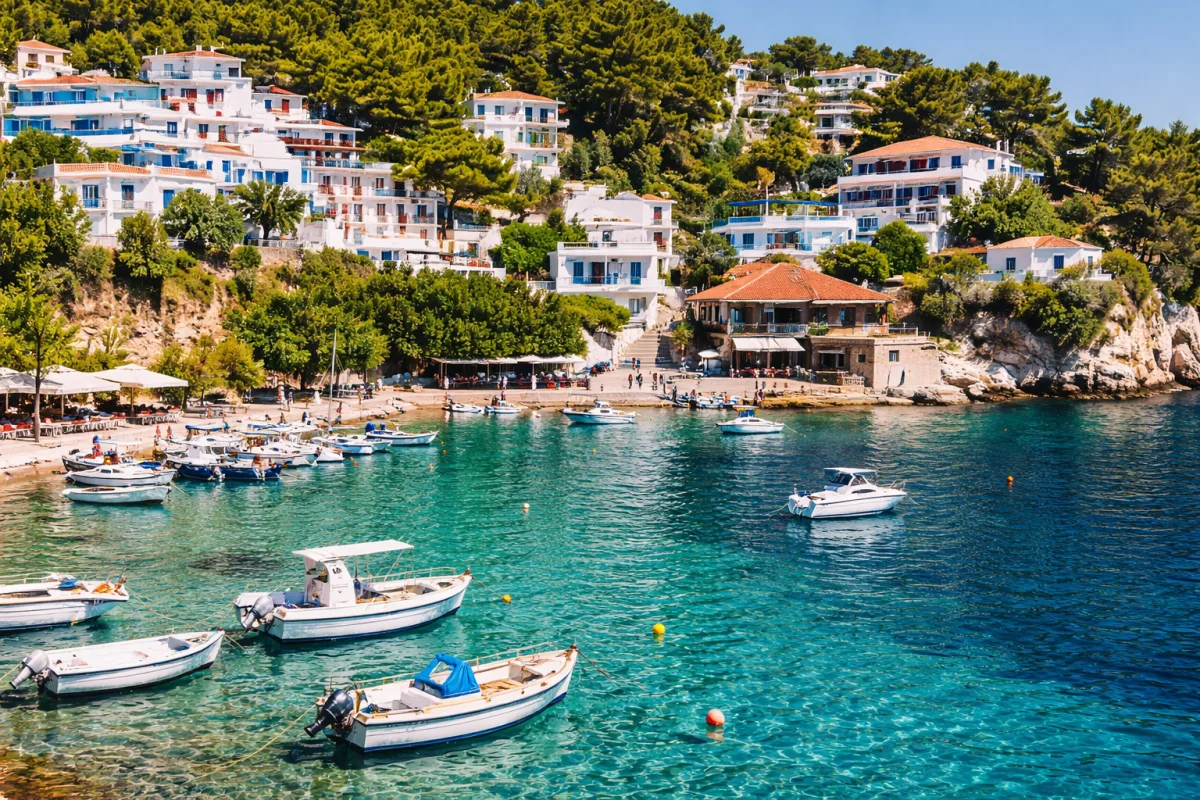
The water around Skiathos has a clarity that feels almost artificial. In the shallows, over the white sand, it turns a pale, electric turquoise. Boats appear to hover in the air, their shadows clearly visible on the seabed below, but the sea here is more than a backdrop for swimming; it is a neighbour. The connection between the land and the water is seamless. In many places, the pine trees lean out over the waves, dropping their needles into the surf. This meeting point, where the smell of the forest mixes with the spray of the sea, is the true signature of the island. It is also a fragile world. The waters here are part of a protected marine park, a sanctuary for the Mediterranean monk seal. There is a sense of life beneath the surface.
History
Today, Skiathos feels peaceful, but its history was shaped by constant attention to the horizon. For centuries, the beauty of the coast was also a danger; the open sea brought pirates. This fear drove the islanders away from the gentle shores and toward a jagged rock in the north called Kastro. For centuries, people lived here, crowded into a fortified settlement, isolated and exposed, protected only by a drawbridge and the drop of the cliffs. Walking through Kastro today is humbling. The noise of the modern world fades away. All that remains are the crumbling shells of houses, the silence of old churches and the sound of the wind moving through the wildflowers. It is a place that holds the memory of endurance. Silence settles in naturally. Standing at the edge of the cliffs, looking out toward the rough open sea, it becomes clear what survival once required here. The ease of life in the port below feels different afterward, not ordinary, but earned. It was also on this island, in the quiet courtyards of the Evangelistria Monastery, that the first Greek flag was woven and raised. Skiathos carries this national pride quietly. It doesn't broadcast it; it simply holds it, woven into the identity of the place.
The Town and the Human Rhythm
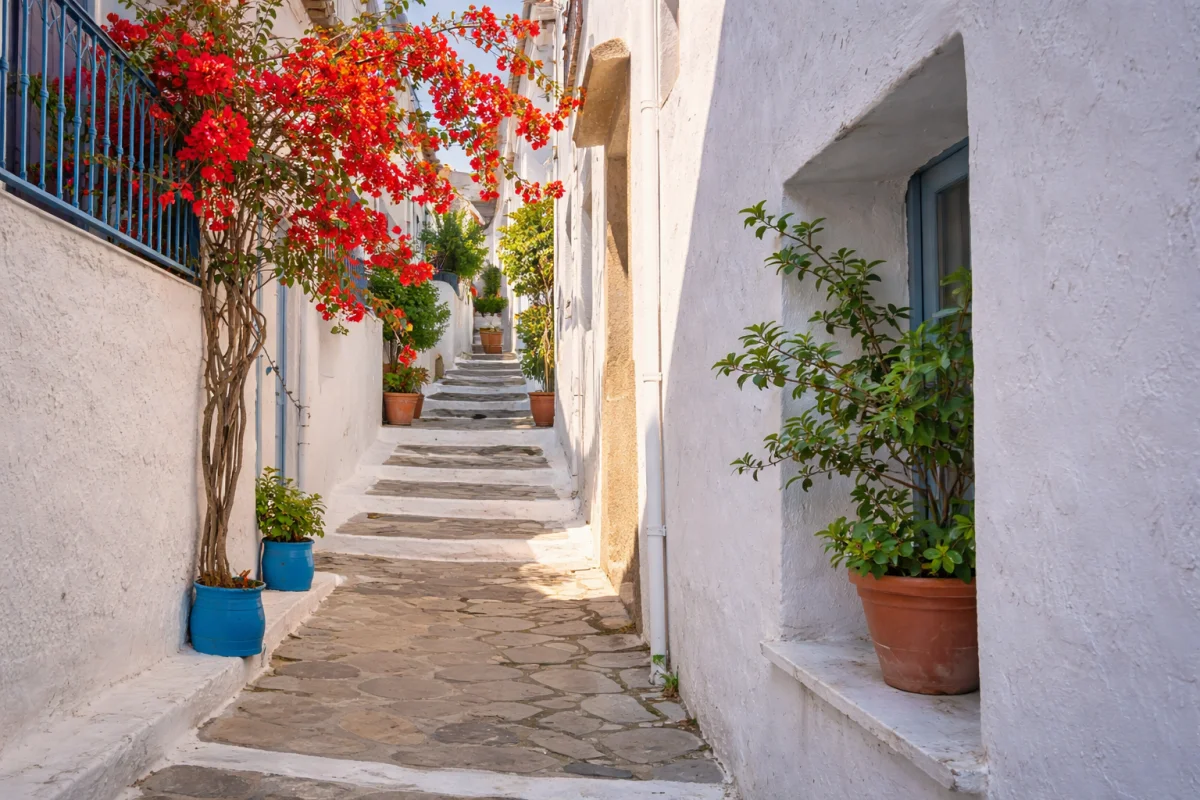
Skiathos Town is where the island’s pulse is fastest. It is built like an amphitheatre around the harbour, a cascade of white walls and terracotta roofs. It is a town that knows how to live. It accommodates the rush of summer without losing its own habits. The Plakes, the stone-paved waterfront, is a stage for the evening stroll, where locals and visitors walk slowly as the sun goes down. The narrow backstreets offer a different pace. Here, laundry hangs from balconies, cats doze on warm stones and the smell of jasmine is heavy in the air. There is no pretence here. The town is functional and lived-in. It feels like a community that opens its doors to the world but keeps its own kitchen table private.
Beaches of Contrast
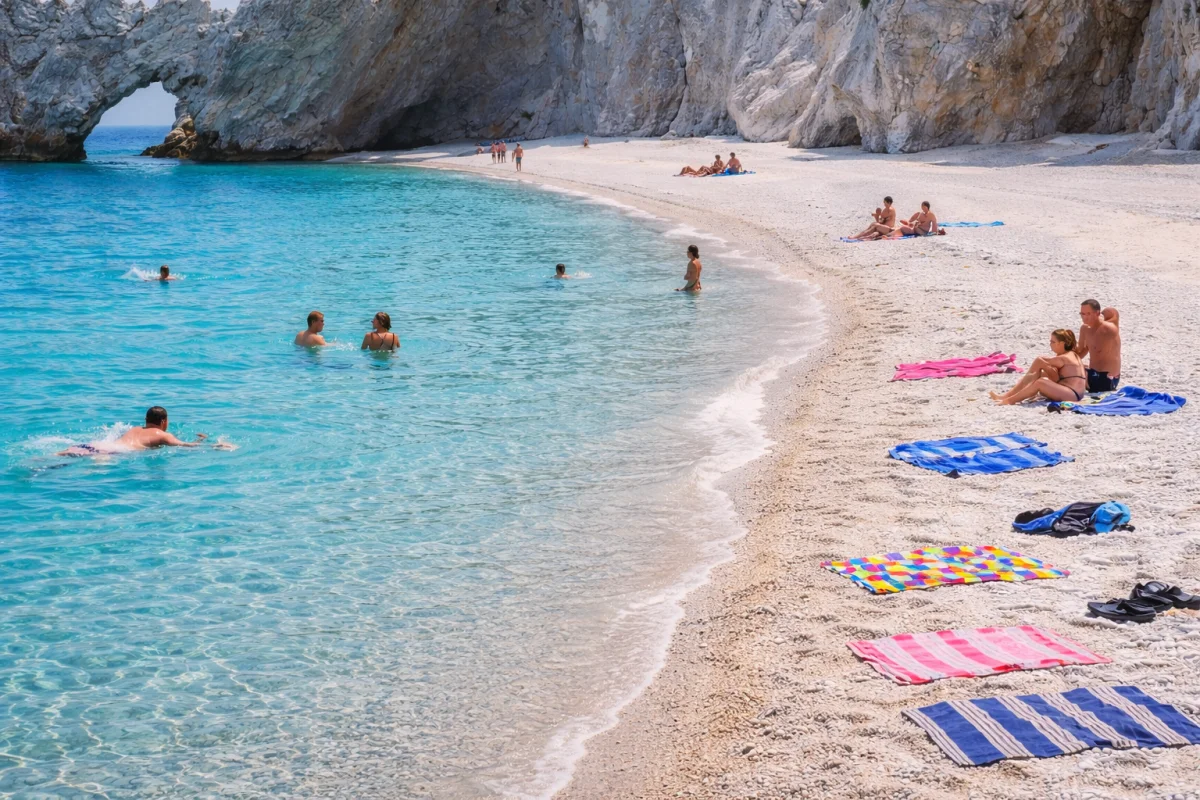
Skiathos is famous for its beaches, over sixty of them, but they are not all the same. Koukounaries is the golden child, a vast sweep of sand backed by a protected wetland. It is beautiful, but it is busy. To find the soul of the island, you must go to the edges. To Lalaria, reachable only by boat, where the sea has ground the stone into smooth, round white pebbles and the cliffs tower above you, creating a sense of awe. Or to the small, unnamed coves hidden between the trees. In these quiet places, the island reveals itself. The noise of the bars fades. There is only the sound of the Cicadas and the gentle lap of water against the sand. Here, time seems to stop. You are not a tourist checking off a list; you are simply a body moving through water and light.
The Lingering Feeling
Skiathos offers a sense of return. The green of the trees rests the eyes. The clarity of the water rests the mind. It is an island that feels like a deep exhale. People leave Skiathos remembering the ease of it. The way the days folded into one another. The way the light shifted through the pine branches. The feeling of slowing down enough to notice it.