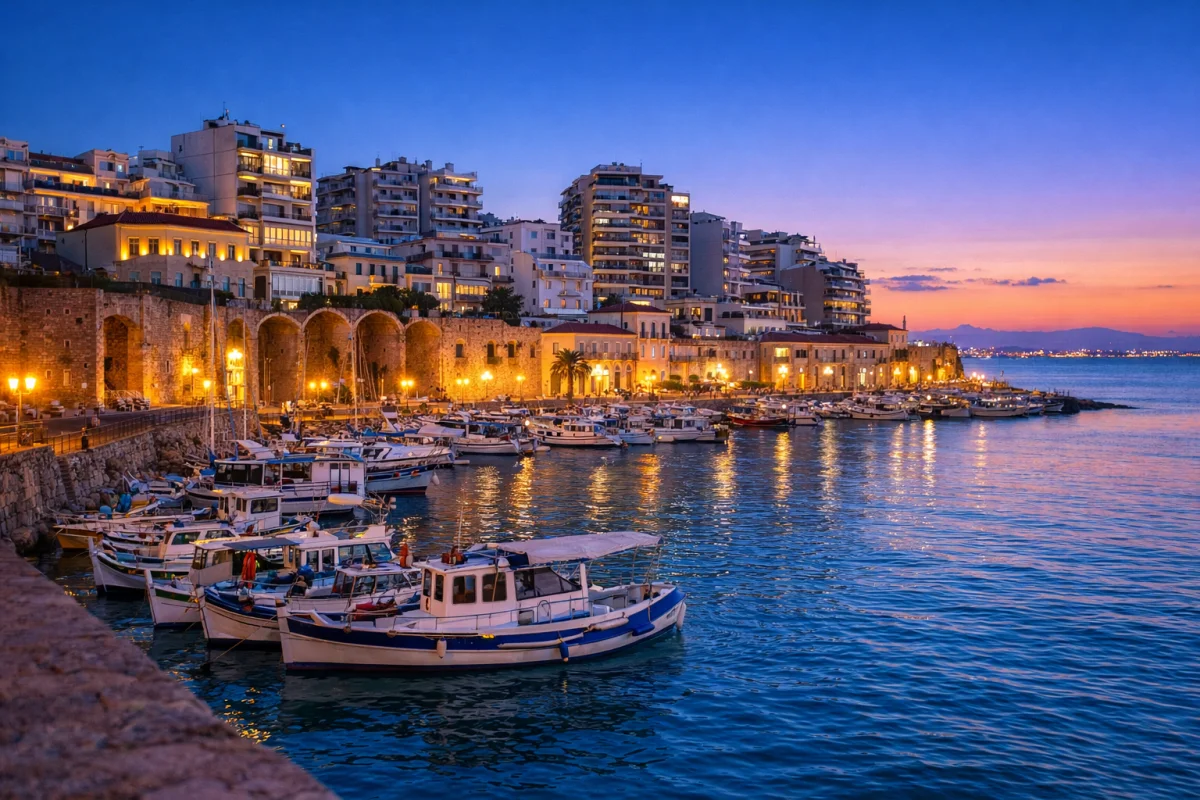
Heraklion is a city that works hard and lives loudly. It is not softened for visitors and it does not pause to explain itself. Heraklion feels real before it feels welcoming. It is shaped by urgency, routine and constant motion. People pass through quickly, but many stay for life. What makes Heraklion interesting is not charm or atmosphere. It is the way everyday life unfolds openly, without apology.
First Impressions
Arriving in Heraklion feels immediate. Traffic moves fast. Streets are full. Sounds overlap. The city feels active at all hours. There is little transition between arrival and immersion. You step into the city and you are already part of it. Shops are open. People are walking with purpose. Conversations happen loudly and without concern for who is listening. This energy can feel overwhelming at first. With time, it becomes grounding.
The Shape of the City
Heraklion spreads outward rather than inward. The city is wide and busy, built to serve a large population rather than preserve a compact centre. The historic core sits near the old walls, but it does not define the whole city. The neighbourhoods are modern. Roads are wide. Buildings are practical. Life is organised around movement. You do not stumble into quiet corners easily here. You have to step away deliberately.
Everyday Movement
Heraklion moves quickly. People walk fast. Cars dominate the streets. Time feels compressed. Movement here is functional. People are going somewhere. Their errands matter and their schedules matter. Walking through the city gives you a clear sense of urgency. This is not a place of wandering without purpose. Even for those sitting in cafés, they seem ready to move again.
The Markets
The markets and small shops are central to life in Heraklion. People shop often here. They know what they need and where to get it. Walking through these areas feels dense and loud. Conversations overlap. Goods change hands quickly. A city that feeds itself, supplies itself and keeps moving.
Food as Fuel and Ritual
Food in Heraklion serves two purposes. It fuels the day and it holds people together. Meals can be quick or long, depending on the hour. Taverns fill with regulars. Menus are familiar. Portions are generous. Food arrives when ready. You eat, you talk, you move on or you stay longer than planned.
History Woven Into the City
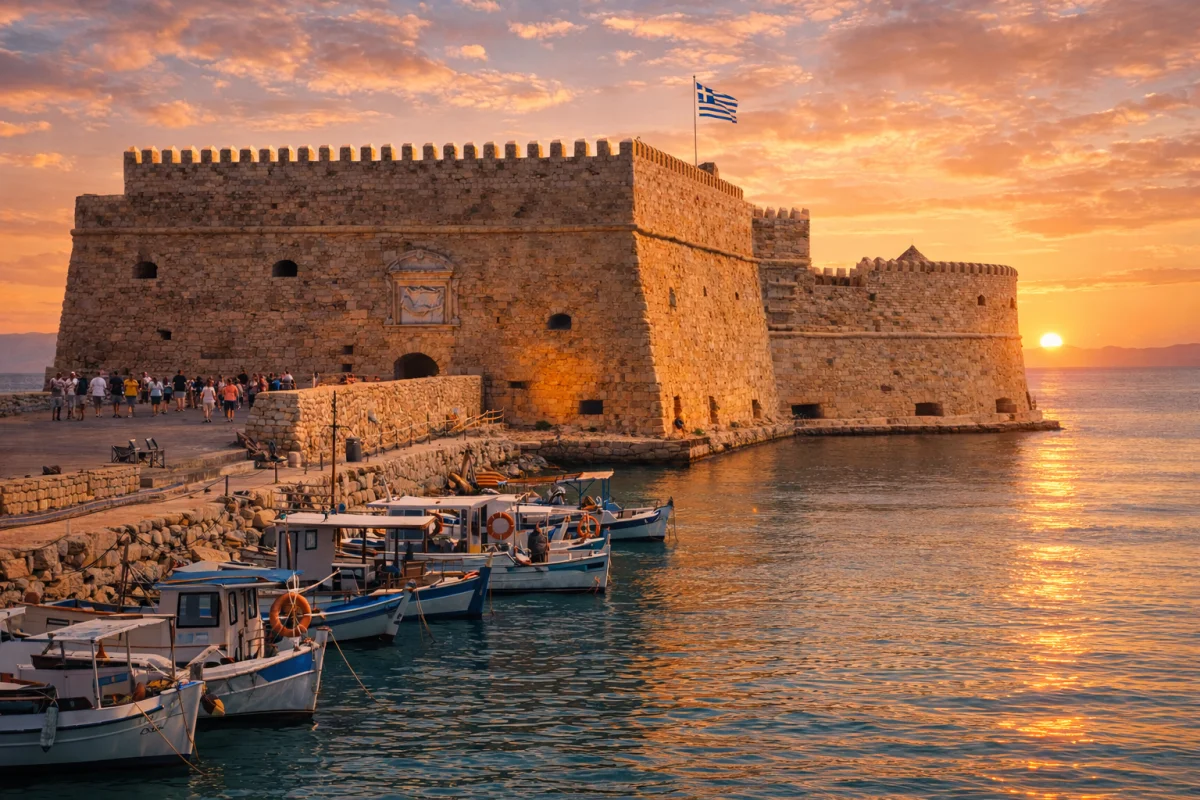
Heraklion carries deep history. The island's ancient layers exist beneath the modern ones. Old walls surround parts of the city. Ruins appear between buildings. Museums sit close to everyday streets. History here feels active rather than reflective. The past in Heraklion is present, but it does not slow the city down.
The Sea and the Port
The sea sits close to Heraklion, but it does not soften it. The port is busy and practical. Ships come and go. Goods move constantly. Walking near the water feels different from other Cretan cities. The sea here supports work rather than leisure. Swimming exists, but it is not central. The relationship with the sea is functional, not romantic. This distance between city and coastline shapes Heraklion’s character.
The Neighbourhoods
Away from the busy streets, the neighbourhoods reveal another kind of rhythm. Life becomes more familiar. People recognise each other. Children play in the evening. Cafés fill with regulars. Conversations stretch longer. The city exhales slightly. These areas show Heraklion beyond its surface energy. A place where people belong, not just pass through.
Evenings in the City
Evenings in Heraklion do not slow the city completely. They change its tone. Traffic thins but does not disappear. Cafés and taverns fill. Streets remain active. There is no clear shift into nightlife. The city continues, just with a different balance of sound and light. Heraklion does not transform after dark. It adjusts.
Why Heraklion Feels Different
Heraklion is a city of work, routine and persistence. History, modern life and urgency exist together without separation. Things to do here are not attractions to collect. They are parts of daily life you witness up close. Heraklion asks you to adapt to it, not the other way around.
Time in Heraklion
The time spent here feels full. The days move quickly and are filled. You notice hours passing through action rather than reflection. This creates a different kind of experience. One that feels grounded and immediate.
Leaving Heraklion
Leaving Heraklion feels abrupt. The city does not slow to let you go. You step away and it continues unchanged. Traffic moves. Shops open. People go on with their day. Heraklion stays with you not through beauty or calm, but through intensity. It leaves an impression of life in motion.