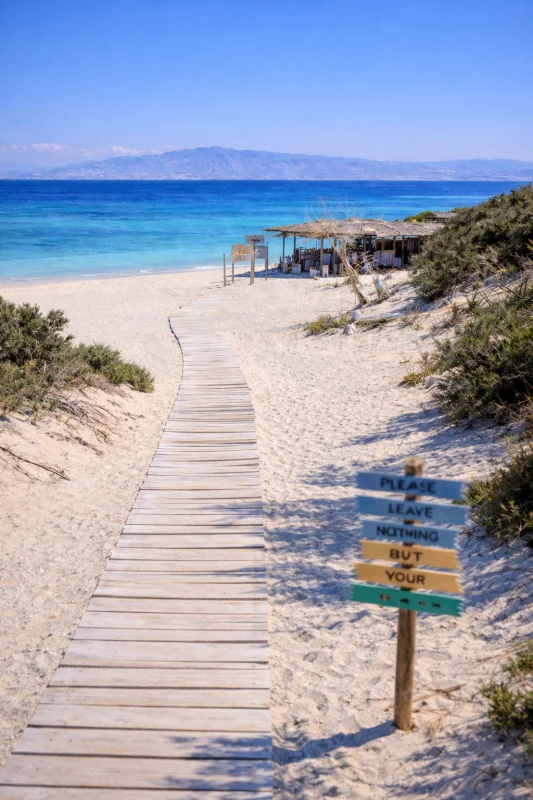
Chrissi or Chrysi Island lies just south of Crete, close enough to reach easily, yet different in nature and pace. From the moment you arrive, it is clear that this is not a place meant to be shaped or improved. It is a place meant to be left as it is. Chrissi is not about variety or activity. It is about stillness, light and restraint.
Arrival and First Impressions
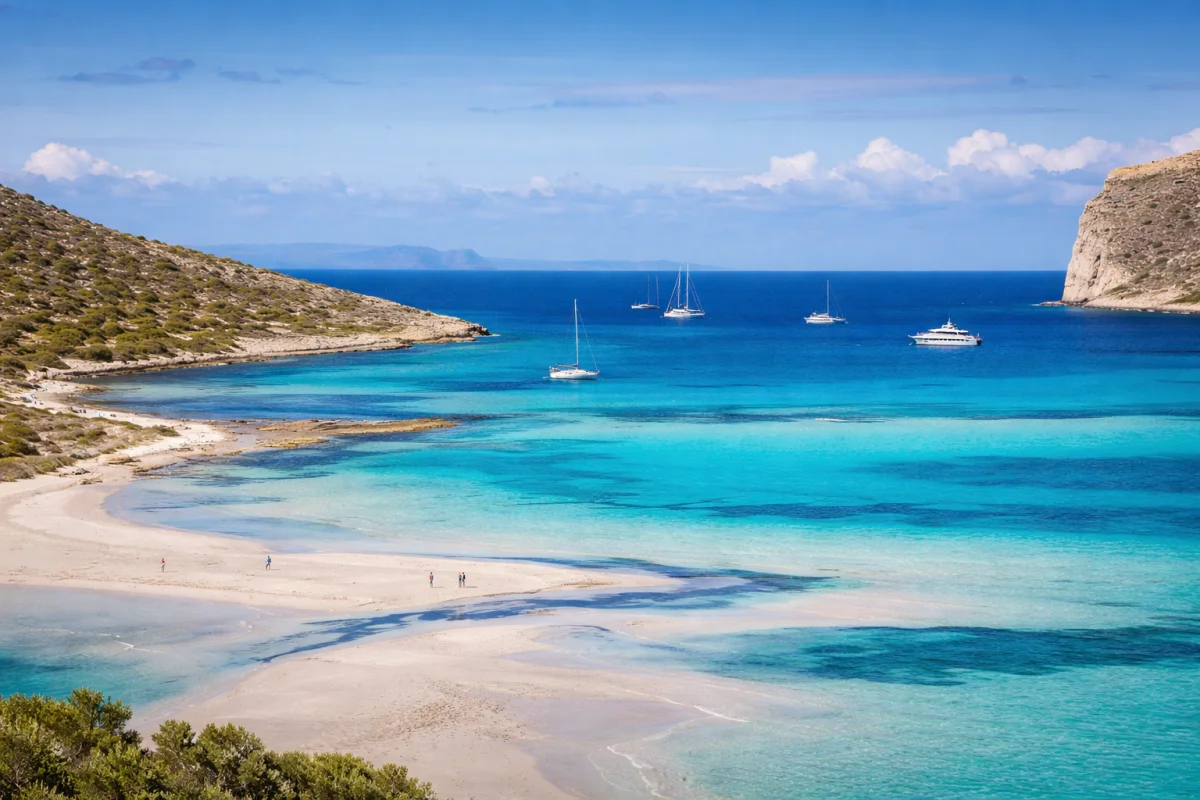
Arrival on Chrissi is quiet and brief. Boats stop offshore. People step onto pale sand. There is no port, no village and no sense of arrival in the usual way. The land feels open. The colour of the sand is almost white. The sand is mixed with broken seashells. The sea is shallow and clear near the shore.
The Shape of the Island
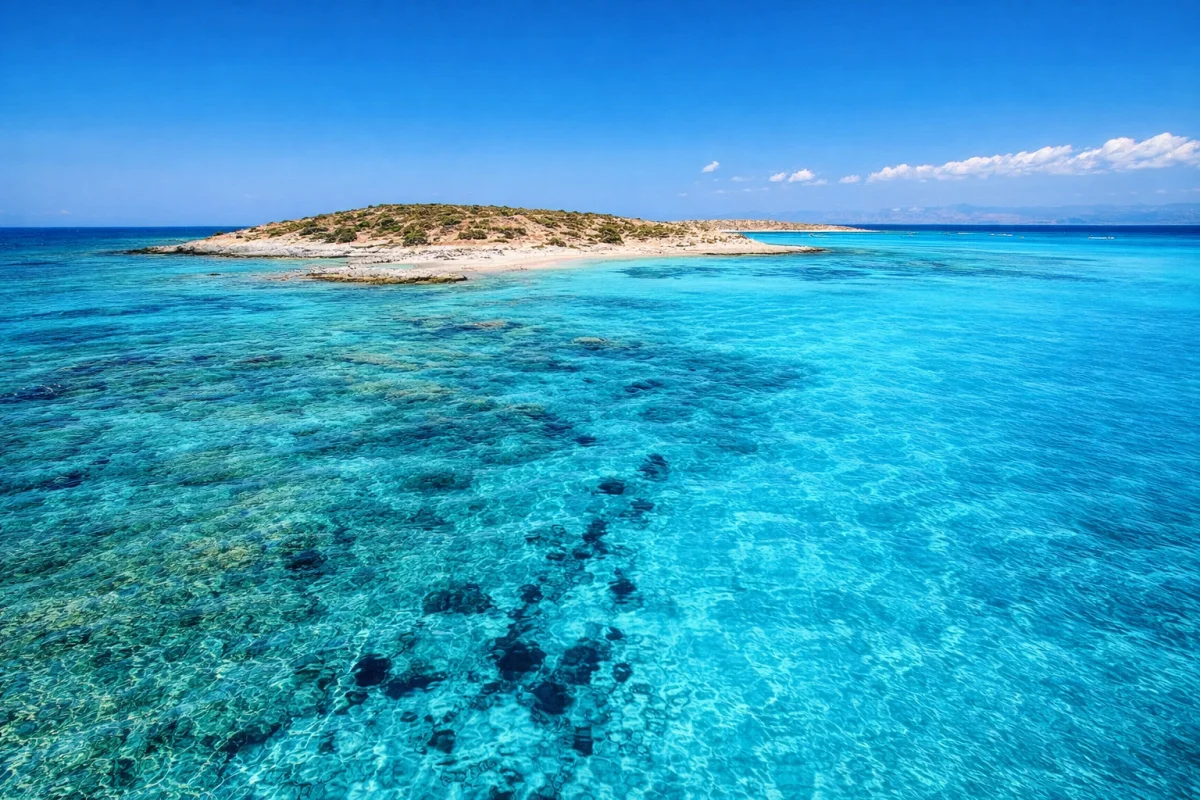
Chrissi is low and narrow. You can cross it on foot without effort. There are no hills, no dramatic rises and no hidden corners. The island feels horizontal. Sea on both sides. Sky above. Sand below. This openness changes how you experience time. There is nowhere to rush to. Nowhere to disappear into. Vegetation stays low. Juniper trees grow slowly and carefully; some are the oldest in Europe. They do not offer much shade, but they shape the island’s character quietly. Everything here feels simple.
The Sand and the Sea
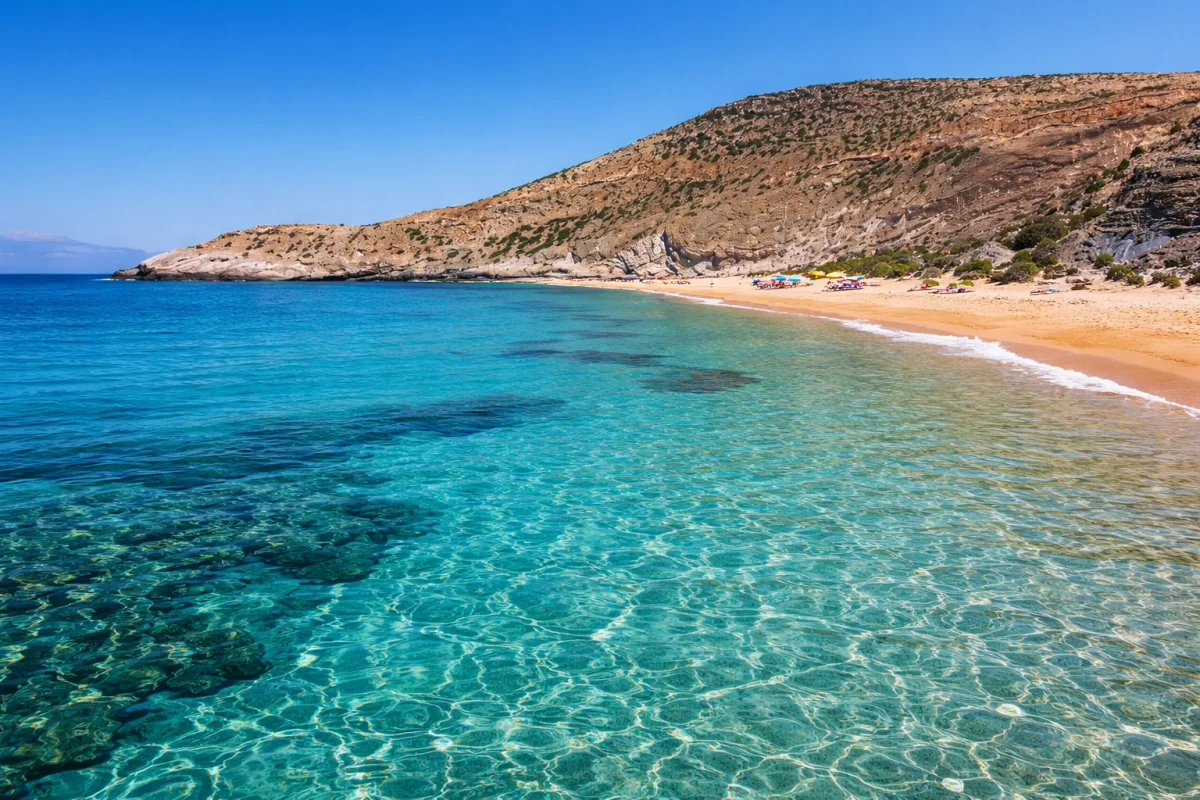
Chrissi is known for its sand, but it does not feel like a beach destination. The sand is soft and pale, made up of tiny shell fragments that catch the light. The sea is shallow for a long distance. You walk into it rather than step down. The water stays calm and warm. Swimming here feels safe. People spread out naturally. There is space between towels, between voices and between movements.
Walking the Island
Walking on Chrissi is simple. Paths are faint. Distances are short. You walk slowly without thinking about it. The sound of footsteps on sand replaces conversation. Wind carries lightly. The sea is always close. Walking here is not about discovery. It is about presence. You notice light changing. You notice heat building and fading. You notice how quiet the island feels even when people are present.
Shade on Chrissi is limited. The sun is constant and when the wind comes, it offers so much relief. This exposure shapes behaviour. The island teaches restraint without instruction. You learn to stay still. To move when necessary and respect the conditions. Chrissi is quiet, but not silent. Wind moves through low trees. Water laps gently at the shore. Voices travel, but they stay soft. There is no background noise. No engines once boats leave. No music filling the space. This quiet changes how people behave. Conversations are slow. Long pauses feel natural. Silence feels shared rather than awkward. You become aware of how rarely you experience this kind of soundscape.
Time on Chrissi is loose. There are no activities to organise the day. No landmarks to visit. No sequence to follow. You swim. You sit. You walk. You return to the same spot without needing a reason. The absence of structure makes the hours feel long, but not empty.
Respecting the Island
Chrissi is protected. This protection feels necessary. The land shows signs of pressure as if it has been forgotten. Walking is limited to certain areas. Trees are not to be touched. Nothing is meant to be taken. These boundaries are not restrictive. They are reminders. The island does not belong to those who visit it. Being here comes with responsibility, even if it is not spoken aloud.
Leaving the Island
Leaving Chrissi feels abrupt. Boats return. People gather quietly. The island does not change as you go. There is no final view. No closing moment. The sand stays pale. The sea stays calm. You leave without feeling finished. That unfinished feeling stays with you.
Why Chrissi Feels Different
Chrissi offers light, sand, sea and space. What you experience depends entirely on how quietly you are willing to be there.